




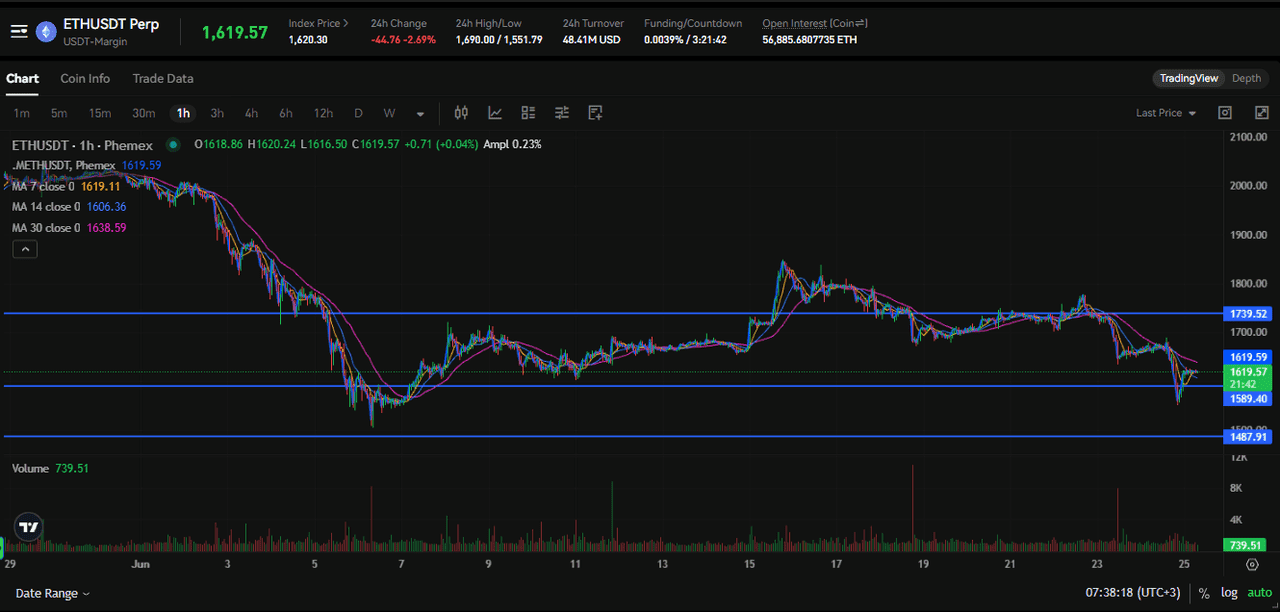
The Ethereum Foundation has cut about 54 people, roughly 20% of its staff, in a restructuring it frames as a shift toward a leaner organization focused on the core protocol. The news landed in the middle of a broad crypto selloff, with Ethereum trading at $1,618.80, down 2.62% on the day. Headlines that pair a 20% staff cut with a falling ETH price write themselves, and plenty of them have already done the easy thing and implied the network is in trouble.
It is worth separating the two. A foundation reorganizing how it spends its money is a very different event from the protocol failing, and the gap between those two readings is where most of the confusion sits. Here is what the Ethereum Foundation actually is, what the restructuring changes, how it fits the EF's recent direction, and what it does and does not mean for anyone holding ETH.
What the Ethereum Foundation Is and What It Actually Does
The Ethereum Foundation is a non-profit organization that stewards research and development funding for the Ethereum ecosystem. It pays for protocol research, funds client teams and independent developers, supports public goods, and helps coordinate the upgrade roadmap. Think of it as a well-funded research institute attached to an open-source project, not a company that owns the project. The distinction matters more than it sounds.
What the EF does not do is run Ethereum. The network is validated by hundreds of thousands of independent validators spread across the world, secured by staked ETH, and changed only when client teams implement upgrades and the broader community runs the software. The Foundation can fund a researcher who proposes an improvement, but it cannot force that improvement onto the chain. No EF employee can roll back a transaction, freeze a wallet, or push a change that node operators refuse to run.
That design is the whole point. Ethereum was built so that no single entity, including the organization that funds most of its research, holds the keys to the network. The Foundation's own description of its mandate on the Ethereum Foundation page at ethereum.org is explicit that its role is stewardship and support rather than control. So when you read that the EF cut staff, you are reading about the budget and headcount of a research-funding non-profit, not about the security, uptime, or decentralization of the chain that settles your transactions.
What the Restructuring Actually Changes
The restructuring trims roughly 54 roles, about 20% of the Foundation's headcount, and reorganizes what remains around a narrower set of priorities. The framing from the EF is a move toward a leaner model that concentrates resources on the core protocol and fewer broad mandates. In plainer terms, the Foundation is trying to do fewer things and fund the most essential work more directly rather than spreading a large staff across many parallel initiatives.
A lot of what a research foundation accumulates over years is overhead that is not the protocol itself. Community programs, events, grants administration, support functions, and exploratory teams all add headcount without touching consensus, the execution layer, or the upgrade pipeline. A leaner structure pushes more of the budget toward Ethereum Layer 2 solutions, scaling research, and core client work, and less toward functions that can be handled by the wider ecosystem or external organizations.
There are two honest ways to read a cut like this. One is discipline, where a focused organization that protects its runway and concentrates on the work only it can do is healthier than a sprawling one. The other is risk, because people carry knowledge and losing a fifth of a specialized team can mean losing context that is hard to rebuild. Which reading turns out right depends on execution over the next several quarters, not on the announcement itself.
What the restructuring does not change is the development pipeline that matters to the chain. Client teams building execution and consensus software are largely independent organizations, many funded by the EF but not employed by it. The roadmap, the upgrade schedule, and the validator set all sit outside the headcount being cut.
How the Cut Fits the EF's Recent Direction
This did not come out of nowhere. The Foundation has spent the better part of a year reshaping how it operates, and the staff cut is the sharpest expression of a direction that was already visible.
The first piece is treasury management. The EF holds a large ETH-denominated treasury, and how it manages that pile has been a recurring point of community pressure. The push has been toward more transparent, more deliberate practices so the Foundation funds research sustainably across cycles instead of selling ETH reactively into weakness. A leaner cost base is the natural companion to that goal, because a smaller payroll stretches the same treasury further.
The second piece is roadmap focus. Over the past year the Foundation has signaled it wants its researchers concentrated on the parts of the roadmap that move the needle, including scaling through Layer 2s, improvements to the execution layer, and the long-running work on making the protocol simpler and more durable. Concentration of effort and concentration of headcount tend to travel together.
The third piece is personnel. Several well-known researchers have left or changed roles over the past year, some to start their own ventures and some to join other teams, and the community read those departures as a warning sign about brain drain. The current restructuring is the formalized version of a transition already underway in pieces, which is part of why the reaction has been more measured than a surprise 20% cut would normally provoke.
How the Community Reacted
The response split roughly into two camps, and neither is unreasonable.
The concern camp focuses on brain drain. Losing about 54 people from a specialized research organization, on top of earlier high-profile departures, raises a fair question about how much institutional knowledge is walking out the door faster than it can be replaced. Ethereum's edge has always been the depth of its research bench, and a fifth of a team is not a rounding error.
The support camp reads the same facts as overdue discipline. Their argument is that the Foundation had grown into a sprawling organization with too many mandates, and that focusing finite capital on the core protocol is exactly what a steward should do. To this group, a leaner EF that funds essential work directly is a feature, not a failure.
The most useful framing sits between the two. A restructuring is neither automatically bullish nor bearish. It is a bet that focus beats breadth, and it pays off only if the work that remains is the work that matters and the people who stayed can do it. That verdict arrives in roadmap progress over the coming year, not in this week's price.
What It Means and Does Not Mean for ETH Holders
Start with what it does not mean. The restructuring does not change Ethereum's security, its decentralization, its staking yield, the supply mechanics, or the upgrade roadmap that client teams are executing. The chain runs the same today as it did before the announcement. A foundation trimming payroll has no mechanical effect on what happens when you stake ETH, bridge to an L2, or use a DeFi protocol. Conflating the EF's headcount with the network's health is the single most common error in the coverage, and it is worth refusing to make it.
What it could mean, on a longer horizon, is a question mark over research pace. If the cut removed people whose work cannot be easily replaced, future upgrades could slow at the margin. If it removed overhead and sharpened focus, the pace could improve. The honest answer is that nobody knows yet which way it breaks, and either way it is a slow-moving, multi-quarter variable, not a reason to reprice ETH on a single day.
As for the $1,618.80 price and the 2.62% drop, the restructuring is a footnote, not the cause. ETH is falling because the entire market is in a broad selloff, the same backdrop dragging on Bitcoin and the rest of the majors. Attributing a market-wide red day to one organization's staffing decision is a tidy narrative that explains very little. You can follow Foundation and protocol developments on the official Ethereum blog and the broader context through CoinDesk's technology section.
For a holder, the practical stance is to treat this as governance news, not protocol news. Watch roadmap delivery and research output over the next few quarters for the real signal, and watch the broad market, not the EF org chart, for what moves price this week.
Frequently Asked Questions
What is the Ethereum Foundation?
The Ethereum Foundation is a non-profit that stewards research and development funding for the Ethereum ecosystem. It pays for protocol research, supports client teams and independent developers, and helps coordinate the upgrade roadmap. It is a funder and supporter of the project, not an owner or operator of the network.
Does the Ethereum Foundation control Ethereum?
No. Ethereum is secured by hundreds of thousands of independent validators and changed only when client teams and node operators choose to run new software. The Foundation can fund research and propose improvements, but it cannot force changes onto the chain, reverse transactions, or freeze funds. That separation is by design.
Is the Ethereum Foundation in trouble?
A 20% staff cut is a real organizational change, but it is a restructuring toward a leaner, core-protocol focus rather than a sign the network is failing. The Foundation continues to fund research and the roadmap, and the chain's security and operation are unaffected. If the cut helps or hurts research pace, that will show up in upgrade delivery over the coming quarters.
Why is ETH down if the Foundation is just restructuring?
ETH is trading at $1,618.80, down 2.62%, primarily because the broader crypto market is in a broad selloff, not because of the staff cut. The restructuring is governance news with no mechanical effect on price. The market-wide move is dragging on most major assets at the same time.
Bottom Line
The Ethereum Foundation cut about 54 people, roughly 20% of its staff, in a restructuring toward a leaner organization focused on the core protocol, and it did so during a broad market selloff that has ETH at $1,618.80, down 2.62%. The cleanest way to hold these two facts is to keep them separate. One is a funding non-profit reshaping its budget and focus. The other is a market-wide risk-off move that has nothing to do with the EF org chart.
The signal to watch is not the headcount number, it is what the leaner Foundation ships from here. If focus translates into steady roadmap delivery and strong research output over the next few quarters, the support camp was right. If the pace slips and key knowledge proves hard to replace, the brain-drain camp was right. For ETH holders, the practical read is to treat this as governance news, judge it on execution rather than the announcement, and look to the broad market, not a restructuring, for what moves price this week.
This article is for informational purposes only and does not constitute financial or investment advice. Cryptocurrency trading involves substantial risk. Always conduct your own research before making trading decisions.