








Key Takeaways
Brickken is an institutional-grade tokenization platform built for issuing and managing digital assets such as equity, debt, funds, and other regulated instruments.
The company’s platform emphasizes no-code issuance, compliance tooling, investor onboarding, and lifecycle management.
BKN is Brickken’s utility token and, according to the whitepaper, is used for protocol issuance fees, token-offering purchases, and ecosystem services.
Brickken’s more recent product content says a fee in BKN is required to create a digital asset on the platform.
As of today, Brickken is best understood as a tokenization infrastructure provider, not just a token project, with current positioning centered on digital-securities issuance and asset-management workflows.
Real-world asset tokenization has become one of the most important themes in crypto, but the sector is no longer just about tokenizing Treasury bills or launching experimental property tokens. The real challenge is building the infrastructure that lets companies issue, manage, and distribute compliant digital assets at scale. That is the problem Brickken is trying to solve. On its official website, Brickken describes itself as an institutional-grade tokenization platform for digital assets, built to unify issuance, compliance, and lifecycle management in one place.
That framing matters because Brickken is not mainly pitching itself as a speculative token project. It is positioning itself as a B2B tokenization infrastructure company for businesses that want to issue digital securities such as equity, debt, funds, and other regulated instruments. Its securities-tokenization page says the platform automates issuance, investor onboarding, and ongoing management in a compliant and secure way.
The native token behind this ecosystem is BKN. Brickken’s whitepaper says BKN is the utility token that fuels transactions made using the decentralized protocol, including issuance fees, token offering purchases, and services provided by experts in Brickken’s ecosystem. More recent platform content also says that a fee in BKN is required to create a digital asset on the platform.
What Is Brickken?
Brickken is a blockchain-fintech company focused on helping businesses tokenize and manage assets through a compliant digital infrastructure. Its official homepage says the platform is designed to be secure, compliant, and scalable, while its asset-tokenization page says Brickken provides the infrastructure needed to issue and manage tokenized assets in one place.
That makes Brickken more than a simple launchpad. The project is trying to solve the operational problem behind tokenization: how do you actually issue a digital asset, onboard investors, handle KYC or KYB checks, structure lifecycle events, and manage a tokenized offering across jurisdictions? Brickken’s site repeatedly emphasizes these platform functions, especially compliance and investor management.
Brickken was founded in July 2020 and aims to standardize how tokenization services are executed globally. The platform is infrastructure that helps companies transform assets such as shares into tokens and issue security token offerings in accordance with applicable legislation.
This is important because the easiest mistake to make with Brickken is to think of it as just another RWA token. In reality, the token is only one part of a wider software-and-compliance stack for digital asset issuance.
What Problem Is Brickken Trying to Solve?
The main problem Brickken is trying to solve is that traditional asset issuance and investor administration are often slow, fragmented, and expensive, especially when a company wants to reach global investors or structure digital securities. Brickken’s securities-tokenization page says managing traditional securities is costly, slow, and hard to scale across jurisdictions, and presents tokenization as a way to automate issuance, investor onboarding, and ongoing management.
The project says trust is one of the biggest barriers in real-world asset tokenization, and that Brickken’s goal is to safeguard the process from asset digitization through security token issuance, so both asset owners and investors have more certainty. The company established a thorough process for RWA tokenization to provide confidence to token buyers and issuers.
So the project is not just solving “how do we put an asset onchain?” It is solving the wider workflow around that question:
how to structure the issuance,
how to onboard investors,
how to enforce compliance,
how to manage the token after launch,
and how to make all of this repeatable for businesses.
How Brickken Works
The easiest way to understand Brickken is to break it into four layers:
Issuance infrastructure
Compliance and onboarding
Lifecycle management
BKN-powered ecosystem activity
Issuance Infrastructure
Brickken’s core product is the issuance layer. Its homepage and tokenization-platform pages say users can issue and manage digital assets through a no-code system, while its security-tokenization page specifically highlights support for tokenizing equity, debt, and funds.
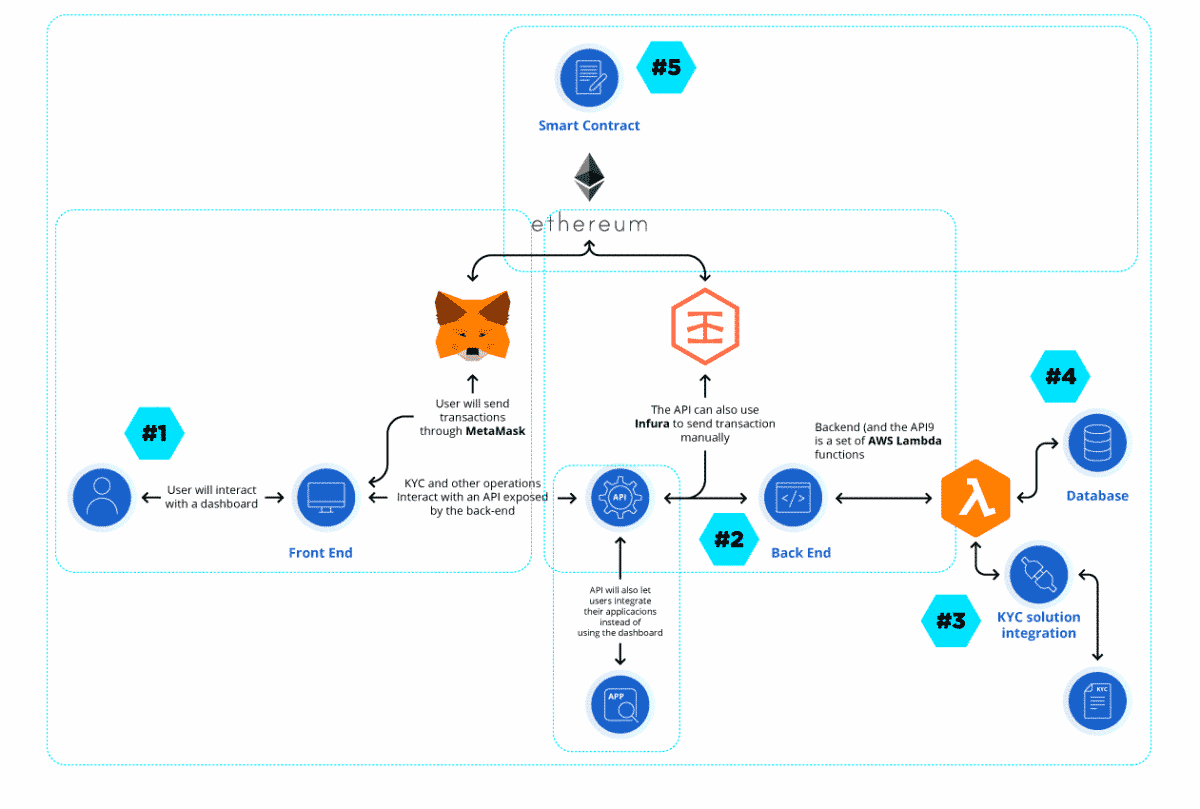
The API documentation also shows that Brickken supports transaction preparation for tokenization, STO management, token operations, and related blockchain actions. That suggests the platform is built not only for manual UI use, but also for programmatic integration.
This makes Brickken useful for issuers who want a full-stack tokenization workflow instead of stitching together separate legal, technical, and investor-management tools.
Compliance and Onboarding
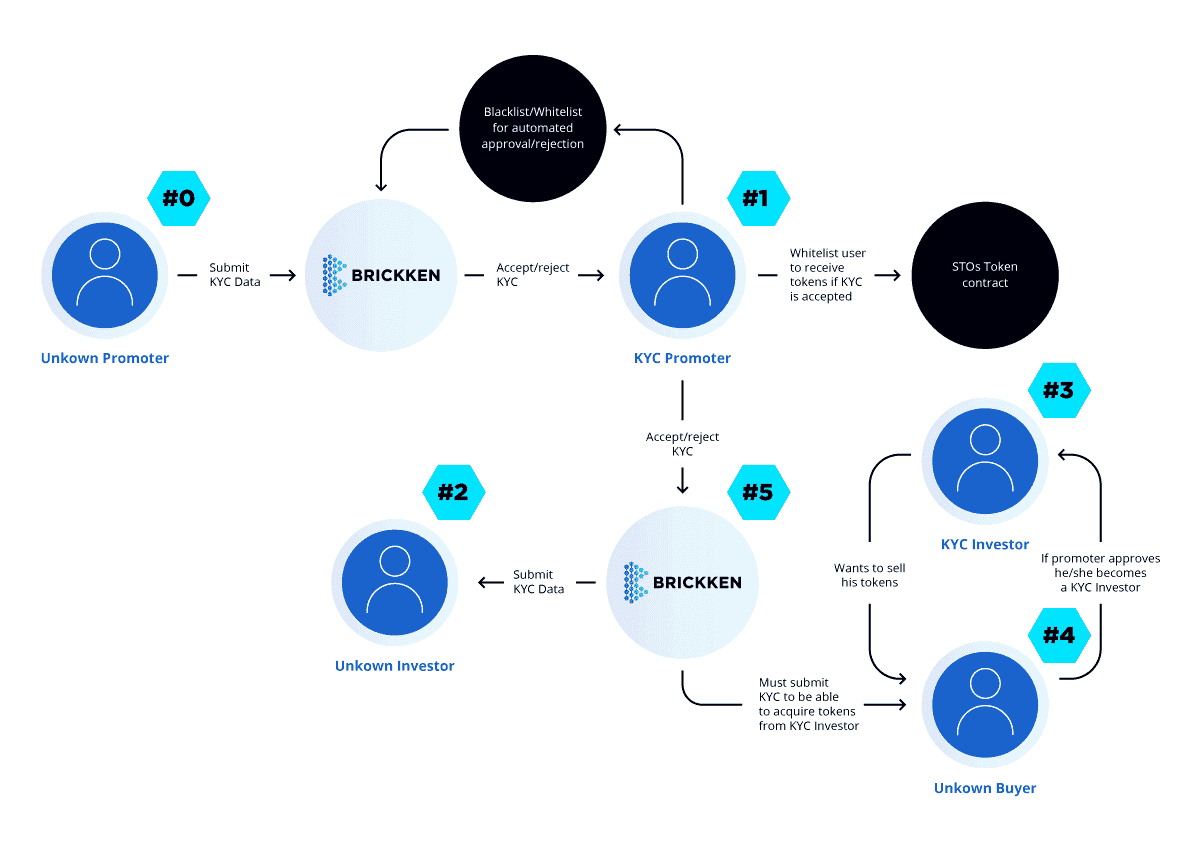
Compliance is one of the strongest recurring themes in Brickken’s materials. Its homepage says the platform includes integrated KYC/KYB, and its BNB Chain walkthrough says KYB verification is mandatory for all parties involved in digital asset issuance. That guide explicitly says businesses need required documents ready before proceeding.
This matters because tokenization infrastructure is not just about smart contracts. For regulated digital assets, investor identity, issuer identity, and jurisdiction-specific compliance often matter as much as the blockchain component. Brickken’s pitch is that it brings these layers together into one process.
Lifecycle Management
Brickken also emphasizes management after issuance. Its homepage says the platform unifies issuance, compliance, and lifecycle management, while the security-tokenization page says it supports ongoing management for digital securities.
Lifecycle management can include things like investor recordkeeping, token-holder relations, governance rights, and other post-issuance operations. While the public product pages do not unpack every workflow in detail, they make it clear that Brickken is selling a continuing platform relationship, not just a one-time token-minting service.
BKN Utility Layer
Finally, the BKN token sits around the platform as the utility layer. The whitepaper says BKN fuels transactions made using Brickken’s decentralized protocol, including issuance fees, token-offering purchases, and expert services. The BNB Chain product guide also says a fee in BKN is required to create a digital asset.
That means BKN is best understood as an operational token within the tokenization ecosystem rather than as the direct asset being tokenized.
What Assets Can Brickken Tokenize?
Brickken’s current materials show a wide scope. Its securities-tokenization page explicitly lists equity, debt, and funds as key use cases. Its asset-tokenization materials and educational content also discuss real estate, art, luxury assets, gold, gemstones, jewelry, and other RWAs.
This is important because it means Brickken is not narrowly tied to one asset category. It is closer to a general tokenization platform that can support different structures depending on issuer needs. In practical terms, though, the strongest official product positioning today appears to be around digital securities and institutional issuance workflows, rather than speculative collectible tokenization. That is an inference based on the prominence of the securities-tokenization and institutional-platform pages compared with the educational blog content.
What Is BKN?
BKN is Brickken’s utility token. Brickken’s whitepaper describes it as the token that fuels the decentralized protocol. Specifically, it lists three main uses:
payment of the protocol’s issuance fee,
one of the payment methods for buying token offerings,
payment for services provided by experts in Brickken’s ecosystem.
That gives BKN a more concrete utility profile than many generic ecosystem tokens. It is linked directly to asset issuance and ecosystem services, not just vague future governance.
More recent product content partially confirms this utility in practice. The BNB Chain issuance guide says issuers need BKN to create a digital asset on the platform, in addition to chain-native gas tokens such as BNB for onchain transaction costs.
BKN is the utility token used in Brickken’s tokenization ecosystem for issuance-related fees and selected platform or ecosystem activities.
What Does BKN Do?
BKN currently has several core roles.
Issuance Fees
This is the clearest use case. Brickken’s whitepaper and its more recent BNB Chain guide both indicate that BKN is used in digital asset creation and issuance.
Token Offering Participation
BKN is one of the payment methods for buying token offerings. That suggests it is not only used by issuers, but can also be part of the investor-side interaction in the ecosystem.
Expert Ecosystem Payments
BKN is used to pay for services provided by experts in Brickken’s ecosystem. That is notable because it suggests Brickken is trying to create not just a software product, but a broader service and specialist network around tokenization.
Staking and Community Participation
Brickken also has official staking terms and a community DAO structure. Its staking-terms page outlines formal rules for BKN staking, while its February 2024 DAO announcement says the first stage of the Brickken Community DAO allows voting support strategies for BKN holders on Ethereum and BSC, including staked and vested BKN.
That means BKN also plays a role in community governance and ecosystem alignment, even if the strongest current public utility story remains tied to platform operations.
Brickken Community DAO
Brickken’s DAO announcement is important because it shows the project is trying to add a community-governance layer around the ecosystem. The February 2024 post says the Community DAO would be implemented in stages, with responsibilities growing over time. In its first stage, governance focused mainly on treasury fund decisions, marketing contests and campaigns, grant requests, and community-channel decisions.
This suggests Brickken is not positioning BKN as a full decentralized governance token for the whole company or product stack yet. Instead, it appears to be gradually expanding community influence in a staged way. That is a more cautious and realistic model than claiming instant full decentralization.
For investors and users, this means BKN’s governance role exists, but should be understood as evolving and scoped, not as an all-powerful governance system from day one.
Recent Brickken Direction
The strongest signal about Brickken’s current direction is that it is leaning harder into institutional tokenization infrastructure.
Its homepage and core product pages now emphasize:
institutional-grade infrastructure,
compliant digital securities,
investor onboarding,
lifecycle management,
and enterprise tokenization workflows.
More recently, a post from just days ago described Brickken’s role in a tokenized trade-finance receivables structure, saying the company provided institutional-grade tokenization infrastructure for investor and issuer onboarding, compliance execution, financial structuring, and asset lifecycle management. That is a useful real-world case study because it shows Brickken being used in a more serious financial context than generic token launches.
Why Brickken Matters in the RWA Sector
Brickken matters because many RWA conversations still focus on the assets themselves, while much less attention goes to the infrastructure needed to issue and manage them properly.
A tokenized asset is only as useful as the system around it:
who can issue it,
who can buy it,
how compliance is enforced,
how investor records are managed,
and how the asset behaves over its lifecycle.
Brickken’s value proposition sits exactly in that missing layer. Its recent trade-finance case study even uses the phrase “building the missing layer” in RWA tokenization, which is a strong summary of its market role.
Risks and Limitations
Brickken is interesting, but it comes with meaningful risks.
Adoption Risk
Tokenization is a strong narrative, but enterprise adoption can be slow. Even if Brickken has solid infrastructure, businesses may adopt tokenization more slowly than crypto investors expect. This is an inference based on the nature of enterprise financial software, not a claim from Brickken.
Regulatory Complexity
Brickken’s compliance focus is a strength, but it also highlights a core risk: digital-securities rules vary across jurisdictions, and changes in regulation can affect how the platform operates. Brickken’s own staking terms explicitly acknowledge regulatory uncertainty around cryptographic tokens and blockchain services.
Token Value-Capture Risk
BKN has real utility in issuance and ecosystem operations, but investors still need to ask how much platform growth will translate into sustained token demand. Utility does not automatically mean strong value capture. This is an inference based on typical token-economics dynamics.
Competition Risk
Tokenization infrastructure is becoming a crowded category. Brickken competes not only with crypto-native tokenization platforms, but also with traditional financial software and institutional tokenization stacks. Its differentiation appears to be product simplicity, compliance focus, and no-code issuance.
Conclusion
Brickken is one of the clearer infrastructure plays in the RWA and digital-securities sector because it is not mainly selling a token story. It is selling a platform story: institutional-grade infrastructure for issuing and managing tokenized assets. Its strongest current positioning is around compliant digital securities, investor onboarding, and lifecycle management.
The BKN token is part of that system, mainly as the utility layer for issuance fees and related ecosystem activity, with an additional evolving role in staking and community governance.
As tokenized securities, RWAs, and digital capital markets continue to expand, projects like Brickken show how much of the real opportunity may lie in the infrastructure behind issuance and compliance. For traders looking to stay ahead of emerging narratives—from RWAs and tokenized securities to TradFi, AI, and onchain market infrastructure—Phemex offers a secure and user-friendly platform to explore the market, monitor new opportunities, and sharpen your trading edge.
Register](https://phemex.com/register?group=7916&referralCode=CUFKP8%22>Register) on Phemex Now
