


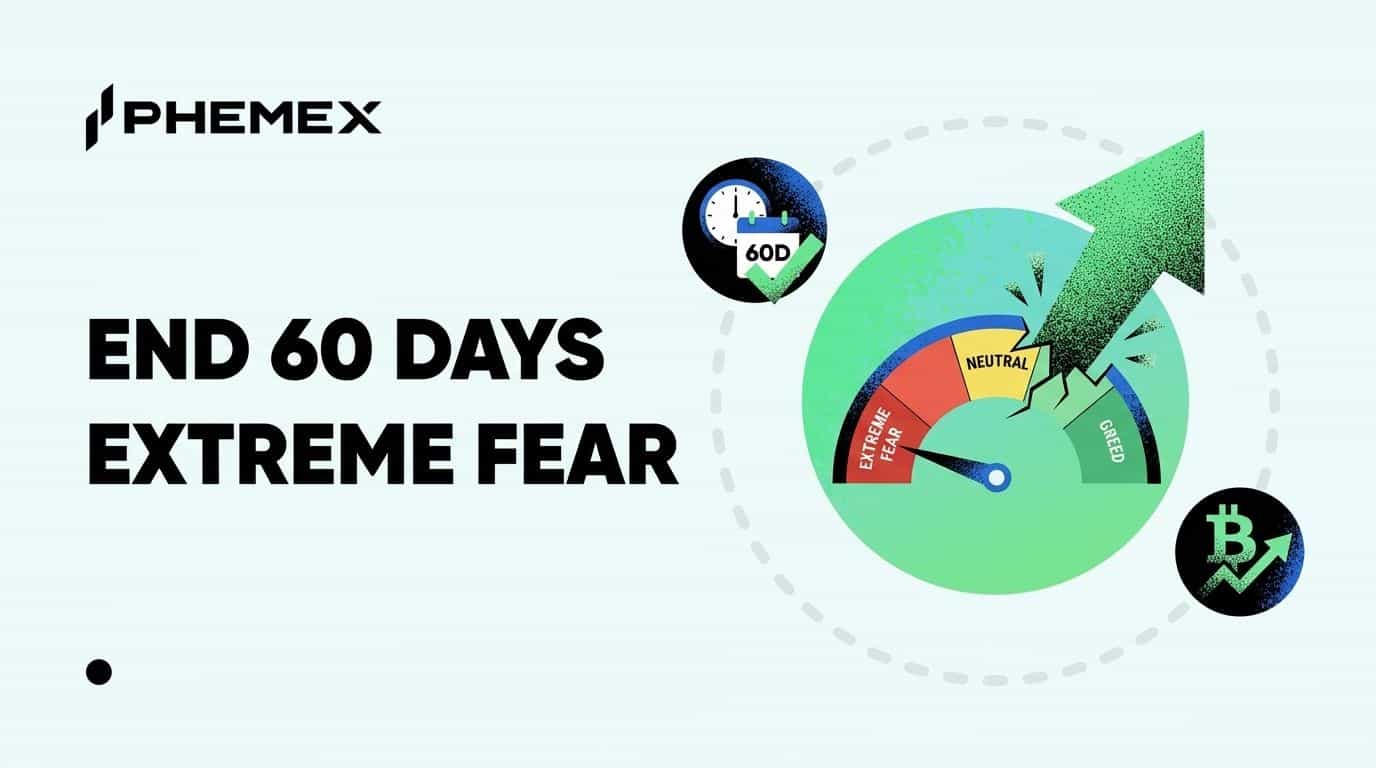
The Crypto Fear and Greed Index has not printed above 10 for over 60 consecutive days, the longest extreme fear streak ever recorded. Then on April 7, a two-week U.S.-Iran ceasefire hit the wires, oil crashed 16% from $112 to $95 in a single session, and Bitcoin jumped from $68,800 to above $72,000 while $427 million in shorts got liquidated. For the first time since early February, the single biggest source of fear in crypto markets is being directly addressed by a real-world event.
The ceasefire clearly matters. But the real question is if removing the oil and geopolitical overhang is enough to drag this index out of single digits for good, or if the damage from 60 days of extreme fear runs deeper than one headline can fix.
Why Oil Was the Fear Index's Anchor
Every previous extended extreme fear episode in crypto was triggered by something inside the ecosystem. Terra/Luna collapsed and the contagion spread through 3AC, Celsius, and Voyager. FTX imploded and took customer funds with it. Both resolved when the bad debt cleared and forced selling exhausted itself.
The 2026 streak is fundamentally different because the fear came from outside. Brent crude above $110 per barrel, driven by the U.S.-Iran conflict and Strait of Hormuz disruption risks, created a rolling inflation scare that kept the Fed locked at 3.50-3.75% with no cut in sight. Every time the index looked like it might bounce, another escalation headline pushed oil higher and reset the fear clock.
On-chain fundamentals told the opposite story the entire time. Bitcoin exchange reserves hit multi-year lows, stablecoin supply grew past $220 billion, and whale accumulation was constructive. None of it mattered because the macro ceiling kept pressing down harder than the crypto floor could push up.
What the Ceasefire Actually Changes
The two-week ceasefire, mediated by Pakistan with Turkey and Egypt co-mediating, does two concrete things. First, Iran agreed to reopen the Strait of Hormuz for the duration, normalizing roughly 20% of global oil supply flows. Second, formal peace talks are scheduled for April 10 in Islamabad, creating a timeline for potential permanent resolution.
The oil market responded immediately. WTI crashed from $112.95 to $95.85 and the estimated geopolitical risk premium compressed from about $14 per barrel to $4-6. That is not a minor adjustment. A $15-17 drop in oil prices flows directly into inflation expectations, and inflation expectations are the single variable that determines when the Fed can cut.
The chain reaction matters for crypto because it runs through every link simultaneously. Lower oil means softer inflation prints, which means the Fed gets cover to signal cuts, which means risk assets reprice higher, which means the fear that has kept BTC range-bound between $62,000 and $73,000 for two months starts to lift. Bitcoin's 4.5% overnight jump to $71,926 on April 8 was the market pricing in exactly this transmission channel.
What the Fear and Greed Index Needs to Exit Single Digits
Getting from 8 to above 10 sounds trivial, but the index aggregates five weighted inputs that all need to shift together. Volatility (25% weight) needs to compress, market momentum and volume (25%) need sustained buying rather than one-day squeezes, social sentiment (15%) needs to shift from panic to opportunity, Bitcoin dominance (10%) needs to stabilize, and Google Trends searches for "Bitcoin crash" (25%) need to fade.
Monday's $427 million liquidation event and Tuesday's follow-through to $72,000 help momentum and volume, but they also spike volatility in the short term. The honest answer is that one strong week does not flip a 60-day trend. It takes roughly 7-10 days of sustained price stability above a new floor, combined with declining volatility, to structurally move the index out of extreme fear.
The threshold to watch is $70,000 holding as support through April 15-17, when the ceasefire's first week concludes and markets assess if the peace talks in Islamabad produced anything real. If BTC holds above $70,000 with declining daily ranges, the index should cross 15 by mid-April. If the ceasefire collapses and oil reverses, the index resets to 6-8 and the streak extends into month three.
What Ended Every Previous Extended Fear Period
The history is short because sustained sub-10 readings have only happened twice before, but the pattern is consistent.
|
Period
|
Catalyst That Triggered Fear
|
What Ended It
|
Days Below 10
|
BTC 90-Day Return After Exit
|
|
Jun-Aug 2022
|
Terra/Luna + 3AC contagion
|
Bad debt fully cleared, forced selling exhausted, Ethereum Merge narrative emerged
|
~30
|
+32%
|
|
Nov 2022
|
FTX collapse
|
Bankruptcy proceedings contained contagion, no further exchange failures, BTC held $16,500 floor
|
~15
|
+55%
|
|
Jan-Apr 2026
|
Tariff escalation + Iran conflict + oil above $110
|
TBD (ceasefire is the first real candidate)
|
60+ (ongoing)
|
TBD
|
In both cases, fear ended when the specific catalyst was contained and no new catalyst replaced it. The 2026 streak has an extra layer of complexity because it was driven by two overlapping catalysts, tariff escalation and the Iran conflict. The ceasefire addresses Iran directly, but tariff uncertainty remains. Removing one of two headwinds gets you from extreme fear to regular fear. Removing both gets you to neutral.
The 90-Day Forward Return Setup
Every completed extreme fear streak has produced outsized returns on a 90-day to 365-day basis. After Terra/Luna, BTC returned roughly 32% in 90 days from $17,500, and after FTX it returned 55% from $16,500, eventually more than doubling within a year. But BTC is starting from $72,000 this time. A 32% move puts BTC at $95,000 and a 55% move hits $111,600, targets that require sustained institutional buying and months of risk-on positioning.
The reason most traders fail to capitalize is timing. Historical data shows that buying at the first sub-10 reading during Terra/Luna meant sitting through a further 37% drawdown before recovery began. Dollar-cost averaging during extended fear periods has outperformed lump-sum entries at every completed cycle, precisely because it removes the impossible task of calling the exact day the streak ends.
Why This Ceasefire Could Fail to End the Fear
Two weeks is not peace. Iran publicly rejected the temporary ceasefire as insufficient before eventually agreeing, demanding a permanent end to hostilities instead. Trump's negotiating style, which included threatening to bomb Iranian bridges 48 hours before announcing the ceasefire, does not inspire confidence in a smooth path to permanent resolution.
If the Islamabad talks on April 10 produce nothing concrete, the ceasefire expires around April 21 and the Strait of Hormuz risk returns. Oil would spike back toward $110+, the inflation narrative resets, and BTC likely retests $65,000-$66,000 support. The fear index would stay pinned in single digits and likely make a new low.
And even if Iran resolves cleanly, the tariff overhang remains. A ceasefire fixes the oil input to the fear equation, but it does not fix the trade policy input. Both need to improve for the index to reach neutral territory above 25.
Frequently Asked Questions
How long has the Crypto Fear and Greed Index been in extreme fear?
Over 60 consecutive days as of April 8, 2026, more than doubling the previous record of roughly 30 days during the Terra/Luna collapse. The streak began in early February when U.S.-Iran escalation pushed oil above $110 and created a persistent inflation scare.
Can a ceasefire alone push the Fear and Greed Index out of extreme fear?
It can help significantly but probably not on its own. The ceasefire addresses the oil and geopolitical component of the fear, but tariff uncertainty remains as a separate headwind. Getting from 8 to above 15 requires roughly 7-10 days of stable prices above a new floor combined with declining volatility, and sustained buying rather than a single rally day.
What is the best strategy during extended extreme fear periods?
Dollar-cost averaging has outperformed lump-sum buying at every completed extreme fear cycle in crypto history because it captures the average price across the fear period rather than betting on timing the exact bottom. Position sizing matters more than entry timing here, because the streak could extend and prices could fall another 15-20% before resolution.
What happens to Bitcoin if the Iran ceasefire collapses?
If talks fail and military escalation resumes, oil prices would spike back toward $110+ per barrel, the Fed stays locked at current rates, and BTC likely retests the $65,000-$66,000 support zone that held through most of the conflict period. The fear index would reset to the 5-8 range and the record streak would extend into a third month.
Bottom Line
The Iran ceasefire is the first macro event in 60 days that directly attacks the source of extreme fear rather than giving traders another reason to hope. Oil dropping from $112 to $95 compresses the inflation premium, opens the door for Fed rate cut signaling in Q3, and removes the single largest headwind keeping BTC below $73,000. The levels from here are $70,000 as support through the ceasefire window and $73,000-$75,000 as the resistance that confirms a regime change. If BTC holds above $70,000 through April 15 with declining daily ranges, the fear index should cross 15 for the first time in two months. But this is a two-week ceasefire, not a peace treaty, and Islamabad on April 10 will determine if the oil relief is temporary or structural. Position for the probability that the worst is behind you, but size for the possibility that it is not.
This article is for informational purposes only and does not constitute financial or investment advice. Cryptocurrency trading involves substantial risk. Always conduct your own research before making trading decisions.