

Summary Box
Ticker Symbol: H
Project Name: Humanity
Current Price: ~$0.30
Chain: Multi-chain (Ethereum main deployment + EVM-compatible L2 integrations)
Contract Address: Not unified across sources due to multi-chain deployment structure
Market Cap: ~$400M – $1B (depending on circulating supply assumptions)
Circulating Supply: ~1.8B – 2.8B H
Max Supply: 10B H
ATH (All-Time High): ~$0.84 – $0.85
ATL (All-Time Low): < $0.01 (post-volatility liquidation events on some venues)
All-Time ROI: Highly variable depending on entry timing; extreme volatility cycle asset
Humanity (H) has rapidly evolved into one of the most controversial and closely watched identity infrastructure tokens in the crypto market. Positioned at the intersection of decentralized identity, biometric verification, and AI-resistant authentication systems, the project aims to solve one of Web3’s most pressing structural problems: how to reliably distinguish real humans from bots in an increasingly AI-dominated digital economy.
At a time when AI agents are becoming indistinguishable from real users across social platforms, DeFi protocols, and governance systems, Humanity attempts to introduce a cryptographic and biometric foundation for “proof-of-humanity.” The H token sits at the center of this system, acting as both the economic incentive layer and the coordination mechanism for verification, staking, and governance.
However, the investment case for H is far from straightforward. The token has experienced extreme volatility, rapid narrative expansion, and significant structural shocks, including a major security incident in mid-2026 that disrupted supply dynamics and market confidence. As a result, any Humanity (H) price prediction must carefully balance strong long-term thematic relevance against real execution and security risks.
What Is Humanity (H)?
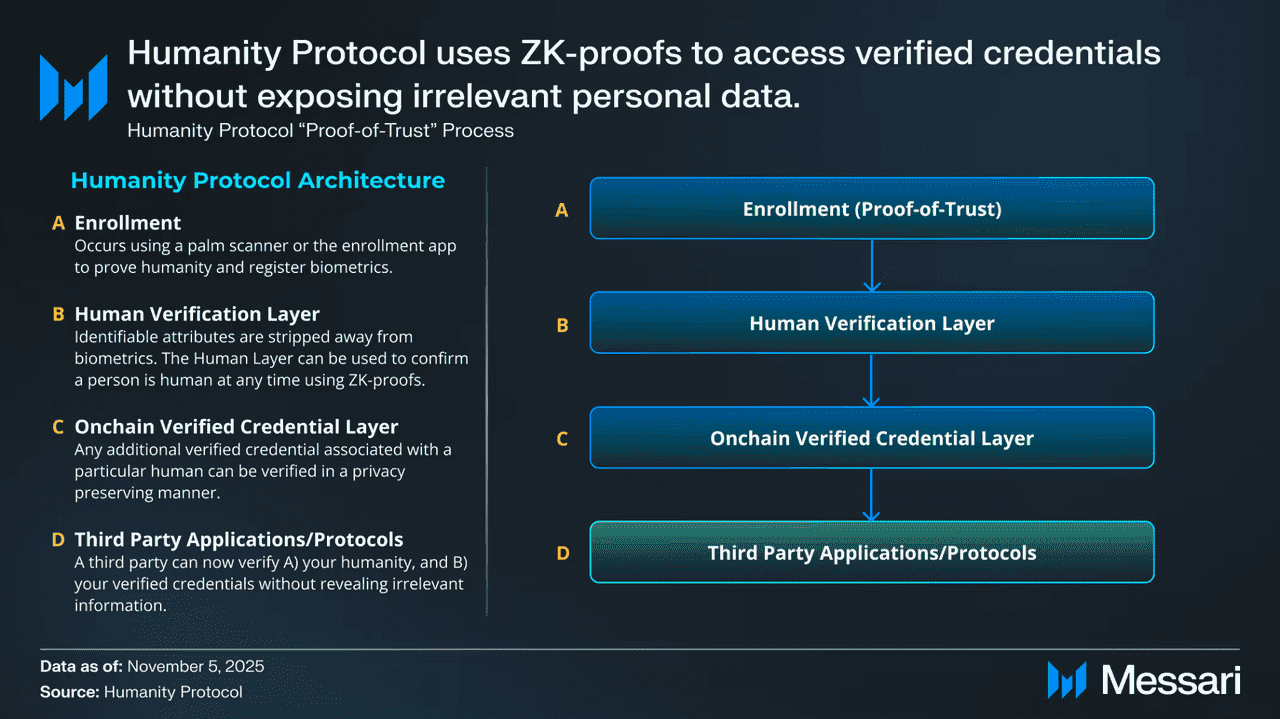
Humanity is a decentralized identity protocol designed to establish verifiable human uniqueness and trust in digital environments. At its core, the project attempts to solve a foundational Web3 problem: the rise of bots, synthetic identities, and AI agents that can distort governance, rewards systems, and user engagement metrics.
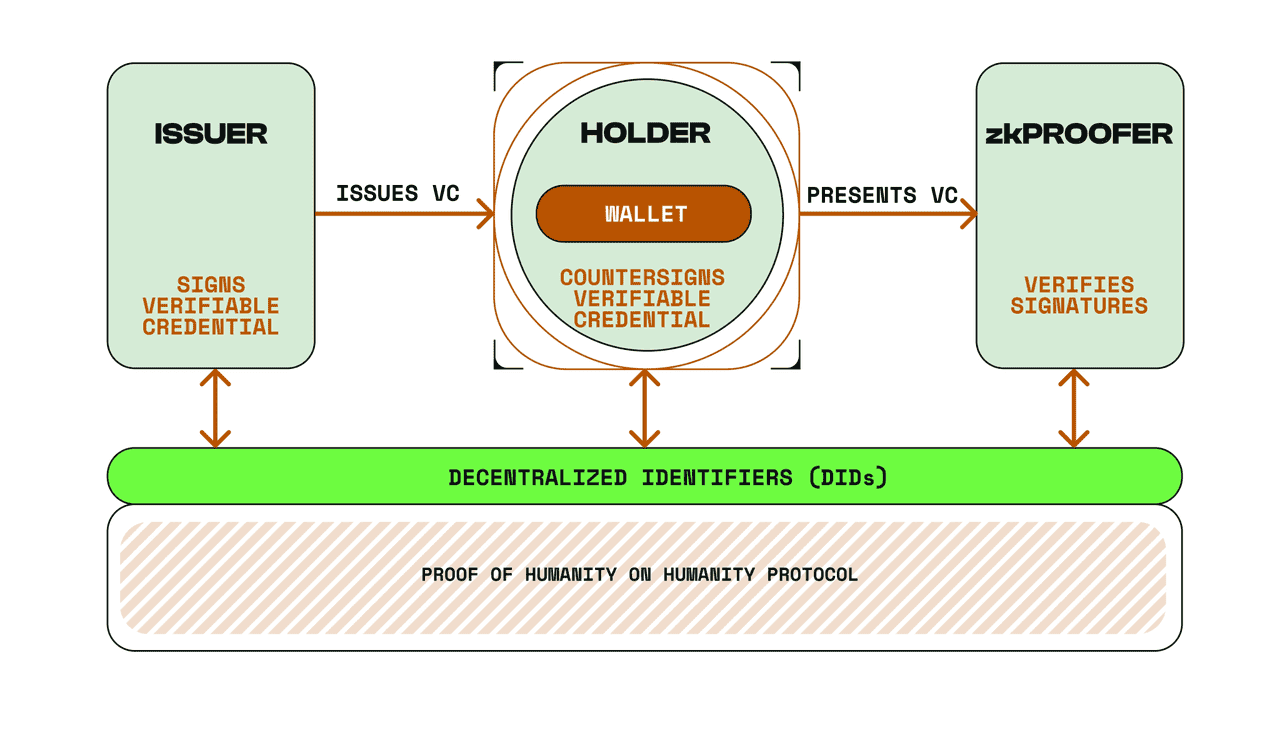
The protocol uses a combination of biometric verification, zero-knowledge proofs, and decentralized identifiers to create a privacy-preserving “human credential.” Instead of exposing sensitive personal data, users generate cryptographic proofs that confirm they are real, unique individuals. These proofs can then be reused across different applications, including DeFi protocols, NFT platforms, DAO governance systems, and Web3 social applications.
The H token powers this ecosystem by incentivizing participation, rewarding validators, and enabling governance over identity-related parameters. In theory, as more applications integrate Humanity’s verification layer, demand for H should increase due to its role in staking, credential issuance, and protocol access fees.
Current Price & Market Data (as of 2026)
Humanity’s current market structure reflects a post-volatility stabilization phase following a major security incident and subsequent liquidity rebalancing. Across major data aggregators, H shows significant price dispersion, with CoinGecko-style volume-weighted averages placing it near the mid-$0.30 to $0.50 region, while other venues such as Phemex and smaller liquidity pools show pricing closer to the low-$0.20 range.
In terms of recent performance, H has experienced sharp swings rather than a smooth trend. Short-term data shows periods of rapid rebounds exceeding 50–100% followed by equally strong retracements. This reflects a market still digesting both narrative-driven demand and structural uncertainty in circulating supply accuracy.
Market capitalization remains highly sensitive to pricing methodology, with estimates ranging from under $500 million to nearly $1 billion depending on circulating supply assumptions. Trading volume remains elevated relative to historical averages, indicating continued speculative interest despite uncertainty. Compared to its all-time high near $0.85, H is still trading at a significant discount, but the market has not yet established a stable valuation anchor. This makes current price action more reflective of sentiment cycles than fundamental equilibrium.
Price History & Performance Overview
Humanity’s price history has been defined by rapid expansion cycles followed by equally sharp corrections. After its launch, the token initially traded at extremely low valuations as the identity narrative was still emerging within broader crypto markets. Early accumulation occurred quietly before the project gained attention through AI-driven identity discussions and Web3 anti-bot narratives.
The first major breakout phase occurred when identity infrastructure became a dominant narrative alongside AI agent proliferation. As concerns about bot-driven manipulation in DeFi and social systems increased, Humanity’s positioning as a proof-of-humanity layer attracted speculative and strategic capital. This drove the token toward its all-time high near $0.85.
However, this rally was followed by a severe correction phase triggered by a major security incident in 2026. The exploit, which involved unauthorized access and token movement across multiple chains, caused a sharp breakdown in market confidence and led to extreme price volatility. In some cases, market prices temporarily collapsed before stabilizing at new, lower equilibrium levels.
Since that event, H has entered a recovery and revaluation phase characterized by high volatility, inconsistent liquidity, and frequent sharp repricing events. The token remains highly sensitive to news flow, unlock schedules, and sentiment shifts in the broader AI and identity sectors.
Whale Activity & Smart Money Flows
Whale activity in Humanity remains a key driver of short-term price movement due to fragmented liquidity and uneven token distribution. On-chain data suggests that large holders are actively rotating positions rather than maintaining long-term passive accumulation.
Following the security incident, a portion of early large holders reduced exposure, contributing to downside pressure during recovery phases. At the same time, mid-sized wallets have shown intermittent accumulation behavior during deep pullbacks, suggesting that some investors view H as a long-term infrastructure bet despite recent instability.
Exchange inflows have remained elevated during volatility spikes, indicating that whales continue to use liquidity events to rebalance positions. However, there is no clear evidence of sustained, coordinated accumulation by “smart money” entities at scale. Instead, the market appears to be in a transitional phase where conviction is still forming.
On-Chain & Technical Analysis
From a technical perspective, Humanity (H) is currently in a broad consolidation structure following an explosive historical move and subsequent correction cycle. The price has been oscillating within a wide range that reflects uncertainty rather than directional conviction.
Key support zones are forming around the lower-$0.20 region, where buyers have repeatedly stepped in during recent drawdowns. A deeper structural support zone exists closer to the sub-$0.10 range, which corresponds to post-event liquidity extremes.
On the upside, the most immediate resistance is located near the $0.60 level, which has repeatedly acted as a rejection zone during recovery attempts. Above that, the $0.85 area remains the critical breakout level that would signal a return to full price discovery.
Momentum indicators suggest a neutral-to-recovering structure. While long-term trend strength is still rebuilding, shorter-term movements show increasing volatility compression, which often precedes directional expansion. However, until H can establish sustained closes above major resistance zones, the broader trend remains structurally uncertain.
Short-Term Price Prediction (2025–2026)
In the short-term outlook, Humanity (H) is expected to remain highly volatile as the market continues to process post-event structural adjustments and upcoming token unlock dynamics. In a bullish scenario, renewed confidence in the protocol’s security improvements and continued identity narrative strength could push H back toward its prior all-time high region and potentially beyond it, targeting the $0.85 to $1.20 range.
In a neutral scenario, H is likely to remain range-bound between approximately $0.25 and $0.60, with frequent oscillations driven by sentiment shifts, liquidity rotations, and unlock-related supply pressure. This would represent a consolidation phase rather than a directional breakout.
In a bearish scenario, renewed selling pressure, combined with unlock dilution or weakening narrative momentum, could push H toward lower support levels near $0.10–$0.20, where historical liquidity has previously formed during stress events.
Long-Term Price Forecast (2027–2030)
The long-term outlook for Humanity depends almost entirely on whether decentralized identity becomes a core infrastructure layer in Web3 and AI-driven systems. If Humanity successfully integrates into major ecosystems such as DeFi, governance systems, and AI-agent verification layers, the token could evolve into a foundational digital identity asset.
In a strong adoption scenario, H could trade in the $1.50 to $3.50 range by 2030, driven by real demand for identity verification services and staking-based token utility. In a moderate adoption scenario, where the protocol grows but faces strong competition from alternative identity systems, H may remain in the $0.50 to $1.50 range over the long term.
In a weaker scenario where adoption stalls or competition dominates, H could remain a speculative mid-cap asset trading below $0.50 for extended periods.
Fundamental Drivers of Growth
The primary growth driver for Humanity is the increasing need for proof-of-human systems in an AI-saturated digital environment. As bots become more sophisticated, demand for verifiable human identity layers is expected to rise across DeFi, social platforms, and governance systems.
Additional growth catalysts include integrations with financial verification systems, expansion of biometric credentialing infrastructure, and adoption of zero-knowledge identity frameworks. If Humanity succeeds in becoming a standard identity layer, H could transition from a speculative token into a utility-driven infrastructure asset.
Key Risks to Consider
Risks of investing in Humanity (H) include security vulnerabilities, token dilution from unlock schedules, regulatory uncertainty around biometric identity systems, and intense competition from alternative identity protocols. Additionally, the protocol’s reliance on continued narrative relevance in AI and Web3 sectors introduces significant macro-level risk.
Analyst Sentiment & Community Insights
Market sentiment around H remains divided. Supporters view Humanity as a necessary infrastructure layer for the AI-driven internet, arguing that identity verification will become a fundamental requirement for digital systems. Critics, however, point to recent security events and execution risks as evidence that the protocol remains early and unstable.
Community engagement remains active, but sentiment is highly reactive to price movements and news cycles rather than stable long-term conviction.
Is Humanity (H) a Good Investment?
Humanity (H) represents a high-risk, high-narrative investment opportunity centered around one of the most important emerging themes in crypto: decentralized identity. The token’s long-term success depends on real-world adoption of its verification infrastructure and its ability to maintain security and trust following recent incidents. The Humanity (H) investment potential remains speculative but potentially significant heading into 2025–2030, particularly if identity becomes a core layer of AI-driven digital economies.
Phemex provides a secure and efficient centralized trading environment, offering deep liquidity, fast execution, and a user-focused trading interface. Phemex also offers advanced trading tools including derivatives markets, automated trading systems, and passive yield products designed to support both short-term traders and long-term holders. These tools allow users to manage exposure to volatile assets more effectively.