


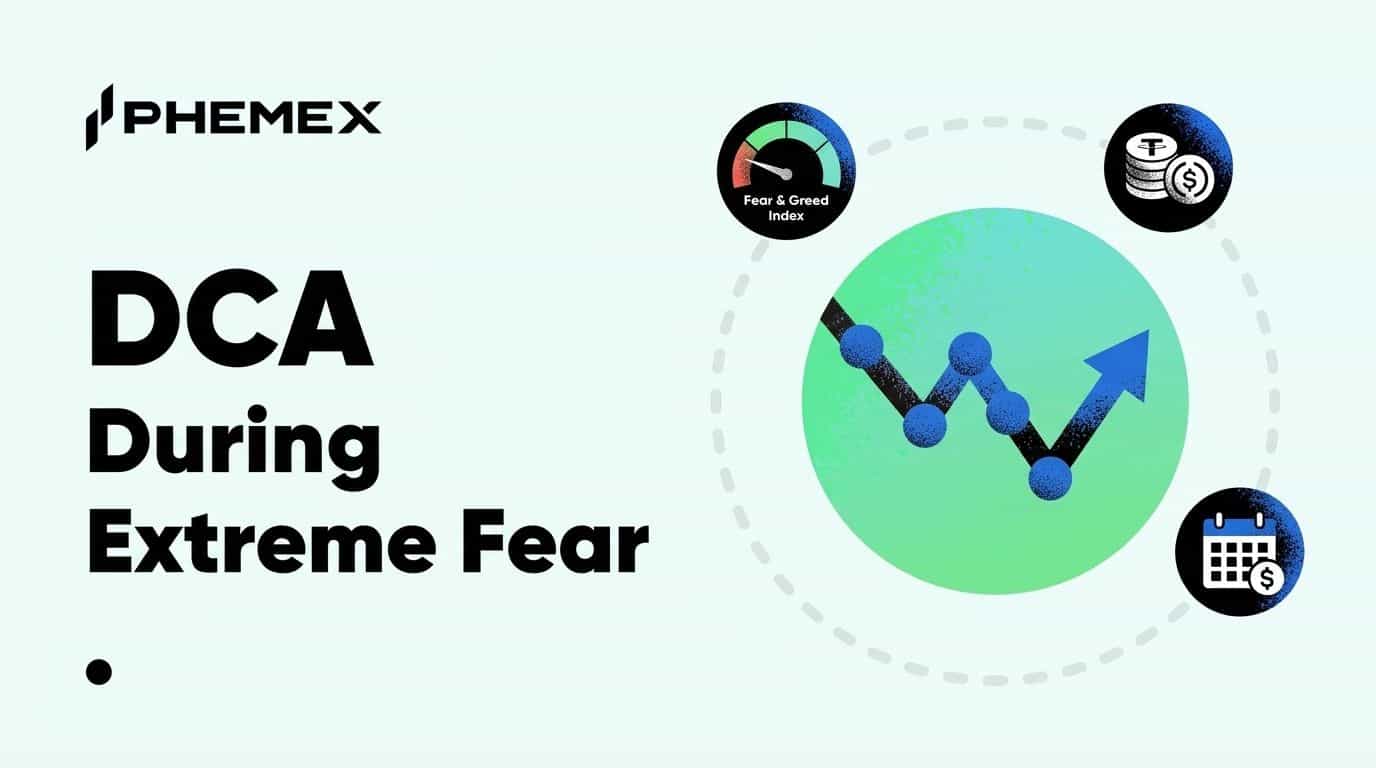
The Crypto Fear & Greed Index dropped to 12 on March 28, 2026, its lowest reading since October 2023. Bitcoin is trading around $66,600 while social media fills up with capitulation posts. And if history is any guide, this is exactly the kind of moment that has produced the best DCA entry points of the last five years.
That is not a motivational statement but a backtest result backed by five years of price data. Every time the index has fallen below 15 since 2020, buying $100 of BTC at that moment and holding until today would have returned between 127% and 1,220% depending on the date. The math is uncomfortable because the emotions at the time were terrible, but the returns were not.
What the Fear & Greed Index Actually Measures
The index is a daily score from 0 to 100 produced by Alternative.me that combines six weighted inputs. Price volatility, market momentum and volume, social media sentiment, Bitcoin dominance, Google Trends search data, and survey results (when available). A reading below 25 is classified as "Extreme Fear." Below 10 is historically rare, occurring fewer than 20 times in the index's history.
The theory behind using it as a buy signal is simple. Markets overshoot in both directions. When fear is at maximum, prices tend to reflect worst-case scenarios that rarely fully materialize. Buying when everyone else is panicking means your cost basis is set at the point of maximum pessimism, and recovering from that low becomes the source of your return.
The index does not predict bottoms. A reading of 12 can drop to 6 (it did in June 2022). But the question is not "did you buy the exact bottom?" It is "did you buy cheap enough that the eventual recovery made the position profitable?" The historical answer, over every instance in the last five years, has been yes.
Five-Year Returns Table for Every Sub-15 Fear Reading
Here is what happened if you put $100 into BTC each time the Fear & Greed Index fell below 15, then held until today (March 29, 2026, BTC at ~$66,600).
|
Date
|
Fear & Greed Reading
|
BTC Price at Entry
|
Current Value of $100
|
Return
|
|
March 12, 2020
|
8
|
~$5,000
|
~$1,332
|
+1,232%
|
|
May 10, 2022
|
10
|
~$29,000
|
~$230
|
+130%
|
|
June 18, 2022
|
6
|
~$20,000
|
~$333
|
+233%
|
|
Nov 21, 2022
|
7
|
~$16,000
|
~$416
|
+316%
|
|
Feb 5, 2026
|
5
|
~$62,000
|
~$107
|
+7%
|
The total investment across all five entries would have been $500. The combined value today would be approximately $2,418, a blended return of 384%.
Two patterns are worth noting here, starting with the fact that every single entry is in profit. Not one of these extreme fear buys has produced a loss when held to today. Second, the returns are wildly uneven. The March 2020 entry alone accounts for more than half the total gain because the price was so depressed relative to where BTC eventually went. That unevenness is actually the point. You do not need every entry to be a home run. You need the strategy to keep you buying when your instincts say stop.
How Fear-Based DCA Compares to Regular DCA
A standard DCA approach, buying $100 of BTC every month regardless of market conditions, has still performed well historically. According to dcabtc.com, a $100 monthly Bitcoin DCA from January 2021 through March 2026 on a total investment of $6,300 would be worth approximately $12,900 today, a return of roughly 105%.
But the fear-based approach has consistently outperformed. A backtest covering 2018-2025 showed that buying only when the Fear & Greed Index dropped below 25 returned 1,145% over seven years, compared to 1,046% for simple buy-and-hold and roughly 202% for fixed-schedule weekly DCA over a comparable five-year window.
The gap widens during volatile periods. Regular DCA buys at every price level, including near cycle tops when greed is at 80+. Fear-based DCA skips those expensive entries entirely. You deploy less capital overall, but you deploy it at systematically lower prices. The tradeoff is that you might go months without making a single purchase, and during extended bull runs, you sit on the sidelines watching BTC climb while your strategy tells you to wait.
That psychological cost is real. Watching a bull market from the sidelines because the index reads 72 instead of 15 feels like missing out. But the backtest data says the patience pays off when the cycle turns.
Why This Is So Hard to Actually Do
The returns table makes fear-based buying look obvious, but in practice it is one of the hardest things a trader can do.
On March 12, 2020, COVID had just been declared a pandemic. The S&P 500 was in freefall and Bitcoin had lost 50% of its value in 48 hours. The Fear & Greed Index reading of 8 reflected a moment when credible analysts were calling for BTC under $1,000 and the entire financial system felt like it was breaking.
Buying $100 of Bitcoin that day required ignoring every survival instinct in your body. The same is true for June 2022, when Three Arrows Capital and Celsius had just collapsed and the market was pricing in a potential cascade of exchange failures. And November 2022, when FTX, the second-largest exchange in the world, turned out to be insolvent and nobody knew which domino would fall next.
The reason most traders cannot execute this strategy is not that they do not understand it. It is that the emotional state required to buy during extreme fear is the exact opposite of what the market conditions produce. You have to act mechanically when everything around you is screaming to sell or do nothing. That is why automating the process, setting limit orders or using a DCA bot that triggers on specific conditions, works better than relying on willpower.
The Limits of This Strategy
Fear-based DCA is not a magic formula and treating it like one will get you hurt.
It requires survival. The asset has to recover for the strategy to work. Bitcoin has recovered from every extreme fear episode in its history, but individual altcoins have not. Buying LUNA at a Fear & Greed reading of 6 in June 2022 returned negative 100% because the token went to zero. This strategy works best with BTC and ETH, assets with strong structural reasons to expect long-term recovery. Applying it to small-cap tokens is a different risk profile entirely.
It requires time. The November 2022 entry at $16,000 did not turn profitable within weeks. BTC spent months grinding between $16,000 and $25,000 before the recovery accelerated. If you bought in November 2022 and checked your portfolio in February 2023, you were barely above breakeven. The gains materialized over years of holding, not weeks of hoping for a quick flip.
It does not catch bottoms. The June 2022 entry at $20,000 was followed by a further drop to $16,000 in November. If you went all-in at $20,000 expecting the bottom was in, you sat through a 20% drawdown before the recovery started. DCA solves this problem by spreading entries across multiple fear events rather than betting everything on a single reading.
And the current reading of 12 could easily drop further. February 2026 already saw a reading of 5. The strategy does not require you to predict the exact bottom. It requires you to buy systematically at cheap prices and hold long enough for the recovery to play out.
What the Current Setup Looks Like
BTC at $66,600 with a Fear & Greed reading of 12 is the fifth time the index has been below 15 since 2020. The previous four entries are all in profit today. That does not guarantee the fifth will follow the same pattern, but the conditions are structurally similar.
The macro backdrop includes paused Fed rate cuts with potential easing in the second half of 2026, geopolitical tensions weighing on risk appetite, and stablecoin dominance near 10% representing a large pool of sidelined capital waiting to re-enter. BTC is trading 47% below its October 2025 all-time high of $126,000, a drawdown similar in magnitude to previous extreme fear periods that preceded recoveries.
None of this means the bottom is in today. But if you are a long-term holder who plans to own BTC regardless of the next three months, the historical data is clear. Deploying capital at Fear & Greed readings below 15 has produced better risk-adjusted returns than any other timing method over the last five years. The discomfort you feel right now is the price of admission.
Frequently Asked Questions
Is it better to DCA during extreme fear or just DCA every week?
Both strategies have been profitable over multi-year horizons, but fear-based DCA has produced higher returns per dollar invested in backtests. A 2018-2025 study showed fear-based buying at 1,145% vs. roughly 202% for fixed weekly DCA over five years. The tradeoff is that fear-based buying deploys less total capital and requires the discipline to wait months between purchases.
How low can the Fear & Greed Index go?
The all-time low is 5, hit in February 2026 and also approached during the FTX collapse in November 2022. Single-digit readings are rare, with the index spending fewer than 30 total days below 10 in its entire history. Any reading below 15 is statistically uncommon enough to qualify as a potential high-value entry window.
Should I use this strategy for altcoins too?
Only with extreme caution, and the results have been far less reliable than with Bitcoin. BTC and ETH have recovered from every extreme fear period in history. Many altcoins have not. LUNA, FTT, and dozens of smaller tokens hit extreme fear readings and never came back. If you apply fear-based DCA to altcoins, limit it to assets with strong fundamentals, active development, and institutional interest like SOL and XRP, and keep position sizes smaller than your BTC allocation.
What if the Fear & Greed Index stays low for months?
That has happened before. The index stayed below 25 for more than 70 consecutive days during the 2022 bear market. In that scenario, a fear-based DCA strategy would have made multiple purchases across those months, averaging your cost basis across the entire fear period. The extended fear zone from mid-2022 through late 2022 actually produced the best entry prices of the entire cycle.
Bottom Line
The Fear & Greed Index at 12 puts March 2026 in the same statistical category as the COVID crash, the Terra/3AC collapse, and the FTX implosion. Every previous reading below 15 has, so far, been a profitable BTC entry when held for 12 months or longer. The blended return across all five sub-15 entries since 2020 sits at 384%, and not a single one is underwater today.
The practical move is straightforward. If you are a long-term BTC holder, set a recurring buy that triggers when fear is elevated. Do not try to catch the exact bottom. Deploy capital in portions across the fear zone and let time do the work. The next bull run will make today's prices look obvious in hindsight, the way they always do. The hard part is buying when nothing about the market feels obvious at all.
This article is for informational purposes only and does not constitute financial or investment advice. Cryptocurrency trading involves substantial risk. Always conduct your own research before making trading decisions.