
Tokens claiming "exposure" to OpenAI and Anthropic dropped roughly 40% on May 13, 2026, after both companies publicly stated that the share transfers behind those tokens were unauthorized and carry no shareholder rights. The tokens were marketed as a way for ordinary investors to back the two most valuable private AI companies on earth before any IPO. What buyers actually held turned out to be far less than the marketing implied, and the price reset confirmed it within hours.
The episode is a clean case study for a question that has gotten blurry as tokenized equity products multiply. When you buy a token that says "OpenAI" or "SpaceX" on it, what do you legally own? The honest answer is usually nothing close to a share. Here is the difference between a tokenized pre-IPO token and real equity, dimension by dimension, and how to tell which one you are actually buying.
What a Tokenized Pre-IPO Token Actually Is
A tokenized pre-IPO "stock" is a crypto token that claims to track the value of shares in a private company that has not gone public. The target companies are the headline names of the private market, like OpenAI, Anthropic, SpaceX, and Stripe. Because retail investors cannot normally buy into these companies, a token that promises a slice of the upside is an easy sell.
The structure behind most of these tokens follows the same template. An issuer sets up a special purpose vehicle, or SPV, that claims to hold shares of the target company. The SPV then issues tokens, and each token is supposed to represent a fractional economic interest in whatever the SPV holds. The buyer does not get a share. The buyer gets a token whose price is meant to track the SPV's claimed holdings.
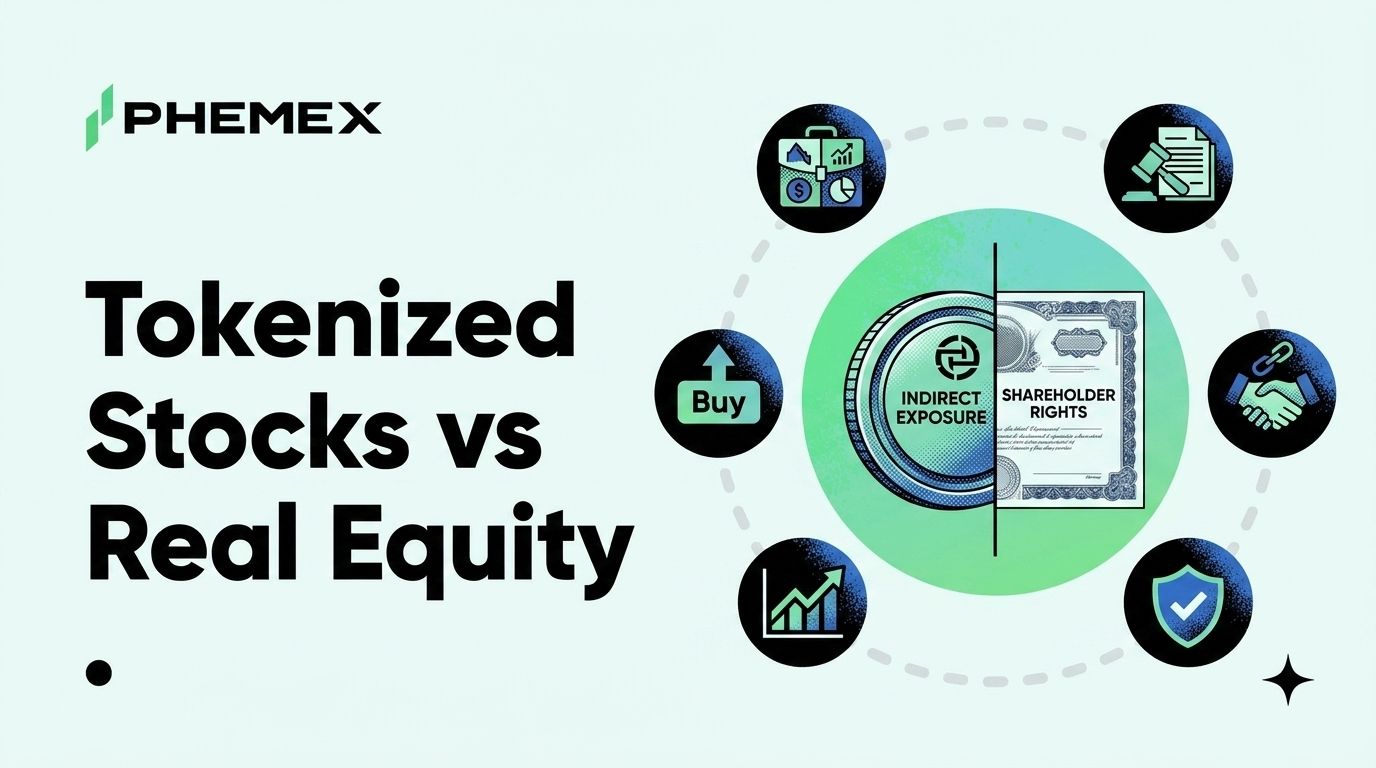
That phrasing matters. The marketing language is almost always "indirect exposure" or "price-tracking," not "ownership." A token holder typically has no voting rights, no claim on company assets, no dividend entitlement, and no name on any cap table. You are holding a derivative of a claim, and the claim itself may not survive contact with the company's legal team.
Why the OpenAI and Anthropic Tokens Collapsed
Private companies do not let their shares move around freely. Share transfers in companies like OpenAI and Anthropic are restricted by contract. A sale usually needs board approval, and existing investors often hold a right of first refusal that lets them block or buy out a transfer. These rules exist specifically to keep the company in control of who its shareholders are.
The tokens that crashed on May 13 ran straight into those rules. According to CoinDesk's reporting on the plunge, Anthropic and OpenAI both stated that the SPV transfers underpinning the tokens were never authorized, meaning the tokens conveyed no shareholder rights at all. Anthropic specifically named several platforms connected to the activity. The Block's coverage of the tokenized pre-stock sell-off put the drop near 40% across the affected tokens.
A 40% drop on a denial is not a normal market move. It is the market repricing a token from "claim on a real asset" to "claim that the company says does not exist." That is the core risk of an unauthorized structure. The token can be voided overnight by a statement the issuer does not control, and there is no exchange circuit breaker or shareholder protection that softens the landing.
What Real Equity Actually Gives You
Real equity is an actual legal ownership stake in a company. A common share carries a defined bundle of rights. You have a residual claim on company assets, you generally get to vote on major corporate matters, and you have a claim on dividends if the company pays them. Those rights are recorded, enforceable, and recognized by securities law.
For a public company, real equity is straightforward. You buy a share through a brokerage, the share settles into a regulated custody system, and ownership is tracked through established infrastructure like the Depository Trust Company. The asset is regulated, the custody is transparent, and your rights are not in dispute.
For a private, pre-IPO company, real equity is harder to get but it still exists. Accredited investors can sometimes buy genuine shares through authorized secondary platforms, or through funds that hold real positions with the company's consent. It is illiquid and access is gated, but the ownership is real. The key word is authorized. A real pre-IPO position is one the company knows about and has approved, which is exactly what the voided token structures lacked.
There is also a legitimate middle ground worth naming. Regulated tokenized equity, where a compliant issuer holds real shares in proper custody with the necessary authorizations, is an emerging and genuine category. Phemex's own guide to tokenized stocks walks through how a properly structured tokenized share is meant to work. The problem is not tokenization as a technology. The problem is unauthorized tokens dressed up to look like the regulated version.
Tokenized Pre-IPO Token vs Real Equity
The fastest way to see the gap is to put the two side by side across the dimensions that decide what you are actually buying.
|
Dimension
|
Tokenized pre-IPO token
|
Real equity
|
|
What you own
|
Indirect or synthetic exposure, often unauthorized
|
An actual legal share
|
|
Shareholder rights
|
None, no voting, no asset claim
|
Yes, voting and a claim on assets
|
|
Authorization
|
Frequently none from the company
|
Yes, the company recognizes it
|
|
Custody
|
Opaque SPV, hard to verify
|
Regulated custodian or DTC
|
|
Liquidity
|
Token-market liquidity that can vanish
|
Brokerage or authorized secondary market
|
|
Regulation
|
Mostly unregulated
|
Securities-regulated
|
|
Key risk
|
Voided overnight, counterparty fraud
|
Normal market price risk
|
The table makes the asymmetry obvious. With real equity, your main exposure is that the stock price falls, which is the risk every investor signs up for. With an unauthorized pre-IPO token, you carry that same price risk plus a second layer the token marketing rarely mentions. The structure itself can fail, the SPV claim can be declared void, and the counterparty holding everything can turn out to be untrustworthy. You are betting on a narrative and on an intermediary at the same time.
How to Tell Which One You Are Buying
The marketing for these products is engineered to make a token feel like a share, so read past the headline. The single most useful question is simple. Can the issuer show authorization from the company whose stock is referenced? If a token claims OpenAI exposure, the issuer should be able to point to a transfer the company actually approved. The May 13 collapse happened precisely because that authorization did not exist.
Custody is the second tell. Real tokenized equity has a verifiable custodian holding real shares, and the issuer can name it and show how holdings are attested. A vague reference to an offshore SPV with no named custodian and no third-party verification is a warning, not a detail. If you cannot trace the token to a specific, checkable pool of real shares, treat it as a synthetic bet.
Language is the third tell. "Indirect exposure," "price tracking," and "synthetic" all signal that you are not buying a share. Those words are not accidental. They are the issuer telling you, in the fine print, that no ownership transfers to you. The SEC has flagged that pre-IPO crypto fraud schemes rose sharply over the past year, and the common thread is exactly this gap between what the marketing implies and what the structure delivers. The same scrutiny applies to real-world asset tokens broadly, and Phemex's explainer on real-world asset tokenization is a useful baseline for what a legitimate structure should disclose.
Frequently Asked Questions
Do tokenized pre-IPO stocks give you real ownership of the company?
Almost never. In the typical structure you hold a token issued by an SPV, and the token tracks a claimed economic interest rather than granting you a registered share. You get no voting rights, no dividend claim, and no position on the company's cap table. If the underlying transfer was unauthorized, you may hold no enforceable claim at all.
Why did the OpenAI and Anthropic tokens drop 40 percent?
Both companies publicly stated that the SPV share transfers behind the tokens were unauthorized and carried no shareholder rights. That turned the tokens from a claimed stake in a real asset into a claim the companies say does not exist. The market repriced that gap almost immediately, which is why the drop was so steep and so fast.
Is all tokenized equity a scam?
No, and treating the whole category as fraud misses the real distinction. Regulated tokenized equity, where a compliant issuer holds real shares in proper custody with the necessary authorizations, is a genuine and growing category. The danger is unauthorized pre-IPO tokens that copy the look of regulated products without the legal substance. The difference is authorization, transparent custody, and regulatory oversight.
How can I check if a tokenized stock is legitimate?
Look for three things. The issuer should be able to show authorization from the referenced company, name a verifiable custodian holding real shares, and operate under a recognized regulatory framework. If the product leans on phrases like "indirect exposure" and cannot name a custodian, assume it is a synthetic bet on a narrative, not real equity.
Bottom Line
A tokenized pre-IPO token and a real share can sit at the same price and represent completely different things. One is a legally recognized ownership stake with enforceable rights and regulated custody. The other is often a price-tracking token wrapped around an SPV claim that the underlying company can void with a single statement, as OpenAI and Anthropic did on May 13. Before buying anything labeled with a famous private company's name, demand proof of authorization and a named custodian. If the issuer cannot produce both, you are not buying the company. You are buying a story, and the story is only worth what the next buyer will pay for it.
This article is for informational purposes only and does not constitute financial or investment advice. Cryptocurrency trading involves substantial risk. Always conduct your own research before making trading decisions.