




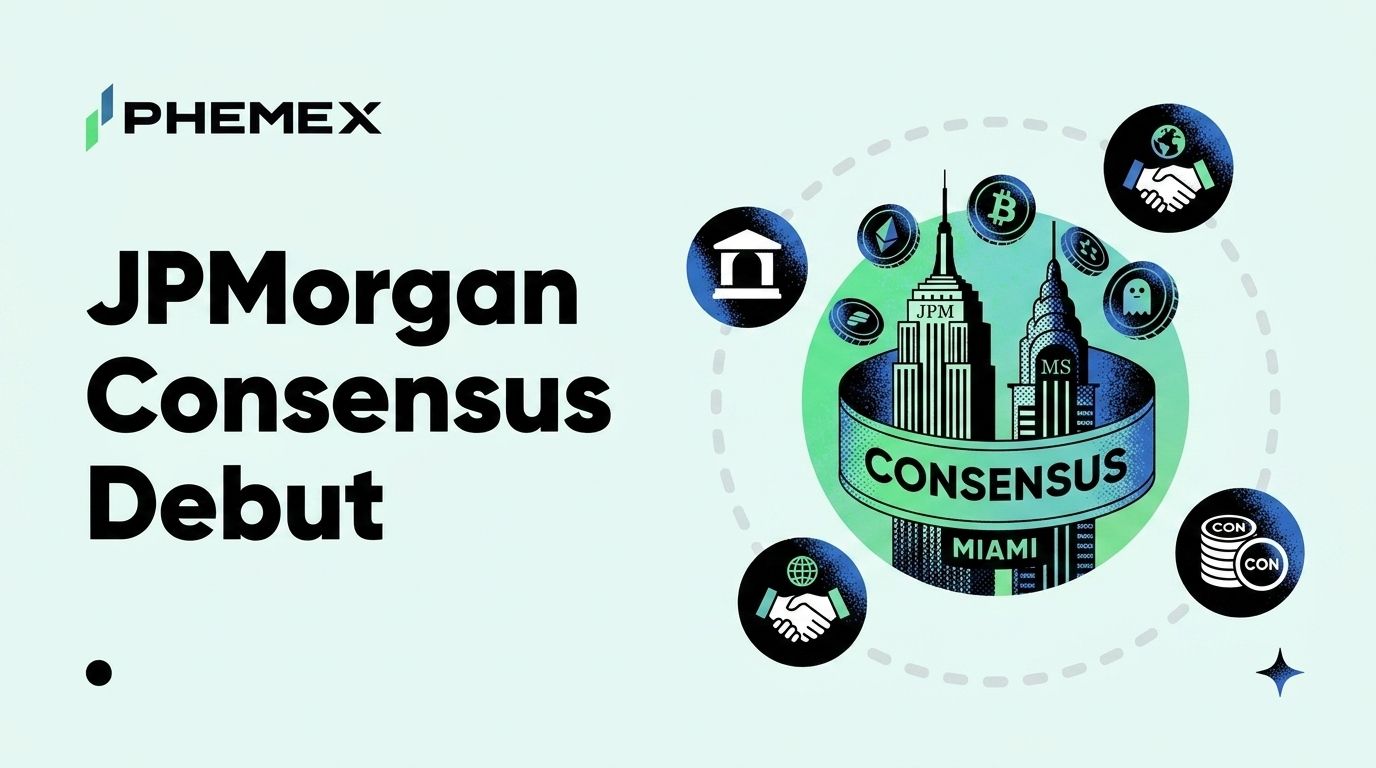
Morgan Stanley and JPMorgan signed on as debut sponsors of Consensus Miami 2026 this week, joining returning sponsors Fidelity, Mastercard, and Bridge by Stripe at the largest US crypto event of the year. Roughly 15,000 attendees descended on the Miami Beach Convention Center between May 5 and May 7, with institutional attendance hitting approximately 35% of the floor and representing about $10 trillion in assets under management. The conference now spans 6 stages, 3 summits, 6 content tracks, more than 200 sessions, and over 500 speakers.
Today is the final day. The story is no longer that Wall Street is "watching crypto." Wall Street is now writing checks for sponsorship slots, putting its logos on the lanyards, and sending senior bankers to share stages with founders.
From "Rat Poison" to Sponsorship Slots in Eight Years
The Morgan Stanley and JPMorgan debut sponsorships go beyond a marketing line item. They are the resolution of an argument that defined the first half of crypto's existence.
Warren Buffett called Bitcoin "rat poison squared" in 2018. Jamie Dimon spent the better part of a decade calling Bitcoin a fraud, threatening to fire any JPMorgan trader caught buying it, and warning shareholders that crypto was "worthless." Morgan Stanley was more measured publicly but quietly told its wealth advisors to keep clients away from anything crypto-related until 2021. The big banks treated the asset class the way they treated cannabis stocks before federal banking permission landed.
Eight years later, JPMorgan has its own Kinexys blockchain processing $5 billion in daily institutional payments, has tokenized private equity funds on its own chain, and just appointed Oliver Harris to head the Kinexys unit. The same bank whose CEO called Bitcoin a fraud is now paying for marketing exposure at the industry's largest US conference. That shift is not subtle, and it is not reversible.
Morgan Stanley got there through a different route. The bank approved Bitcoin ETF access for its 15,000 wealth advisors in August 2024, which moved roughly $1.5 trillion in advisable assets onto the spot BTC ETF rails. Showing up as a debut sponsor in 2026 is the logical next step. You do not pay six figures to put your logo at a conference unless you intend to harvest deals from the people in the room.
Who Else Is on the Sponsor Sheet
The returning sponsor list reads like a directory of every institution that has spent the last five years quietly building crypto capability. Fidelity has been the institutional custodian of choice since 2018 and runs one of the larger spot BTC and ETH ETF books. Mastercard has crypto card programs running with Coinbase, Bitget, and several others. Bridge by Stripe is the stablecoin payments layer Stripe acquired for $1.1 billion in late 2024 and now treats as core fintech infrastructure rather than a side project.
CertiK is sponsoring the security track, while Tether and Circle both have heavy presence on the floor. Solana, Base, and the XRP ecosystem all have dedicated stage time. The institutional convergence theme has been the marketing pitch of this conference for months, and the actual sponsor mix delivers on it.
The number that matters is the institutional attendance share. Roughly 35% of the people on the floor work for institutions, and those institutions collectively manage about $10 trillion. That is not a crypto-native crowd hoping a banker shows up to validate them. That is the banker showing up with a budget and a mandate.
Government Showed Up Too
The government attendance list is the second tell that Consensus 2026 has shifted in character. CFTC Chair Mike Seligappeared in person, gave a sit-down interview, and laid out what the agency is actually doing. Senator Ashley Moody appeared on the policy track. White House crypto official Patrick Witt represented the administration's digital asset priorities directly.
Selig's comments were the most concrete. He warned that prediction market litigation may end up at the Supreme Court, with the CFTC already having filed suit against five or six states that tried to block federally regulated event contracts. He confirmed the agency is using AI tools to triage crypto registration applications and pushed for a joint SEC and CFTC asset taxonomy that would settle the security versus commodity question for tokens not covered by the March 2026 commodity ruling.
Pair that with the SEC continuing its pro-growth rulemaking shift under Chairman Atkins, and the regulatory backdrop at this conference is the friendliest US crypto has seen since the 2017 ICO boom. Bankers do not buy sponsorship slots when they think the regulator is going to sue their clients.
Tokenization Stole the Conference
If sponsorship was the headline, tokenization was the substance. The track ran across all three days and saw the most coordinated set of institutional product announcements the sector has had in a single week.
Coinbase announced on May 5, the conference opening day, that it had named Centrifuge the preferred tokenization backbone for the Base ecosystem and taken a seven-figure equity stake on top of its existing 2022 Coinbase Ventures position. The deal makes Centrifuge the default issuance layer for structured credit, tokenized ETFs, and onchain index products inside the Base ecosystem. That is the largest US-licensed exchange picking a tokenization protocol the same way it would pick a custody partner.
Securitize received FINRA approval one day before Consensus opened to operate as a special purpose broker-dealer custodying tokenized securities. That is the regulatory plumbing that lets registered broker-dealers hold onchain assets without bumping into the bank custody rules that previously made tokenized securities effectively impossible for traditional financial firms to touch.
Galaxy Digital and State Street announced a tokenized cash fund partnership during conference week, with State Street acting as transfer agent and administrator. State Street is the second largest custodian in the world and has roughly $44 trillion in assets under custody. That partnership is the first time a top-three global custodian has committed administrative infrastructure to a crypto-native fund manager's tokenized product. The signal is that institutional cash management is following BUIDL.
Why This Compresses Three Years Into Three Days
Most institutional adoption stories play out over quarters. Consensus week compressed three years of institutional momentum into three days because every major piece of plumbing landed simultaneously.
The list is short and concrete:
- A debut sponsor with $4 trillion in client assets. Morgan Stanley wealth alone manages around $4 trillion. JPMorgan asset and wealth management adds another $4 trillion. Combined sponsor presence equals roughly $8 trillion in advisable capital sitting next to the conference badge.
- A regulator with binding authority. Selig and Atkins both spoke during conference week, and the agencies that determine which products can launch are now actively coordinating on a joint taxonomy rather than fighting jurisdictional battles.
- Three live tokenization launches. Coinbase plus Centrifuge, Securitize plus FINRA, Galaxy plus State Street. Each one removes a different barrier that was previously cited as the reason institutional capital could not enter the asset class at scale.
- Stablecoin rails as fintech infrastructure. Bridge by Stripe sponsoring the conference confirms that stablecoin payments have moved from crypto-native rails into the same product roadmaps that handle credit card processing.
When all four conditions land in the same week, the story stops being "institutions are coming" and starts being "institutions are here, building, and writing checks."
What the Sponsor List Actually Predicts
Sponsorship is a forward-looking commitment. Companies do not pay for booths to commemorate adoption that already happened. They pay because they expect business to flow from the people they meet at the conference.
For Morgan Stanley, the obvious next step is offering direct crypto allocation inside its wealth management platform, expanding beyond ETF-only access. The bank already has the legal framework. What it needs is product, and that product is built by the founders and protocols on the conference floor.
For JPMorgan, the trajectory points to deeper integration of Kinexys into mainstream institutional payments and likely tokenized treasury products competing directly with BlackRock's BUIDL. The bank already partnered with Coinbase on crypto-backed lending and just expanded JPM Coin across multiple chains. Showing up as a Consensus sponsor signals that the institutional crypto desk is now an offensive line of business, not a defensive compliance project.
The sponsor mix also tells you which use cases the institutions take seriously. Tokenization, stablecoin payments, and security infrastructure get the visible budget. Memecoins, NFTs, and consumer Web3 do not. That filter matters for traders looking at where institutional flow is most likely to land in the next 12 months.
Frequently Asked Questions
Why is it a big deal that JPMorgan is sponsoring Consensus?
JPMorgan CEO Jamie Dimon spent years publicly attacking Bitcoin and threatening to fire any JPMorgan trader who bought it. The bank now sponsoring crypto's largest US conference is the public-facing acknowledgment that the institutional pivot is permanent, with the bank running its own Kinexys blockchain and offering crypto-backed lending through a Coinbase partnership.
What does Morgan Stanley actually do in crypto today?
Morgan Stanley approved spot Bitcoin ETF access for its 15,000 wealth advisors in August 2024, putting roughly $1.5 trillion in advisable assets behind the access decision. The next likely step is direct crypto custody and allocation inside the wealth platform, which is the kind of business Consensus sponsorships are typically meant to source.
Is the institutional crypto rally already priced in?
Bitcoin and Ethereum spent most of conference week trading sideways despite the announcements, which suggests short-term price action did not capture the structural shift. Tokenization-related tokens and infrastructure plays saw more concentrated moves. The capital that follows institutional plumbing tends to land in waves over months, not days.
What was the most important Consensus 2026 announcement?
The Coinbase plus Centrifuge tokenization deal on May 5 is arguably the highest-impact single announcement, because it commits the largest US-regulated exchange to a single tokenization protocol the way an exchange commits to a custody partner. The Securitize FINRA approval is the most important regulatory milestone of the week.
Bottom Line
Wall Street went beyond attendance at Consensus Miami this week. It sponsored the event, sent its CFTC chair to speak, paired with custodians and broker-dealers to ship live tokenization products, and put its logos on the same lanyards as Solana and Tether. The combined wealth and asset management balance sheets of the debut sponsors alone clear $8 trillion, and that capital now has a direct line into the founders, protocols, and infrastructure that ran the conference.
What to watch in the next 90 days. First, the question of Morgan Stanley announcing direct crypto custody or allocation inside its wealth platform. Second, the question of JPMorgan moving Kinexys-based tokenized treasury products into the institutional market in competition with BUIDL. Third, the question of the joint SEC and CFTC taxonomy Selig referenced getting a public draft. If any two of those three land before August, the trajectory from "rat poison" to "sponsor sheet" finishes its full arc, and the next conference will be discussing which tokenized products to allocate to rather than the binary question of allocating at all.
This article is for informational purposes only and does not constitute financial or investment advice. Cryptocurrency trading involves substantial risk. Always conduct your own research before making trading decisions.