









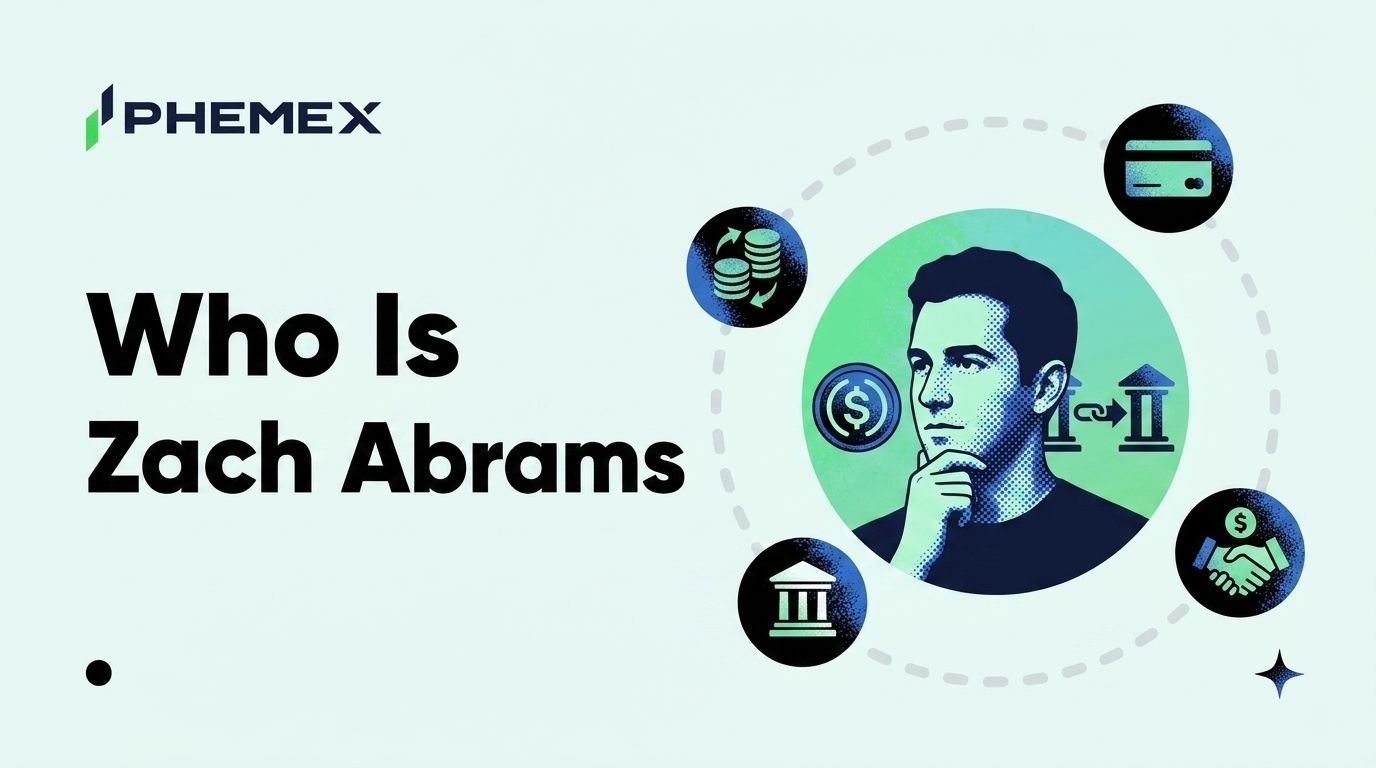
Zach Abrams is the founding CEO of Open Standard, the consortium that on June 30, 2026, unveiled Open USD, a dollar stablecoin backed by Visa, Mastercard, Stripe, BlackRock and more than 140 firms. He is also the cofounder and CEO of Bridge, the stablecoin-infrastructure company Stripe bought in 2024 for roughly $1.1 billion, one of the largest acquisitions in crypto history. In the span of about eighteen months he has gone from running a payments startup to steering a coalition of banks, card networks and asset managers into the most contested corner of digital money.
That is a strange resume for someone most retail traders have never heard of. Abrams is not a protocol founder with a token to shill or a conference-circuit personality. He is a product operator who kept building the plumbing underneath stablecoins until the biggest names in traditional finance decided to build on top of it. Here is who he is, what he built, and why a Stripe-backed operator leading a bank-and-card-network stablecoin consortium is a real signal for where this market is heading.
Who Is Zach Abrams
Abrams is a fintech operator whose career has tracked the movement of money onto the internet for over a decade. He cofounded Evenly, an early peer-to-peer payments app, and sold it to Block (then Square) in 2013. He later ran consumer product at a major US crypto exchange, where he watched millions of ordinary users try to move dollars in and out of crypto and hit the same friction every time. Slow settlement, high fees, and banking rails that were never designed for programmable money.
That experience became the thesis for his next company. Abrams is the kind of builder who fixes the boring middle layer rather than the flashy front end, and stablecoins turned out to be exactly that layer. His public profile is thin by crypto-founder standards. You will find him on LinkedIn and posting occasionally on X, but he has spent far more time shipping product than building an audience.
Founding Bridge and the Bet on Stablecoin Rails
Abrams cofounded Bridge in 2022 with Sean Yu, a former Airbnb engineer he had worked with earlier in his career. The company solved a narrow, unglamorous problem. Most businesses want the speed and low cost of moving money as stablecoins without touching wallets, private keys, or blockchain complexity at all. Bridge became the layer that hid all of that.
Through a single set of APIs, a company could accept payments, convert between fiat and stablecoins, and settle across borders in minutes instead of days. Think of it as the Stripe of stablecoins, a developer toolkit that turns a hard infrastructure problem into a few lines of code. That framing turned out to be more than a metaphor. Bridge signed customers who needed to move real money at scale, including large crypto platforms and one very high-profile aerospace company, and it did so while the rest of the market was still arguing about which chain would win. The insight was that the winning chain does not matter much to a business that just wants dollars to move. What matters is the rail sitting on top, and Bridge owned that rail.
The $1.1 Billion Stripe Acquisition
In October 2024, payments giant Stripe announced it would acquire Bridge for roughly $1.1 billion, and the deal closed in February 2025. It was Stripe's largest acquisition ever and, by most reckonings, one of the biggest deals the crypto sector has produced. For a company founded barely two years earlier, the price tag said something loud about how seriously traditional payments now takes stablecoin settlement.
The logic was straightforward. Stripe processes payments for millions of businesses and had been circling crypto for years, and Bridge gave it a ready-made stablecoin engine plus the operator who built it. Abrams stayed on to run Bridge inside Stripe rather than cashing out, which matters for understanding what came next. He was not an entrepreneur looking for an exit. He was building a distribution machine, and Stripe handed him one of the largest in the world.
|
Milestone
|
Date
|
Detail
|
|
Bridge founded
|
2022
|
Cofounded by Zach Abrams and Sean Yu
|
|
Stripe acquisition announced
|
October 2024
|
Roughly $1.1 billion, Stripe's largest deal
|
|
Acquisition closed
|
February 2025
|
Abrams stays on to lead Bridge
|
|
OCC conditional charter approval
|
February 2026
|
Cleared to organize a national trust bank
|
|
Open USD unveiled
|
June 30, 2026
|
Abrams named founding CEO of Open Standard
|
Stablecoin Rails and the OCC Trust Bank Charter
The single most important thing Abrams built after the Stripe deal was regulatory, not technical. In February 2026, the Office of the Comptroller of the Currency granted Bridge conditional approval to organize a national trust bank. If finalized, that charter would let the entity issue stablecoins, custody digital assets, and manage reserves under direct federal supervision rather than a patchwork of state money-transmitter licenses.
This is the part traders should pay attention to. A federal trust charter is the difference between a stablecoin operator that regulators tolerate and one that regulators formally oversee. Bridge cleared the hurdle alongside a short list of stablecoin players, including the team behind XRP, which tells you how narrow the front door still is. It puts stablecoin reserves inside the same supervisory framework that governs the rest of the banking system, which is precisely what large institutions need before they will move serious volume. Abrams spent the year turning Bridge from a clever API into a federally chartered financial institution in waiting. That credential is the foundation everything else now rests on, and it is why the next move made sense to the biggest names in finance.
Leading Open USD and the 140-Firm Consortium
On June 30, 2026, Abrams stepped into the role that put his name in headlines. He was named founding CEO of Open Standard, the consortium behind Open USD, a dollar stablecoin backed by Visa, Mastercard, Stripe, BlackRock and more than 140 firms spanning payments, banking, and technology. The pitch is deliberately different from the incumbents. Businesses can mint and redeem Open USD with no fees and no volume caps, partners keep nearly all of the reserve earnings after a small management fee, and governance sits with a board of member institutions rather than a single controlling company.
That last point is the whole strategy. Today's largest stablecoin issuers keep the interest earned on their reserves, which can run into billions of dollars a year. Open USD flips that model by returning most of the yield to the businesses that actually circulate the coin. As Abrams put it, Open USD is "a stablecoin built for the internet economy, designed by the businesses growing it." The design is a direct shot at the economics that made existing issuers so profitable, and the market noticed immediately.
Why a Stripe-Backed Operator Leading This Consortium Matters
Stablecoins have quietly become one of the most important pieces of crypto infrastructure, the settlement layer that moves value between exchanges, protocols, and increasingly the real economy. For years that layer was dominated by a small number of issuers operating largely outside the traditional banking perimeter. Abrams represents the opposite approach. He built the rails, earned the federal charter, and then convinced card networks and asset managers to standardize on a shared coin instead of each launching their own.
The significance is about who is now committed. When Visa, Mastercard, Stripe and BlackRock line up behind one stablecoin governed by a consortium rather than a single issuer, it signals that stablecoin settlement is being absorbed into mainstream finance instead of competing with it. This is the same institutional migration that turned the Bitcoin ETF from a fringe idea into a trillion-dollar product, now aimed at the payments layer. The people who understand DeFi and on-chain settlement have spent years explaining why programmable dollars matter. Abrams is the operator who got the institutions to agree, and the fact that a Stripe-backed founder is holding the pen changes the competitive math for every existing issuer at once.
Frequently Asked Questions
Who founded Bridge?
Bridge was cofounded in 2022 by Zach Abrams and Sean Yu. Abrams serves as CEO and previously built consumer payments products across fintech, while Yu came from an engineering background at Airbnb.
How much did Stripe pay for Bridge?
Stripe announced the acquisition in October 2024 for roughly $1.1 billion and closed the deal in February 2025. It was Stripe's largest acquisition ever and one of the biggest deals in the history of the crypto sector.
What is Open USD?
Open USD is a dollar-backed stablecoin unveiled on June 30, 2026, by a consortium of more than 140 firms including Visa, Mastercard, Stripe and BlackRock. It lets businesses mint and redeem at no cost and returns most reserve earnings to partners, a sharp break from how existing issuers make money.
Why is Open USD a threat to existing stablecoin issuers?
Most incumbents keep the interest earned on their reserves, which is the bulk of their revenue. Open USD hands that yield back to the businesses circulating the coin, which undercuts the core economics that made existing issuers profitable and pressures them to change their model.
Bottom Line
Watch what Abrams does with the trust charter and the consortium over the back half of 2026, because that combination is what makes Open USD different from every stablecoin announcement that came before it. The coin is not live yet, and a 140-member board is far harder to steer than a single company, so execution risk is real. The number that matters is how much settlement volume actually migrates once Open USD launches, and how quickly incumbent issuers respond by sharing reserve yield of their own. If a federally chartered, consortium-governed stablecoin captures even a slice of institutional payment flows, the era of one issuer quietly pocketing the interest on everyone's dollars is over. Abrams spent a decade building the plumbing for exactly that moment.
This article is for informational purposes only and does not constitute financial or investment advice. Cryptocurrency trading involves substantial risk. Always conduct your own research before making trading decisions.
