









Key Takeaways
OpenEden is an RWA platform focused on bringing U.S. Treasury securities and related yield products onchain.
Its flagship product is TBILL, which OpenEden describes as a smart-contract vault giving direct exposure to short-dated U.S. Treasury Bills with 24/7 liquidity.
USDO is OpenEden’s yield-bearing stablecoin and is described as being fully backed by tokenized Treasuries, including OpenEden’s TBILLs.
OpenEden says its TBILL fund is permissioned and currently aimed at accredited investors or professional investors, while USDO is positioned more broadly as a stablecoin product.
As of 2026, OpenEden is expanding beyond a single Treasury product through offerings such as PRISM, a tokenized yield portfolio launched with FalconX and Monarq.
Real-world asset tokenization has grown from a niche crypto idea into one of the most important infrastructure trends in digital finance. But not all RWA projects are trying to tokenize the same things. Some focus on private credit, some on tokenized stocks, and others on tokenized money-market or Treasury products. OpenEden is one of the clearest examples of the last category. Its official website says OpenEden is “building the bridge to a new financial system” by bringing real-world assets onchain, while its docs say the platform offers 24/7 onchain access to tokenized U.S. Treasury securities for Web3 CFOs, DAO treasury managers, and institutional buy-side investors seeking low-risk crypto cash management solutions.
That positioning matters because OpenEden is not just another “yield token” project. It is building a more complete RWA platform around tokenized U.S. Treasury exposure, yield-bearing stablecoins, and newer structured products. Its public product set now includes TBILL, its flagship tokenized Treasury-bill fund; USDO, a yield-bearing stablecoin backed by tokenized Treasuries; and PRISM, a tokenized yield portfolio launched with FalconX and Monarq. OpenEden’s news page and product pages show that the project is evolving from a single Treasury token into a broader tokenized fixed-income and cash-management ecosystem.
What Is OpenEden?
OpenEden is a blockchain-based financial platform focused on tokenizing real-world assets, especially short-dated U.S. government debt. Its homepage says the mission is to unlock trillions by bringing RWAs onchain seamlessly and securely. The docs narrow that further by emphasizing onchain access to tokenized U.S. Treasury securities for institutional-style cash management. In other words, OpenEden is not trying to tokenize everything at once. It is strongly anchored around high-quality, low-risk, short-duration yield products.
That makes OpenEden different from many earlier DeFi yield products. Instead of relying primarily on onchain borrowing demand, liquidity mining, or volatile protocol incentives, OpenEden’s flagship products are tied to Treasury-backed yield. The platform’s TBILL product and USDO stablecoin both reflect this design philosophy. TBILL gives direct tokenized exposure to Treasury bills, while USDO packages Treasury-backed reserves into a stablecoin format.
So the most accurate description is not that OpenEden is a stablecoin project or that OpenEden is a tokenized fund. It is better described as a Treasury-centric RWA platform with multiple product layers built on top of tokenized government debt.
What Problem Is OpenEden Trying to Solve?
OpenEden is trying to solve a practical problem for crypto capital: where should onchain investors park money when they want lower-risk yield and better liquidity management? Traditional finance already has a standard answer: short-dated U.S. Treasury bills and cash-equivalent products. But accessing those products through traditional rails can be slow, operationally heavy, and disconnected from the rest of the crypto economy. OpenEden’s docs say the platform exists for Web3 CFOs, DAO treasuries, and institutional investors that want low-risk, highly liquid crypto cash-management solutions.
Its TBILL page makes the same case from a product perspective. OpenEden says TBILL lets users “earn the U.S. risk-free rate” on stablecoins through a smart-contract vault with 24/7 liquidity. That shows the core pitch clearly: take a traditional safe-yield asset and make it usable inside an always-on blockchain environment.
This matters because many crypto users and institutions do not always want speculative exposure. Sometimes they want capital preservation, predictable yield, or treasury management. OpenEden is one of the projects building that bridge between Treasury-backed safety and onchain utility.
What Is TBILL?
TBILL is OpenEden’s flagship tokenized Treasury-bill product. OpenEden’s app page describes the TBILL Vault as “the world’s first smart-contract vault for U.S. Treasury Bills,” and says users can mint TBILL tokens to earn the U.S. risk-free rate with 24/7 liquidity. RWA.xyz’s asset page similarly describes the OpenEden Treasury Bills Vault as a smart-contract vault offering direct exposure to short-dated U.S. Treasury Bills through the TBILL token.
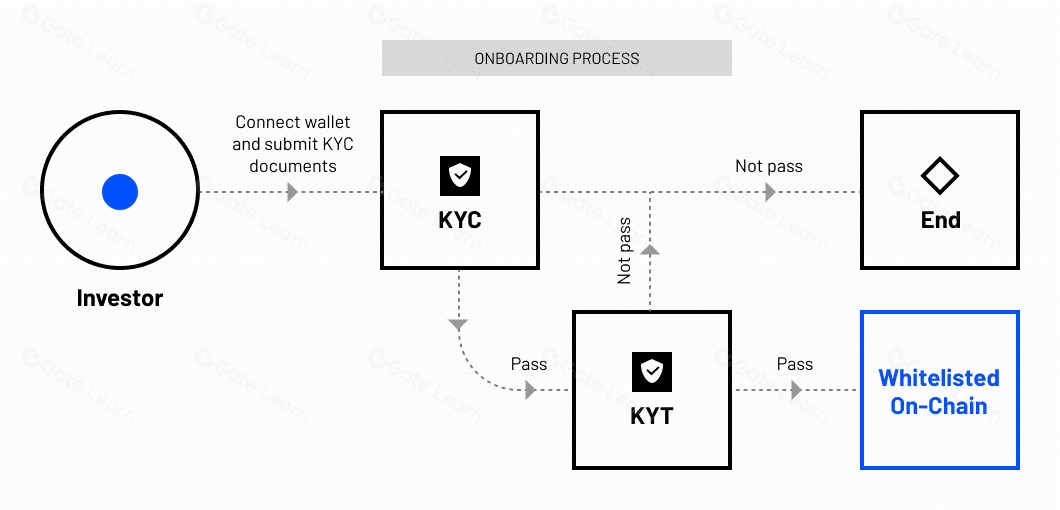
The FAQ page adds important detail. It says TBILL tokens are backed 1:1 by a pool of U.S. T-Bills and USD held in custody with regulated financial institutions and custodians. It also says deposits and withdrawals are done onchain in USDC, that the first deposit must be at least 100,000 USDC, and that the product is permissioned, with investors required to pass KYC and meet accredited investor or professional investor criteria.
This makes TBILL a highly institutional-style product, even though it runs through blockchain rails. It is onchain in settlement and token form, but access is still structured and compliance-gated. That is a useful reminder that many serious RWA products are not fully permissionless in the classic DeFi sense.
How TBILL Works
The TBILL structure is designed to let eligible investors move stablecoins into tokenized Treasury exposure with a relatively direct operational flow. According to the FAQ, once an investor passes onboarding and wallet whitelisting, they can deposit USDC into the TBILL Vault and mint TBILL tokens. Redemptions are placed into a queue and are typically processed on the next U.S. business day. OpenEden also discloses a 5 bps redemption transaction fee and a 30 bps annualized total expense ratio.
This structure combines a few important traits:
onchain minting and redemption in USDC,
Treasury-bill backing held with regulated custodians,
permissioned investor access,
and daily transparency reporting.
The transparency page for TBILL says NAV reports are published daily at the end of each business day. That daily reporting is important because it reinforces one of the core advantages of tokenized finance: the potential for more frequent, accessible reporting than traditional private fund structures often provide.
What Is USDO?
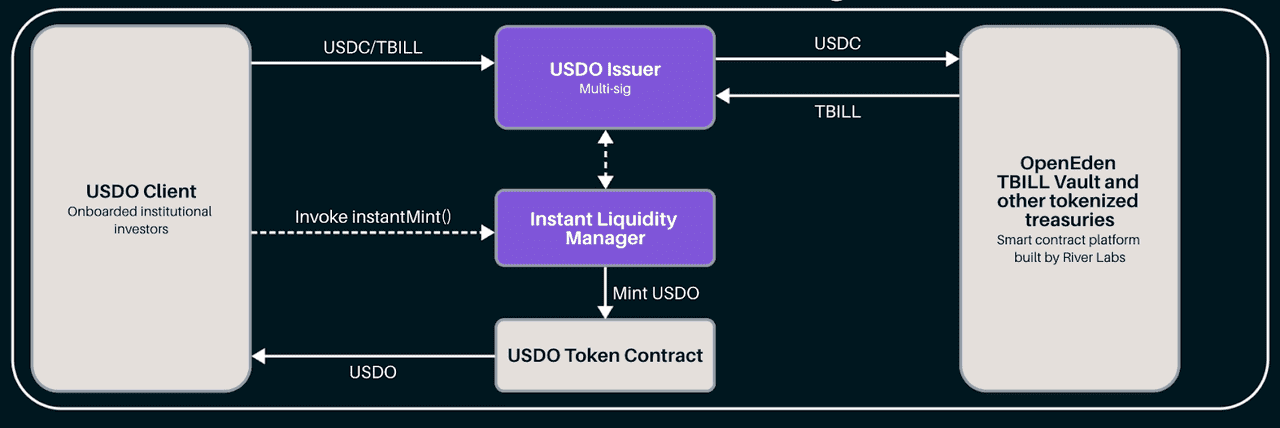
USDO is OpenEden’s yield-bearing stablecoin. Its dedicated product page says USDO is fully backed by tokenized Treasuries including OpenEden’s TBILLs, and notes that the Treasury backing is rated AA+ by S&P Global as of May 2026. The page also highlights real-time transparency and displays reserve-related information.
This is a major expansion beyond the original TBILL concept. TBILL is more like a tokenized Treasury fund product for eligible investors. USDO is a stablecoin layer that packages Treasury-backed exposure into a more familiar dollar-denominated token format. That gives OpenEden a route into a much broader crypto use case: not just treasury management, but stable onchain money with embedded yield logic.
OpenEden has described USDO as a regulated yield-bearing stablecoin backed primarily by tokenized Treasury-linked reserves and designed to generate daily yield while staying pegged to the dollar.
How USDO Fits Into the OpenEden Ecosystem
USDO matters because it broadens OpenEden’s model beyond direct fund-style Treasury exposure. Treasury tokens like TBILL are highly attractive to institutions and treasury managers, but a stablecoin can be more flexible inside DeFi, payments, and general onchain finance. OpenEden’s site presents USDO as the more fluid, crypto-native expression of the same core idea: Treasury-backed yield made usable onchain.
This means OpenEden’s ecosystem now has at least two important layers:
TBILL for direct tokenized Treasury exposure,
USDO for a yield-bearing stablecoin backed by tokenized Treasuries.
That is strategically important because it gives OpenEden a stronger position in both institutional treasury management and broader DeFi stablecoin infrastructure.
What Is PRISM?
OpenEden is also moving into more structured yield products through PRISM. In January 2026, OpenEden announced with FalconX and Monarq the upcoming launch of the Portfolio of Risk-adjusted Investment Strategy Mix, or PRISM. The company said PRISM is designed to deliver stable returns through a multi-strategy quantitative model actively managed by Monarq, a majority-owned subsidiary of FalconX.
This is a meaningful evolution. TBILL and USDO are clearly centered on Treasury-backed safety and liquidity. PRISM suggests OpenEden wants to expand into broader tokenized yield portfolios that go beyond simple T-bill exposure. That makes OpenEden more than just a tokenized Treasury issuer; it starts to look like a fuller RWA yield platform.
At the same time, PRISM should be viewed as a newer, more specialized product layer rather than the core of OpenEden’s identity. The strongest current product association remains Treasury-backed RWAs.
OpenEden’s Institutional and Regulatory Positioning
One reason OpenEden stands out in the RWA field is its strong emphasis on structured, regulated infrastructure. The FAQ makes clear that TBILL is permissioned and limited to investors who pass KYC and qualify as accredited or professional investors. That already places it closer to institutional finance than to open retail DeFi.
Additional third-party reporting reinforces this institutional posture. Binance Research’s October 2025 note on OpenEden said the TBILL fund was rated “A” by Moody’s and “AA+” by S&P, and said USDO is issued by OpenEden Digital, a Bermuda Monetary Authority-licensed segregated accounts company. That same report said OpenEden partnered with BNY to act as investment manager and primary custodian for the underlying assets of the TBILL fund. While this source is secondary, it supports the broader picture of OpenEden as a regulated and institutionally aligned platform.
That matters because tokenized Treasury products compete on trust as much as on yield. Investors in this category usually care deeply about ratings, custody, legal structure, and reserve transparency. OpenEden clearly understands that and markets itself accordingly.
Who Is OpenEden For?
OpenEden’s docs are unusually clear about target users. The docs say the platform serves:
Web3 CFOs,
DAO treasury managers,
and buy-side institutional investors looking for low-risk, highly liquid crypto cash-management solutions.
That tells you a lot about where OpenEden sits in the market. It is not primarily a meme-driven retail product. It is designed for:
crypto-native organizations managing treasury capital,
institutional investors seeking onchain access to Treasury-backed products,
and more advanced market participants who want yield-bearing stable liquidity.
USDO may broaden that reach over time, but the core institutional DNA of the project is still very visible.
Why OpenEden Matters in the RWA Sector
OpenEden matters because tokenized Treasuries are one of the clearest real product-market fits in the RWA sector. They offer a familiar asset, relatively low risk, and clear demand from both crypto-native treasuries and institutions. OpenEden is one of the better-known platforms building directly in that niche.
It also matters because the project is building more than a single token. With TBILL, USDO, and PRISM, OpenEden is creating a stack that spans:
tokenized government debt,
yield-bearing stablecoins,
and structured yield portfolios.
That gives it a more ambitious trajectory than a one-product issuer. If tokenized finance continues maturing, platforms that can combine safe yield, stable liquidity, and onchain composability may become much more important.
Risks and Limitations
OpenEden is compelling, but it is not risk-free.
The first limitation is access. TBILL is permissioned and currently aimed at accredited or professional investors. That makes it institutionally credible, but less open than many retail crypto users might expect.
The second is product-structure risk. Even when backed by Treasuries, tokenized products still depend on legal wrappers, custodians, fund mechanics, and operational processes. OpenEden’s strong transparency helps, but investors are still relying on a structured system, not direct ownership of Treasury bills in a brokerage account.
The third is stablecoin and smart-contract risk. USDO may be Treasury-backed, but stablecoin products still carry technology, liquidity, and market-structure risks. Binance’s OpenEden explainer highlighted reserve risk, smart-contract risk, and exchange/liquidity risk as key considerations for USDO users.
The fourth is market evolution risk. OpenEden is building in a fast-growing but increasingly crowded tokenized Treasury and yield-bearing stablecoin market. Continued adoption will depend on trust, product quality, distribution, and regulatory durability. This is an inference based on the broader sector rather than a direct claim from OpenEden.
Conclusion
OpenEden is one of the clearest examples of how crypto is turning real-world fixed-income products into onchain financial infrastructure. Its current identity is anchored in TBILL, a tokenized U.S. Treasury-bill vault, and USDO, a stablecoin backed by tokenized Treasuries. Newer products like PRISM suggest it is expanding into a broader tokenized yield ecosystem as well.
OpenEden is building a Treasury-backed RWA platform that gives crypto-native investors and institutions onchain access to low-risk yield and cash-management products.
As tokenized Treasuries, yield-bearing stablecoins, and onchain fixed-income products continue to grow, OpenEden is one of the projects worth watching in the RWA sector. For traders looking to stay ahead of emerging narratives—from tokenized Treasuries and stablecoins to Bitcoin, Ethereum, AI, PayFi, and TradFi-onchain convergence—Phemex offers a secure and user-friendly platform to explore the market, monitor new opportunities, and sharpen your trading edge.
