










Movement (MOVE) saw its 24-hour trading volume jump roughly 90% this week, one of the larger volume spikes among mid-cap tokens despite MOVE trading near $0.012 and broad altcoin sentiment staying weak. The catalyst is a mix of mainnet anticipation and a new ecosystem mechanism called the Move Alliance, which routes dApp revenue into on-chain MOVE buybacks. Movement positions itself as the first blockchain built on the Move programming language that settles to Ethereum, a pitch that puts it in the same technical family as Aptos and Sui while leaning on Ethereum for security.
A volume spike is not the same thing as a clean breakout, and this token carries real baggage. Here is what Movement actually is, how the token and the buyback model work, why volume moved now, and the headwinds you need to weigh before treating any of it as bullish.
What Movement Is and the Move Language Angle
Movement is a blockchain network built around the Move programming language, the same resource-oriented language that powers Aptos and Sui. Move was originally developed for a Meta-backed project and designed to treat tokens and assets as native "resources" that cannot be accidentally copied or destroyed, which closes off a category of smart-contract bugs that has cost other chains hundreds of millions in exploits. Think of it as the difference between handing someone a physical bearer note that can only exist in one place at a time versus a database row that careless code might duplicate.
What makes Movement different from Aptos and Sui is where it settles. Instead of running as a fully independent Layer-1, Movement is structured to settle transactions to Ethereum, borrowing Ethereum's security while keeping the Move execution environment for speed and safety. The project lays out this design on the Movement Network official site. That framing matters because it lets Movement market itself to the large pool of capital and developers already anchored to Ethereum, rather than asking them to trust an entirely separate validator set. If you have read about how Ethereum Layer 2 solutions inherit security from the base chain, the logic here will feel familiar, even though Movement's Move-based design sits outside the standard EVM rollup mold.
The practical pitch is straightforward. Developers who want Move's safety guarantees but do not want to leave the Ethereum economy get a home, and Movement gets to tap Ethereum liquidity. The open question is if that pitch converts into real usage, and the next few quarters will answer it.
MOVE Tokenomics and the Move Alliance Buyback Model
MOVE is the network's native token, and its utility is the usual pair for a Layer that wants to be self-sustaining. It pays gas for transactions and it can be staked to help secure the network and earn rewards, in the same way native tokens anchor most modern chains. None of that is unique, and on its own it would not move volume 90% in a week.
The piece drawing fresh attention is the Move Alliance. The idea is a buyback flywheel: ecosystem dApps that generate protocol revenue commit a share of that revenue to buying MOVE back on-chain. In theory, more usage across DeFiapps, lending markets, and other on-chain activity feeds a steady, transparent bid under the token rather than relying purely on speculation. It is a model several newer ecosystems have experimented with, because a visible, revenue-funded buyback gives holders something concrete to point at beyond a roadmap.
The honest caveat is that a buyback is only as strong as the revenue behind it. If the dApps committing to the Alliance do not generate meaningful, sustained fees, the buyback is symbolic. The mechanism is genuinely interesting and it is a real reason traders are paying attention, but it is a promise about future cash flows, not a guarantee of price support today. You can sanity-check the ecosystem's actual on-chain activity on the DefiLlama Movement page rather than taking the narrative at face value.
Why MOVE Volume Spiked This Week
Three things lined up at once. The biggest is anticipation around Movement's public mainnet, the moment the network shifts from testnet and early-access phases to something the broader market can actually use and build on. Mainnet launches are reliable volume events because they pull in speculators positioning ahead of the news and developers who waited for a stable target.
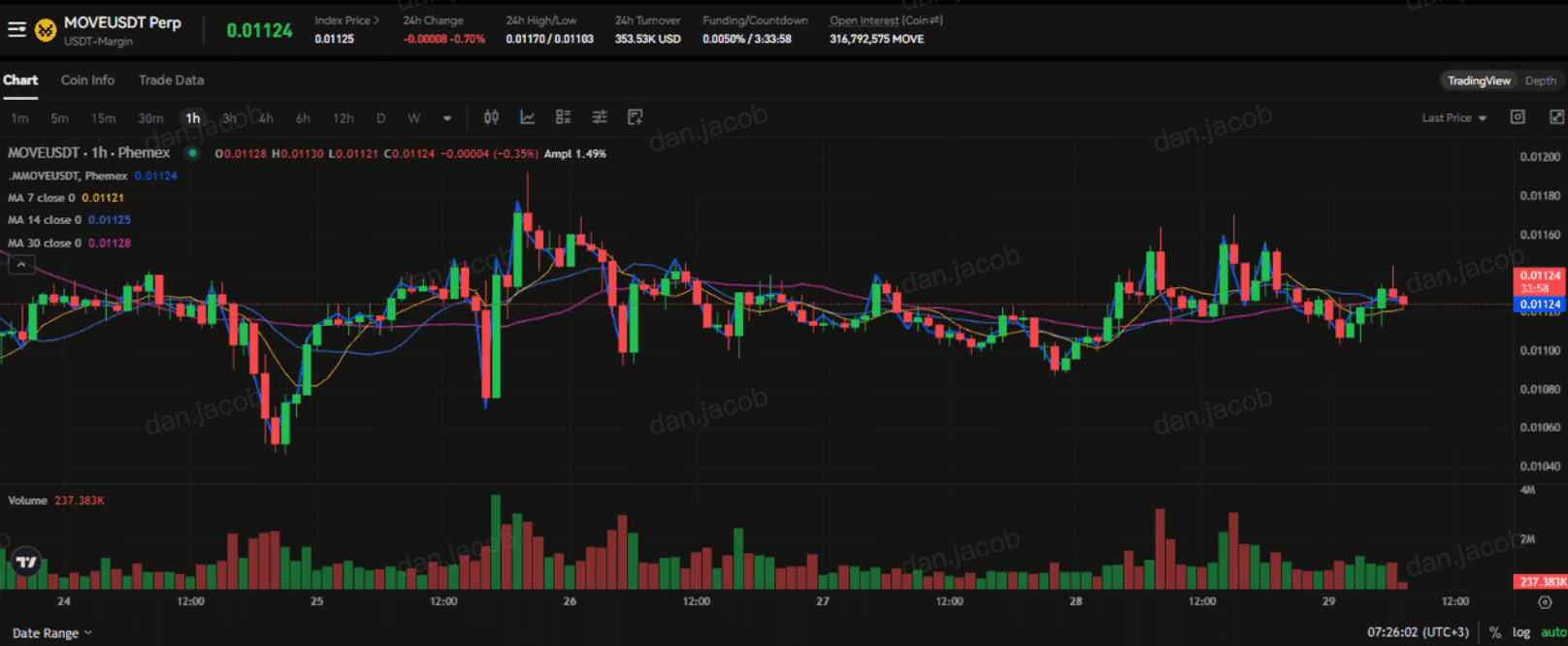
The second is the Move Alliance announcement itself. A revenue-funded buyback narrative is the kind of story that travels well on crypto social feeds, and it gave traders a fresh reason to revisit a token that had drifted out of the spotlight. The third is simple mechanics. After a long quiet stretch and a depressed price, even moderate fresh interest produces a large percentage jump in volume off a low base. A 90% volume increase sounds dramatic, and it is worth noting, but it is measuring activity against a sleepy week, not a sustained trend. The live volume and near-$0.012 priceare tracked on the CoinGecko MOVE page if you want to watch the number in real time.
What this spike is not, at least not yet, is confirmation of a durable uptrend. Volume can surge on anticipation and then evaporate the moment the catalyst passes, which is exactly the pattern speculative tokens print most often.
The Risks You Cannot Ignore
This is where the balanced view matters, because MOVE carries more headwinds than the average mid-cap. The volume spike does not erase any of the following, and a serious assessment has to weigh each one honestly.
- Heavy cliff-vesting token releases. Large monthly MOVE releases are scheduled to continue through at least September 2026, with sizable tranches hitting circulating supply on a recurring basis. Cliff-vesting means tokens that were locked become spendable in big chunks rather than trickling out, which creates recurring sell pressure that can swamp organic demand. Every release is a potential supply wall the buyback narrative has to absorb.
- A 2025 market-making scandal. Movement spent much of 2025 dealing with the fallout from a market-making arrangement that damaged trust in the project, leading to public disputes and reputational harm that still lingers. Some traders will not touch the token because of it, and that overhang is a real factor in why the price sits where it does.
- Weak altcoin sentiment. The broader market is not in a risk-on phase for speculative alts right now. Capital has favored majors, and a low-cap token leaning on a narrative has to fight the tape, not ride it.
- Narrative-dependent buyback. As covered above, the Move Alliance buyback only works if ecosystem revenue is real and sustained. Treat it as a thesis to verify, not a floor that already exists.
Put together, MOVE is a speculative, headwind-heavy name. The Move-language design and the buyback model are genuinely interesting, but the token-release schedule, the trust damage from 2025, and a soft altcoin market are the kind of overhangs that keep a token cheap until something materially changes. For broader context on how revenue-sharing and yield mechanics work across on-chain protocols, the basics of crypto lending and DeFi cash flows are a useful frame.
Frequently Asked Questions
What is Movement crypto?
Movement is a blockchain built on the Move programming language, the same language family behind Aptos and Sui, and it is designed to settle transactions to Ethereum so it can borrow Ethereum's security. MOVE is its native token, used for gas and staking. The project markets itself as the first Move-based chain that anchors to the Ethereum economy rather than running as a standalone Layer-1 like Solana.
Is MOVE a good investment?
MOVE is a speculative, high-risk name rather than a clean setup. It has an interesting design and a revenue-funded buyback narrative, but it also faces large monthly token releases running through at least September 2026, lingering distrust from a 2025 market-making scandal, and weak altcoin sentiment. Anyone considering it should size the position for the risk and watch the vesting calendar closely.
Why is MOVE volume rising?
The roughly 90% volume jump this week was driven by anticipation of Movement's public mainnet and the Move Alliance buyback announcement, amplified by the fact that the increase is measured off a low, quiet base. A volume spike on a catalyst is not the same as a confirmed uptrend, and it can fade once the news passes.
Bottom Line
If you are weighing MOVE, the framing is simple. If the mainnet lands cleanly and the Move Alliance buyback is backed by real, growing dApp revenue, the token has a credible story that the 90% volume spike hints at early. If ecosystem revenue stays thin, the recurring token releases through September 2026 and the unresolved trust damage from the 2025 scandal will likely keep capping any rally. Watch three things. The vesting dates and how price absorbs each tranche, the actual on-chain revenue feeding the buyback, and the broad altcoin sentiment that decides if traders rotate back into risk. Until those line up, treat MOVE as a speculative trade against the tape, not an investment with a floor.
This article is for informational purposes only and does not constitute financial or investment advice. Cryptocurrency trading involves substantial risk. Always conduct your own research before making trading decisions.
