









Key Takeaways
-
Canton Network is a privacy-enabled blockchain protocol built for regulated financial markets and institutional-grade interoperability.
-
Canton’s core value proposition for RWAs is that it allows separate applications—tokenization, payments, collateral, financing—to interoperate atomically without exposing all data publicly.
-
Its official ecosystem includes use cases ranging from RWA tokenization and on-chain collateral to stablecoins and 24x7 on-chain financing.
-
Major adoption signals include DTCC tokenizing DTC-custodied U.S. Treasuries on Canton, Franklin Templeton Benji expanding to Canton, and a series of cross-border collateral mobility and Treasury financing pilots.
-
Canton matters for RWA adoption because it focuses on the infrastructure institutions actually need: privacy, interoperability, settlement, and controlled composability.
Real-world asset tokenization has moved past the phase where the main question was, “Can this asset be represented onchain?” The harder question now is, “Can tokenized assets actually function inside real financial markets without sacrificing privacy, compliance, or interoperability?” Canton Network is one of the clearest attempts to answer that question.
Canton describes itself as a privacy-enabled blockchain protocol and a network of networks designed for highly regulated financial markets. Its official FAQ says Canton gives financial institutions the scalability and extensibility of the internet while preserving the privacy, permissioning, and control required for regulated industries. It also says the network enables separate applications—such as RWA tokenization, on-chain collateral, and privacy-enabled stablecoins—to interoperate while retaining privacy and independent control.
That positioning matters because many blockchains force a trade-off: either assets are composable but too transparent for institutions, or they are private but siloed. Canton’s central pitch is that institutions should not have to choose. Its official materials say a digital bond and a digital payment can be composed across two sovereign applications into a single atomic transaction, allowing simultaneous exchange without operational risk. That is exactly the kind of capability the RWA sector needs if it wants to move from tokenized wrappers to true market infrastructure.
What Is Canton Network?
Canton Network is a blockchain protocol and ecosystem aimed at enabling applications across multiple organizations to work together while preserving strict privacy and authorization controls. The protocol page explains that smart contracts define who can see or change a contract, and Canton enforces these visibility and authorization rules while maintaining transaction integrity even in adversarial environments.
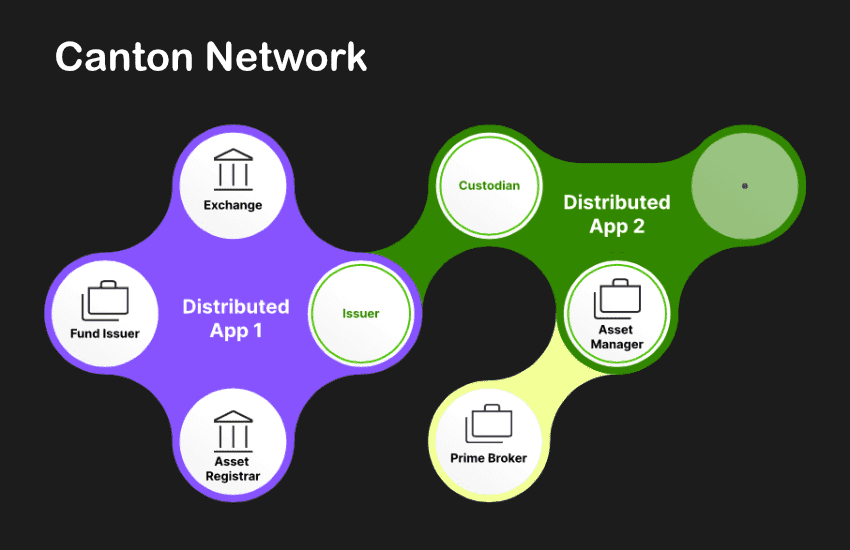
Canton is a “network of networks” where previously siloed financial systems can interoperate with the governance, privacy, permissioning, and controls required by highly regulated industries. In other words, instead of one giant fully transparent ledger, Canton is built so different applications can remain sovereign yet still connect when needed.
That is important because many RWA use cases do not fail because tokenization is impossible. They fail because the market infrastructure around tokenization remains fragmented. The 2026 RWA tokenization report produced with Canton participation says fragmentation is the main barrier to a unified global tokenized-asset market, and identifies interoperability as the central requirement for the next phase of growth.
Why RWA Adoption Needs More Than Tokenization
Early RWA adoption focused heavily on issuance: tokenize a Treasury, tokenize a fund, tokenize a stock, and prove the wrapper works. That first wave mattered, but it was only the beginning. To scale meaningfully, RWAs need to move through real market workflows:
-
issuance,
-
payments,
-
collateralization,
-
financing,
-
repo,
-
servicing,
-
and settlement.
The Canton FAQ makes this point directly. It says that in today’s markets, asset registers and cash payment systems are distinct and siloed. Canton’s value is that a digital asset and a digital payment can be composed across separate applications into one atomic transaction. It also says a digital asset could be used in a collateralized financial transaction by connecting it to a repo or leveraged-loan application.
That is exactly what RWA adoption needs. Tokenization by itself creates representation. Interoperability plus synchronized settlement create utility. The Canton-supported 2026 RWA report says the market is at an inflection point, but fragmentation still creates price-discovery discrepancies, capital friction costs, and limits on composability. The report’s conclusion is that solving interoperability is the central imperative for unlocking the full potential of tokenized RWAs.
The Core Features That Make Canton Relevant for RWAs
Privacy by Design
One of Canton’s strongest differentiators is privacy. The protocol page says Daml defines who can see and who can change any contract, while Canton enforces those rules. The March 2026 “Ethereum and Canton” post also says Canton’s privacy-first design is tailored for RWAs and enterprise-scale operations, and that this privacy-with-composability model makes it attractive to institutions that do not want the trade-offs of fully transparent public ledgers.
This matters because institutions do not want all transaction details, positions, or counterparties exposed to every network participant. Public transparency may be valuable in many crypto-native settings, but in real financial markets it can conflict with confidentiality, compliance obligations, and commercial relationships. Canton’s architecture is explicitly designed to solve that problem.
Atomic Interoperability
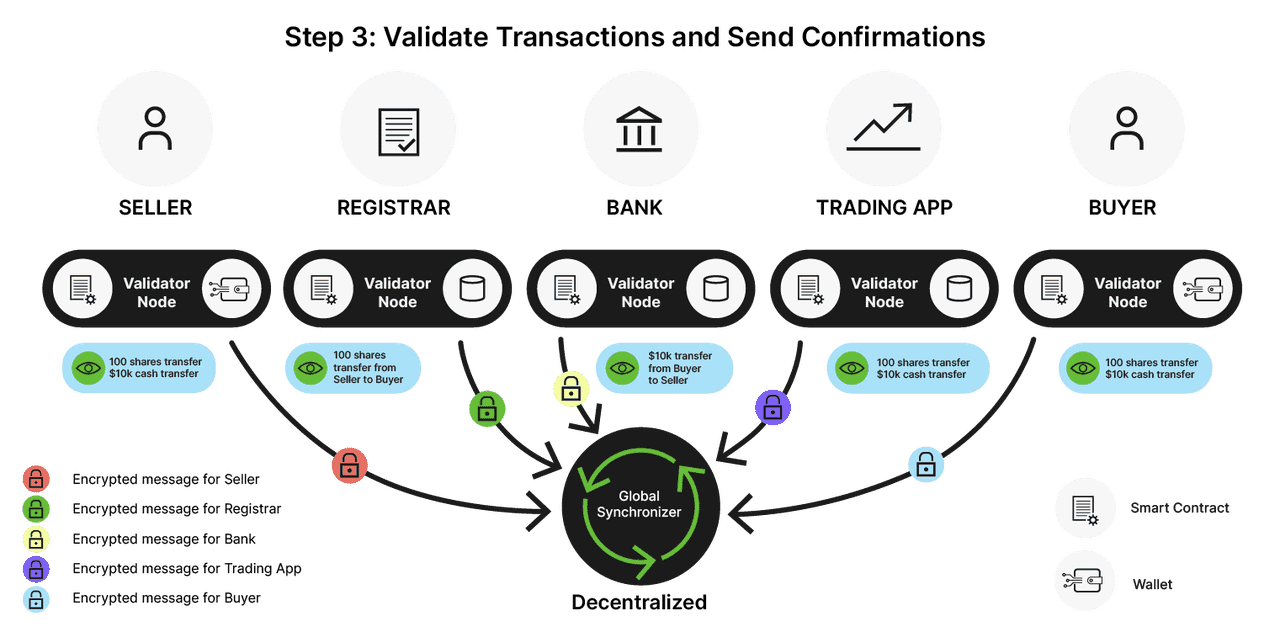
Canton’s FAQ says a digital bond and a digital payment can be composed across two sovereign applications into a single atomic transaction. That is one of the most important RWA adoption features imaginable. If payment and asset transfer cannot be synchronized, tokenized markets inherit the same frictions as older systems. If they can be synchronized atomically, tokenized assets become much more useful for settlement, DvP, and collateral workflows.
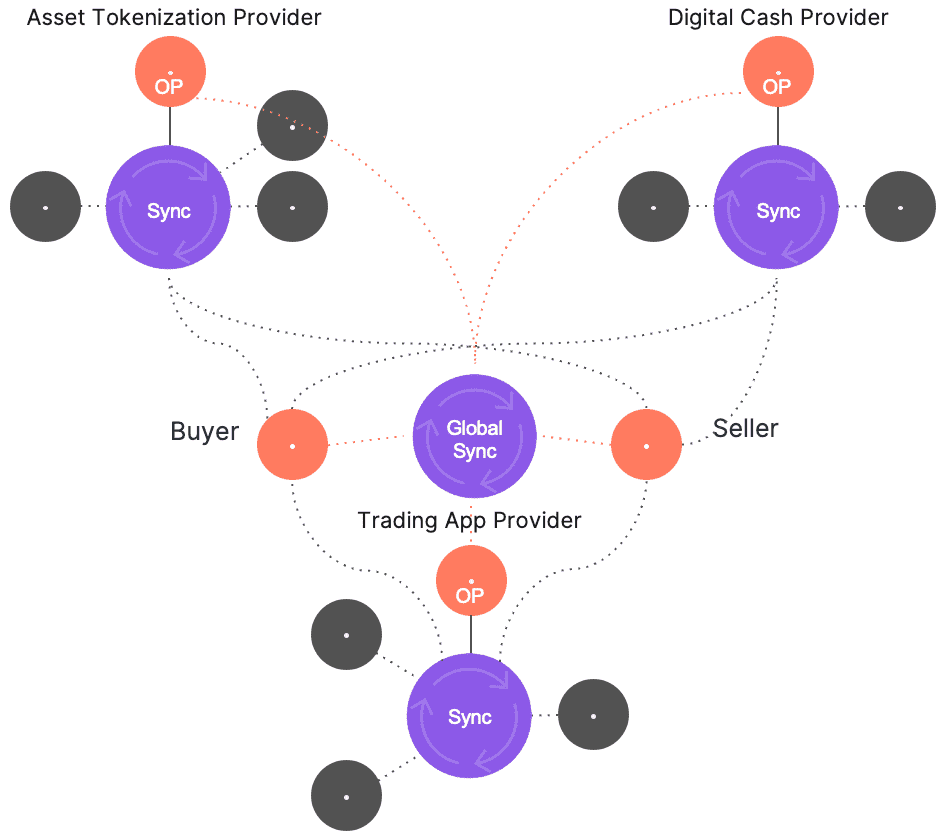
The technical primer reinforces this by describing Canton as a network of networks with “true atomic and privacy-preserving interoperability within and across its subnets.” It adds that each application can use one or more synchronizers without giving up privacy, control, or interoperability.
Independent Control for Institutions
Canton does not force every participant into one shared operating model. The FAQ says applications are interoperable while running on the provider’s and user’s own infrastructure, with data permissions written at the application level in Daml smart contracts. It also says applications can choose between the decentralized Canton sync domain or private centralized sync domains, depending on preferences around scalability, trust, and metadata disclosure.
That flexibility matters because institutions often need different trust and governance setups. Some may want broader network composability. Others may want highly controlled private domains. Canton’s design allows both, which lowers the friction of institutional participation.
How Canton’s Architecture Supports RWA Adoption
The technical primer is especially helpful for understanding why Canton may fit RWAs well. It says many new applications start by using the Global Synchronizer, which is publicly available and lets validators compose atomic transactions across multiple applications. It also says this makes it possible to bring tokenized assets natively to Canton or quickly get a complete tokenization platform running for customers.
That last point is crucial. RWA adoption often stalls because each new issuer or institution must build too much infrastructure from scratch. Canton’s model tries to reduce that burden by giving projects a common interoperability layer and ready-made network effects without requiring a loss of privacy or institutional control.
The result is that a tokenized asset on Canton does not have to remain isolated. It can potentially connect to:
-
stablecoin applications,
-
collateral platforms,
-
financing apps,
-
repo workflows,
-
and other tokenization systems on the same network.
That is a major reason Canton can accelerate RWA adoption. It is not only a place to issue assets; it is a place where assets can start interacting with the rest of the financial system.
The Live Use Cases That Show Canton’s RWA Strategy
Canton’s own FAQ says applications on the network span RWA tokenization, on-chain collateral, privacy-enabled stablecoins, crypto derivatives, and 24x7 on-chain financing. It also names institutional-grade platforms already on the network, including Goldman Sachs DAP, Broadridge DLR, and Versana, alongside crypto-native participants such as stablecoins and money-market funds.
That list matters because it shows Canton is not narrowly focused on one RWA vertical. It is building toward an ecosystem where multiple parts of institutional finance can coexist and interoperate:
-
issuance,
-
payments,
-
financing,
-
and servicing.
This breadth is part of what drives adoption. Institutions are more likely to care about tokenization when it connects to broader workflows, not when it produces one isolated digital asset.
DTCC and DTC-Custodied U.S. Treasuries on Canton
One of the biggest RWA adoption signals for Canton is its work with DTCC. Canton’s homepage says DTCC and Digital Asset are using Canton’s interoperable, privacy-preserving L1 to tokenize a subset of DTC-custodied U.S. Treasury securities, targeted for 2026. The site frames this as a significant step toward regulated, institutional-ready tokenization.
That is important for two reasons.
First, U.S. Treasuries are one of the most important and institutionally relevant RWA categories. Second, DTCC sits at the center of traditional U.S. market infrastructure. If DTCC is building tokenization workflows on Canton, that is a very different signal than a small crypto startup launching a wrapped Treasury token. It suggests Canton is becoming relevant to the core infrastructure layer of capital markets.
This directly supports the claim that Canton drives RWA adoption. It is helping move tokenization from theoretical asset issuance toward real integration with existing post-trade and custody systems.
Cross-Border Collateral Mobility and Treasury Financing
Another reason Canton is increasingly relevant is the series of industry working group announcements around collateral and financing.
Its press releases page lists:
-
Digital Asset and Industry Working Group Complete Groundbreaking On-Chain US Treasury Financing on Canton Network in August 2025,
-
The Canton Network’s Industry Working Group Demonstrates Next Phase of Onchain U.S. Treasury Financing in December 2025,
-
Expanded 24/7 Global Collateral Mobility in January 2026,
-
and Cross-Border Collateral Mobility in February 2026.
These are especially important because they show RWA adoption moving beyond issuance into financing and collateral movement. That is exactly what RWA 2.0 is supposed to look like: tokenized assets being used inside real funding and liquidity workflows rather than only sitting in wallets as passive wrappers.
If Canton can help tokenized Treasuries move as collateral across borders and across financing applications, it is doing far more than hosting assets. It is enabling market functionality.
Why Privacy Plus Composability Is the Key Combination
Ethereum brings public innovation and liquidity, while Canton brings privacy-first design for RWAs and enterprise-scale operations. It adds that Canton’s focus on privacy with composability and compliance positions it as the go-to for institutions wary of the trade-offs of fully transparent public chains.
This combination—privacy plus composability—is probably the strongest single explanation for why Canton may drive RWA adoption.
If a network is private but not composable, assets stay siloed.
If a network is composable but not private, institutions may hesitate to use it.
If a network is both, then tokenized assets can become useful without becoming institutionally unacceptable.
That is why Canton is not just another enterprise chain story. Its entire pitch is built around solving this precise trade-off.
Canton and the “AllFi” Thesis
The 2026 RWA report includes a notable section on private, permissioned environments and says Canton’s “AllFi” concept reflects the growing recognition that future financial infrastructure may be a hybrid model where permissioned issuance platforms selectively interface with public liquidity venues.
This idea matters because RWA adoption is unlikely to happen on one single ledger type. Some assets, issuers, and institutions will require permissioned environments. Others will want access to public-chain liquidity and composability. A network that can help bridge or coordinate these worlds may have a stronger long-term adoption story than one that insists everything must happen in one mode only.
That hybrid model is one of Canton’s most compelling strategic angles. It allows institutions to keep the governance, privacy, and controls they need, while still building toward broader interoperability.
How Canton Helps Solve Fragmentation
The 2026 RWA tokenization report repeatedly returns to one theme: fragmentation is the main barrier to large-scale RWA growth. The report says fragmentation creates price-discovery discrepancies, capital-friction costs, and inhibited financial product composability, and it argues that the industry is converging on a multi-layered interoperability stack to create a seamless, unified market.
Canton is one of the clearest practical responses to that problem. Its FAQ and technical primer both emphasize:
-
one common interface,
-
interoperable but sovereign applications,
-
atomic composition,
-
and privacy-preserving interoperability.
In other words, Canton’s RWA adoption strategy is not just “more tokenization.” It is “less fragmentation.” That is a much stronger long-term thesis because the market does not need dozens of isolated tokenized-asset islands. It needs assets that can interact safely and efficiently across workflows.
Why Institutions Might Prefer Canton for RWAs
Institutions generally care about a few recurring things:
-
confidentiality,
-
legal certainty,
-
interoperability,
-
operational resilience,
-
and the ability to integrate with existing systems.
Canton’s public materials are tailored directly to those concerns. The FAQ says Canton offers the scalability of the internet with the security and privacy standards necessary for financial institutions. The protocol page says authorization and visibility are defined at the smart-contract level. The technical primer says applications can start simply and scale toward greater utility while preserving privacy and control.
That makes Canton a strong candidate for RWA adoption because it is speaking the language institutions actually use when evaluating market infrastructure. It is not only promising open finance ideals; it is promising regulated, privacy-aware operational usefulness.
Risks and Limitations
Canton’s approach is compelling, but it is not risk-free.
The biggest challenge is still adoption depth. Institutional partnerships and pilots are meaningful, but the broader question is how much of financial-market activity will actually migrate to interoperable onchain infrastructure over time. Even if the architecture is strong, adoption can still move slowly in highly regulated markets. This is an inference, though it is consistent with the 2026 RWA report’s emphasis on fragmentation and institutional inertia as barriers.
Another challenge is ecosystem complexity. Canton’s model is more sophisticated than a simple public chain with one shared state. That sophistication is partly its advantage, but it can also make understanding and onboarding more complex for newer builders and users.
A third challenge is competition. The 2026 RWA report notes that a meaningful portion of institutional RWA innovation is also happening on other permissioned platforms such as Kinexys, Partior, and Goldman Sachs’ DAP. So Canton is not alone in targeting this market.
Still, those challenges do not weaken the core thesis. They simply show that RWA adoption is a large infrastructure race, and Canton is one of the more credible contenders.
Conclusion
Canton Network drives RWA adoption by focusing on the part of tokenization that institutions care about most: how assets actually interoperate, settle, finance, and preserve privacy in real workflows.
Its architecture is built around a network-of-networks model, atomic interoperability, privacy-preserving smart contracts, and flexible synchronization options. Its live signals—DTCC Treasury tokenization, Franklin Templeton Benji expansion, Treasury financing pilots, and cross-border collateral mobility—show that this is not only theory. It is increasingly part of the real institutional tokenization conversation.
As tokenized Treasuries, tokenized funds, on-chain collateral, and institutional blockchain infrastructure continue to evolve, Canton Network is likely to remain one of the most important platforms to watch in the RWA sector.
