

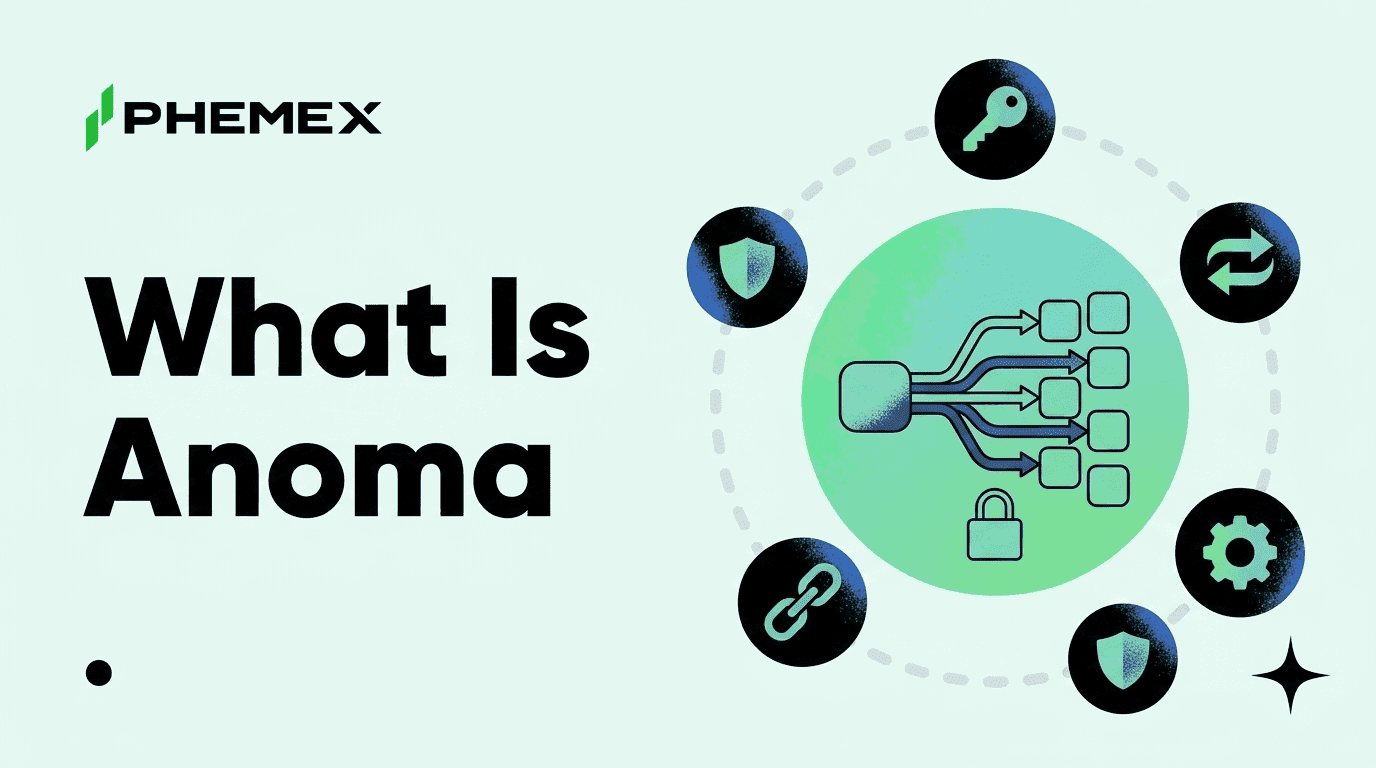
Anoma is an intent-centric architecture for blockchains. Instead of signing a specific transaction, you sign what you want to end up with, and a network of solvers competes to find the execution. XAN is its token, an ERC-20 on Ethereum with a bridged deployment on BNB Chain.
Anoma at a Glance
|
Metric
|
Details
|
|
Token name
|
Anoma
|
|
Ticker
|
XAN
|
|
Blockchain
|
Ethereum is canonical, with a bridged deployment on BNB Chain
|
|
Contract address
|
`0xcedbea37c8872c4171259cdfd5255cb8923cf8e7` on Ethereum. The BNB Chain bridge sits at `0x7427bd9542e64d1ac207a540cfce194b7390a07f`
|
|
Total supply
|
10,000,000,000 XAN at 18 decimals, read straight off the contract on Monday 7 September 2026
|
|
Circulating supply
|
2,500,000,000 XAN, a 25% float. CoinGecko and CoinMarketCap agree. CoinPaprika models 2 billion instead
|
|
Token generation event
|
Monday 29 September 2025. The Phemex spot series and CoinPaprika's price history both begin that day
|
|
Core narrative
|
Intents and solvers. CoinGecko also tags it Privacy, Privacy Infrastructure and Zero Knowledge
|
|
Token type
|
ERC-20 network token of the Anoma protocol
|
|
Next unlock
|
About 202.5 million XAN, 2.03% of max supply, on Tuesday 29 September 2026
|
|
Primary risks
|
7.5 billion tokens still locked, no dated driver for the move, roughly 93% below the all-time high
|
|
Availability on Phemex
|
Spot only, as XAN/USDT, listed Monday 29 September 2025. No live perpetual contract
|
XAN closed Sunday 6 September 2026 at $0.01988 on Phemex spot and $0.019823 on CoinGecko, a 0.29% spread between the two feeds.
That's a 17.70% session gain and 52.45% over seven sessions, on a token that closed between $0.0123 and $0.0138 every day from Tuesday through Friday.
Volume did the same thing. The Sunday bar cleared $20.98 million against roughly $2.0 to $2.9 million a day earlier in the week.
And there is no announcement behind any of it. That absence is the most useful thing on this page, so it gets its own section rather than a footnote.
What Is Anoma?
Most blockchains make you specify the path. You pick the pool, the route, the slippage tolerance and the gas, then you sign that exact sequence and hope the state hasn't moved by the time it lands.
Anoma inverts the order. You express the outcome you want, and third parties called solvers compete to build the transaction that delivers it.
Think of it as the difference between telling a taxi driver every turn and telling them the address. Both get you there, and only one of them makes you responsible for knowing the traffic.
Solvers are what makes or breaks the design. They're independent operators who read a pool of intents, hunt for matches between them, and get paid for finding the cheapest route.
Two users who want opposite trades can settle against each other without either one touching a liquidity pool. That's the efficiency case, and it only works if enough solvers show up to compete for the flow.
That model is an architecture rather than a single chain. Anoma describes itself as running alongside existing networks rather than replacing them. The token lives on Ethereum as a standard ERC-20, and a bridged version circulates on BNB Chain.
The shipped product is AnomaPay, a confidential payments layer. The project blog records deployments onto Arbitrum, Monad, Stable and Base through the middle of 2026, plus a business payroll beta and confidential swaps. Its newest post carries an August 2026 date.
Why Did XAN Become Popular?
Nothing dated explains the week, and you should be suspicious of any page that tells you otherwise.
The project blog's newest entry predates the move by weeks. No listing, no mainnet milestone, no partnership and no funding round lands inside the seven sessions that produced the 52.45% gain.
The desk looked and found nothing, and saying so plainly is more useful to you than inventing a cause.
What can be said is where the move sits. Privacy names ran hard into the same anchor.
Zcash closed Sunday 6 September at 1,226.67 on Phemex spot, its highest close in 365 sessions, up 19.64% on the session and 139.97% across thirty. Firo held the top slot on CoinGecko's trending list, with Zcash a few places behind it.
Read the shape of the move as well as the size. Six sessions from Monday 31 August through Friday 4 September all closed inside a narrow band, between $0.01233 and $0.01377.
Saturday 5 September broke it with a 22.7% close, and Sunday 6 September added 17.70% on top. Two sessions carried the entire seven-session gain, which tells you this was a burst of flow rather than a trend building.
Anoma carries CoinGecko's Privacy and Privacy Infrastructure tags alongside its Intent tag. When a sector bid arrives, screeners and rotation flows pick up everything carrying the sector's label, and XAN carries three of them.
That is correlation and it is not causation. A tag is not a product update.
If the privacy bid cools, a token that rose without its own catalyst has nothing of its own to stand on, and you should size the position with that in mind.
How Does the XAN Token Work?
Four direct calls to the Ethereum contract on Monday 7 September 2026 return name Anoma, symbol XAN, 18 decimals and a total supply of exactly 10,000,000,000 tokens. CoinPaprika lists the same address and the same total. You can check it yourself on Etherscan.
Of that 10 billion, 2.5 billion circulates. Everything else is on a vesting clock.
|
Allocation
|
Share of 10 billion
|
Vesting
|
|
Backers
|
31%
|
Locked 12 months from the September 2025 token generation event, then linear across 36 months
|
|
Community, marketing and liquidity
|
25%
|
Released at the event. This is the entire circulating float
|
|
R&D and ecosystem
|
19%
|
Same lock, same 36-month linear release
|
|
Core contributors
|
15%
|
Same lock, same 36-month linear release
|
|
Anoma Foundation
|
10%
|
Same lock, same 36-month linear release
|
The twelve-month lock expires on the anniversary of the token generation event, which is why the first tranche is dated Tuesday 29 September 2026. DropsTab and CoinMarketCap both put that tranche near 202.5 million XAN, 2.03% of max supply.
At the Sunday close that's about $4.01 million of token, and it lifts the float by 8.1% in a single step.
Spread across 36 months, 7.5 billion tokens average roughly 208 million a month. A 25% float works like a small room.
It doesn't take much money to move the price, and it doesn't take much selling either, which cuts both ways every month from Tuesday 29 September onward.
Anoma vs Bitcoin
|
Category
|
Anoma (XAN)
|
Bitcoin (BTC)
|
|
Main identity
|
Intent-centric architecture with a confidential payments product
|
Monetary settlement network
|
|
Blockchain
|
ERC-20 on Ethereum, bridged to BNB Chain
|
Its own base layer
|
|
Core value driver
|
Adoption of intents, solvers and AnomaPay deployments
|
Scarcity and network effect
|
|
Supply model
|
10 billion fixed, 25% circulating, 36-month linear release
|
21 million capped, roughly 95% mined
|
|
Market maturity
|
Under one year of trading history
|
Sixteen years of continuous price history
|
|
Risk profile
|
Small float, monthly dilution, no dated catalyst
|
Macro-driven drawdowns, deep liquidity
|
What Can Move the XAN Price?
The Tuesday 29 September Unlock
It is the only hard date on the calendar. Roughly 202.5 million XAN arrives at once, then the release becomes monthly. Watch how the market handles the first tranche, because the first one usually sets the pattern for the next thirty-five.
The tranche itself is small against a $49.6 million cap, roughly $4.01 million at the Sunday close. What matters more is the signal it sends about thirty-six months of steady supply arriving on a schedule anyone can read.
The Privacy Rotation
The move happened alongside a privacy bid, so it can fade alongside one too. Track ZEC's closes as the sector proxy rather than reading XAN's chart in isolation.
AnomaPay Deployments
New chain deployments are dated, checkable events on the project's own blog. They are the closest thing this token has to a fundamental release cadence, and none of them landed inside the seven-session run.
Float and Depth
At a $49.6 million market capitalisation, the Sunday bar's $20.98 million of volume equalled 42% of the whole cap in a single day. That ratio makes for violent moves in both directions.
Compare it against a large cap, where a day's turnover is a few percent of the market value. At 42%, the price gets set by whoever showed up that session rather than by a deep standing book, and your own market order can move it.
Volume Normalisation
Turnover ran eight to ten times its prior-week average into the anchor. If it settles back toward $2 million a day, the bid that carried the move has left, and the price usually follows it out.
Risks of Buying or Trading Anoma
Seventy-Five Percent of the Supply Is Still Locked
Three quarters of the tokens that will ever exist have not reached the market. Every valuation you read is priced on a quarter of the supply and carries a fully diluted figure of $198.2 million at the Sunday close, four times the visible cap.
No Dated Driver Explains the Move
A rally with no cause has no invalidation level either. You can't watch a catalyst fail if you can't name the catalyst.
The Close Sits Roughly 93% Below the All-Time High
CoinGecko records the high at $0.272752 on Monday 29 September 2025, the launch day itself. CoinPaprika records $0.2575211 on the same date. Measured against either, the Sunday close is down between 92.3% and 92.7%, all inside twelve months.
Most Volume Sits on Order Books, Not Pools
Roughly three quarters of tracked turnover happens on centralized venues rather than in on-chain pools. The usual on-chain wash test, volume against pooled liquidity, is the wrong tool here, and reaching for it will give you false comfort.
The Bridged Balance on BNB Chain Is Not Fixed
The BNB Chain contract's total supply changes with every bridge action in either direction. Two reads hours apart on Monday 7 September returned figures more than four million tokens apart. Treat it as a live balance, never as a supply fact.
A Clean Search Is Not Proof of the Right Contract
CoinGecko's search returns exactly one Anoma, and that's reassuring without being sufficient. DexScreener also surfaces a Frankencoin pool quoted in XAN whose displayed price reads near 1.27.
That number is a ratio between two other assets, not the XAN price, and the same shape of trap catches readers on every token with a small float.
How to Research Anoma Safely
Run these five checks before you size anything, and run them in this order.
Verify the contract by direct call. Read name, symbol, decimals and total supply from the chain rather than from a listing page. Two independent feeds pointing at the same address is your confirmation.
Sort pools by volume, never by liquidity. A large pool with no flow tells you nothing, and a small pool with heavy flow is where the real price discovery happens.
Say which layer every volume number came from. A dated daily bar from a price aggregator, a rolling exchange figure and an on-chain pool total are three different measurements, and mixing them produces nonsense ratios.
Read the unlock calendar before the chart. For a token with a 25% float, the vesting schedule is a bigger input to the next six months than any candle pattern.
Compare two feeds and print the spread. Phemex spot and CoinGecko differed by 0.29% at the anchor. When you see a gap far wider than that, the problem is usually your own timestamp offset.
Is Anoma a Good Investment?
The honest position is that the technology and the token are on different clocks.
The intent-centric design is real engineering with a shipped payments product and dated deployments behind it. That is more than most tokens in this cap range can show you.
But the seven-session move that put XAN on your screen has no cause anyone can date, and the first vesting tranche lands on Tuesday 29 September 2026.
Those two facts point in opposite directions, and that is the decision in front of you.
If you're buying the architecture, the unlock schedule is a cost you accept across three years. If you're buying the move, you're buying a rotation you did not cause and cannot forecast, in a token where a quarter of the supply carries the entire price.
Position size settles this argument better than conviction does.
Frequently Asked Questions
What is the difference between an intent and a transaction?
A transaction names the exact steps. An intent names the outcome and lets solvers compete to find the steps. You carry less execution risk and give up direct control of the route.
What is AnomaPay?
Anoma's shipped product, a confidential payments layer. The project blog records deployments onto Arbitrum, Monad, Stable and Base through the middle of 2026, plus a business payroll beta and confidential swaps.
How much of the XAN supply is locked?
7.5 billion of the 10 billion total, or 75%. It releases linearly across 36 months beginning Tuesday 29 September 2026, at an average near 208 million tokens a month.
Is Anoma a privacy coin?
Not in the way Zcash is. Anoma is an architecture with a confidential payments product, and CoinGecko applies privacy tags to it. Shielding is a feature here, not the base layer's purpose.
Why did XAN rise without any news?
No dated announcement matches the move. It ran alongside a broad privacy-token bid into the Sunday 6 September close, which is correlation rather than a cause you can trade against.
Final Thoughts
Tuesday 29 September 2026 is the date to write down. It is the twelve-month anniversary of the token generation event, the first vesting tranche, and the first real test of what a 25% float does when it grows by 8.1% overnight.
Between the Sunday 6 September close and that date, the two things that matter are the volume trend and the privacy sector's bid.
If turnover drifts back toward $2 million a day while ZEC gives back its 365-session high, XAN loses the only support the move ever had.
Track the unlock, not the candles. This token's next six months are a supply story, and the supply story is already written.
This article is for informational purposes only and does not constitute financial or investment advice. Cryptocurrency trading involves substantial risk. Always conduct your own research before making trading decisions.