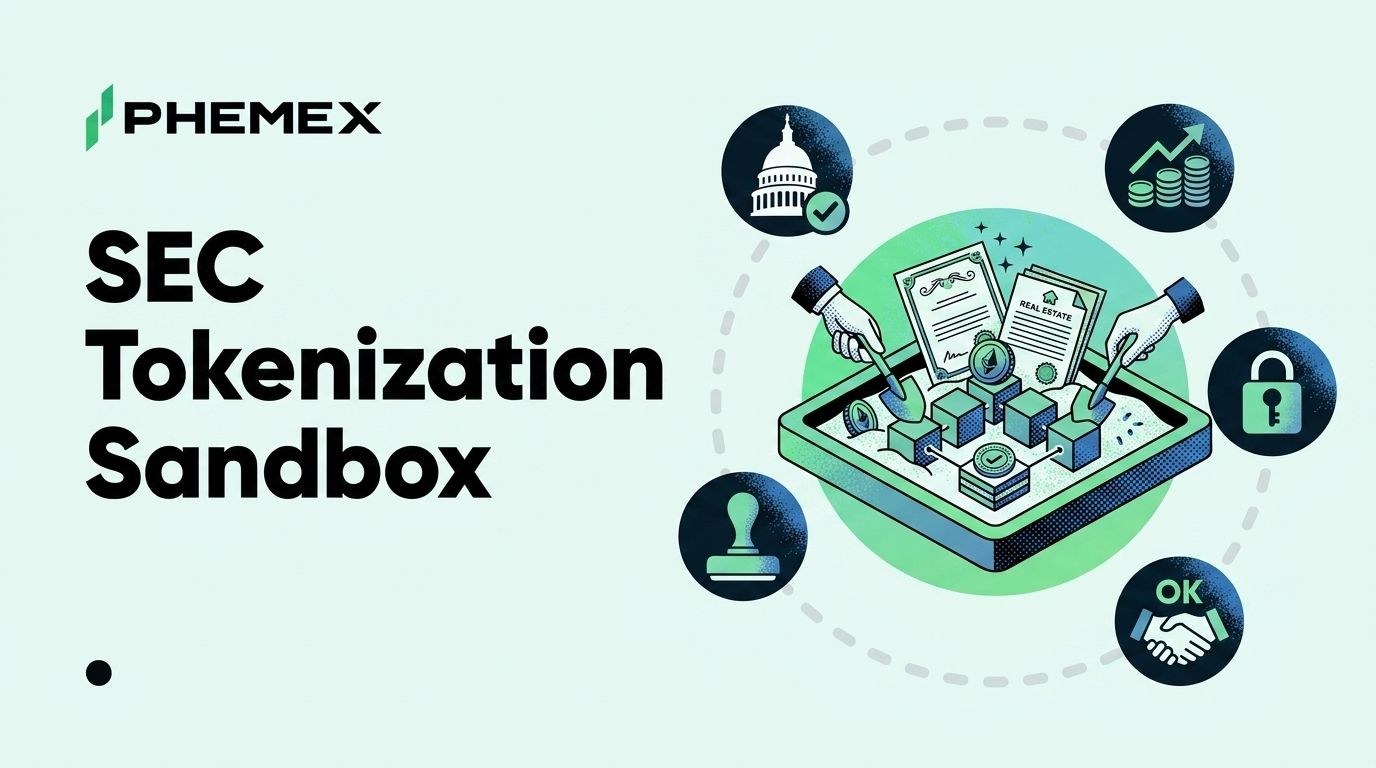
SEC Chair Paul Atkins stood on stage at Bitcoin 2026 in Las Vegas on April 27 and did something no sitting securities regulator has ever done at that conference. He previewed the Innovation Exemption, a formal regulatory sandbox that will let firms issue, trade, and settle tokenized securities on public blockchains without full SEC registration. The exemption window runs 12 to 36 months, and Atkins said it would launch "in weeks."
That timeline matters because the on-chain RWA market already sits above $26 billion, BlackRock's BUIDL fund alone holds roughly $2.8 billion in tokenized U.S. Treasuries, and the bottleneck for the next wave of growth is not technology but regulatory permission.
What the SEC Tokenization Sandbox Actually Is
The Innovation Exemption is a structured regulatory window, not a free pass. Firms that qualify receive a temporary exemption from Section 5 of the Securities Act, meaning they can issue and trade tokenized securities on-chain without going through full SEC registration. The exemption period is 12 to 36 months depending on the project scope.
During that window, participants operate under real constraints that mirror traditional securities oversight. Volume caps limit how much can be traded during the exemption period, and investor whitelisting requires every wallet to be registered and screened through DTCC's compliance infrastructure, including OFAC sanctions checks. Firms must also submit periodic reports to the SEC covering performance data, risk events, and user complaints.
The sandbox sits under Project Crypto, the Commission-wide initiative Atkins launched to modernize how securities law applies to digital assets. Project Crypto introduced a five-category token taxonomy in March 2026, classifying crypto assets as digital commodities, digital collectibles, digital tools, payment stablecoins, or digital securities. Only that last category falls under securities law, and the sandbox targets it directly.
Who Can Apply and What the Requirements Look Like
Eligibility is broader than most people expect. The sandbox is open to DeFi protocols, stablecoin issuers, traditional financial institutions, and any U.S.-based firm looking to tokenize real-world assets like bonds, equities, real estate, or Treasury bills. You do not need to be a registered broker-dealer to apply, though you do need to operate within the compliance framework the SEC sets out.
The requirements break into three buckets, and each one carries real weight.
KYC and anti-fraud compliance. Every participant must maintain full know-your-customer and anti-money-laundering protocols throughout the exemption period. Trading can happen on automated market makers and permissionless blockchains, but wallet-level identity verification is non-negotiable regardless of the underlying platform.
Reporting obligations. Firms file regular reports with the SEC covering transaction volumes, risk incidents, and any user complaints received during the testing window. This is not a "move fast and break things" environment, and the reporting cadence means the SEC maintains continuous visibility into sandbox operations.
Exit conditions. When the sandbox period ends, a project faces a binary outcome that determines its future classification. Either it demonstrates "sufficient decentralization" and transitions to digital commodity status, or it must file for full registration as a security. There is no option to keep operating in regulatory limbo once the clock runs out.
Why This Changes the Game for RWA Tokenization
The numbers tell the story of a market straining against regulatory barriers. Tokenized real-world assets on-chain grew 300% year over year to $26.4 billion in 2026, according to industry data tracked across major protocols. McKinsey projects the broader tokenization market could reach $2 trillion by 2030, while Standard Chartered's estimate runs to $30 trillion by 2034.
But here is where the sandbox changes the math. Until now, only firms with deep legal budgets and existing regulatory relationships could realistically tokenize securities. BlackRock can afford to structure BUIDL as a compliant tokenized money market fund with a $5 million minimum. A fintech startup building fractional real estate tokens on Ethereum cannot.
The Innovation Exemption lowers that barrier dramatically. A smaller firm can now apply for a 12-to-36-month window to test its product, build a track record, and either achieve decentralization or prepare for full registration. The cost and complexity of going from idea to live product drops by an order of magnitude.
And the timing is not accidental. The DTCC, which clears and settles the majority of U.S. securities transactions, already received SEC approval to custody tokenized securities on blockchain earlier this year. The infrastructure is ready and waiting, and the sandbox provides the legal permission to actually use it at scale.
The ACT Strategy Behind the Announcement
The sandbox did not appear in isolation, and understanding the broader framework explains why it matters so much. It is part of what Atkins calls the ACT strategy, which stands for Advance, Clarify, and Transform.
Advance means engaging with blockchain technology proactively rather than waiting for enforcement cases to define the rules. The old SEC approach under Gary Gensler was to regulate through litigation, and Atkins is deliberately doing the opposite by building frameworks before problems emerge.
Clarify addresses the token taxonomy that had been a source of confusion for years. The five-category system published in March 2026 drew clear lines by sorting every crypto asset into one of five buckets. Bitcoin, Ethereum, and Solana landed as digital commodities, while NFTs became digital collectibles, utility tokens became digital tools, and stablecoins were classified as payment instruments. Only tokenized versions of traditional securities remain under the SEC's direct authority, and the sandbox gives those specific projects a structured path forward.
Transform is the long-term play, and it carries the boldest ambition of the three pillars. Atkins said at Bitcoin 2026 that the U.S. financial system could shift meaningfully toward tokenization "within a couple of years," and he was not referring only to crypto-native projects issuing tokens. The bigger picture involves stocks, bonds, and Treasuries settling on-chain instead of through the current T+1 clearance system that still relies on infrastructure built decades ago.
What Assets Could End Up in the Sandbox
The scope is wider than most crypto-native traders might assume. The exemption applies to any instrument that qualifies as a security under federal law, which opens the door to several categories.
|
Asset Type
|
Current State
|
Sandbox Potential
|
|
Tokenized U.S. Treasuries
|
$2.8B+ via BlackRock BUIDL, institutional only
|
Smaller issuers, lower minimums
|
|
Tokenized equities
|
DTCC approved for custody, limited pilots
|
Full on-chain trading within caps
|
|
Tokenized real estate
|
Fragmented, mostly private placements
|
Fractional ownership on public chains
|
|
Tokenized corporate bonds
|
Early stage, a few DeFi experiments
|
Institutional and retail access
|
|
Tokenized fund shares
|
Primarily accredited investors
|
Broader distribution channels
|
The real shift here goes beyond putting assets on-chain. What makes the sandbox meaningful is that it creates a regulated secondary market where tokenized instruments can actually trade with legal backing. Tokenized Treasuries are useful on their own, but they become far more powerful when you can swap them peer-to-peer on a DEX within a compliance wrapper rather than waiting for a traditional redemption process.
What Traders Should Watch
For crypto markets, this announcement has both direct and indirect implications. The direct effect is that RWA tokenslike ONDO, MKR, and protocols building tokenization infrastructure could see renewed interest as the sandbox moves from announcement to launch. When regulatory barriers drop, capital flows toward the newly accessible opportunity.
The indirect effect runs deeper and could reshape how capital flows through DeFi over the next 12 to 18 months. Every dollar of traditional assets that moves on-chain needs settlement infrastructure, liquidity pools, and bridging mechanisms to function properly. That dynamic benefits Layer 1 chains positioned for institutional adoption like Ethereum and Avalanche, as well as DeFi protocols building compliant swap infrastructure.
But do not assume the sandbox guarantees success for every RWA project, because the exit conditions are strict and the SEC has shown no interest in extending lifelines. Projects that fail to demonstrate sufficient decentralization or cannot meet full registration requirements at the end of their window will face a hard stop. The sandbox tests viability under real market conditions, and surviving those conditions is the entire point.
And the exemption is still not a binding rule. As of late April 2026, the final proposal remains under White House review. Atkins has political support and momentum, but the precise terms could shift before the official launch.
Frequently Asked Questions
What is the SEC tokenization sandbox?
It is formally called the Innovation Exemption. The sandbox gives qualified firms a 12-to-36-month window to issue and trade tokenized securities on public blockchains without full SEC registration, subject to volume caps, wallet whitelisting, and periodic reporting requirements.
Who can apply for the SEC Innovation Exemption?
Eligibility is open to U.S.-based crypto startups, DeFi protocols, stablecoin issuers, and traditional financial institutions. You do not need to be a registered broker-dealer, but you must maintain full KYC/AML compliance and agree to the SEC's reporting framework.
What happens when the sandbox period ends?
Projects face a binary outcome when the clock runs out. Either they demonstrate sufficient decentralization and transition to digital commodity classification, removing them from securities regulation entirely, or they must file for full SEC registration as a security. Continuing to operate without choosing one path is not an option.
How does this affect RWA token prices?
Regulatory clarity has historically opened the door to institutional capital, and the Innovation Exemption could follow that pattern. When the sandbox officially launches, RWA-focused tokens and protocols building tokenization infrastructure stand to benefit from increased attention and investment flows. That said, the sandbox tests viability under real constraints, and not every project will survive the exit conditions.
Bottom Line
The Innovation Exemption is the most concrete step any U.S. regulator has taken toward making tokenized securities a legal, tradable reality on public blockchains. The 12-to-36-month sandbox window, combined with DTCC custody approval and the five-category token taxonomy, creates a full stack where legal permission, settlement infrastructure, and asset classification all exist in place for the first time simultaneously.
What matters now is the launch date. Atkins said "in weeks" at Bitcoin 2026, and the proposal is under White House review. If the final terms hold, smaller firms will be able to tokenize Treasuries, equities, and real estate on-chain with a regulatory path that previously only existed for BlackRock-sized players. The $26 billion on-chain RWA market could look very different by year-end. The firms that apply early and build compliant products during the sandbox window will have a structural advantage when the exemption period ends and the rules become permanent.
This article is for informational purposes only and does not constitute financial or investment advice. Cryptocurrency trading involves substantial risk. Always conduct your own research before making trading decisions.