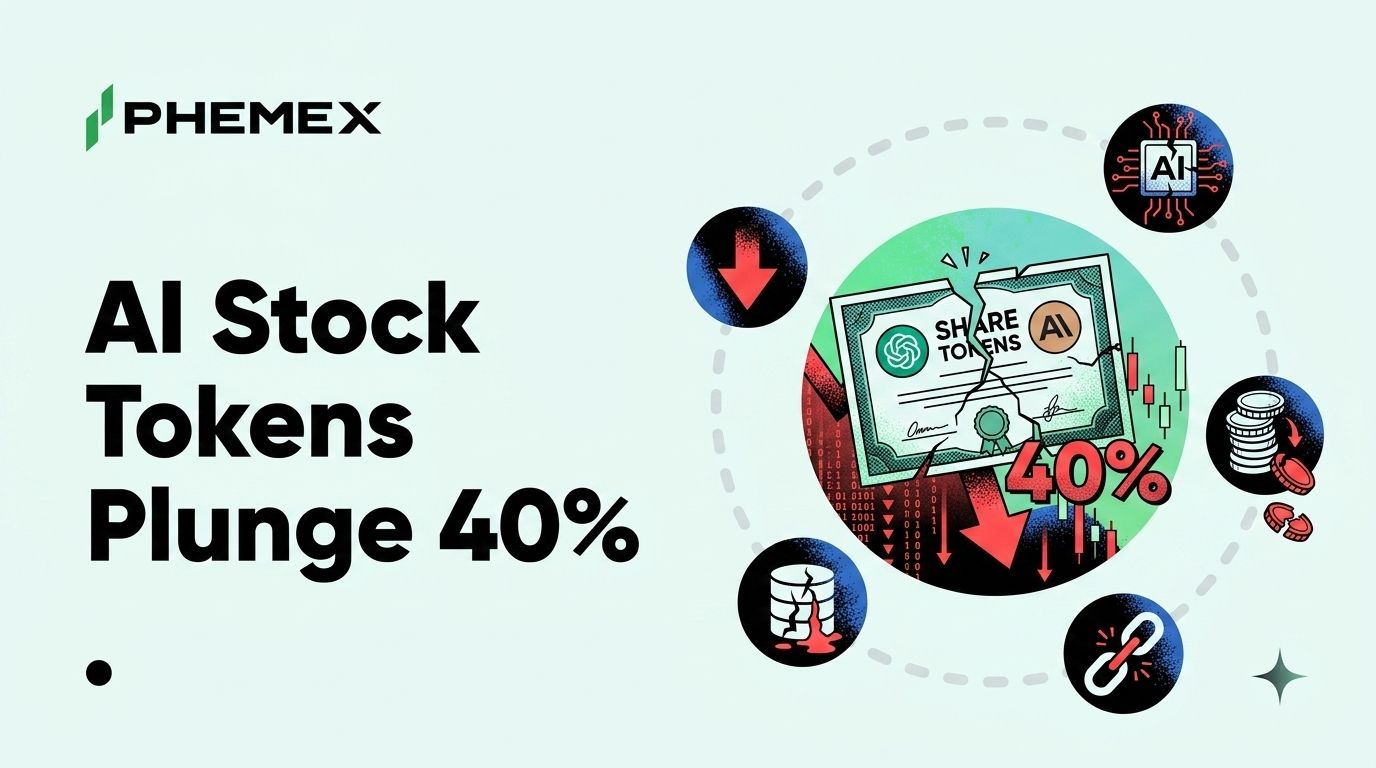
Solana tokens marketed as a way to get exposure to Anthropic and OpenAI plunged nearly 40 percent between May 12 and May 13, 2026, after both companies publicly warned that the structures behind those tokens are not valid. Anthropic-linked tokens fell roughly 34 percent over seven days and OpenAI-linked tokens dropped close to 39 percent, according to CoinGecko pricing cited by CoinDesk. The trigger was not a market event at all. It was a legal one.
Both companies said the same thing in plain language. Any sale or transfer of their stock without explicit board approval is void, carries no shareholder rights, and may not be recognized at all. That single statement erased the premise these tokens were sold on. Here is what tokenized pre-IPO stock actually is, why "indirect exposure" was the warning sign all along, and what it means if you are holding any tokenized-equity product right now.
What Tokenized Pre-IPO Stock Actually Is
Anthropic and OpenAI are private companies. Their shares do not trade on any public exchange, and you cannot buy them through a normal brokerage. That scarcity is exactly what created demand. Both firms are among the most valuable private companies on earth, with OpenAI's pre-IPO valuation reported near $1 trillion, and retail investors have spent two years looking for any door into that growth story.
Tokenized pre-IPO stock was sold as that door, and the pitch was simple. A platform claims to hold real pre-IPO equity, then issues blockchain tokens on Solana that supposedly track the value of those shares one-to-one. You buy the token, the token moves with the private company's valuation, and you get the upside without needing accredited-investor status or a direct line to the company. Platforms in this category, including the PreStocks brand at the center of this story, marketed tokens covering Anthropic, OpenAI, and other large private firms.
The mechanism that made this possible is the special purpose vehicle, or SPV. An SPV is a pooled investment structure. Several smaller investors put money into one legal entity, that entity buys a stake in the private company, and each investor holds a slice of the entity rather than the shares directly. SPVs are a normal, legal tool in venture capital. The problem is not the SPV itself. The problem is that the company whose stock the SPV claims to hold may never have agreed to the arrangement at all.
The SPV Trick and Why "Indirect Exposure" Was the Red Flag
Read the marketing for almost any tokenized pre-IPO product and you find the same careful wording. The token offers "indirect exposure" or "synthetic exposure" to the underlying company. It is rarely described as actual ownership. That language was not an accident, and it was the clearest warning available to anyone reading closely.
Direct exposure means you own the share, your name or your entity is on the cap table, and you have a recognized legal claim. Indirect exposure means you own something that is supposed to move in price alongside the share. You are one or two steps removed from the asset, and each step is a layer of counterparty risk. When a platform sells indirect exposure, it is telling you, in the quietest way it can, that you do not have a real claim on the company.
The structure stacked the risk even higher. A buyer of an Anthropic token on Solana was relying on the token issuer to hold a token-to-SPV relationship, the SPV to hold a valid stake in Anthropic, and that stake to be recognized by Anthropic. If any link in that chain failed, the token at the end of it was backed by nothing enforceable. This week both Anthropic and OpenAI confirmed that the critical link, the company recognizing the SPV's stake, was never there.
There is also a backing problem that has nothing to do with the legal warnings. PreStocks tokens were marketed as one-to-one backed by SPV holdings, yet neither the platform nor an independent auditor has published the attestation reports promised at launch. Reporting from The Block noted that on-chain liquidity for the Anthropic token sat near $333,000 in stablecoins plus a small amount of SOL as the selloff hit. Holders sitting on paper profits may not be able to exit at the price the screen shows them.
Why Anthropic and OpenAI Can Void These Transfers
The reason both companies can simply declare these transfers void comes down to how private-company shares work, and it surprises a lot of crypto-native buyers who are used to permissionless assets.
When you buy Bitcoin or any token on a public blockchain, the asset moves freely and nobody needs to approve the transfer. Private-company stock works the opposite way. Shares in companies like Anthropic and OpenAI come with a shareholder agreement, and that agreement almost always contains hard transfer restrictions. The most common one is the right of first refusal, or ROFR. Before any shareholder can sell to an outside party, the company gets the first option to buy those shares itself or to block the sale. Many agreements go further and require explicit board approval for any transfer, full stop.
This is the core point. The company that issued the stock gets to decide if a transfer is valid or not. A token on Solana cannot override a shareholder agreement signed in the physical world. If shares were moved into an SPV without board sign-off, the company's position is that the transfer never legally happened, the SPV never validly acquired the stock, and every token built on top of that SPV represents a claim on nothing.
Anthropic put it directly in an updated investor warning, stating it does not permit SPVs to acquire its stock and that any transfer of shares to an SPV is void under its transfer restrictions. The company named specific secondary platforms as unauthorized to buy or sell its shares.
|
Platform named by Anthropic
|
What Anthropic said
|
|
Open Door Partners
|
Not authorized to buy or sell Anthropic shares
|
|
Unicorns Exchange
|
Not authorized to buy or sell Anthropic shares
|
|
Forge Global
|
Shares acquired through this channel carry no shareholder rights
|
|
Hiive
|
Shares acquired through this channel carry no shareholder rights
|
OpenAI issued a parallel warning. The company said unauthorized transactions involving its stock may violate U.S. securities laws and could result in the invalidation of the underlying equity, covering direct trades, SPV shares, tokenized ownership, and forward contracts. When two of the most valuable private companies in the world both say your token represents nothing, the market reprices fast. It did, inside 24 hours.
The Broader Pre-IPO Crypto Fraud Wave
This is not an isolated blowup. It sits inside a fast-growing category of fraud, and the timing of the warnings reflects that.
Pre-IPO fraud schemes that use crypto channels have risen roughly 40 percent year-on-year, according to SEC data referenced by Crypto Briefing. The playbook is consistent. Scammers pick the most recognizable private companies, the names every retail investor already wants a piece of, and build investment vehicles around them. OpenAI, Anthropic, SpaceX, and similar firms are the obvious targets because the brand does the marketing for free. A token labeled "OpenAI" sells itself.
Tokenization adds two things that make these schemes more dangerous than old-fashioned pre-IPO scams. It adds a veneer of technical legitimacy, because a token on a real blockchain with a real price chart looks like a genuine financial product. And it adds global, instant, around-the-clock access, so the offer reaches far more people far faster than a boiler-room phone call ever could. The underlying con is decades old, but the distribution is new and far harder to police.
Regulators have started to close the gap on this category. The SEC has moved toward treating tokenized securities as actual securities, which means a token wrapping equity does not escape securities law just because it lives on-chain. Anthropic's warning leaned on that same principle from the company side. The legal status of the asset does not change because someone put it on Solana. The interest in regulated pre-IPO access is real, and established exchanges have explored compliant versions of it, as Phemex covered when Binance launched an on-chain pre-IPO asset feature. What separates a compliant product from a void one is one fact. Did the issuing company actually sign off on the structure.
What It Means If You Hold Tokenized-Equity Tokens
If you are holding a tokenized pre-IPO token right now, the price on your screen is not the number that matters. The question is what legal claim, if any, sits underneath it.
Start with the wording. If the product describes itself as offering "indirect" or "synthetic" exposure, treat that as a statement that you do not own the underlying share. Then look for the chain of backing. Has the platform published independent attestation reports proving the SPV holds real equity? For PreStocks, the promised attestations have not appeared, which is a serious gap. And ask the decisive question. Has the company whose stock is supposedly backing the token approved the transfer into the SPV? If the company has not, or has publicly said it never would, the token is backed by an invalid claim no matter what the chart does.
Liquidity is the practical trap. A token can show a healthy paper value while the actual pool available to cash out is tiny. When confidence breaks, everyone tries to exit through the same narrow door at once, and the people who hesitate get nothing. That dynamic is already visible in the thin liquidity behind the Anthropic and OpenAI tokens.
The honest takeaway is that exposure to a private company you cannot legally own is not the same as owning it. Real pre-IPO equity requires accredited-investor status, direct participation in a funding round or an authorized secondary platform, and the issuing company's recognition of your stake. A token that skips all three steps did not find a clever shortcut. It skipped the parts that make the claim real.
Frequently Asked Questions
Are tokenized pre-IPO stocks legal?
The token itself is not automatically illegal, but the structure usually is the problem. If the underlying shares were moved into an SPV without the company's board approval, the company can declare that transfer void, which leaves the token with no enforceable claim. Regulators are also increasingly treating tokenized equity as a security, so issuers can face securities-law exposure.
Did anyone actually own Anthropic or OpenAI stock through these tokens?
No. Both companies stated that transfers into SPVs without board approval are void, meaning the SPVs never validly acquired the equity in the first place. A token built on top of an invalid SPV stake represents no recognized ownership and no shareholder rights.
Why can a company cancel a stock sale it was not part of?
Private-company shares come with shareholder agreements that restrict transfers, commonly through a right of first refusal or a requirement for board approval. Those restrictions are signed legal contracts, and a blockchain token cannot override them. The issuing company decides if a transfer is valid, not the platform selling it.
How can I tell if a tokenized-equity product is legitimate?
Look for three things. The issuing company publicly recognizes the structure, an independent auditor has published attestation reports proving the assets are held, and the product describes real ownership rather than "indirect" or "synthetic" exposure. If any of those is missing, treat the price chart as unreliable.
Bottom Line
The 40 percent drop in Anthropic and OpenAI tokens was a repricing of a legal fiction, not a market correction. Buyers were told they had exposure to two of the most valuable private companies in the world, and both companies have now confirmed the transfers underneath those tokens are void. Watch closely for the attestation reports PreStocks promised at launch, because continued silence is the clearest signal that the backing was never there. The wider lesson holds beyond this one platform. Any tokenized-equity product that leans on "indirect exposure" wording, hides its attestations, and relies on an SPV the issuing company never approved is selling a price chart, not a claim. The crash happened the day reality caught up with the marketing.
This article is for informational purposes only and does not constitute financial or investment advice. Cryptocurrency trading involves substantial risk. Always conduct your own research before making trading decisions.