


In January, futures traders were pricing two or more Fed rate cuts for 2026 and treating a hike as something that could not happen. Four months later the odds of a rate hike at an upcoming meeting have climbed above 44% on the CME FedWatch tool, and Bitcoin fell to $77,855 as the market repriced the entire path. April CPI printed at 3.8% and PPI at 6%, both running hotter than anyone modeled at the start of the year. The 10-year Treasury yield jumped to 4.54%, its highest level in twelve months.
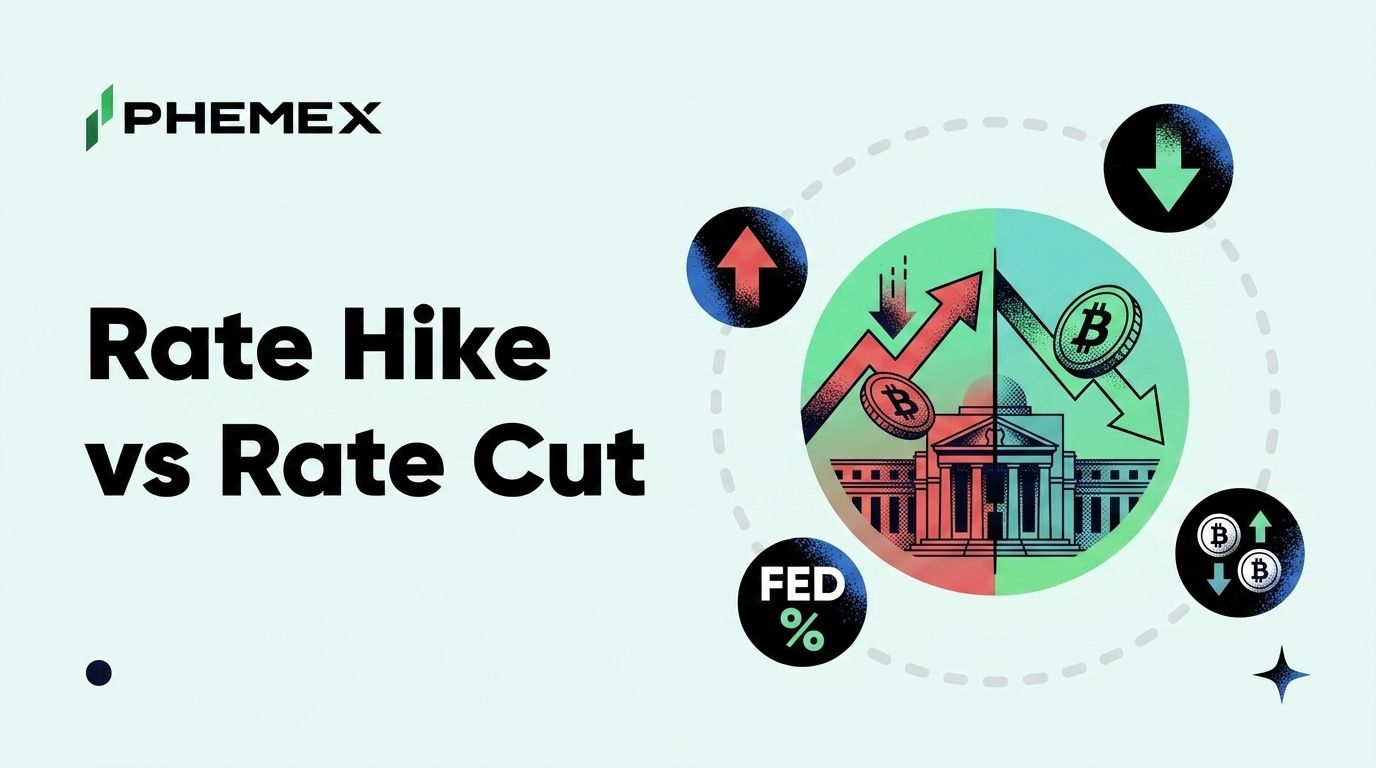
That repricing is the dominant story for crypto right now, and it splits cleanly into two scenarios that pull BTC in opposite directions. Here is what a rate hike and a rate cut each mean for Bitcoin's price path, what altcoins do under each, where ETF flows go, and how to position before Kevin Warsh runs his first FOMC meeting on June 17.
Why Rates Move Bitcoin in the First Place
The link between the federal funds rate and Bitcoin is mechanical, not sentimental. When the Fed raises rates, the risk-free return on cash and short-term Treasuries goes up. A trader who can earn 5% on a Treasury bill with zero risk demands a much higher expected return to hold a volatile asset like BTC instead. Capital rotates toward the safer yield, and risk assets across the board lose their bid.
When the Fed cuts, the math reverses. Cash and bonds pay less, the hurdle for holding risk drops, and liquidity flows back toward assets with higher upside. Lower rates also weaken the dollar, which historically lifts Bitcoin because BTC is priced in dollars and a softer dollar makes the same coin worth more.
This is why the FOMC meeting is the single most-watched event on a crypto trader's calendar. The decision itself sets the rate, but the dot plot and the press conference set expectations for the next twelve months, and markets trade expectations long before they trade the actual move. The two scenarios below are not abstract. They are the two roads the market is actively pricing right now.
Scenario A: The Rate Hike
A rate hike was unthinkable in January. It is now the live risk, sitting above 44% odds, because the inflation data refuses to cooperate. April CPI at 3.8% and PPI matching levels last seen in the 2022 inflation spike forced the Fed to take a tightening bias seriously again.
The mechanism. A hike pushes the risk-free return higher, which strengthens the dollar and pulls the DXY up. Capital rotates out of risk assets and into yield. Bitcoin gets pressured, and altcoins get hit harder because they sit further out on the risk curve. When liquidity tightens, the market sells the most speculative holdings first, and rate hike fears alonehave been enough to flip risk sentiment this spring.
ETF flows. The spot Bitcoin ETF complex has been the marginal buyer through 2025 and early 2026. A hike threatens that. Higher yields make the opportunity cost of holding a non-yielding ETF more painful for institutional allocators, and inflows can stall or reverse into net outflows. Recent sessions already showed heavy outflows as yields climbed, which is the early version of this dynamic.
The historical analog. The 2022 hiking cycle is the cleanest precedent crypto has for this. As the Fed marched the funds rate from near zero to over 5%, Bitcoin fell from $69,000 to $15,500, a 77% drawdown. Altcoins fell further. That cycle is the reason traders treat aggressive tightening as the worst macro environment crypto can face.
There is one important nuance. A 25 basis point hike is now partly priced in, so the move itself would not be a clean shock. The real damage would come from a 50 basis point hike or a hawkish dot plot that signals rates staying elevated through 2027. Futures markets already expect rates to hold high through at least the first half of 2027, so the surprise risk is to the hawkish side, not the dovish one.
Scenario B: The Rate Cut
A cut was the base case at the start of 2026. It has not vanished, but it has moved from the center of the distribution to the tail. For it to come back, two things need to happen together, and neither is happening yet.
The mechanism. A cut lowers the risk-free return, adds liquidity, and shifts the market into risk-on mode. The dollar weakens, which is a direct tailwind for BTC. Altcoins outperform in this environment because traders rotate down the risk curve looking for higher beta once the macro pressure lifts.
ETF flows. Lower rates make a non-yielding asset far easier to hold. Institutional inflows tend to accelerate in a cutting cycle as allocators add risk, and the spot ETF structure turns those inflows into direct, persistent buy pressure on spot BTC.
The historical analog. The 2024 cutting cycle is the reference point for what easing does. Three Fed cuts in the back half of 2025 helped fuel the rally that carried Bitcoin past $108,000 and on to its $126,000 all-time high. Easing liquidity plus a weaker dollar is the environment that has produced every major crypto bull run.
The trigger. A cut needs inflation to cool fast and the labor market to crack. The Fed will not ease into 3.8% CPI. It needs a clear disinflation trend plus rising unemployment to justify the pivot. Until the data turns, the cut stays a distant scenario, and traders positioning for it now are positioning early.
The Warsh Wildcard
Kevin Warsh was sworn in as Fed Chair on May 15, and his first FOMC meeting on June 17 is the first real read on how he runs policy. He matters because he is not Powell, and the market does not yet know his reaction function.
Warsh is widely seen as rules-based and less reactive than Powell, who often adjusted policy meeting to meeting based on incoming data. A more rules-based chair cuts two ways for crypto. He could prove more hawkish on inflation, treating the 3.8% CPI print as a line that has to be defended with tighter policy. Or he could give the market a clearer, more predictable path, which would reduce the uncertainty premium that has weighed on risk assets all spring.
The honest answer is that nobody knows which Warsh shows up until June 17. That single meeting will tell traders more than any forecast can. Until then, the range of outcomes stays wide, and that uncertainty is itself a reason BTC has struggled to find a floor. For a deeper look at how the handover reshapes the macro setup, the Powell vs Warsh transition breakdown covers what changes for Bitcoin into 2027.
How to Position for Either Path
The mistake most traders make here is picking a side and betting the account on it. With hike odds at 44%, neither scenario is dominant enough to justify that, so the disciplined approach is to size positions for the uncertainty itself.
Respect the asymmetry. A hike is already partly priced into the market, so the downside surprise is smaller than it looks unless the Fed goes 50bp or turns the dot plot hawkish. A cut is barely priced, so the upside surprise is larger if inflation cracks. That asymmetry argues for keeping some dry powder rather than being fully positioned in either direction.
Hedge the macro event. Traders holding spot BTC into the June 17 meeting can offset event risk with a short futures position rather than selling the underlying. That keeps the long-term spot holding intact while neutralizing the meeting. Perpetual futures make this straightforward, and watching the funding rate tells you how crowded each side of the trade already is.
Spot vs futures. Spot is the cleaner expression for the cut scenario, because a sustained easing cycle plays out over months and leverage is a liability across that horizon. Futures suit the hike scenario and the event itself, where moves are sharp and short-lived and defined risk matters. Keep leverage low either way. Hot inflation prints and FOMC days produce the kind of volatility that liquidates oversized positions in minutes.
Watch the data, not the narrative. The next CPI and PPI releases, and the 10-year yield holding above or breaking below 4.54%, will move BTC more than any analyst forecast. If yields keep climbing, the hike scenario gains weight. If they roll over, the cut scenario comes back into play.
Frequently Asked Questions
Is the Fed actually going to hike rates in 2026?
It is now a real possibility rather than a certainty, with CME FedWatch showing hike odds above 44% after April CPI hit 3.8% and PPI hit 6%. The Fed has not committed to a hike, but the hot inflation data has put tightening back on the table for the first time since the 2022 cycle. The June 17 FOMC under new chair Kevin Warsh is the next decision point.
Why did Bitcoin fall when rate hike odds went up?
Higher rates raise the risk-free return on cash and Treasuries, which makes a non-yielding, volatile asset like BTC less attractive on a relative basis. As hike odds climbed and the 10-year yield hit a 12-month high of 4.54%, capital rotated toward yield and Bitcoin sold off to $77,855. It is the same mechanism that drove the 2022 crypto bear market.
What happens to altcoins under each Fed scenario?
Altcoins are higher-beta than Bitcoin, so they amplify whatever BTC does. In a rate hike scenario they fall harder than BTC because the market sells its most speculative holdings first when liquidity tightens. In a rate cut scenario they tend to outperform BTC as traders rotate down the risk curve chasing higher returns.
When will the market know which path the Fed takes?
The first clear read is the June 17 FOMC meeting, the first one chaired by Kevin Warsh. Before that, the upcoming CPI and PPI releases will shift the odds, and the 10-year Treasury yield acts as a real-time gauge. A yield holding above 4.54% points to the hike scenario, while a roll over points to the cut, so the bond market tells you which path is being priced.
Bottom Line
The Fed path is now a binary that the crypto market has not faced since 2022, and the resolution comes through the data between now and June 17. A hike, currently above 44% odds, strengthens the dollar, pressures BTC, hits altcoins harder, and threatens to reverse ETF flows, with the real damage reserved for a 50bp move or a hawkish dot plot. A cut, the January base case now pushed to the tail, weakens the dollar and reopens the path that carried BTC to $126,000, but it needs inflation to cool fast and the labor market to crack first.
Watch three things: the next CPI and PPI prints, the 10-year yield around 4.54%, and Warsh's first FOMC. If yields keep climbing, the hike scenario owns the tape and sub-$78K lows get retested. If they roll over, the cut comes back and BTC has room to reclaim $90,000. Position for the range, not the forecast, because the trader who is sized correctly when the path resolves beats the one who guessed right too early.
This article is for informational purposes only and does not constitute financial or investment advice. Cryptocurrency trading involves substantial risk. Always conduct your own research before making trading decisions.