
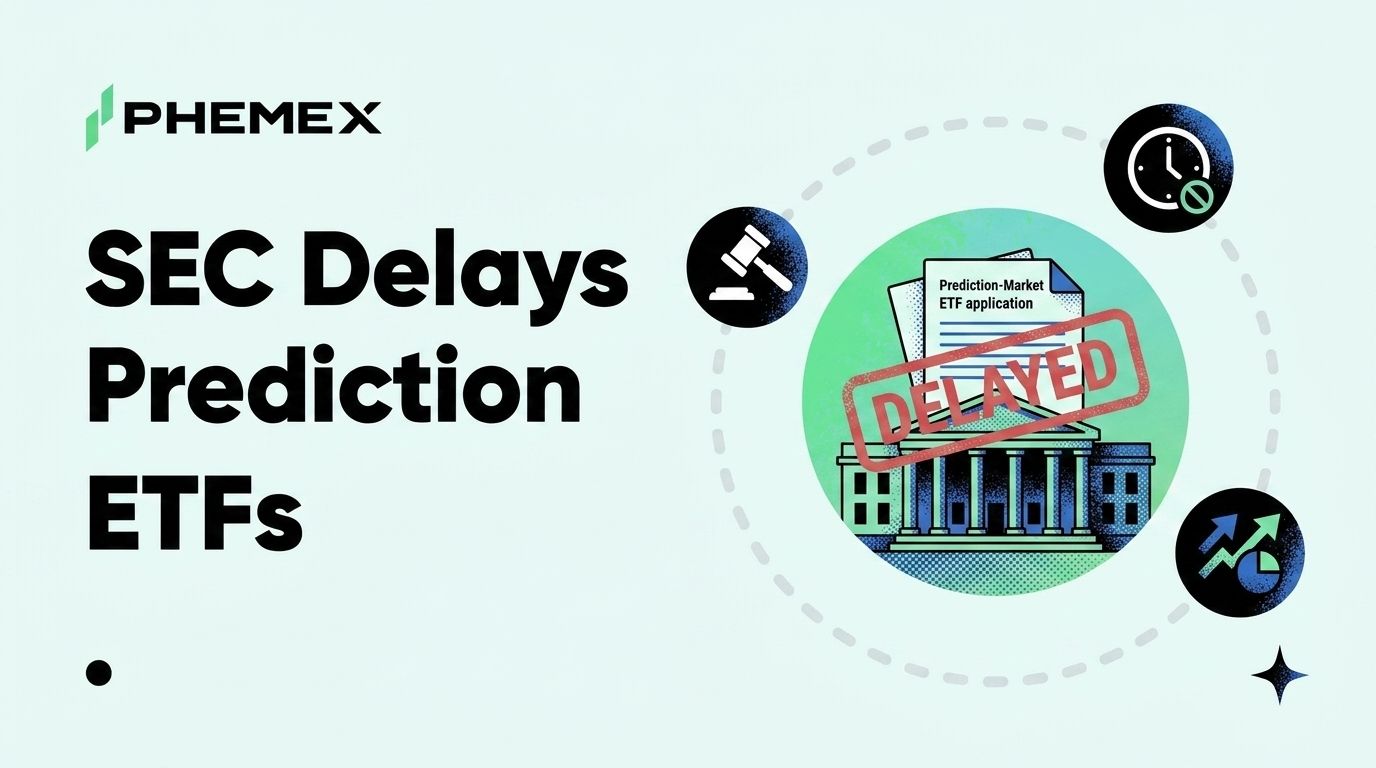
The SEC stepped in days before more than two dozen prediction market ETFs were set to start trading and put the entire batch on hold. The affected funds came from Roundhill Investments, Bitwise Asset Management, and GraniteShares, all of which filed in February 2026 and were counting on the SEC's 75-day rule to carry their products to market automatically. That window was about to expire in early May when the agency asked for more detail on how the funds are built and what risks they disclose.
For an industry that watched spot bitcoin ETFs spend the better part of a decade stuck in regulatory limbo, the pause carries an obvious echo. Here is what these products actually are, the specific reasons the SEC hit pause, why the bitcoin-ETF fight is the right comparison, who is affected, and the scenarios that decide where this goes next.
What a Prediction Market ETF Actually Is
A prediction market lets people trade yes/no contracts tied to a real-world outcome, and the price of a Yes share between $0.00 and $1.00 reads as the market's live probability of that event. A contract trading at $0.68 means the crowd is pricing a 68% chance. Platforms like Kalshi and Polymarket have turned that mechanism into a fast-growing venue, with their combined lifetime volume reaching roughly $150 billion by April 2026.
A prediction market ETF does not hold those contracts directly in the way a spot bitcoin ETF holds BTC. The proposed funds use derivatives to track the value of binary event contracts traded on CFTC-regulated platforms, packaging exposure to election results, economic data prints, commodity prices, and other outcomes into a single ticker that trades on a normal stock exchange. The pitch is straightforward. An investor who wants exposure to the prediction-market sector could buy a fund through an existing brokerage account instead of opening a position on a specialized event-contract venue.
That is the appeal and the problem at the same time. The product wraps a young, lightly understood asset class in the familiar packaging of an ETF, and the SEC's job is to decide if that packaging hides risks a retail buyer would not see coming. To learn how the underlying contracts price probability, the Phemex Academy guide to prediction marketswalks through how Kalshi and Polymarket actually work.
Why the SEC Delayed the Funds
The SEC did not reject these ETFs. It requested additional information on product structure and disclosures, and sources cited by Reuters described the delay as likely temporary while issuers address those questions. The distinction matters, because a request for more detail is a process step, not a verdict.
Three concerns sit underneath that request. The first is the nature of the underlying asset. Roundhill's own filing language flagged that these investments carry "unique risks that differ from those associated with traditional futures, options or securities" and could produce substantial losses and valuation uncertainty. When the issuer itself is naming risks that fall outside the SEC's normal frame of reference, the agency has a reason to slow down and study the structure.
The second concern is settlement. A prediction-market contract resolves on the question of a specific event happening, and that resolution can run into errors, ambiguities, or disputes over how the underlying event was defined in the first place. An ETF that has to mark its holdings every trading day inherits that ambiguity. If the contracts feeding the fund's value can be contested, the fund's net asset value can be contested too.
The third concern is the line between an event contract and a regulated security or a wager. Some of the most-traded prediction-market contracts involve politics, including election outcomes, and bringing politically themed event contracts to retail investors through an ETF is exactly the kind of step a regulator approaches carefully. ETF analysts framed the pause less as opposition from the current administration and more as the caution any regulator would show before clearing a brand-new product category. The 75-day rule, which makes an ETF effective automatically 75 days after filing unless the SEC intervenes, gave the agency a hard deadline. It used the deadline to stop the clock rather than let an untested structure go live by default.
The Bitcoin ETF Parallel
Crypto investors have seen this movie before. The first spot bitcoin ETF proposal, from the Winklevoss twins, was filed in 2013. The SEC rejected filing after filing for roughly a decade, repeatedly citing market manipulation, custody, and surveillance concerns, before the first spot bitcoin ETFs finally launched in January 2024. The approval only came after a federal court ruled the agency had been arbitrary in blocking Grayscale's conversion.
The prediction-market situation is not a ten-year saga, at least not yet. But the underlying pattern is the same. A new asset class produces investor demand, issuers race to package it into an ETF, and the SEC slows the process to work through structural questions it has not faced before. With bitcoin the sticking points were custody and manipulation, while with prediction markets they are settlement integrity and the event-contract-versus-security question. Different specifics, identical dynamic.
The parallel cuts both ways, and the bitcoin precedent shows the SEC can hold a category back for years. It also shows that once a court forces the issue or the agency gets comfortable with the structure, approval can arrive suddenly and the products can scale fast. The bitcoin funds went from a decade of denials to one of the most successful ETF launches in history within a single quarter. A delay is not a death sentence, and traders who treat it as one tend to misread how these processes resolve.
Who Is Affected and What Is at Stake
The three named issuers carry the most direct exposure. Roundhill, Bitwise, and GraniteShares each filed in February with the expectation that the 75-day rule would carry their funds to market in early May, and all three now wait on the SEC instead. Bitwise in particular has built much of its brand on being early to crypto-adjacent ETF categories, so a delay here is a competitive timing question rather than a simple paperwork one.
The event-contract platforms sit one layer back. Kalshi and Polymarket do not need the ETFs to operate, and their volume figures show the venues are thriving without them. An ETF wrapper would still matter, because it opens prediction-market exposure to the large pool of capital that only buys products inside a regulated brokerage account. Retirement accounts, advisor-managed portfolios, and institutions that cannot or will not open a Kalshi account represent demand the current structure cannot reach.
Retail investors are the third group. The delay keeps a convenient on-ramp closed for now, which is a short-term frustration. It also means the eventual product, if it launches, will carry disclosures the SEC actually pressure-tested. For a category this new, that scrutiny is closer to a feature than a bug.
|
Group affected
|
What the delay changes
|
What is at stake
|
|
Roundhill, Bitwise, GraniteShares
|
Funds held back past the expected May launch
|
First-mover advantage in a new category
|
|
Kalshi and Polymarket
|
No change to direct trading volume
|
Access to brokerage-only capital pools
|
|
Retail investors
|
Convenient ETF on-ramp stays closed
|
Trade-off between speed and tested disclosures
|
|
The SEC
|
Buys time to study an untested structure
|
Setting precedent for all future event-contract ETFs
|
The Possible Outcomes From Here
Nobody can tell you a date, and anyone giving you one is guessing. What can be mapped is the range of ways this resolves, and each path carries a different signal for the broader event-contract market.
The procedural fix. The issuers answer the SEC's questions on structure and disclosure, tighten their settlement and risk language, and the funds clear within a few months. This is the outcome the Reuters sourcing points toward, and it would be the cleanest read. A short delay followed by approval would tell the market the SEC sees prediction-market ETFs as a disclosure problem, not a legitimacy problem.
The extended review. The SEC works through a longer back-and-forth, possibly opening a formal comment period or rethinking how politically themed contracts should be treated inside a fund. This stretches the timeline into late 2026 or beyond without killing the products. It would mirror the middle years of the bitcoin-ETF fight, when the category was clearly alive but stuck.
The structural rejection. The agency decides the current ETF structure cannot adequately value or disclose event-contract risk and denies the filings outright. Issuers would then either redesign the products or, as Grayscale did with bitcoin, push the question into court. This is the slowest and least likely path given the SEC's framing so far, but the bitcoin precedent shows it cannot be ruled out.
The tell to watch is the substance of the SEC's next communication. A request for narrow disclosure tweaks points to the first scenario. A request that reopens the question of event contracts belonging in an ETF at all points to the second or third.
Frequently Asked Questions
Did the SEC reject the prediction market ETFs?
No. The SEC requested more information on product structure and disclosures rather than issuing a denial, and sources cited by Reuters described the delay as likely temporary. A request for detail is a process step, and the funds remain in review rather than dead.
What is the 75-day rule for ETFs?
Under SEC rules, certain ETF registrations become effective automatically 75 days after filing unless the agency intervenes before that window closes. The prediction-market issuers filed in February 2026, which put the deadline in early May, and the SEC used that deadline to halt the products instead of letting them go live by default.
How is this different from a spot bitcoin ETF?
A spot bitcoin ETF holds the underlying asset directly. These prediction-market ETFs use derivatives to track the value of binary event contracts on CFTC-regulated platforms, so they are a layer removed from the contracts themselves. That extra layer is part of why the SEC wants a closer look at how the funds value their holdings.
Can I still trade prediction markets without the ETF?
Yes. Platforms like Kalshi and Polymarket operate directly, and the ETF delay does not affect them. The ETF was meant to open the sector to investors who only buy products inside a regulated brokerage account, not to replace direct trading on the venues.
Bottom Line
The SEC paused, it did not reject, and the difference is the whole story. More than two dozen prediction-market ETFs from Roundhill, Bitwise, and GraniteShares are in review because the agency wants tighter answers on settlement, valuation, and where event contracts sit relative to securities law. The bitcoin-ETF history says a category can stay stuck for years, then clear suddenly once the structural questions are answered. The signal that decides which way this goes is the SEC's next request. Narrow disclosure edits mean approval is close. A reopened debate over the place of event contracts inside a fund means the long version of this fight is just starting.
This article is for informational purposes only and does not constitute financial or investment advice. Cryptocurrency trading involves substantial risk. Always conduct your own research before making trading decisions.