



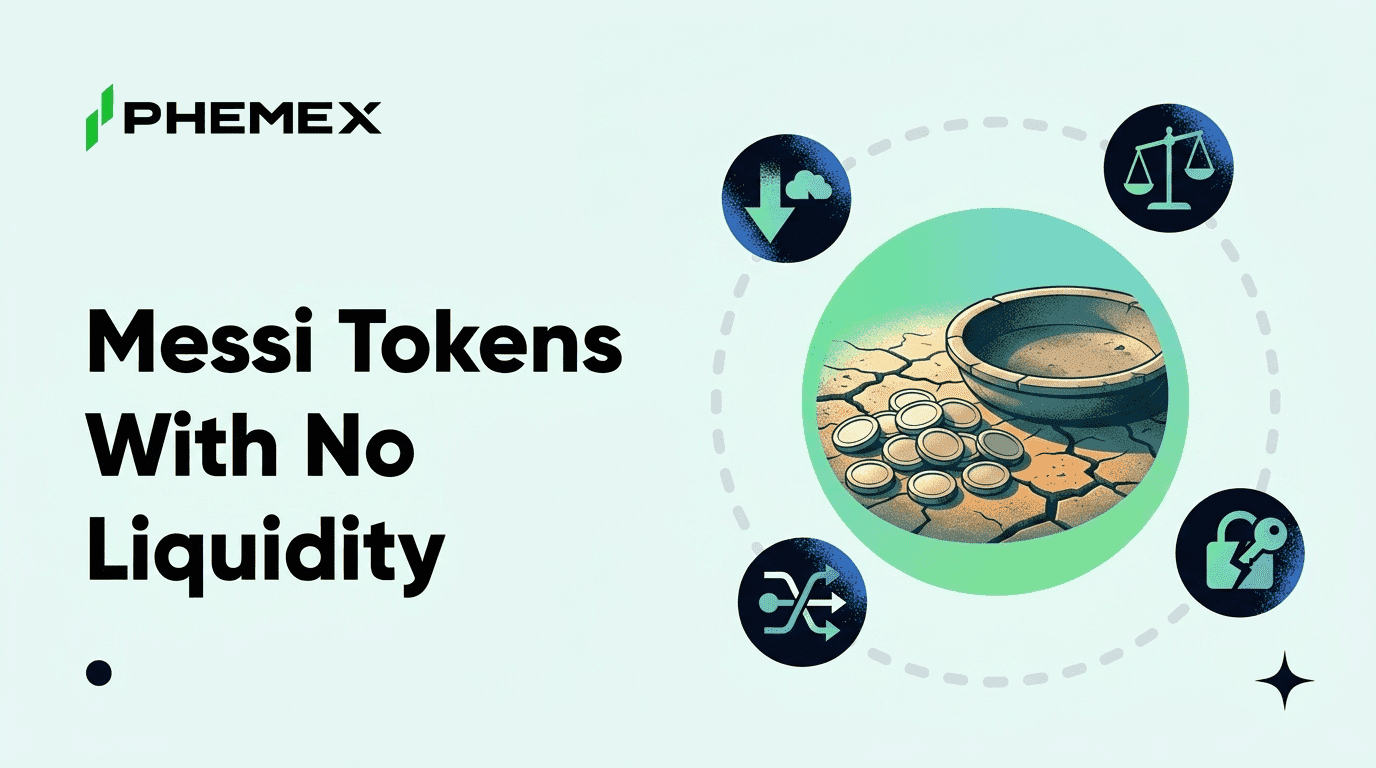
A Messi retirement token is a memecoin created around Lionel Messi's exit from international football, most of them minted on Solana bonding curves or deployed as Ethereum ERC-20s under the ticker MESSI. Most of them have no trading market at all. Searches for them climbed because the retirement is real and the tokens, in the trading sense, are not.
That gap is the reason this page is worth reading even for someone with no interest in football. A token can carry a contract, a ticker, a logo, a chart and a published market capitalization while having no book behind it, and the checks that separate the two take about four minutes to run. Messi week produced an unusually clean set of examples because the tokens were minted inside a single afternoon and the chain recorded every one of them.
The Messi Token Field at a Glance
|
Metric
|
Detail
|
|
Trigger event
|
Lionel Messi announced his international retirement on Monday 31 August 2026
|
|
Tokens listed on CoinGecko under a Messi name
|
None. The nearest matches are MESSIER, Messiah and The Messi Goat
|
|
Distinct Ethereum ERC-20s using the symbol MESSI
|
Twelve inside the first fifty results of one explorer search
|
|
Largest by holders
|
MESSI COIN, contract 0xE08eF920 through c4772, 100,000,000 supply at 9 decimals, 1,424 holders
|
|
Largest by supply
|
MESSI, contract 0x1e2d6ca1 through ee8d9, 600,000,000 supply at 18 decimals, 3 holders
|
|
Pooled liquidity behind MESSI COIN
|
About fifteen cents across two Ethereum pools
|
|
Indexed pairs behind the 600 million supply contract
|
None on either pair feed checked
|
|
New MESSI pairs created on Monday 31 August
|
A cluster minted between 15:06:59 and 16:13:19 UTC
|
|
Reported market cap across that cluster
|
Roughly $2,880 per token, in a band from $2,875.58 to $2,903.91
|
|
Highest daily turnover inside the cluster
|
About 14 times its own reported market cap
|
|
Availability on Phemex
|
No Messi token has a Phemex spot or perpetual market
|
Every figure above was read from the chain and from two independent pair feeds on Monday 31 August 2026. Contract addresses are abbreviated here on purpose, because a partial address is not something anyone should paste into a swap.
What Is a Token With No Liquidity?
Liquidity is not a quality a token has. It is a pile of assets that somebody deposited into a pool so that swaps have something to trade against, and it belongs to the pool rather than to the token. A token with no liquidity pool behind it exists perfectly well on the chain. Balances move, transfers settle and the explorer renders it, and the token still cannot be bought or sold by anybody.
Think of it as a price tag in a shop window with no door. The number is legible from the street and the goods are unreachable, and no amount of staring at the number changes that.
The distinction matters because almost every surface a retail trader looks at is downstream of a price, and a price is downstream of one trade in one pool. Charting sites, portfolio trackers and third-party price pages will all render a token that nobody can trade. They are not lying. They are reporting the last thing that happened, however long ago it happened and however little it involved.
Why Did the Messi Tokens Launch Without a Market?
Because creating a token costs almost nothing and takes under a minute, while creating a market costs real capital that somebody has to lock up. Bonding curve launchpads such as pump.fun collapsed the first job to a form and a signature. The second job did not get any cheaper, and the timestamps show precisely what that asymmetry produces. The Solana cluster minted around the retirement went live between 15:06:59 and 16:13:19 UTC on Monday 31 August 2026, a window of about sixty-seven minutes, under names including Farewell Messi, La Pulga, The GOAT, Gracias Por Todo and MESSI RETIREMENT. Their reported market caps sit in a band from $2,875.58 to $2,903.91, which is not a coincidence and not a valuation. It is the same bonding curve seeded with the same starting reserve, thirteen times over.
Two of them, both on Robinhood Chain, carry the identical name Farewell Messi and the identical symbol. They are separate contracts, deployed roughly nine minutes apart. Neither one is a copy of the other in any meaningful sense, because there was no original.
And the turnover figures inside that cluster are the tell that matters most. One token recorded daily volume of about $41,600 against a reported market cap of about $2,880, which is roughly fourteen times its own capitalization changing hands in a day. A tiny float being passed around at speed generates a chart that looks like demand. It is closer to the same coin going round a table.
How Can a Market Cap Exist With No Market?
Market capitalization is arithmetic, not a bid. It is the last quoted price multiplied by supply, and the last quoted price is whatever the most recent trade in some pool happened to print. If nothing trades after that, the price does not fall. It freezes, and the multiplication keeps running.
Baby Claw is the cleanest illustration this desk has recorded. Its aggregator row shows a market capitalization of $91,376,294 against $5.43 of daily volume and an empty ticker list, meaning no venue is reporting a market for it at all. The quote itself carries a timestamp of 20 March 2026, more than five months before the page was read. The ninety-one million is a fossil multiplied by a billion tokens.
The chain explains where the fossil came from. The Baby Claw contract on Base sits in nine pools, and those nine pools price the same token from $0.0000000258 to $0.09155, a spread of about three and a half million times. The pool that produces the headline number is labelled with a fee tier of 99.984%, and it recorded zero trades over twenty-four hours. Across all nine pools combined, the day's activity was five buys and zero sells.
The same pattern at a larger size
AI XOVIA shows the reporting side of the problem rather than the pool side. Its aggregator row carries a market capitalization near $116 million and roughly $4.5 million of daily volume, and all of that volume comes from a single centralized listing. Across the ten Solana pools that hold the same mint, total volume over a comparable day came to about $225.
That is a basis difference before it is anything else, and a large gap between a centralized figure and an on-chain figure is not by itself evidence of anything wrong. The point is narrower and more useful. A reader who does not know which basis a number is quoted on cannot judge it, and those same ten pools report ten different market capitalizations for one token, ranging from $41.6 million to $1.13 billion.
What the Chain Says About the Two Largest MESSI Contracts
Direct contract reads settle questions that aggregators cannot. Five calls against each contract return the name, the symbol, the decimals, the true supply and the ownership state, and they take seconds.
MESSI COIN returns symbol MESSI, name MESSI COIN, nine decimals and a total supply of exactly 100,000,000. Its owner call returns the zero address, which means ownership was renounced and no privileged wallet can mint more or change the rules. On the aggregator side it holds 1,424 holders. On the market side it holds two Ethereum pools created on 13 and 16 June 2023, whose combined reserve is about fifteen cents, and neither recorded a single trade over twenty-four hours. Those two pools quote the same token about 656,000 times apart, one at a fully diluted value of $2,885,264 and the other at $4.39.
The second contract is starker in its simplicity. The 600 million supply MESSI contract returns symbol MESSI, name MESSI, eighteen decimals and a total supply of 600,000,000. Its owner call reverts, because the function is not there. It has three holders and no indexed pair on either feed checked, which means there is no venue to buy it on and no price to quote for it, and that has not stopped third-party pages from carrying a row for the ticker.
Renounced ownership is worth noting and worth putting in its place. It removes one specific risk, which is the deployer changing the rules afterwards. It says nothing at all about how much liquidity exists, and it is not the property most retail losses turn on.
What Separates a Real Book From a Reported Number
|
Check
|
Token with a real book
|
Token with a reported number only
|
|
Pooled liquidity
|
Deep enough to absorb your intended size
|
Cents, or no pool that any feed indexes
|
|
Volume against pooled liquidity
|
Same order of magnitude as the pool
|
Multiples of the market cap, or zero
|
|
Trade count over a day
|
Hundreds or thousands, on both sides
|
Single digits, or all buys and no sells
|
|
Price agreement across pools
|
Tight, usually inside a few percent
|
Orders of magnitude apart on the same chain
|
|
Timestamp on the quote
|
Minutes old
|
Weeks or months old
|
|
Holder count
|
Thousands, with a distributed tail
|
Single digits, or a wallet holding most of it
|
What Makes a Book Real
Pooled liquidity you can size against
The only number that decides how much you can sell is how much is sitting in the pool. A position of $500 against a $700 pool is not a position, it is a donation, and the slippage on the exit will take most of it. Read the reserve before you read the chart.
Volume in proportion to the pool
Healthy pairs tend to turn over somewhere near their pooled liquidity in a day. Volume many multiples above the pool means a small float is recycling, and volume far below it means the pool is parked. Both are informative, and neither is what a functioning market looks like.
Trades on both sides
Buys with no sells is the fastest read available. A day of five buys and zero sells is not a market forming, it is a market that nobody has been able to leave, and the reason is usually visible in the pool parameters rather than in sentiment.
Agreement between pools
When a token has one real venue, its pools agree closely because arbitrage forces them to. When they disagree by six figures, arbitrage is not running, and the most common reason is that moving value through those pools is uneconomic or impossible.
A holder base wide enough to produce sellers
Three holders cannot make a market with each other. Holder count on its own is a weak signal and top-holder concentration is a stronger one, but a single-digit count settles the question without any further work.
Risks of Buying a Token Launched on a News Event
The exit is the risk, not the entry
Buying into a thin pool is easy and often cheap. Getting out is the part that fails, because your sale is priced against the same shallow reserve that made entry look painless. Size every position on what the pool can absorb, not on what you want to own.
A same-name field makes the address the only identifier
Twelve Ethereum contracts using one ticker, plus two identically named tokens on a third chain, means the name identifies nothing. Match the full contract address character by character against a source you trust before any swap, and treat a partial address in a social post as no address at all.
The quote you are reading may be months old
A price with a stale timestamp behaves exactly like a live one on most interfaces. Check when the quote was last updated before treating a market capitalization as a fact about the present.
Pool parameters can make a market untradable by design
Fee tiers, transfer taxes and routing restrictions all live in the pool and the contract rather than in the price. A fee tier near 100% takes almost the whole value of any swap routed through it, and it will still generate a price that charting sites publish. Uniswap's own documentation sets out how a swap fee is applied, which is worth reading once so the mechanism stops being abstract.
Renounced ownership is not a safety rating
It removes the deployer's ability to change the rules and nothing else. A contract can be fully renounced, permanently immutable and completely untradable at the same time, and several of the contracts described on this page are exactly that.
Nothing supports the price on the way down
These tokens have no revenue, no treasury and no buyback. When attention moves to the next event, the only thing that arrests a decline is a buyer choosing to appear. That is the same structure behind most rug pull outcomes even when nobody pulls anything, because the liquidity was never there to begin with.
How to Check If a Token Has a Book at All
Run these in order. The whole sequence takes about four minutes and it would have stopped every purchase described on this page.
Search the contract address on two pair feeds, not the name. If both return no pairs, there is no market and the checks are finished. If one returns pairs and the other does not, keep going, because the discrepancy usually means the pools are dead rather than absent.
Read the reserve in every pool, not only the top one. Add them up. That total is the real size of the market, and it is frequently three or four orders of magnitude below the published market capitalization.
Compare the quoted price across every pool you found. Agreement inside a few percent is normal. Agreement inside a factor of a thousand is not, and a spread of six figures means the pools are not connected by anyone's arbitrage.
Read the daily transaction count and the buy to sell split. Zero sells is the loudest signal on the page.
Read the token contract directly rather than the aggregator row. Call name, symbol, decimals, total supply and owner. Compare the on-chain supply with what the aggregator publishes, because a disagreement there invalidates every derived figure including the market cap.
Check the timestamp on the quote before you use it. A number without a time attached is not a number you can trade against.
Then look at the holder count and the concentration behind it. A single-digit holder count ends the discussion. A large count with one wallet holding most of the supply is a different problem and a similar outcome.
Is Any Messi Token Worth Trading?
The honest answer is that none of the tokens examined for this page has a market a retail trader could enter and exit at any meaningful size, and that assessment comes from the pool reserves rather than from an opinion about memecoins. A pool holding fifteen cents cannot fill a fifty dollar order. A contract with three holders and no indexed pair cannot fill anything at all.
That is a statement about liquidity and about nothing else. None of these contracts is being described as fraudulent, and nothing found on the chain supports such a claim about any of them. Somebody minted a token about a footballer retiring, which is a thing people do, and most of them never attracted a market. Those are separate facts and only the second one costs money.
The wider point survives the news cycle completely. Every event that reaches the top of a search trend produces this same field within hours, and the checks above work identically on the next one. Traders who want exposure to attention cycles are better served by liquid assets with real books than by low-quality tokens minted around a headline, where the position size you can actually exit is the only number that ends up mattering.
Final Thoughts
Watch what happens to the Solana cluster's pooled liquidity over the days after a news event rather than watching its price, because liquidity leaving is what makes the exit impossible and it leaves before the chart reflects it. The specific tell to keep is the ratio, not the level. Volume many times a token's own market capitalization on a pool holding four figures is a float being recycled, and it resolves the same way every time.
The broader habit is cheaper than any of this. Before treating a published market capitalization as information, find the pool it came from and read the reserve, then check when the price was last updated. Two lookups. If the answer is fifteen cents and a five-month-old timestamp, the market capitalization is arithmetic performed on something that stopped trading long ago, and no chart on any site is going to tell you that.
Frequently Asked Questions
Is there an official Lionel Messi cryptocurrency?
No token endorsed by Messi or by any organization connected to him has been identified, and his retirement announcement makes no reference to any digital asset. Every MESSI token examined here was created by third parties with no stated connection to him.
Can a token have a market cap of millions and still be impossible to sell?
Yes, and it is common. Market capitalization is the last traded price multiplied by supply, so a single trade in a pool holding a few dollars can set a price that generates a nine-figure valuation. The number is real arithmetic performed on an unreal input.
How do I check a token's liquidity before buying?
Search the full contract address on two independent pair feeds and add up the reserve across every pool returned, then compare that total against the size you intend to trade. Anything smaller than roughly ten times your position is a pool you will move against yourself on the way out.
Does renounced ownership mean a token is safe?
It means the deployer cannot mint new supply or alter the contract, which is one narrow risk removed. It says nothing about liquidity, holder concentration, pool fee tiers or the existence of a market, and a fully renounced contract with no pool is worth exactly zero.
Why do price sites show a price for a token with no trading pairs?
Most feeds inherit a price from the last trade recorded anywhere, including a pool that stopped trading years earlier, and some carry a row for a ticker on the strength of a submitted contract alone. The price is not fabricated, it is simply the last thing that happened, and the timestamp is the only field that tells you how long ago that was.
Are tokens like these carried on major exchanges?
Almost never, and the reason is the same one described throughout this page. A listing requires a market to exist first, and the tokens described here do not have one. Traders wanting positions around attention cycles generally use established assets with deep books instead.
This article is for informational purposes only and does not constitute financial or investment advice. Cryptocurrency trading involves substantial risk. Always conduct your own research before making trading decisions.