Introduction
In the high-stakes world of cryptocurrency, price action is often driven by sentiment, but long-term trends are driven by policy. As the United States pivots significantly in its approach to digital assets in late 2025, one name has emerged as the intellectual architect behind the curtain: Kevin Hassett.
While names like Elon Musk or Michael Saylor dominate the headlines, it is Kevin Hassett—the former Chairman of the Council of Economic Advisers (CEA)—whose fingerprints are on the actual legislative levers. From the White House to the Treasury, Hassett’s influence represents a seismic shift from "tolerance" to "adoption."
But who is this economist? What is his history with digital assets? And most importantly, how will his specific brand of supply-side economics radically reshape the crypto landscape for the next decade? This comprehensive dossier explores the Kevin Hassett crypto phenomenon.
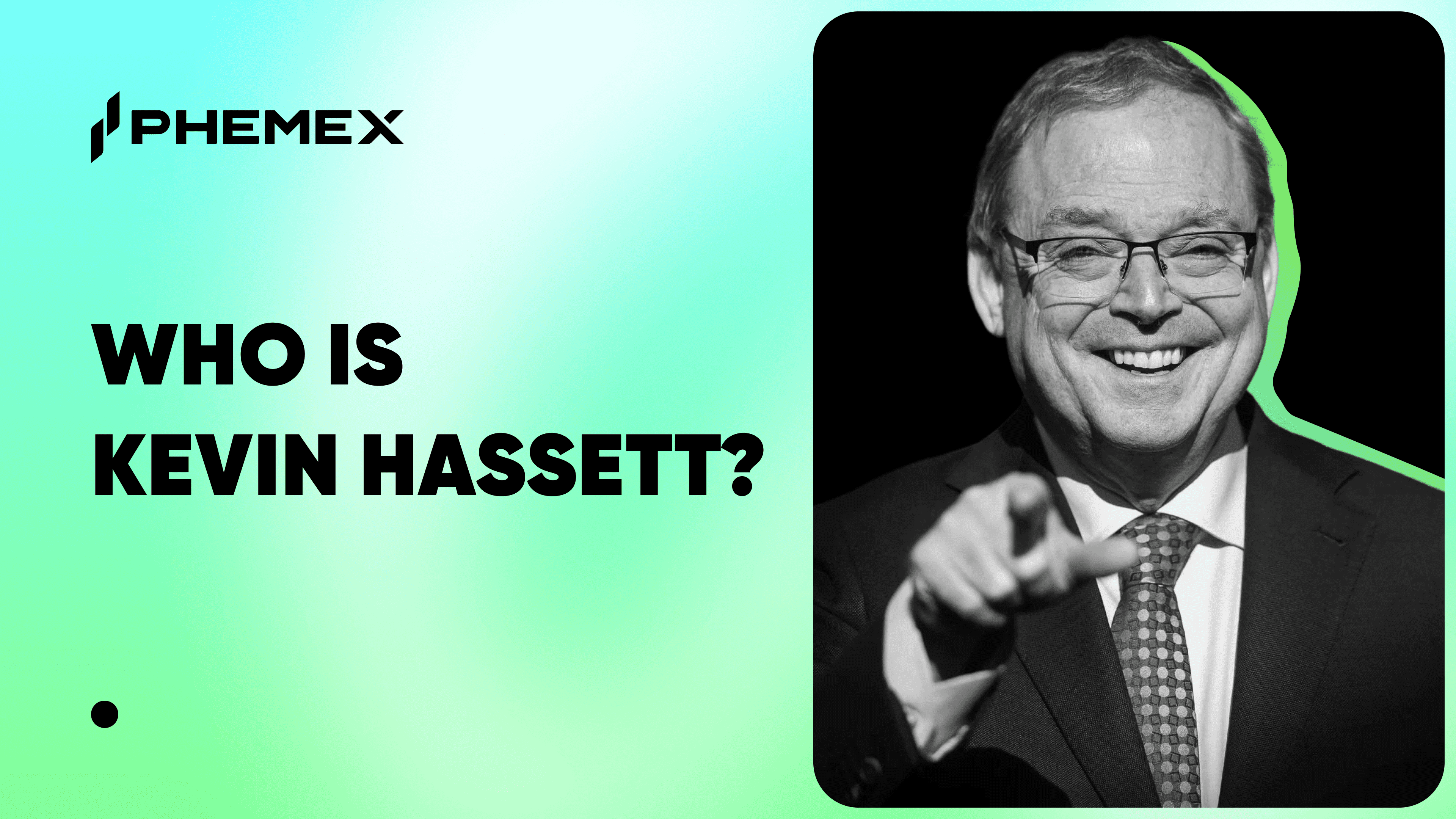
Who is Kevin Hassett? (The Man Behind the Math)
To understand where crypto policy is going, you must understand the worldview of the man shaping it. Kevin Hassett is not a tech entrepreneur; he is a classical, data-driven economist with a penchant for contrarian optimism.
The "Dow 36,000" Visionary
Hassett first gained global fame (and some infamy) for his 1999 book, Dow 36,000. While critics at the time mocked his bullish prediction just before the Dot-com bubble burst, his core thesis was arguably ahead of its time: that equity risk premiums were misunderstood and that stocks were fundamentally undervalued in the long run.
-
Relevance to Crypto: This demonstrates Hassett’s willingness to look past short-term volatility and identify long-term structural value—a mindset perfectly suited for Bitcoin adoption.
The Architect of the 2017 Tax Cuts
Hassett served as the Chairman of the CEA from 2017 to 2019. He was the primary intellectual force behind the Tax Cuts and Jobs Act (TCJA).
-
The Philosophy: His defining economic belief is that capital goes where it is treated best. He argued that high corporate taxes forced US companies to move money offshore.
-
The Crypto Pivot: Today, he applies this exact logic to the crypto industry. He recognizes that hostile US regulations (2021-2024) forced crypto innovation to Dubai, Singapore, and Europe. His mission is to repatriate that digital capital.
Kevin Hassett’s Relationship with Crypto
Kevin Hassett was not an early Bitcoin adopter in 2011, but his evolution mirrors that of Wall Street itself: from skepticism to curiosity, and finally, to strategic embrace.
From Skeptic to Free-Market Advocate
Initially, like many traditional economists, Hassett viewed Bitcoin through the lens of currency substitution. However, his libertarian leanings—favoring small government and free markets—made him naturally sympathetic to the industry. He has consistently argued that the government should not be in the business of picking winners and losers.
The "Digital Dollar" vs. CBDC Conflict
This is the most critical aspect of Hassett’s stance.
-
Anti-CBDC: Hassett has voiced concerns regarding Central Bank Digital Currencies (CBDCs). He views a Fed-run ledger as a privacy nightmare and a step toward a surveillance state.
-
Pro-Stablecoin: Conversely, Hassett champions private-sector stablecoins (like USDC or USDT). He views them as the ultimate vehicle for US Dollar Hegemony. In his view, if the world trades crypto using USD-backed stablecoins, they are essentially importing US monetary policy, which strengthens the dollar rather than weakening it.
The Advisor Role
Post-White House, Hassett’s work with groups like The Lindsey Group and his advising of the Trump transition teams placed him in rooms where the "Bitcoin Strategic Reserve" transformed from an internet meme into a serious Treasury proposal.
How Kevin Hassett Will Impact the Crypto Industry
The query "Kevin Hassett crypto impact" is trending for a reason. His policies are not hypothetical; they are structural changes that affect everything from Bitcoin's price to DeFi compliance.
1. The Bitcoin Strategic Reserve: Legitimizing the Asset
Hassett is a proponent of hedging risk. With the US National Debt surpassing $36 Trillion, traditional tools (printing more money) are losing efficacy.
-
The Policy: Hassett supports the creation of a Strategic Bitcoin Stockpile. This involves the US government holding the 200,000+ BTC it has seized from criminal cases and potentially acquiring more.
-
The Economic Logic: By treating Bitcoin as a "hard asset" akin to gold or oil reserves, the US strengthens its national balance sheet. Hassett’s influence provides the academic cover needed for the Treasury to say, "This isn't gambling; this is sovereign risk management."
2. Regulatory Clarity: CFTC Over SEC
Hassett has long been a critic of administrative overreach. The aggressive "regulation by enforcement" led by the SEC in previous years is antithetical to his belief in market efficiency.
-
The Shift: Expect Hassett to push for legislation that classifies the majority of crypto assets (excluding obvious scams) as Commodities.
-
The Impact: This moves oversight to the CFTC (Commodity Futures Trading Commission), a regulator traditionally viewed as more business-friendly and focused on risk disclosure rather than punishment. This clears the path for ETFs, options, and deeper institutional liquidity.
3. Tax Reform for Digital Assets
As a tax expert, Hassett knows the current crypto tax code is a mess.
-
De Minimis Exemption: He is likely to support laws that exempt small transactions (e.g., buying a coffee with crypto) from capital gains tax, unlocking crypto’s use as actual currency.
-
Incentivizing Mining: Hassett advocates for using tax credits to encourage US-based Bitcoin mining, specifically when it stabilizes the energy grid. He views energy abundance as an economic driver, framing Bitcoin mining as a utility partner rather than an environmental villain.
4. Banking Access (Operation Chokepoint 2.0 reversal)
Hassett’s free-market view dictates that banks should judge risk, not regulators.
-
The Change: His influence will likely lead to the complete repeal of guidance like SAB 121. This means major custodians (JP Morgan, BNY Mellon) will be allowed to hold Bitcoin for their clients without punitive capital requirements. This opens the floodgates for trillions of dollars in pension funds to enter the market.
The Market Forecast (2025-2026)
If Kevin Hassett’s roadmap is fully implemented, what does the market look like?
-
The "Hassett Put": Just as the markets believed the Fed would save the stock market (The Fed Put), the crypto market is pricing in a "Hassett Put"—a belief that the US government is now a stakeholder in Bitcoin’s success and will not allow it to fail regulatory tests.
-
USA as the "Crypto Capital": We will likely see a reversal of the "brain drain." Startups that moved to Lisbon or Dubai will return to Silicon Valley and Austin, attracted by the clarity and tax incentives Hassett champions.
-
Bitcoin vs. Gold: Under Hassett’s economic modeling, Bitcoin begins to demonetize gold at an accelerated rate, becoming the preferred collateral asset for the digital economy.
Frequently Asked Questions (FAQ)
Q1: Is Kevin Hassett a "Bitcoin Maximalist"?
A: No. He is a Free Market Maximalist. While he may not post "laser eyes" memes, his economic policies (deregulation, sound money, privacy) are arguably more bullish for Bitcoin than any internet hype. He supports Bitcoin because it fits his theory of efficient markets, not because of blind faith.
Q2: How does Hassett view Ethereum and DeFi?
A: While his primary focus is often on Bitcoin as a monetary asset and stablecoins as a dollar instrument, his regulatory philosophy benefits Ethereum. By pushing for clear "rules of the road," he removes the threat of developers being arrested for writing code, allowing DeFi to compete with traditional banking—something Hassett believes will lower costs for consumers.
Q3: Will Hassett’s policies increase crypto volatility?
A: Short-term, perhaps, as markets react to news. Long-term, his goal is reduced volatility. By bringing in institutional capital (pension funds, sovereigns) through clear regulation, the crypto market depth increases, which theoretically dampens the wild 50% swings seen in the past.
Q4: What is the biggest risk to Hassett’s crypto plan?
A: The Federal Reserve. Hassett often disagrees with the Fed’s monetary policy. There could be friction between the fiscal policy (Hassett/Treasury wanting to embrace crypto) and monetary policy (The Fed wanting to maintain total control). However, in a battle for influence in 2025, the Executive Branch appears to be winning.
Conclusion
For the first 15 years of its existence, cryptocurrency was an outsider movement fighting against the establishment. The arrival of Kevin Hassett at the center of US economic policy marks the end of that era.
Kevin Hassett represents the merger of Wall Street rigor and blockchain innovation.
He is not trying to kill crypto; he is trying to integrate it into the machinery of American Capitalism. For investors, this signals that the "existential risk" of a US ban is effectively zero. The new risk is simply not having exposure to the asset class that America’s top economists are now engineering into the national balance sheet.