


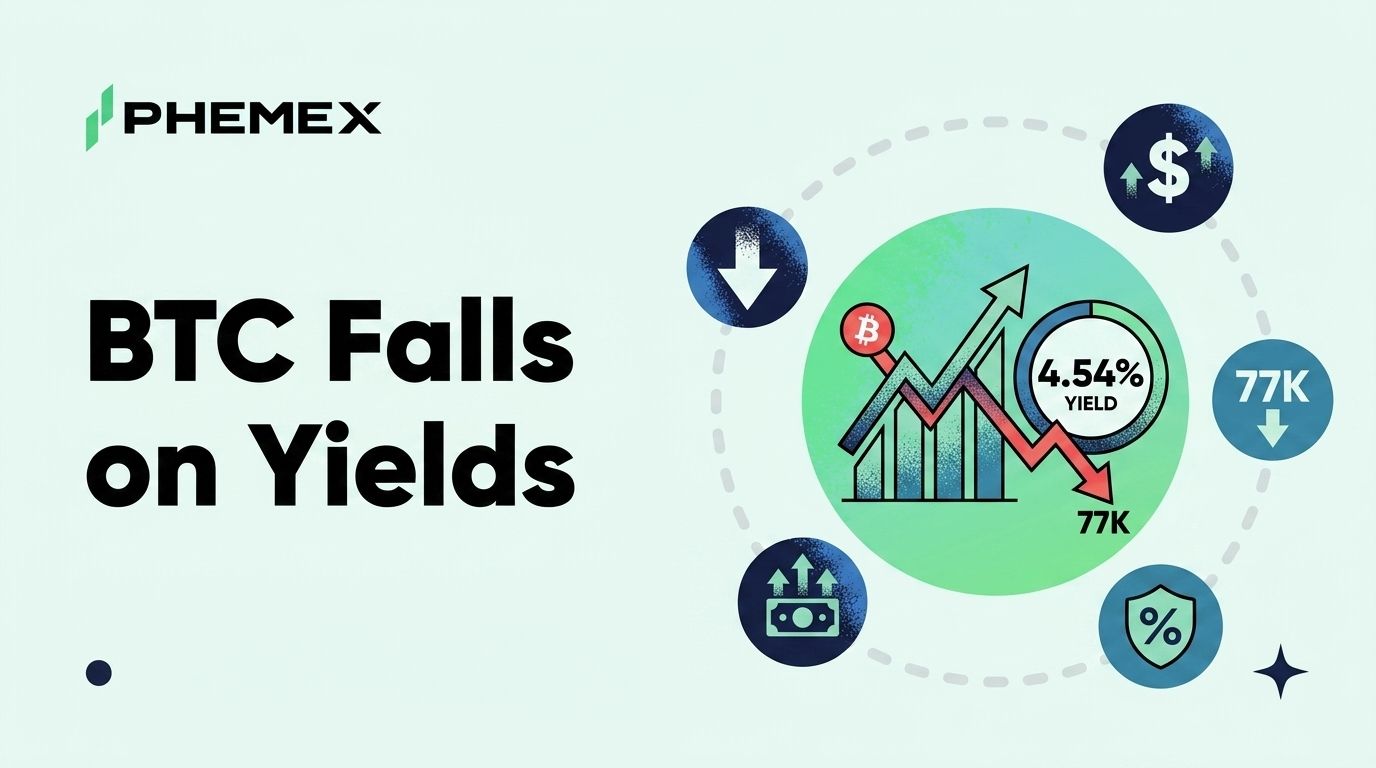
Bitcoin is trading at $77,855 on May 17, down from roughly $82,000 in mid-May, after the US 10-year Treasury yield climbed to 4.54% on May 15, its highest level since May 2025. The move was not driven by anything inside crypto. It came from the bond market, where April inflation data landed hot enough to put rate hikes back on the table for the first time in this cycle. April CPI printed at 3.8% and PPI came in at 6%, a wholesale-inflation reading that matched 2022 levels. CME FedWatch now shows rate-hike odds above 44%, and BTC just posted its most bearish weekly close of May below $78,000.
Here is why a number from the bond market reset the entire 2026 crypto thesis, and what the PPI print specifically is warning about.
What Actually Triggered the Drop
The catalyst was a single data cluster released in the week of May 12. April CPI came in at 3.8% year-over-year, well above the consensus and far from the Fed's 2% target. The bigger shock was the Producer Price Index, which rose 6% and matched levels last seen during the 2022 inflation spike. PPI measures the prices producers pay before goods reach consumers, so a hot PPI reading is effectively a preview of where consumer inflation is heading next.
Treasury markets moved first. The 10-year yield jumped to 4.54% on May 15, a 12-month high that pressured Bitcoinand the broader risk-asset complex. Crypto followed within hours. BTC slid through $80,000, then through $79,000, and bond yields surging kept the selling orderly but persistent rather than a single violent crash.
By May 15, leverage caught up with the move. A $550 million long flush hit the market as rate-hike fears triggered forced liquidations across futures venues. Traders who had been positioned for a continuation higher were stopped out in waves, and the cascade pushed BTC into the $77,000s. The Fear and Greed Index collapsed as the weekly candle closed below $78,000, the weakest close of the month.
Why Rising Yields Pressure Bitcoin
The 10-year Treasury yield is the closest thing global markets have to a risk-free benchmark. When it rises, three things happen at once, and all three work against Bitcoin.
The first is competition for capital. A 4.54% yield on a US government bond is a guaranteed nominal return backed by the Treasury. Every percentage point that risk-free rate climbs raises the bar that a non-yielding asset like Bitcoin has to clear to justify the risk. BTC pays no coupon and no dividend, so its entire case rests on price appreciation. When investors can lock in 4.5% with no drawdown risk, the opportunity cost of holding a volatile asset goes up sharply.
The second is dollar strength. Higher yields attract foreign capital into US bonds, and that capital has to buy dollars first. A stronger dollar makes every dollar-priced asset, Bitcoin included, more expensive for the rest of the world and tends to cap rallies.
The third is liquidity, and it is the one traders feel most directly. Rising yields signal tighter financial conditions, so borrowing costs go up across the economy, leveraged positions get more expensive to carry, and the marginal speculative dollar that fuels crypto rallies becomes scarcer. Phemex's FOMC explainer lays out the mechanism cleanly. Hawkish policy strengthens the dollar and drains the liquidity that risk assets depend on. This is not a new relationship. It is the same one that defined the 2022 bear market, and it is reasserting itself now.
The PPI Number Is the Scary One
Most of the headlines led with CPI at 3.8%, but the more important figure is the PPI print of 6%. The two indices measure different stages of the same pipeline, and that difference is what makes the May data genuinely concerning.
CPI tracks what consumers pay at the checkout today. PPI tracks what producers and wholesalers are paying for inputs, raw materials, and intermediate goods before those costs reach the shelf. Producer prices feed into consumer prices with a lag, usually one to three months. A 6% PPI reading is the inflation that has not shown up in CPI yet. It is in the pipeline.
That matters because it removes the easiest dovish argument. A Fed looking at a one-off CPI spike could call it noise and hold steady. A Fed looking at PPI matching 2022 levels has to take seriously the possibility that the 3.8% CPI is not the peak but a waypoint on the way higher. Hot inflation data sparking Fed rate-hike fears is the market doing exactly that math. Pipeline inflation at 2022 levels is what shifted the conversation from "how many cuts" to "is the next move a hike."
How the Rate-Hike Repricing Reverses the 2026 Thesis
Coming into 2026, the dominant macro trade was straightforward. Inflation was assumed to be drifting back toward target, the Fed was expected to deliver two or more rate cuts during the year, and crypto was positioned as a primary beneficiary of looser policy and a weaker dollar. Futures traders priced that path with confidence, and that entire framework just broke in a single week of inflation data.
|
Variable
|
2026 thesis (January)
|
After May CPI/PPI
|
|
Fed policy path
|
2+ rate cuts expected
|
Rates elevated through at least H1 2027
|
|
Rate-hike odds
|
Near zero
|
Above 44% on CME FedWatch
|
|
10-year yield
|
Expected to drift lower
|
4.54%, a 12-month high
|
|
Dollar
|
Expected to weaken
|
Strengthening on yield differential
|
|
BTC setup
|
Risk-on tailwind
|
Risk-off headwind
|
Futures traders who started the year pricing two or more cuts now expect rates to stay elevated through at least the first half of 2027. That is not a minor adjustment. It is a full repricing of the cost of capital for the next eighteen months, and crypto sits at the far end of the risk curve where repricings hit hardest.
Two scheduled events define the path from here. Kevin Warsh was sworn in as Fed Chair on May 15, the same day yields peaked, and his first FOMC meeting is June 17. Warsh built his reputation on an inflation-vigilant approach, which gives the market little reason to expect a dovish pivot into a hot PPI print. Until the June meeting delivers actual guidance, the rate-hike premium stays embedded in every risk asset.
The Damage Was Not Limited to Bitcoin
When the macro driver is the bond market, correlations across crypto tighten and the major altcoins move as a single block. That is exactly what happened. ETH, SOL, and XRP all followed Bitcoin lower through the week, with no asset finding independent strength because there was no asset-specific story to find. A yield-driven selloff does not discriminate.
The ETF flow data confirmed the institutional side of the move. US spot Bitcoin ETFs recorded $290 million in net outflows, the second consecutive day of heavy redemptions. Two back-to-back heavy-outflow sessions during a yield spike is a different signal than a single noisy day, because one weak session can be rebalancing while two in a row points to a deliberate shift. It suggests allocators are actively trimming risk exposure in response to the macro picture rather than adjusting positions on the margin, and that kind of institutional selling tends to persist until the yield trend turns.
This is the part of the cycle where the risk-on boom meeting rate-hike fears gets resolved, and so far it is resolving against risk. Phemex News covered a similar dynamic earlier in the year when the Treasury yield spread hit a five-year high and pressured Bitcoin, and the playbook this time is recognizable. Yields lead, crypto follows, and altcoins amplify the move in both directions.
Frequently Asked Questions
Why does Bitcoin fall when Treasury yields rise?
Higher Treasury yields raise the guaranteed return investors can earn from risk-free government bonds, which increases the opportunity cost of holding a non-yielding asset like Bitcoin. Rising yields also strengthen the dollar and tighten financial conditions, both of which drain liquidity from speculative markets. It is one of the most reliable macro relationships in crypto.
What is the difference between CPI and PPI?
CPI measures the prices consumers pay at the point of purchase, while PPI measures the prices producers and wholesalers pay for inputs before goods reach the shelf. Producer prices feed into consumer prices with a one-to-three-month lag, so a hot PPI reading is effectively a forecast of where CPI is heading. That is why the April PPI of 6% worried markets more than the 3.8% CPI.
Will the Fed actually hike rates in 2026?
CME FedWatch puts the odds above 44%, which means the market views a hike as a real possibility rather than the base case. The June 17 FOMC meeting under new Chair Kevin Warsh is the next decision point, and his guidance will matter more than the rate move itself. Nothing is decided until that meeting delivers actual forward language.
Is the 2026 bull thesis for crypto over?
The original thesis built on two or more rate cuts and a weaker dollar is broken for now, with futures traders pricing elevated rates through at least H1 2027. That does not end the crypto cycle, but it removes the macro tailwind that was supposed to drive it. The thesis would need a genuine cooling in inflation data to come back.
Bottom Line
The drop to $77,855 was a bond-market event, not a crypto event, and that distinction defines what to watch next. The single number that matters is the 10-year yield. As long as it holds near 4.54% or pushes higher, the headwind stays in place and rallies will struggle to hold. The June 17 FOMC meeting is the first real test, and Warsh's guidance on the next move, a hold or a hike, will set the tone for the rest of the year. The level to watch on the downside is the May low in the $77,000s. A weekly close below it confirms the rate-hike repricing is still feeding through. A reversal back above $80,000 would suggest the market has absorbed the worst of the inflation shock. Until inflation data actually cools, every crypto rally is fighting the bond market, and the bond market is the larger force.
This article is for informational purposes only and does not constitute financial or investment advice. Cryptocurrency trading involves substantial risk. Always conduct your own research before making trading decisions.