









Key Takeaways
WorldAssets presents itself as an RWA tokenization platform called the WAT Protocol, designed to bring real assets on-chain and connect them to DeFi liquidity.
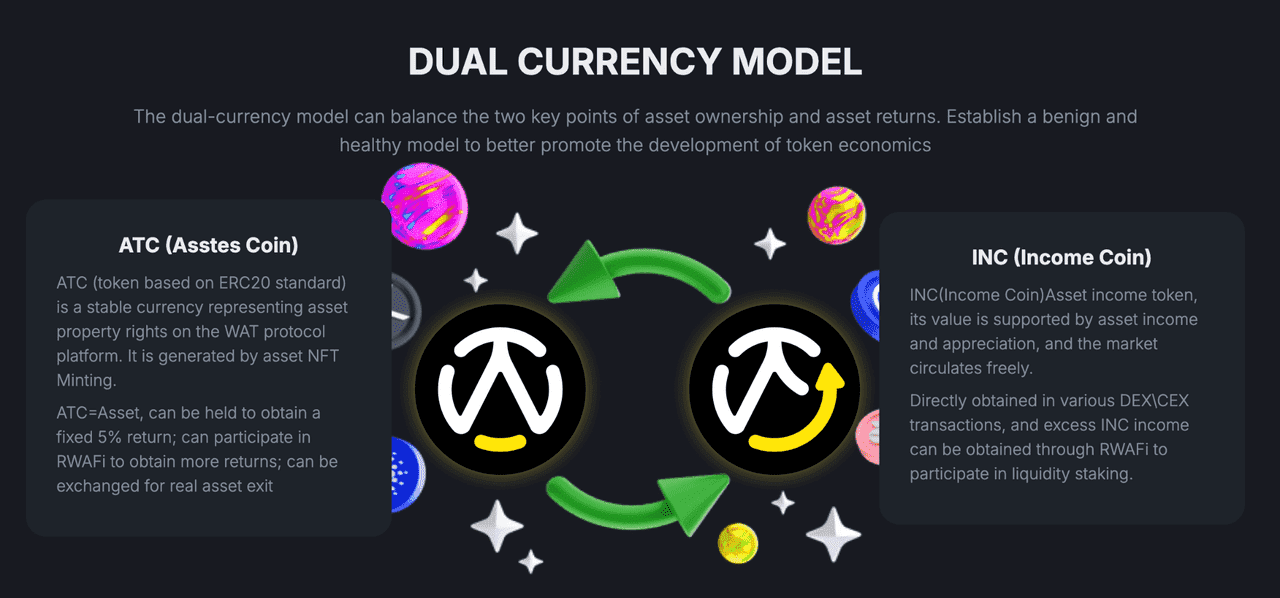
The ecosystem uses a dual-token model: ATC for asset ownership representation and INC for asset income and appreciation exposure.
Official docs say INC is an ERC-20 income token with a 300 million max supply and a first-phase circulation of 30%.
The project says its early asset package includes tokenized exposure to companies such as Aupera and JOHOME, with a strong early emphasis on AI-company equity and pre-IPO assets.
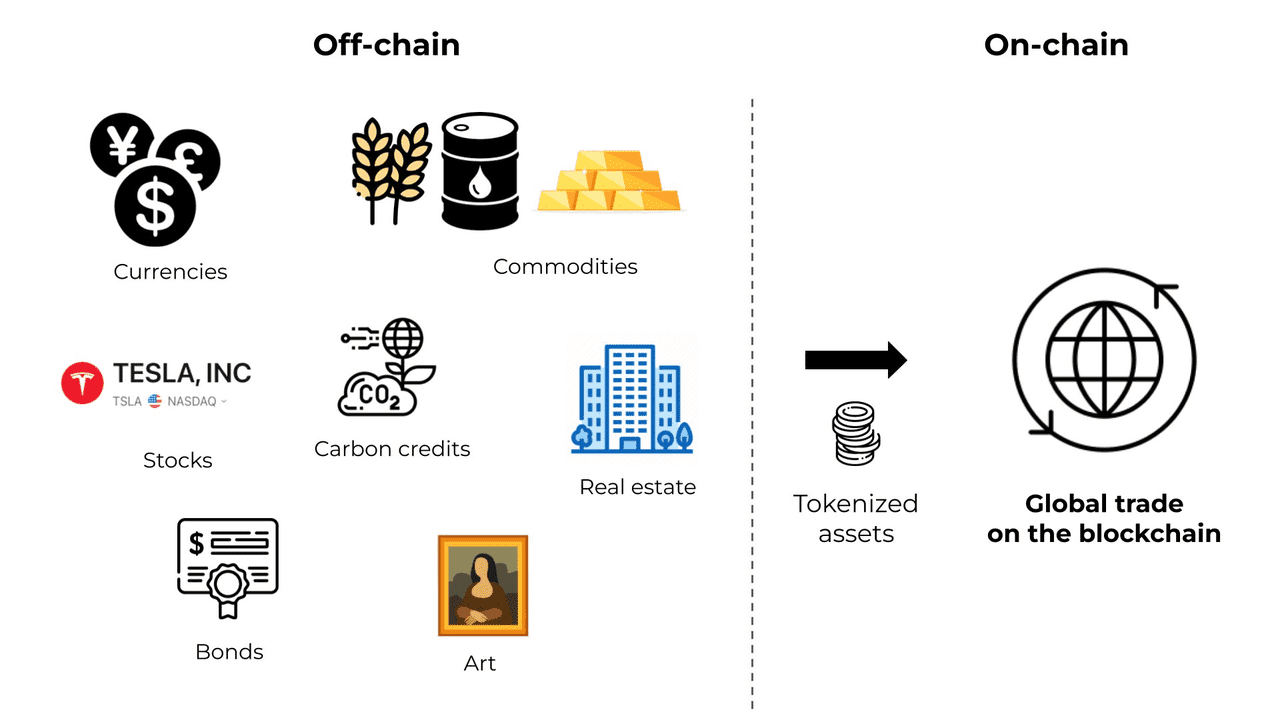
Real-world asset tokenization has become one of crypto’s most important long-term narratives, but not every RWA project is built the same way. Some projects focus on tokenized Treasury bills, some on private credit, and others on real estate or commodities. WorldAssets takes a broader and more experimental approach. On its official website, the project presents itself as WAT (WorldAssets Protocol), a protocol for blockchain financial liquidity that integrates real-world assets on-chain and combines them with crypto through a composite structure. The same site says the platform aims to tokenize asset classes such as equity, stocks, bonds, real estate, art, luxury goods, precious metals, AI applications, and computing power.
That broad ambition is paired with a distinct token design. Instead of using a single token for everything, WorldAssets uses a dual-token model built around ATC and INC. According to both the website and the official docs, ATC is the asset-rights or property token tied to tokenized real assets, while INC is the income token whose value is supported by asset income and appreciation and is meant to circulate freely in the market. The docs say INC has a total supply of 300 million tokens and is issued as an ERC-20 token.
That means the simplest way to understand the project is this: WorldAssets is the broader RWA platform, WAT is the protocol framework, ATC is the asset-linked token layer, and INC is the yield-and-income token meant to capture ecosystem upside and liquidity. Because your requested topic is “What is WorldAssets (INC)?”, this article focuses primarily on the project through the lens of the INC token and the broader WorldAssets design around it.
What Is WorldAssets?
WorldAssets is an RWA-focused crypto project aiming to tokenize real-world assets and connect them to blockchain-native liquidity and DeFi-style trading. The official docs describe the WORLDASSETS (WAT Protocol) platform as an innovative financial service platform for the “true tokenization” of RWAs, combining physical assets on-chain, a dual-token model, RWAFi, AMM liquidity, a POS-DAO asset committee, compliance, and a tokenization exit mechanism. The website makes the same basic point in simpler marketing language, saying the protocol unlocks the value of real assets and transforms digital asset markets into something smarter and more efficient.
Unlike some RWA projects that focus on one narrow sector, WorldAssets is intentionally wide in scope. Its official materials say the protocol wants to support assets including equity, stocks, bonds, real estate, artworks, luxury goods, precious metals, AI applications, and computing power. The site also says the “asset package” can accept assets such as equity, stocks, bonds, real estate, art, luxury goods, precious metals, AI applications, and computing power, subject to protocol standards and POS-DAO review.
That breadth is part of the project’s pitch. WorldAssets is not trying to be just a gold-token product or just a pre-IPO equity product. It is trying to position itself as a broader framework for turning many categories of real assets into on-chain financial products. Whether it can actually scale that ambition is another question, but that is clearly the direction presented in official materials.
What Problem Is WorldAssets Trying to Solve?
The project’s core argument is that traditional financial assets are valuable but often suffer from low liquidity, slow transactions, information asymmetry, high regulatory friction, and poor accessibility. The docs say the WAT Protocol aims to address those issues by combining blockchain technology, DeFi, compliance processes, and tokenization mechanisms. The website adds that tokenization can reduce barriers to entry, improve global access, and create more flexible trading and asset management.
The project also frames this as a DeFi problem. Its docs say RWAFi can solve the “crossing the chasm” or “breaking the circle” problem of DeFi by introducing real-world asset value into crypto markets, thereby expanding DeFi’s scope and adding stronger value support. The website similarly says RWAFi brings value support from physical assets while giving traditional assets more liquidity and market reach.
So the basic problem WorldAssets is trying to solve is not simply “how do we tokenize an asset?” It is more like:
how do you bring real assets on-chain,
how do you split ownership and income into separate token layers,
and how do you make those assets usable inside a more liquid crypto financial environment?
How the WorldAssets Model Works
The official docs and website break the protocol into a few clear layers: RWAization, the dual-token model, RWAFi liquidity, and finally redemption or withdrawal back to real assets.
RWAization
The first step is converting real assets into on-chain representations. WorldAssets says this is done through NFT-based confirmation of ownership using ERC-721, backed by legal documents, audit reports, valuation reports, and related asset documentation. The site says this process is meant to create on-chain proof of real assets rather than speculative NFTs disconnected from ownership.
ATC: The Asset Token
The second step is minting ATC. The docs describe ATC as a stable asset-rights token minted from asset NFTs, with the official framing that 1 ATC = 1 USDT/USDC = $1. The website calls ATC an “asset property stablecoin” and says it cannot be issued in advance; instead, it is minted only when asset NFTs are created at equivalent value. The docs list an initial total supply of 40 million ATC and say the initial market cap is $40 million.
INC: The Income Token
The third step is INC, which is the focus of your article request. The docs say INC is the income token of the ecosystem, its value is supported by asset income and appreciation, and it circulates freely in the market. The site says INC “carries value appreciation or bubbles” and fluctuates with market prices, while ATC is intended to remain stable and tied to underlying asset value.
RWAFi
WorldAssets then plugs these tokens into RWAFi, which it describes as the combination of DeFi + asset value support. In the project’s own framing, real-world assets provide substance and value support, while DeFi adds liquidity and financial composability. This is the mechanism through which tokenized assets are supposed to become more actively tradable and usable.
Exit to Real Assets
Finally, the platform says that if users hold enough ATC, they can withdraw into actual physical assets from the WorldAssets asset package, subject to physical-asset transfer requirements and procedures. This part is important because the project explicitly argues that genuine RWA requires not only on-chain entry, but also credible exit back into real ownership.
What Is INC?
INC, or Income Coin, is the token that represents the yield and appreciation side of the WorldAssets ecosystem. Official docs say INC is an ERC-20 income token that can be obtained by holding ATC and that its total amount is 300 million. The docs also state that the initial issuance price was $0.10 per INC and the first-phase circulation was 30%.
The website describes INC in similar terms, saying it is the asset income token, its value is supported by asset income and appreciation, and it circulates freely in the market. The FAQ is even more direct, asking whether INC is for profit maximization and answering that INC carries stable income, asset appreciation, and asset volatility, and is the cornerstone of the ecosystem.
This is a useful distinction because INC is not the property-rights token. That role belongs to ATC. INC is the more market-facing, yield-sensitive token. If WorldAssets succeeds in bringing valuable assets on-chain and generating income and appreciation from them, INC is the token designed to reflect that upside.
How INC Is Distributed
The official docs provide a token distribution plan for INC. They say the first-phase circulation is 30%, and then break token allocation into several buckets including:
Airdrop: 10%
WAT-I smart contract: 50%
WAT-AMM: 40%
Market reserve: 30%
Foundation reserve: 20%
Eco-development: 5%
Team reserve: 15%
The formatting on the docs is not perfectly clear about how some of these buckets relate to one another, so readers should treat the official page as the primary source but also note that the presentation is not as precise as a more polished tokenomics dashboard. Still, the key high-confidence points are that INC is capped at 300 million, launched at $0.10, and is designed as the income token of the system.
Market trackers currently reflect that total supply. CoinGecko lists 300 million as both total and max supply, with about 90 million circulating as of April 2026.
How INC Generates Value
According to the docs, INC’s value comes from three main sources: asset income, asset appreciation, and market liquidity participation. The docs say that the yield is set according to a world-standard annualized yield of 5%, using U.S. Treasury bond yield as a reference, and that income is automatically distributed by the WAT-I smart contract. The mechanism described is that ATC holders receive INC based on snapshots of ATC balances and the real-time market price of INC.
The site repeats the same theme more simply, saying ATC can be held to obtain a fixed 5% return, while INC carries value appreciation and can also generate additional income through RWAFi liquidity staking. In effect, the project is separating the stable ownership layer from the more volatile income-and-upside layer.
That is one of the more distinctive aspects of the WorldAssets model. Instead of forcing one token to represent both stable asset ownership and speculative upside, it splits those functions. In theory, that could make the system easier to price and use. In practice, it also adds complexity and execution risk.
Why WorldAssets Matters in the RWA Sector
WorldAssets matters because it represents a more experimental branch of the RWA narrative. Many RWA projects focus on institutional-grade Treasury products with conservative design. WorldAssets, by contrast, is trying to build a more expansive and crypto-native financial ecology around real assets, combining NFT-based asset confirmation, dual-token economics, RWAFi liquidity, and eventually even a dedicated RWA public chain and exchange. The docs explicitly say that by 2026 the project’s plan is to establish an RWA physical-assets exchange.
That ambition makes the project interesting, especially for readers watching how RWA evolves beyond Treasuries and stablecoins. WorldAssets is trying to answer a harder question: can you build a broader on-chain marketplace for many kinds of real assets while keeping crypto-native liquidity and upside?
Risks and Limitations
WorldAssets is ambitious, but it comes with substantial risk.
First, a lot of the official documentation is about a year old, while the live website is more current but still somewhat high-level. That means some roadmap items, such as the planned public chain and exchange, should be treated as project goals, not confirmed delivered products.
Second, the model is complex. The combination of ATC, INC, NFT-based asset confirmation, RWAFi, AMMs, DAO review, and real-asset exit mechanics creates a much more complicated system than a simple stablecoin or tokenized-fund product. Complexity can create innovation, but it also increases execution and governance risk. This is an inference based on the protocol design shown in the official docs.
Third, the project’s claims around real assets, compliance, and token redemption need to be judged against actual implementation over time. The platform says it has legal documents, audit reports, valuation reports, and compliance processes, but investors still need to verify asset quality, legal enforceability, and the practical mechanics of redemption and ownership transfer.
Fourth, INC is still a market-traded crypto token, which means its price can diverge sharply from any theoretical asset-income value. CoinGecko’s data shows a substantial gap between the token’s all-time high and current price levels, which is a reminder that narrative, liquidity, and speculation can dominate price action in the short term.
Conclusion
WorldAssets is a niche but interesting RWA project because it is not simply trying to wrap one asset in a token. It is trying to build a full WAT Protocol around real-asset tokenization, a dual-token structure, RWAFi liquidity, and eventual asset exit back into the real world.
Within that structure, INC is the token that matters most for upside and income exposure. ATC represents the asset-rights layer, but INC is designed to carry ecosystem income, appreciation, volatility, and liquidity participation. That makes it the more market-facing part of the WorldAssets model, and the token most likely to matter for traders trying to understand the project from an investment angle.
WorldAssets is building a broad RWA tokenization protocol, and INC is the income token meant to capture yield, appreciation, and liquidity upside within that system. Whether it becomes a meaningful long-term player will depend on asset quality, regulatory execution, token design durability, and the project’s ability to turn a bold roadmap into live infrastructure.
As the RWA sector continues to evolve beyond tokenized Treasuries into more experimental forms of on-chain asset finance, projects like WorldAssets show how crypto teams are trying to build broader financial ecosystems around real-world collateral. For traders looking to stay ahead of emerging narratives—from RWAs and RWAFi to AI, PayFi, and tokenized markets—Phemex offers a secure and user-friendly platform to explore the market, monitor new opportunities, and sharpen your trading edge.
