






Key Takeaways
Wayfinder is a decentralized protocol designed to let AI agents interact with permissionless blockchain networks.
The project centers on AI-driven shells, wayfinding paths, and smart maps that help agents navigate blockchain environments more efficiently.
PROMPT is the native token of the ecosystem, used for transactions, gas fees, staking, and premium features.
Official Wayfinder help materials show that PROMPT exists on both Ethereum mainnet and Base, and the platform also provides a dedicated Prompt Portal bridge between Base and Ethereum.
Wayfinder’s interface terms repeatedly emphasize that the protocol is experimental, that AI outputs can hallucinate, and that users remain responsible for verifying actions before signing onchain transactions.
Crypto has no shortage of complexity. Even experienced users still have to think about wallets, bridges, gas tokens, approvals, contract addresses, and which chain a particular app or asset actually lives on. For most mainstream users, that friction remains one of the biggest barriers to using Web3. Wayfinder is trying to solve that problem by putting AI agents between users and blockchain complexity. On its official website, Wayfinder describes itself as “Intelligent Agents on Every Chain,” while its live product language says the platform’s token powers shells, fuels gas, enables staking, and funds services. It also describes PROMPT as the native token used for transactions, gas fees, and unlocking premium features.
At a high level, Wayfinder is building an AI-agent protocol that lets users and agents interact with blockchains more naturally. Rather than manually stitching together multi-step onchain workflows, users can rely on AI-driven “shells” and Wayfinder’s blockchain navigation layer. The project’s whitepaper snippet describes Wayfinder’s proposed token system as securing shell access to blockchain navigation through wayfinding paths and smart maps, while another official snippet explains that these paths and the ecosystem graph let AI agents navigate blockchain environments more securely and efficiently.
That makes Wayfinder more than just another AI-themed token. It is an attempt to turn blockchain interaction into an AI-mediated, cross-chain coordination layer. The simplest way to understand the project is this: Wayfinder is a crypto-AI protocol for helping AI agents and users move through blockchain environments, and PROMPT is the token that powers access, gas, staking, and premium functionality within that system.
What Is Wayfinder?
Wayfinder is a decentralized AI-agent protocol built to help users and artificial agents interact with blockchain networks in a more natural way. Official Wayfinder terms describe the protocol as a community-driven, peer-to-peer set of blockchain-based smart contracts and tools that allow users and artificial intelligent agents to create, move, or otherwise interact with crypto-assets across multiple blockchains. The same terms make it clear that the interface is meant to provide access to the protocol, while the protocol itself is framed as decentralized, non-custodial, and community-governed.
That definition is important because it shows Wayfinder is not merely a chat interface on top of wallets. The project is trying to establish a deeper coordination layer where AI agents can understand how to move through blockchain environments, interact with assets, and trigger onchain actions.
In practical terms, Wayfinder is tackling one of crypto’s most persistent UX problems: blockchain actions are powerful, but the decision tree around them is messy. A user may want to do something simple like bridge an asset, swap into a token, deploy a contract, or automate a strategy, but actually doing it often requires a long chain of technical steps. Wayfinder’s answer is to let AI-native interfaces and agents handle more of that navigation. This is an inference based on the protocol’s description of shells, paths, smart maps, and multi-chain interaction.
What Problem Is Wayfinder Trying to Solve?
Crypto is still difficult because users have to think in infrastructure terms instead of intention terms.
A normal user rarely wants to think, “Which bridge is safest for this asset?” or “Which chain should this contract deploy on?” or “What gas token do I need for this transaction path?” They usually want an outcome: buy an asset, move funds, deploy something, or automate a workflow. Wayfinder is trying to make blockchain interaction look more like goal-driven navigation and less like manual protocol assembly. This is supported by the project’s language around wayfinding paths, smart maps, and AI agents navigating blockchain environments.
The protocol also sits in the middle of two rising trends:
AI agents, which increasingly act on behalf of users
chain abstraction, which tries to hide multi-chain complexity from users
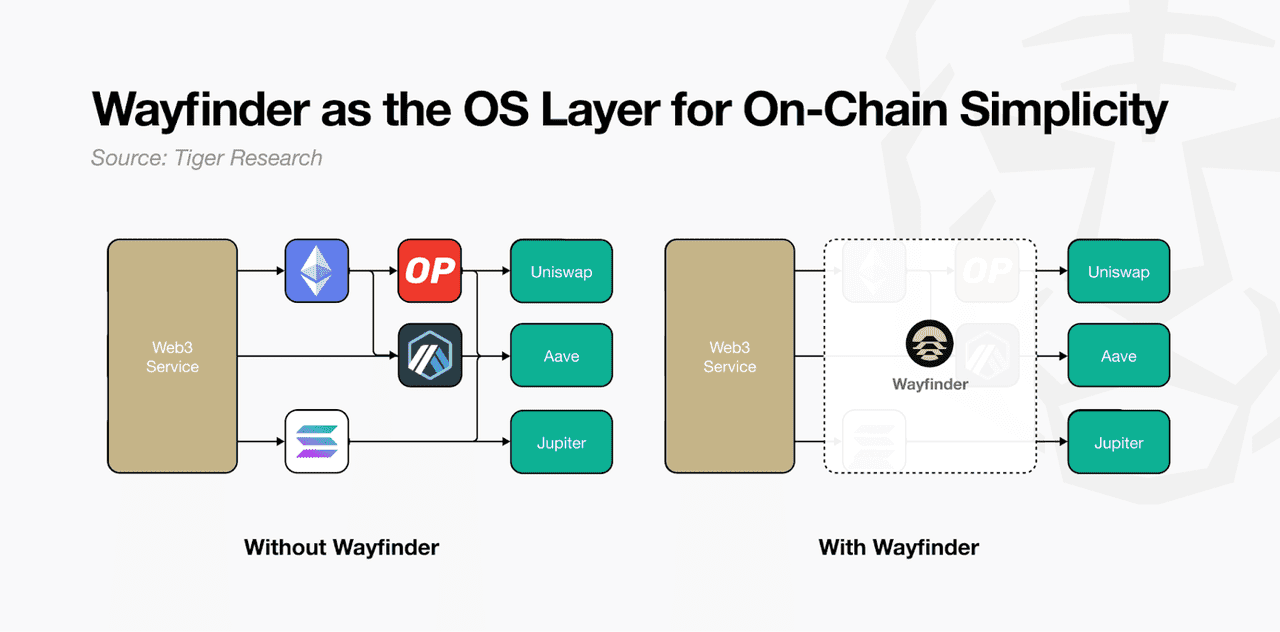
Wayfinder can be understood as an attempt to merge those two ideas. Instead of requiring users to directly manage every transaction path, the protocol aims to let AI-driven agents and shells execute tasks across blockchains.
That is what makes the project interesting in the April 2026 market context. It is not simply saying “AI plus crypto.” It is specifically targeting the navigation problem of Web3.
How Wayfinder Works
Wayfinder’s public materials highlight several core concepts: shells, wayfinding paths, smart maps, and a decentralized protocol layer that supports blockchain interactions.
Shells
One of the most visible product concepts is the shell. Wayfinder’s live token page says the token powers shells, and older official summaries around the project describe shells as AI-driven entities or interfaces that can carry out tasks within the ecosystem. The whitepaper snippet adds that shell access to blockchain navigation is tied to Wayfinder’s path system.
The easiest way to think about shells is as the operative AI interface inside Wayfinder. They appear to be the agent-like layer that users or applications interact with when they want something done onchain. Instead of the user manually traversing a route across blockchains and protocols, a shell can use Wayfinder’s infrastructure to interpret, plan, and execute actions.
Wayfinding Paths
The whitepaper snippet is particularly useful here. It says Wayfinder’s proposed native token secures shell access to blockchain navigation through the use of the network’s wayfinding paths and smart maps. Another official snippet says these wayfinding paths and the ecosystem graph enable AI agents to securely and efficiently navigate blockchain environments.
This suggests that wayfinding paths are not just one-off routes. They are more like reusable, mapped-out pathways through blockchain environments. These could help agents understand how to move assets, call contracts, or complete tasks in a safer and more structured way. That is an inference from the official wording, but it is strongly supported by the project’s repeated use of navigation language.
Smart Maps
The smart maps idea appears alongside paths. If paths are the routes, smart maps are likely the knowledge layer that describes how different chains, contracts, and transaction environments connect. The whitepaper snippet says smart maps collectively form the navigation system used by shells.
In practical terms, smart maps appear to be Wayfinder’s answer to the fragmented structure of crypto. Instead of each agent or user having to rediscover the ecosystem from scratch, the protocol can provide a shared navigation layer that maps usable routes.
Multi-Chain Operation
Wayfinder’s terms explicitly state that the protocol enables agents and users to interact with crypto-assets across multiple blockchains. The live bridge interface also confirms that PROMPT itself can move between Base and Ethereum mainnet, which reinforces the project’s practical multi-chain focus.
This matters because the cross-chain problem is one of the main reasons Web3 still feels fragmented. If Wayfinder can make that fragmentation more manageable through AI-agent infrastructure, that becomes a meaningful utility layer.
What Is PROMPT?
PROMPT is the native token of the Wayfinder ecosystem. The official site states that PROMPT is used for transactions, gas fees, and unlocking premium features. Another official snippet describes PROMPT as the ERC-20 governance and utility token powering the AI-driven Wayfinder ecosystem, while the live token section says the token powers shells, fuels gas, enables staking, and funds services.
That gives PROMPT a broader role than a simple payment token. It appears to sit at the center of the protocol’s agent economy:
it is used for on-platform economic activity,
it is tied to shell usage,
it fuels gas-related activity,
it supports staking,
and it unlocks premium product access.
The project’s help center also confirms official token contract addresses for both Ethereum mainnet and Base, indicating that the token’s live infrastructure already spans both chains. That cross-chain deployment makes sense for a project whose core value proposition is helping agents operate across different blockchain environments.
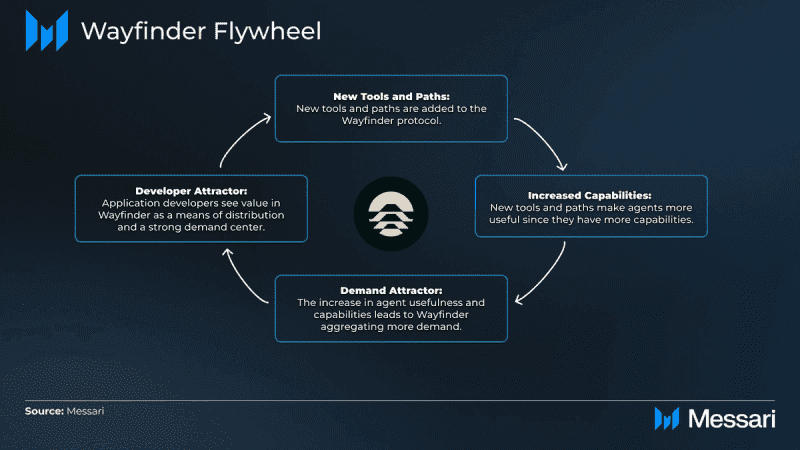
Wayfinder Flywheel (source)
What Does PROMPT Do?
Based on current official materials, PROMPT serves four major roles.
Transaction and Gas Utility
The most direct role is economic usage inside the protocol. The Wayfinder site says PROMPT is used for transactions and gas fees, while the token section says it fuels gas.
That matters because AI-agent systems still need a native economic unit if they are going to execute actions, access routes, or consume protocol services. PROMPT appears to be that unit.
Shell Access and Services
Wayfinder’s token page says the token powers shells and funds services. Meanwhile, the whitepaper summary says the token secures shell access to blockchain navigation through wayfinding paths and smart maps.
This implies PROMPT is tied directly to the activity of the AI-agent layer, not just to passive holding or governance. If shells are the operative actors in the ecosystem, PROMPT is likely a key resource for using or maintaining them.
Staking
The official token snippet says PROMPT enables staking. While the accessible public snippets do not fully detail the full staking model, this clearly places the token in the incentive and participation structure of the network.
In many crypto protocols, staking can support security, governance weight, routing integrity, or reward distribution. For Wayfinder, it likely aligns participants around maintaining useful navigation infrastructure and ecosystem services. That is an inference based on the protocol’s role structure and whitepaper summary.
Premium Features and Subscription Access
Wayfinder’s official site says PROMPT unlocks premium features, and the Pro-plan help article explains that the Wayfinder Pro plan uses a pre-authorized PROMPT allowance system. In the example shown in the help center, monthly Pro access deducts a certain number of PROMPT tokens based on the exchange rate at the deduction date.
That is one of the more concrete signs of real token utility. PROMPT is not only described abstractly as useful; it is actively referenced as the unit used for subscription-like premium access.
Tokenomics: What Is Publicly Confirmed?
Wayfinder’s currently accessible official public materials are clearer about utility than about finalized token distribution. The whitepaper snippet says the project proposes a token tentatively called PROMPT with a maximum authorized supply of 1 billion tokens, but it also explicitly says this is subject to a ratification process, which means readers should treat it as a proposal rather than immutable final tokenomics unless confirmed by newer official docs.
PROMPT is clearly live and actively used by the ecosystem
the site and help materials confirm current utility and token contracts
the whitepaper snippet points to a proposed max supply of 1 billion, but public accessible materials do not make that the most definitive current figure available today.
That is also a useful reminder for readers: on newer AI-agent projects, utility may become clear before public token-distribution materials become fully easy to audit from accessible documentation.
Wayfinder Pro and Real Token Utility
One of the strongest signals that Wayfinder is trying to make PROMPT a functional ecosystem token rather than a pure speculation asset is the Wayfinder Pro model.
According to the official help article, the Pro plan uses a pre-authorized PROMPT allowance system. The platform deducts the number of PROMPT tokens required for each month of access based on the token’s exchange rate on the deduction date.
That creates a fairly straightforward consumption loop:
Users hold or authorize PROMPT
The platform uses that allowance to maintain Pro access
Premium features are effectively priced through the token
For AI-agent ecosystems, this kind of design matters. Tokens often struggle when they do not correspond to any recurring product demand. Wayfinder’s Pro structure is notable because it creates a user-facing reason to acquire and spend PROMPT beyond simple trading.
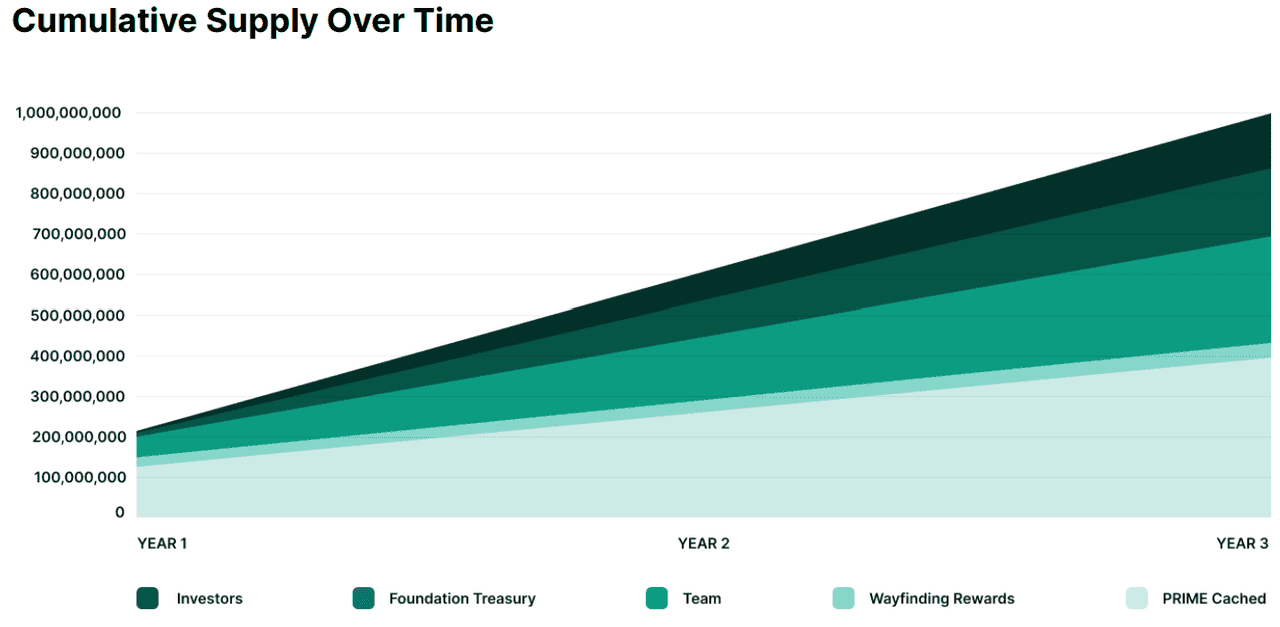
PROMPT Supply (source)
The Importance of Base and Ethereum Support
Wayfinder’s token-support materials and bridge interface show that PROMPT is currently supported on both Ethereum mainnet and Base, and that the platform offers a dedicated bridge called the Prompt Portal for converting PROMPT between those two networks.
This is more important than it might seem. A project focused on cross-chain agent navigation should not be isolated to one network. Supporting both Ethereum and Base helps match the project’s broader positioning around multi-chain interaction.
It also reinforces the idea that Wayfinder is not just theory. There is already operational token infrastructure around chain movement, claims, and account access.
Why Wayfinder Matters
Wayfinder matters because it addresses a real bottleneck in crypto adoption: execution complexity.
Most chain-abstraction ideas focus on smoothing the user experience at the wallet or protocol level. Wayfinder goes one step further by inserting AI agents into that flow. Instead of only hiding technical complexity, it tries to make blockchain actions interpretable and navigable through an agent layer.
That has implications for several fast-growing narratives:
cross-chain UX
agent commerce
automation of onchain tasks
If these themes continue growing through 2026, Wayfinder could occupy a useful middle layer between users, agents, and blockchains.
Another reason the project matters is that its official materials are unusually explicit about both the promise and the risk. The protocol terms state that AI-agent interaction with crypto-assets is highly experimental and that hallucinations or unintended behavior can lead to asset loss. That level of warning underscores both the ambition and the danger of the model.
Risks and Limitations
Wayfinder is interesting, but it is not low-risk.
Experimental AI Risk
The biggest risk is the one Wayfinder itself emphasizes: the protocol is highly experimental. Its terms warn that agents may hallucinate, produce misleading outputs, deviate from user instructions, or trigger harmful consequences. Users are explicitly told they are solely responsible for verifying AI-generated outputs before acting on them.
That means Wayfinder is not something users should treat as infallible automation. It is an emerging system where agent usefulness and agent risk grow together.
Smart Contract and Infrastructure Risk
The terms also stress that the software and systems are developmental, may be incomplete or unproven, and should not be relied upon as if fully mature.
That is a major point for any investor or user. Even if the product vision is compelling, real onchain execution brings risks around smart contracts, agent behavior, routing logic, and multi-chain infrastructure.
Adoption Risk
PROMPT’s long-term value depends on whether Wayfinder’s AI-agent model gains meaningful adoption. If users do not want AI-mediated blockchain navigation, or if competing chain-abstraction systems make Wayfinder unnecessary, token demand could remain limited. This is an inference based on the project’s utility structure rather than a claim from Wayfinder itself.
Tokenomics Clarity Risk
While utility is clear, publicly accessible official tokenomics are not yet as straightforward as those of more mature protocols. The whitepaper snippet references a proposed max supply of 1 billion, but frames it as tentative and subject to ratification.
That means traders should be careful about relying on secondary-source tokenomics without cross-checking current official materials.
Conclusion
Wayfinder is one of the more interesting AI-agent projects because it is trying to solve a specific and persistent problem: how to make blockchain environments easier for intelligent systems and ordinary users to navigate.
Its architecture revolves around shells, wayfinding paths, smart maps, and a tokenized system that lets agents and users access services across chains. PROMPT sits at the center of that design as the native token for transactions, gas, staking, shell access, and premium features.
The project is also notable for its honesty about the experimental nature of its system. Wayfinder is not pretending that AI-driven blockchain interaction is fully solved. Its own terms make clear that users need to treat outputs cautiously and verify them before acting.
As AI agents and chain abstraction continue to evolve, projects like Wayfinder show how crypto interfaces may shift from manual execution toward intelligent coordination. For traders looking to stay ahead of emerging narratives—from AI agents and AgentFi to RWAs and PayFi—Phemex offers a secure and user-friendly platform to explore the market, monitor new opportunities, and sharpen your trading edge.
Register](https://phemex.com/register?group=7916&referralCode=CUFKP8">Register) on Phemex Now
