







Key Takeaways
RWA settlement infrastructure refers to the systems that make tokenized real-world assets transferable, payable, and final, including cash movement, custody, legal recordkeeping, and DvP.
The infrastructure challenge is no longer just tokenization. It is increasingly about interoperability, collateral mobility, and production-grade settlement workflows.
DTCC plans initial limited production trades using DTC’s tokenization service in July 2026, with a broader launch planned for October 2026.
The SEC’s January 2026 statement says tokenized securities generally fall into two broad categories—issuer-tokenized and third-party-tokenized—and remain subject to federal securities laws.
Chainlink and ANZ have demonstrated cross-chain purchase and settlement of tokenized RWAs using stablecoins across different networks, highlighting how cross-ledger settlement may work in practice.
Real-world asset tokenization gets a lot of attention for the assets themselves: tokenized Treasuries, tokenized stocks, tokenized credit, and tokenized funds. But the more important question is often less glamorous: how do these assets actually settle? In other words, once a trade happens, how does ownership move, how does cash move, and how do both sides complete with legal and operational certainty? That is the role of RWA settlement infrastructure.
At a high level, RWA settlement infrastructure is the set of systems, rules, and service providers that make tokenized real-world assets transferable, payable, and final. It includes the mechanics of delivery-versus-payment (DvP), custody, transfer-agent functions, collateral movement, tokenized cash, interoperability across ledgers, and the legal structure that makes a tokenized claim actually enforceable. DTCC describes tokenization as an extension of trusted market infrastructure into digital assets, designed to preserve ownership rights and investor protections while enabling interoperable access to blockchain networks. The SEC likewise emphasizes that tokenized securities are still securities, and their legal treatment does not disappear just because the representation lives on crypto rails.
That is why settlement infrastructure matters so much in the RWA sector. The first generation of tokenization proved that assets can be represented onchain. The next phase is about whether those assets can clear, settle, collateralize, and interoperate at institutional scale. DTCC is building a DTC tokenization service for production use in 2026, while Chainlink case studies and articles focus on cross-chain DvP and cross-ledger settlement for tokenized assets. These are strong signs that the market is moving beyond issuance into full post-trade infrastructure.
What Does Settlement Infrastructure Mean?
In finance, settlement is the point where obligations from a trade are completed. One side delivers the asset, the other delivers the cash, and the transfer becomes final. In traditional markets, that often involves brokers, clearing agencies, custodians, central securities depositories, payment rails, transfer agents, and multiple reconciliation layers. DTCC’s recent educational materials explain that tokenization could make settlement real-time or near-real-time, reduce settlement risk, and improve transparency, but only if the surrounding market infrastructure is in place.
For RWAs, settlement infrastructure means the machinery that answers questions like:
Who legally owns the tokenized asset?
How is cash delivered against that asset?
Who records the change in ownership?
How is collateral recognized and moved?
What happens when different chains or ledgers are involved?
What legal structure sits behind the token?
The SEC’s January 2026 statement makes clear why these questions matter. It says tokenized securities may be issued by or on behalf of the issuer, or by third parties unaffiliated with the issuer, and that market participants still need to comply with securities laws and likely submit registrations, proposals, or requests for regulatory action where needed. That means RWA settlement infrastructure is not only technical plumbing. It is also legal and regulatory plumbing.
So when people talk about RWA settlement infrastructure, they are really talking about the entire post-trade and ownership stack that lets a tokenized asset function like a real financial instrument rather than a speculative digital receipt.
Why RWA Settlement Infrastructure Matters
A tokenized asset can look impressive in a wallet or dashboard, but if it cannot settle cleanly, it is not yet useful at scale. This is one reason current industry discussion has shifted away from “Can we tokenize this?” toward “How do we make tokenized assets operational in real markets?” DTCC’s April 2026 article says tokenization can improve outcomes for investors through faster settlement and better liquidity, while its DTC tokenization service announcement says the industry is now working through operational and technical workflows for production environments and interoperability across many chains.
The same point appears in the Canton Network’s 2026 RWA report, which says fragmentation is the primary barrier to the maturation of tokenized RWAs into a globally liquid and efficient system. That report frames interoperability as an imperative rather than a nice-to-have, implying that tokenization alone is insufficient if markets remain siloed by chain, ledger, or service provider.
The Core Components of RWA Settlement Infrastructure
RWA settlement infrastructure is not one product. It is a stack.
Legal Issuance Structure
The first component is the legal wrapper behind the token. The SEC’s statement on tokenized securities is essential here because it clarifies that tokenized format does not eliminate securities-law obligations. Whether the security is tokenized by the issuer or by a third party changes what legal claims and compliance requirements apply. This means legal structure is foundational to settlement, because settlement only has meaning if the asset being transferred represents an enforceable claim.
This is also why many tokenized-security providers rely on SPVs, issuer-sponsored structures, or other formal legal vehicles. The market has largely solved the technical question of moving tokenized representations, but as a February 2026 SEC submission argues, what remains unresolved in many cases is the institutional definition of what is being issued and with what enforceable consequences.
Recordkeeping and Registration
Settlement also requires a credible record of who owns what. In traditional securities markets, this often involves transfer agents, custodians, and central depositories. DTCC’s March 2026 explanation of direct vs. indirect registration makes clear that indirect models remain essential for scalable tokenized-market design, even as blockchain-based records expand. That article argues that indirect registration still plays a critical role in investor protection and operational scale.
This is important because many crypto-native discussions skip over the recordkeeping layer. But for tokenized securities and other RWAs, settlement is inseparable from ownership recording. If no regulated or legally recognized system records the post-trade state, then the transfer may not be meaningful outside the blockchain itself.
Tokenized Cash or Payment Rails
A trade is not settled until the cash side is completed. That is why tokenized cash, tokenized deposits, and stablecoin rails are becoming central to RWA settlement infrastructure. Reuters reported in March 2026 that BMO is launching a tokenized-cash platform with CME Group and Google Cloud for margined products, aiming to support real-time payments and more continuous settlement activity outside traditional banking windows. The article says this is meant to help clients meet margin calls and manage settlement in markets that are increasingly operating beyond normal business hours.
This is a major signal. It means financial institutions are not only tokenizing assets—they are also tokenizing the cash leg of settlement. Without that, the delivery of a tokenized security still depends on slower and more fragmented traditional payment systems.
Delivery-versus-Payment (DvP)
DvP is the principle that the asset and the cash should move together, so one side does not deliver without receiving the other. Chainlink’s cross-chain securities settlement article defines cross-chain securities settlement as finalizing trade obligations by transferring tokenized assets and payments across distinct blockchain networks, using atomic exchange to reduce counterparty risk and improve capital efficiency. That is exactly the kind of mechanism RWA settlement infrastructure needs to scale.
A tokenized market without DvP is dangerous because it creates settlement gaps. If cash and assets move separately and asynchronously, market participants carry unnecessary counterparty and operational risk. RWA settlement infrastructure therefore depends heavily on getting DvP right.
Custody and Collateral Mobility
Many tokenized assets are not only investments. They are also emerging as collateral. DTCC’s May 2026 paper summary on tokenized collateral says real-time collateral mobility can reduce capital and liquidity requirements, and that intraday secured funding on digital ledgers could cut funding costs and free significant capital. This is a strong signal that settlement infrastructure is increasingly linked to collateral management, not just asset transfer.
That matters because RWA settlement infrastructure in 2026 is not only about “settling a stock trade.” It is also about moving tokenized Treasuries, tokenized securities, or tokenized cash as collateral across trading and financing systems.
Interoperability Across Chains and Ledgers
RWA markets are fragmented across private chains, public chains, institutional platforms, and different issuer systems. The Canton Network report says this fragmentation is the main barrier to a globally liquid tokenized market. Chainlink’s institutional cross-chain settlement case study with ANZ is relevant here because it demonstrated a customer buying tokenized assets on Ethereum using stablecoins issued on Avalanche, with CCIP coordinating the backend complexity and preserving privacy.
This shows why interoperability is part of settlement infrastructure, not a separate luxury feature. If an institution wants to settle tokenized assets across ledgers, it needs a trusted cross-chain mechanism. Otherwise, tokenization may simply create more silos.
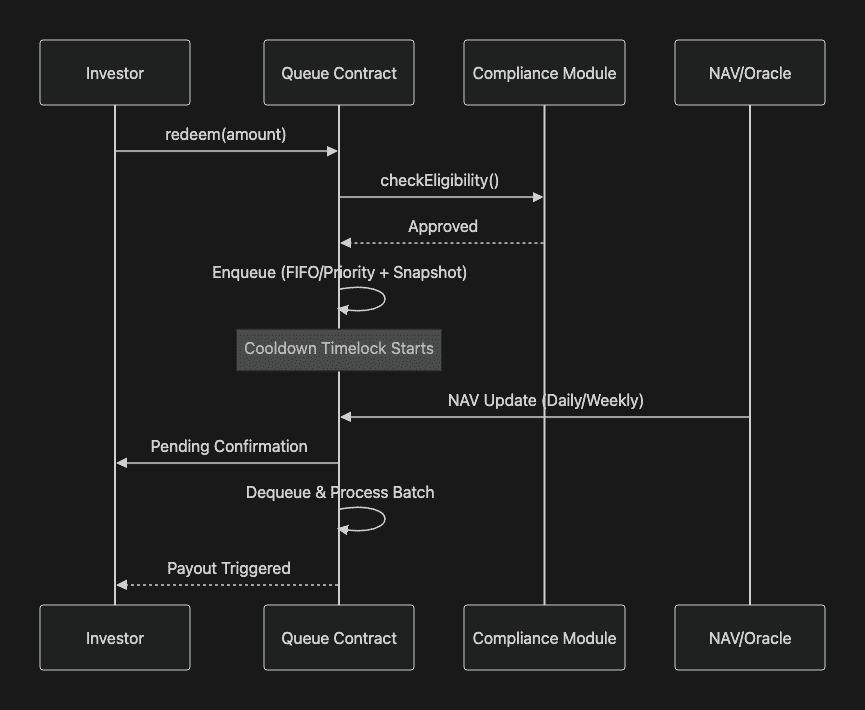
Real Examples of RWA Settlement Infrastructure in 2026
The category becomes much clearer when you look at current market examples.
DTCC’s DTC Tokenization Service
DTCC is perhaps the strongest sign that settlement infrastructure is moving from theory into production. In April 2026, DTCC said DTC’s tokenization service, following a December 2025 no-action approval from SEC staff, is expected to go live in the second half of 2026 and will allow certain securities positions held at DTC to be recorded on distributed ledger technology alongside DTC’s centralized ledger. In May 2026, DTCC announced that it plans initial limited production trades in July 2026 and a service launch in October 2026, with over 50 firms engaged.
This is a landmark development because it means tokenized settlement infrastructure is moving into the core of U.S. post-trade market plumbing.
Chainlink and ANZ Cross-Chain RWA Settlement
Chainlink’s case study with ANZ demonstrates how tokenized assets can be purchased across ledgers, with a customer buying assets on Ethereum using stablecoins on Avalanche. The core point is not the specific blockchains. It is that settlement can be coordinated atomically across different networks. That is a direct illustration of how RWA settlement infrastructure could work in a fragmented world.
Tokenized Collateral and Intraday Funding
DTCC’s May 2026 collateral paper summary highlights another crucial shift: tokenized assets being used for minute-by-minute funding rather than overnight-only processes. This points toward a world where settlement infrastructure is tightly linked with intraday collateral movement, repo, and liquidity management.
Tokenized Securities Rules on Exchanges
A new NYSE American rule filing from May 2026 proposes a specific tokenized-securities rule and updates order-ranking and display provisions to account for tokenized securities preferences of DTC-eligible participants. That suggests even exchange rulebooks are beginning to adapt for tokenized-securities settlement preferences.
RWA Settlement Infrastructure vs RWA Issuance
This distinction is important.
Issuance is about creating the tokenized asset. Settlement infrastructure is about what happens after that asset is traded, transferred, or posted as collateral.
A platform can be good at issuance and still be weak on settlement. It may tokenize an asset successfully but fail to provide scalable DvP, interoperable transfers, recognized ownership records, or tokenized cash settlement. This is one reason the market is now focusing more on infrastructure than on tokenization alone. DTCC, SEC materials, Chainlink case studies, and Canton’s interoperability report all point in this direction.
So when people say “RWA settlement infrastructure,” they are talking about the systems that make tokenized assets usable in live markets, not just minted onchain.
Why RWA Settlement Infrastructure Is Hard
The reason this field is so important is the same reason it is hard: it must satisfy both technical and institutional requirements at the same time.
On the technical side, the system must handle:
token standards,
wallet and smart-contract interactions,
atomic payment logic,
chain interoperability,
and live state changes.
On the institutional side, it must handle:
securities-law compliance,
regulated registration and recordkeeping,
ownership rights,
investor protections,
and market-practice compatibility.
The February 2026 SEC submission about supervisory-safe bridge patterns is useful here because it focuses on auditable and accountable integration of tokenized sovereign bills and private credit into programmable infrastructure. Even though it is not a binding SEC policy statement, it reflects how serious market participants are thinking about evidence artifacts, supervisory-safe patterns, and accountable operations.
That is why RWA settlement infrastructure will likely be built by a mix of:
financial-market utilities,
regulated issuers,
transfer agents,
custodians,
interoperability providers,
and compliance-focused tokenization platforms.
No single smart contract solves all of that.
Risks and Limitations
RWA settlement infrastructure is promising, but it still faces serious challenges.
The first is fragmentation. Canton’s report calls this the primary barrier to maturation. If assets settle on different chains, under different recordkeeping models, and with incompatible standards, the market can become more fragmented rather than less.
The second is legal ambiguity. The SEC’s January 2026 statement is helpful, but it also shows how much legal categorization still matters. Whether a tokenized asset is issuer-sponsored or third-party-issued affects how the infrastructure should be built and what rights tokenholders actually have.
The third is operational transition risk. Even when tokenized services go live, legacy systems do not disappear immediately. DTCC’s own service is designed to work alongside its centralized ledger, not replace it overnight. That means the market will likely operate in hybrid mode for a long time.
The fourth is adoption speed. Despite progress, production tokenization services are still early. That means many of the promised benefits—real-time DvP, broad collateral mobility, unified interoperability—are still emerging rather than universally available.
Conclusion
RWA settlement infrastructure is the layer that turns tokenized assets from blockchain representations into real financial instruments that can move, pay, and finalize inside markets.
It includes legal structure, recordkeeping, tokenized cash, DvP, collateral mobility, and cross-chain interoperability. DTCC’s DTC tokenization service, the SEC’s clarification on tokenized securities, Chainlink’s institutional cross-chain settlement work, and the Canton report on fragmentation all point to the same conclusion: tokenization is entering a new phase where post-trade infrastructure matters as much as issuance.
As tokenized securities, tokenized collateral, and onchain capital markets continue to evolve, understanding settlement infrastructure is becoming essential. For traders looking to stay ahead of emerging narratives—from RWAs and tokenized market structure to AI agents, PayFi, and chain abstraction—Phemex offers a secure and user-friendly platform to explore the market, monitor new opportunities, and sharpen your trading edge.
