








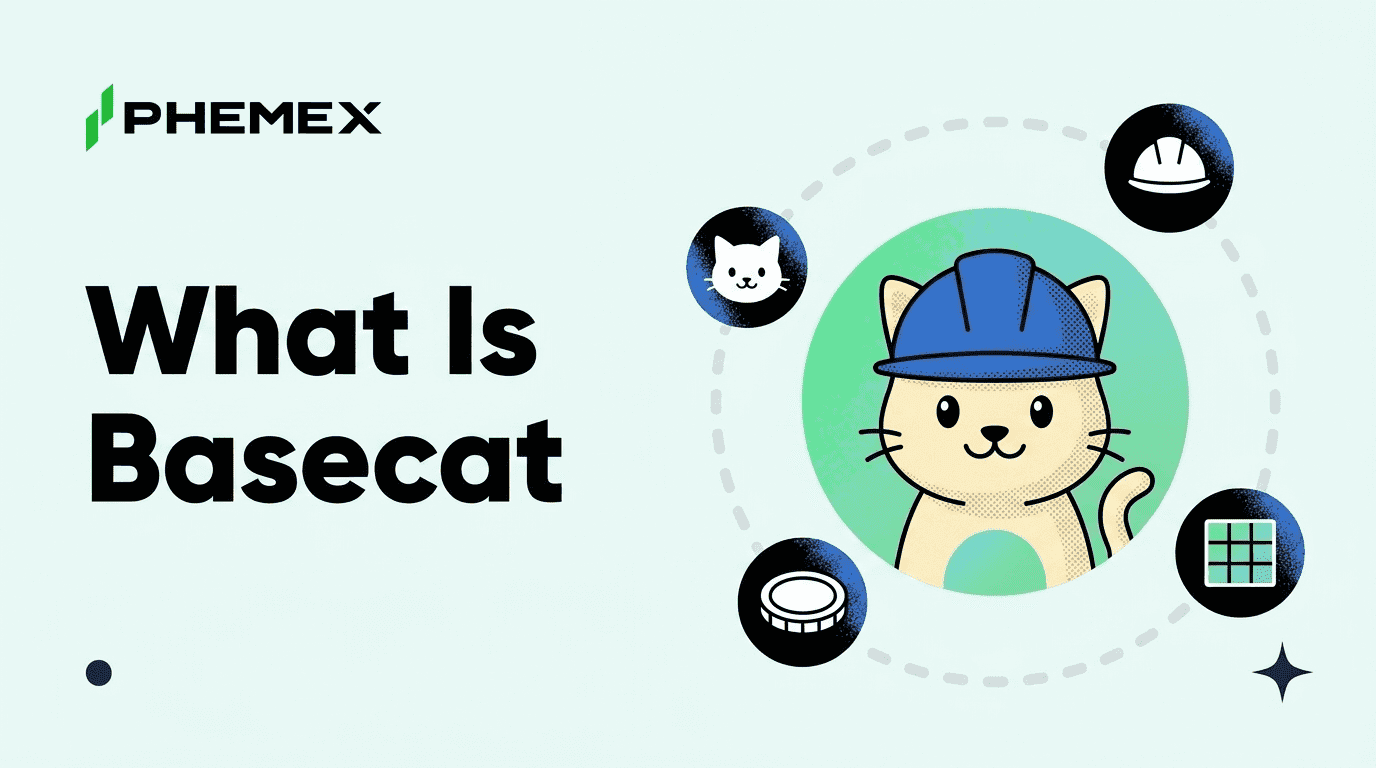
Basecat is a meme token on the Base network built around a cream cat in a blue hard hat, and its first liquidity pool opened at 18:03 UTC on Saturday, August 15, 2026. A DexScreener pull taken at 05:09 UTC on Tuesday, August 18, 2026 put its market capitalization at $13.84 million across a fixed supply of one billion tokens, supported by $980,173 of liquidity spread across 30 separate pools. A second pull five minutes later, at 05:14 UTC on the same morning, put the same figure at $13.31 million and the trailing 24-hour change at minus 13.5% against minus 5.2% five minutes earlier.
That five-minute gap tells you more about this asset than any percentage headline attached to it. The address a buyer pastes into a wallet matters even more, because at least five separate contracts on Base answer to the name Basecat and exactly one of them is the token that trades.
The Basecat Contract Address and the Four Ways to Get It Wrong
The token contract is
0xB2000000000000000000004c27f6523082f41D01 on Base, and that string is the only one worth trusting. Calling name() and symbol() against a Base RPC node returns "Basecat" for both, decimals() returns 18, and totalSupply() returns exactly one billion tokens. The Base block explorer types the same contract as an ERC-20, and the project's community site publishes that identical address, which gives three independent confirmations of one string.Four other contracts sit close enough to catch people, and each one fails in a different way.
|
Address
|
What it actually is
|
How the check resolves
|
|
0xB2000000000000000000004c27f6523082f41D01
|
The Basecat token, ERC-20, 18 decimals, 1B supply
|
name() and symbol() both return "Basecat"
|
|
0xf79478d5a6baE4546F7e489e80b2fC690B558944
|
A Uniswap v3 pool
|
name(), symbol() and decimals() all revert
|
|
0xa0bd61872fb2f92c6a77c6c81ee7dbebcc1a6ad9
|
An ERC-721 collection called BaseCat, 9,902 items
|
supportsInterface returns true for ERC-721
|
|
0x2467e50F7a27e13E7D28137ed1383536ABF1EbBe
|
A different ERC-20 whose name and symbol are also "Basecat"
|
351 holders, no trading pair at all
|
|
0xb2ec1ed95C21c8B40cC9b0268Ebad45818a34BcE
|
A different ERC-20 named Basecat with a live pool
|
53 holders, $354,835 of reported depth, $42 of daily volume
|
The pool address is the one that circulates most widely, because chart links and aggregator pages are built on pools rather than on tokens. Its
token0() returns wrapped ether on Base and its token1() returns the real token, which is what a pool contract is supposed to do and what an asset never does. Paste it into a wallet and nothing resolves at all, because all three of the functions a wallet reads to display a balance revert.The ERC-721 in the third row is a different animal again, an NFT drop of 9,902 items deployed as a minimal proxy to a standard thirdweb contract. It holds 6,883 indexed owners, and its
decimals() call reverts because fungible-token functions were never part of it. Somebody searching a block explorer for BaseCat lands on that page, sees a healthy owner count next to a matching name, and draws exactly the wrong conclusion.Casing is not a reliable tell, and treating it as one is how people get hurt. Searching Base for "basecat" returns more than fifty contracts, forty of them ERC-20s on the first page alone. Three of those ERC-20s carry the name "Basecat" spelled precisely the way the real one spells it. The cleanest of the fakes is the fourth row above, which matches the genuine token on name, symbol, decimal places and total supply, and would be indistinguishable inside a wallet interface.
The nastier one is the fifth row, which mimics the real contract's opening characters, carries a live Uniswap v3 pool showing $354,835 of reported depth, and traded $42 across a full day. Depth that never trades is a display rather than a market. Copy the address from the project's own page or from a block explorer token record, confirm it in two places, and treat every address pulled out of a chart URL as a pool until proven otherwise.
What the 2,000% Figure Was Actually Measuring
A syndicated BeInCrypto report published at 07:22 UTC on Monday, August 17, 2026 gave the gain as 2,034% over the previous 24 hours, and the number then travelled through a dozen republishing sites with its timestamp stripped off. Rolling 24-hour windows on a token this young are close to meaningless, because the denominator moves as violently as the numerator does.
Recomputing that same rolling figure hour by hour from GeckoTerminal candles on the deepest pool shows how unstable it was inside one calendar day.
|
Hour on Monday, August 17 (UTC)
|
Trailing 24-hour change
|
|
00:00
|
+2,927%
|
|
08:00
|
+2,075%
|
|
14:00
|
+3,409%
|
|
20:00
|
+734%
|
|
23:00
|
+40%
|
Same metric, same day, same pool, and a spread running from +40% to +3,409%. The 2,034% print was accurate for roughly one hour and misleading for the other twenty-three.
Daily candles give the real shape. The pool opened on Saturday, August 15 with its first hourly candle closing at $0.0013132. Sunday, August 16 ran from an open of $0.000374 to a close of $0.011608, a gain of about 3,000%, and printed an intraday high of $0.020449 that still stands as the record. Monday, August 17 added roughly 40% and closed at $0.016263. The August 18 session opened there and had given back about 15% by the 05:09 UTC pull.
The parabola was Sunday's. Everything since has been distribution dressed up in a rolling window.
Why Under $1 Million of Depth Sets a $13 Million Price
Total liquidity across all 30 pools came to $980,173 on the 05:09 UTC pull on Tuesday, August 18, 2026, and $967,305 five minutes after that. The deepest single pool held $479,978. Set that against the market capitalization and pool depth works out at roughly 7% of the token's nominal value, so the price supporting a $13 million valuation is being discovered by a book that could not absorb a $1 million exit.
Volume makes the same point from the other direction. The token turned over $9.34 million in 24 hours across those 30 pools on roughly 71,100 transactions, which is about 0.68 times its market capitalization and a genuinely high 9.5 times its total pool depth. Turnover that high often signals wash trading, but this flow spreads across 25 Uniswap v4 pools, three Uniswap v3 pools and two Aerodrome pools with tens of thousands of separate transactions, which is not the shape a handful of bots produce.
The sprawl carries its own cost. Liquidity split thirty ways is shallower everywhere than the aggregate figure implies, and the pools disagree with each other. Quoted prices across the 30 pairs ranged from $0.01163 to $0.04163 on a single pull, a spread of more than three times, which put the implied market capitalization anywhere between $11.6 million and $41.6 million depending on which pool a data site happened to read. Anyone quoting a Basecat market cap is quoting one pool's opinion.
Only about 2.6% of the total supply sits inside Uniswap v4's pool contract, which holds the balances backing all 25 of those v4 markets. The rest of the billion tokens is somewhere else, unpriced, and free to arrive at any moment.
What the Project Has Not Published
Basecat has no team, no roadmap, no audit and no documentation. The community site says so itself, describing the token as having "no invented utility" and "no fake roadmap" while stating that it is "not affiliated with Base" and is not run by the deployer. Supply is one billion tokens with no published emissions schedule, and no vesting or release calendar has been disclosed anywhere.
That same site carries a warning worth repeating in full, because it describes an attack that already happened. A social account promoting the token shared an unsafe "allocation" website, and the community response was to publish a clean page telling visitors that any Basecat page asking them to connect a wallet, claim an allocation, enter a seed phrase or download something should be abandoned on sight. A token whose own community has to publish that warning within three days of launch is telling you what environment it trades in.
The holder count cannot be verified and should not be quoted. Press coverage put it near 10,200. The Base block explorer returns 15 holders against 452,224 recorded transfers, a combination that is arithmetically impossible and proves the index is incomplete rather than proving the token is concentrated. The same explorer indexes 6,883 owners for the unrelated NFT collection, so the failure is specific to this one contract.
Basecat is absent from CoinGecko entirely. A search returns no coin record and a contract lookup returns a 404, meaning the aggregator most retail buyers reach for as a sanity check has nothing at all on file.
As for the mascot, the project's own announcement dated Monday, August 17 states that the official Base account posted the hard-hat cat character on April 8, 2025 and later followed the token's account. Posting an image more than a year before a token exists is cultural material rather than an endorsement, and the community site says as much.
A Base Native Meme in a Solana Shaped Market
Nearly all of the memecoin machinery of the last two years was built on Solana, which is why a Solana meme token like ANSEM is the reference point most traders reach for first. Base is an Ethereum Layer 2 with a smaller and more Ethereum native retail population, and it has never had the equivalent of a dominant memecoin launchpadconcentrating flow into a single venue.
And that absence is exactly why Basecat's liquidity fragmented across thirty pools on three different decentralized exchange protocols instead of pooling into one deep launch market. The Base app has been headed by Cobie, the pseudonymous trader Jordan Fish, since July 2026, and Base builder identity is the raw material the mascot borrows from. None of that gives the token any claim on the network or on the people running it.
Frequently Asked Questions
What is the real Basecat contract address on Base?
The token is
0xB2000000000000000000004c27f6523082f41D01, an ERC-20 with 18 decimals and a one billion supply. Confirm it against a block explorer token record and against the project's own page before sending anything, because several other Base contracts use the same name and one of them matches it exactly on both name and symbol.Is Basecat listed on CoinGecko or any major aggregator?
No. A CoinGecko search returns no coin record and the contract lookup returns a 404, so all pricing comes from decentralized exchange data sites reading individual pools. That is why quoted market capitalizations for this token vary by a factor of three depending on which source you check.
How many Basecat holders are there?
No available source can be trusted on that figure. Press coverage cited roughly 10,200 while the Base block explorer reports 15 holders against more than 452,000 transfers, which means its index is broken rather than the token being held by fifteen wallets. Treat any specific holder figure for this token as unverified.
Can you trade Basecat with leverage?
No perpetual futures market exists for it at any major venue, so the only exposure available is spot buying through a decentralized exchange on Base, carrying all of the address risk described above. Traders who want leverage on the same directional idea generally express it through majors instead.
Bottom Line
Basecat is a float and liquidity trade wearing a mascot costume, and the mascot is the least important variable in it. Under $1 million of pool depth is setting a $13 million valuation, the supply is one billion tokens of which only a fraction sits inside Uniswap v4's pool contract, and the parabolic session was Sunday, August 16, not the day the 2,000% headlines ran.
Three things decide what happens from here. Pool depth is the first, and the question is if it consolidates toward one deep venue or stays split thirty ways with every pool printing a different price. Levels are the second, and the intraday high of $0.020449 from Sunday, August 16 is what the chart has to argue with, while the $0.011608 close from that same session is the shelf a book this thin can revisit inside an afternoon.
The address is the third, and it is the only one of the three that can cost a reader everything at once. Verify
0xB2000000000000000000004c27f6523082f41D01 in two places every single time, because these impersonators are better built than the token they copy.This article is for informational purposes only and does not constitute financial or investment advice. Cryptocurrency trading involves substantial risk. Always conduct your own research before making trading decisions.
