









Key Takeaways
Autonomous on-chain trading refers to software agents or automated systems that can analyze markets and execute trades directly on blockchain networks with limited human intervention.
It goes beyond basic trading bots by combining AI agents reasoning, smart-contract interaction, wallet control, and policy-based execution.
The category overlaps heavily with DeFAI, where autonomous AI agents use DeFi protocols to manage portfolios, optimize yield, and rebalance positions.
The biggest unlock is 24/7 onchain execution at machine speed, but the biggest risks are security, policy failure, hallucinations, and strategy errors.
As of April 2026, the infrastructure conversation is increasingly focused on trusted execution environments (TEEs), programmable wallet policies, agent orchestration, and machine-native payment rails.
Crypto trading started with humans clicking buttons on exchanges. Then came scripts, bots, APIs, and algorithmic strategies. The next step is more ambitious: autonomous on-chain trading, where software agents can monitor markets, analyze data, enforce strategy rules, and execute trades directly on blockchain rails with limited or structured human intervention. Chainlink’s February 2026 explainer on DeFAI describes this broader shift as AI agents using blockchain protocols to execute complex financial strategies, optimize yield, and manage risk with greater speed and precision than humans can manually manage.
At a high level, autonomous on-chain trading means a trading system that can make and execute decisions onchain by itself, usually within predefined policies, budgets, or risk constraints. These systems are not just price alerts or copy-trading dashboards. They are software agents or automated execution systems that can read market data, interact with smart contracts, move assets, rebalance portfolios, and settle transactions without requiring a person to sign every single step.
That is why autonomous on-chain trading is becoming such an important 2026 narrative. It sits at the intersection of several fast-growing sectors:
AI agents
smart wallets and account abstraction
machine-to-machine payments
policy-based security
verifiable or trusted execution
What Does “Autonomous On-Chain Trading” Actually Mean?
The term sounds futuristic, but it helps to break it down into parts.
Autonomous means the system can make at least some decisions on its own instead of only following a static preset order. On-chain means the execution happens through blockchain-based protocols, smart contracts, or wallet infrastructure rather than only on centralized exchange order books. Trading means the system is actively allocating, swapping, hedging, or repositioning capital in response to changing market conditions.
Put together, autonomous on-chain trading refers to systems that can:
read market or onchain data,
interpret trading conditions,
decide what action to take,
and execute that action onchain.
This is different from a simple recurring purchase plan or a static limit order. A recurring purchase rule says “buy this amount every week.” A limit order says “buy if price reaches X.” Autonomous trading is broader: it might compare multiple liquidity venues, hedge risk, rotate assets, harvest yield, exit positions based on market structure, or allocate across protocols as conditions change. Chainlink’s DeFAI explainer explicitly describes autonomous AI agents using blockchain protocols to execute complex financial strategies and manage risk, which is a much richer behavior set than ordinary automation.
Why This Matters Now
Autonomous on-chain trading matters now because crypto markets are uniquely suited to machine-native finance.
Unlike traditional markets, many onchain markets are:
open 24/7,
globally accessible,
programmatically composable,
and already controlled through smart contracts.
That means there is less friction between “thinking about a trade” and “executing a trade.” An AI agent does not need to call a broker, wait for the market to open, or rely on manually reconciled middleware. If the system has data access, wallet permissions, and execution routes, it can act. Chainlink’s AI agent payments piece frames this as part of a broader machine-to-machine economy where software agents negotiate, authorize, and settle transactions autonomously.
Another reason it matters is sheer market complexity. The modern onchain environment includes DEXs, lending markets, liquid staking, perpetuals, vaults, tokenized RWAs, and cross-chain execution. Humans can manage some of this, but machines are better at continuously monitoring many inputs and responding at all hours. That is one reason DeFAI has emerged as a live narrative in 2026.
Autonomous On-Chain Trading vs Ordinary Trading Bots
These terms overlap, but they are not identical.
A classic trading bot usually follows a fixed strategy. It may place orders according to a known rule set like grid trading, DCA, or threshold-based rebalancing. It is automated, but not necessarily adaptive or autonomous in a deeper sense.
Autonomous on-chain trading systems tend to add some combination of:
dynamic reasoning
multi-step execution
cross-protocol interaction
adaptive strategy selection
policy-aware wallet control
and sometimes AI-driven analysis or planning.
In other words, a normal bot may say, “If price crosses this line, sell.” An autonomous trading agent may say, “Volatility has changed, liquidity is thinner on venue A, funding is better on venue B, my max drawdown rule is nearing its limit, and I should reduce exposure by routing part of the position through a safer path.” That kind of behavior is closer to what current infrastructure teams mean by autonomous agents.
How Autonomous On-Chain Trading Works
Most autonomous trading systems have several layers.
Data Ingestion
The system first needs market information. That may include:
price feeds,
liquidity depth,
volatility,
onchain wallet movements,
protocol yields,
funding rates,
or broader market context.
Without trusted data, an autonomous agent cannot make reliable decisions. Chainlink’s “enterprise data onchain” article points out that as AI agents become economic actors, they depend on trusted data to negotiate and execute transactions.
Strategy or Reasoning Layer
Next comes decision-making. This layer can be:
a quant model,
a rules engine,
a machine-learning model,
an LLM-based planner,
or a multi-agent orchestration system.
This is where autonomous systems differ from simpler bots. They may interpret changing market conditions and choose between multiple possible actions rather than only executing one rigid script.
Wallet and Permission Layer
An agent cannot trade without some kind of asset control. But giving full private-key control to an autonomous system is risky. That is why current infrastructure discussions increasingly revolve around:
account abstraction
programmable policies
wallet limits
MPC
TEEs
execution firewalls
Chainlink’s programmable policy enforcement article is especially direct: autonomous trading bots should be constrained by risk mandates, such as maximum drawdown limits or blocked destination rules.
Execution Layer
Once the system decides what to do, it has to execute onchain. That may mean:
swapping through a DEX,
opening or closing a DeFi position,
rebalancing collateral,
moving funds cross-chain,
or settling a payment to another service or agent.
This execution layer can include relayers, smart wallets, routing engines, and cross-chain messaging systems. It is often more complex than a single wallet sending one transaction.
Monitoring and Feedback
Autonomous systems should not just act; they also need to monitor outcomes. Did the trade settle? Was slippage acceptable? Did the action violate a risk threshold? Should the system update its internal state or reduce exposure? This loop is what makes autonomy sustainable rather than merely reactive. This is an inference supported by Chainlink’s agent orchestration framing.
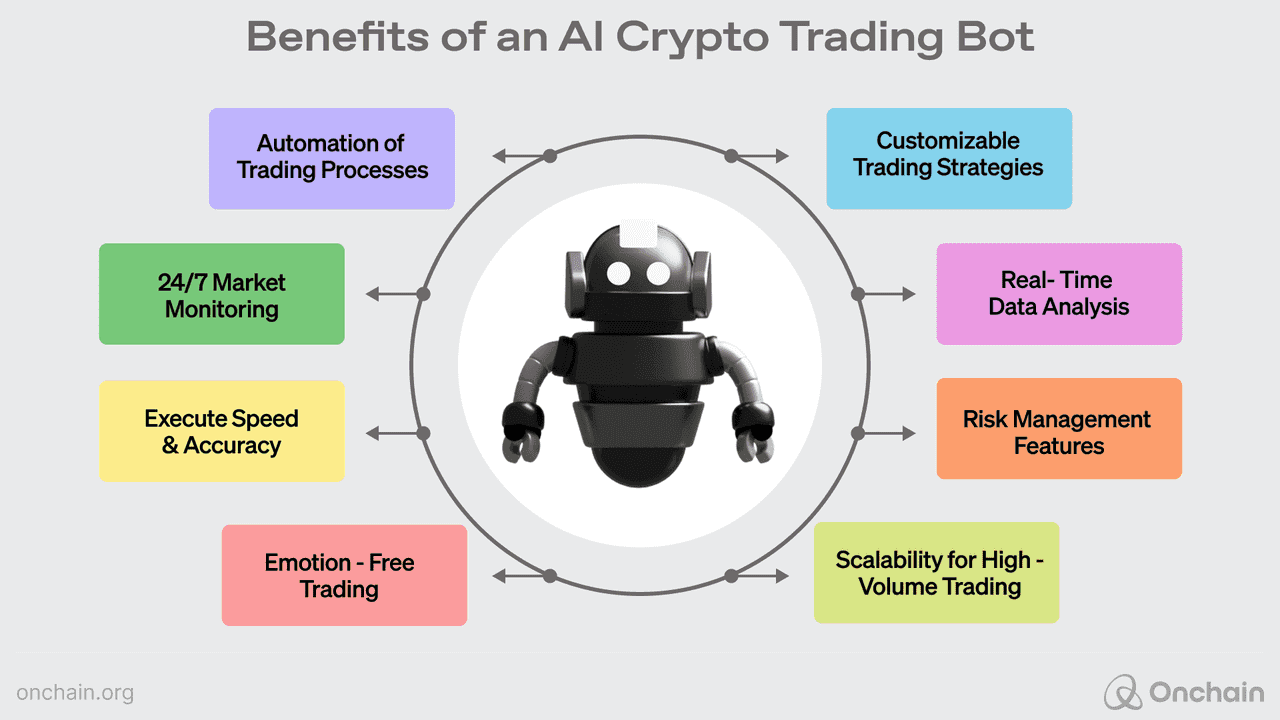
The Role of AI in Autonomous On-Chain Trading
AI is not strictly required for autonomous trading, but it is becoming a major differentiator.
A non-AI autonomous strategy might still operate from dynamic rule sets. But AI can add capabilities such as:
contextual interpretation of many data sources,
adapting strategies to new market regimes,
generating natural-language explanations,
coordinating multi-step actions,
and choosing tools or venues more flexibly.
This is why the term DeFAI matters. Chainlink defines DeFAI as the convergence of DeFi and AI, where autonomous AI agents use blockchain protocols to execute complex financial strategies and optimize yield or risk. Autonomous on-chain trading is one of the clearest practical expressions of that concept.
However, AI also introduces new risk. A static bot might fail because its rule was wrong. An AI-driven agent might fail because it interpreted the situation poorly, used low-quality data, or hallucinated a conclusion. That is why current conversations about autonomous trading always come back to guardrails.
The Importance of Trusted Execution
One of the biggest questions in autonomous on-chain trading is: Where does the agent’s logic run, and how do you trust it?
If the agent runs in an insecure environment, its keys or strategy can be compromised. If it runs in a black box, users may not know whether it followed the intended mandate. Chainlink’s February 2026 article on TEEs says that as autonomous onchain agents become more sophisticated, TEEs can serve as the secure brain for these agents, protecting proprietary logic and private keys used to settle transactions.
This is important because autonomy requires more than intelligence. It requires:
secure key management,
controlled runtime environments,
reliable policy enforcement,
and ideally some form of verifiability.
That is why trusted execution has become a core part of the infrastructure conversation in 2026.
Common Use Cases
Autonomous on-chain trading is a broad category. Common use cases include:
Portfolio Rebalancing
An agent monitors allocations and rebalances between assets, vaults, or stablecoins when thresholds or risk conditions change. This is a straightforward extension of onchain asset management and DeFAI principles. (Learn more)
Yield Rotation
The system scans DeFi opportunities and moves funds between lending, staking, or liquidity venues based on yield, liquidity, and risk conditions. This is one of the most intuitive DeFAI-style use cases.
Risk-Managed Positioning
The agent adjusts leverage, collateral, or exposure according to volatility, drawdown, or liquidation risk thresholds. Chainlink’s programmable policy enforcement piece directly references maximum drawdown policies as an example.
Cross-Chain Execution
The system moves assets where they are needed and executes on multiple chains as opportunities or risk conditions change. This is increasingly relevant because autonomous agents do not operate only on one chain. While not an official source, this matches the broader trusted-infrastructure discussions around multichain agent activity.
Machine-to-Machine Service Purchasing
A trading agent may pay for data, analysis, model inference, or execution services autonomously. This overlaps with AI agent payments and machine-native commerce.
Why Crypto Is Especially Well-Suited to This
Autonomous on-chain trading is more feasible in crypto than in most traditional markets for a few reasons.
First, markets are always open. An agent does not need to wait for human office hours. Second, settlement is programmable. Smart contracts can settle actions directly. Third, assets are already digital and composable. Fourth, wallets and protocols can be integrated into policy systems more directly than legacy broker infrastructure.
This does not mean crypto solves every problem. But it does mean the environment is naturally friendly to machine-native finance. That is one reason the AI-agent and DeFAI narrative has accelerated in 2026.
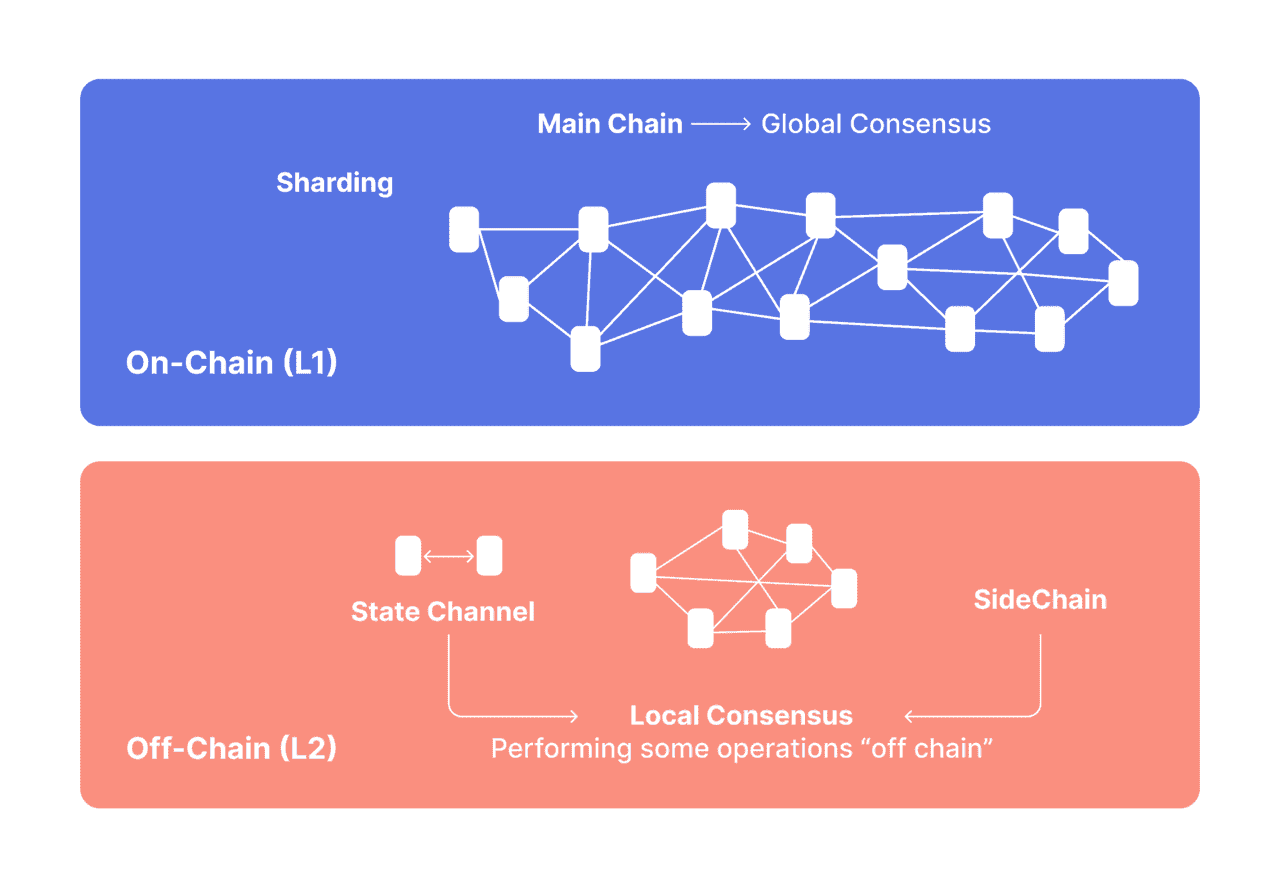
On-chain vs. Off-chain (source)
Benefits of Autonomous On-Chain Trading
24/7 Execution
The most obvious benefit is constant market coverage. Human traders sleep; agents do not.
Speed
Machines can react faster than humans to changing onchain conditions, especially in fragmented DeFi environments. This is also one reason security controls matter more, because fast mistakes are still mistakes.
Discipline
Agents can follow rules consistently without emotional interference. This is one of the classic automation benefits, especially for risk control and execution discipline. This is an inference from the broader automation model and policy-enforcement framing.
Complex Coordination
A well-designed autonomous system can manage multi-step workflows that would be tedious for humans to execute repeatedly. Chainlink’s agent orchestration article focuses on exactly this kind of multi-agent coordination.
Better Machine-Native Finance
As machine-to-machine payments and agent-led workflows expand, autonomous trading systems can become one part of a broader digital-economy stack.
Risks and Limitations
This category is exciting, but it is also dangerous if misunderstood.
Security Risk
Giving agents direct control of assets creates obvious attack surfaces. Keys, policies, relayers, and runtimes can all fail or be compromised.
Policy Failure
Even a secure agent can lose money if its mandates are poorly designed. If the max loss is wrong, if destination rules are too loose, or if execution constraints are incomplete, the system can behave in ways the owner did not intend.
AI Error
AI-driven agents may misinterpret data, hallucinate logic, or choose bad tools. This is a major reason why policy and execution constraints are essential.
Market and Liquidity Risk
Onchain execution is only as good as the liquidity and routing available. Thin liquidity, MEV, slippage, oracle delays, and cross-chain friction can all damage outcomes. This is a reasoned inference based on how onchain markets function.
Over-Autonomy
There is also a conceptual risk: not every strategy should be fully autonomous. In some cases, semi-autonomous systems with human approvals may remain safer than full machine discretion. This is an inference, but it follows from the security and policy issues highlighted across current infrastructure discussions.
Why This Could Become a Major 2026 Narrative
Autonomous on-chain trading is becoming a major narrative because it combines several things the market already cares about:
AI agents
onchain composability
machine-native payments
account abstraction
and better execution infrastructure
It is also a natural next step from earlier cycles:
first, humans traded manually
then bots automated human logic
now agents are beginning to combine reasoning, execution, and policy-aware wallet control
Whether the sector matures quickly or slowly, the direction is clear: markets are becoming more machine-readable, wallets are becoming more programmable, and execution layers are becoming more autonomous. That makes autonomous on-chain trading one of the clearest ways AI and crypto can converge into a usable financial product category.
Conclusion
Autonomous on-chain trading is the idea that software agents can analyze, decide, and execute trades directly through blockchain infrastructure under defined rules and safeguards.
It is more advanced than a simple bot, more composable than many legacy trading systems, and more naturally suited to crypto than to most traditional markets. But it is also riskier than many people realize, because autonomy increases both capability and failure surface. That is why today’s infrastructure conversations focus so heavily on trusted execution, programmable policies, and agent orchestration.
As AI agents, DeFi infrastructure, and machine-native payments continue to evolve, autonomous on-chain trading is becoming an increasingly important trend for both builders and traders. For users looking to stay ahead of emerging narratives—from AI agents and autonomous trading to RWAs, chain abstraction, and PayFi—Phemex offers a secure and user-friendly platform to explore the market, monitor new opportunities, and sharpen your trading edge.
Register](https://phemex.com/register?group=7916&referralCode=CUFKP8%22>Register) on Phemex Now
