









Key Takeaways
AI Rig Complex (ARC) is centered on Rig, an open-source Rust framework for building modular, lightweight AI agents and LLM-powered applications.
ARC presents itself as a collective of developers and AI agents collaborating around infrastructure, culture, and technical advancement.
The official tokenomics page describes $ARC as a fair-launched token used to align incentives, support open-source development, and reward meaningful contributions.
ARC’s public ecosystem includes an Arc Registry and a waitlist page for Ryzome, which is described as being built on Anthropic’s MCP and focused on reliable agent-service integration.
Public market trackers currently show 1 billion ARC in circulation, though investors should always verify live supply and contract data before trading.
Artificial intelligence infrastructure is evolving fast, but not every AI project is trying to solve the same problem. Some focus on model training, some on chat interfaces, and others on marketplaces for agents. AI Rig Complex, usually called ARC, takes a different route. Its official manifesto says ARC is building rig, an open-source framework for building portable, modular, lightweight AI agents in Rust. On its architecture page, ARC describes itself as a cyborg collective where developers and AI agents collaborate to build and enhance rig, sharing insights, culture, and technical advances.
That positioning matters because ARC is not easiest to understand as “just another AI token.” The core of the project is Rig, a Rust-based framework for building LLM-powered applications and agents. ARC’s token and ecosystem are meant to sit around that developer and agent stack, not replace it. The project’s homepage highlights an Arc Registry of ecosystem partners and agents, while its tokenomics page describes $ARC as a fair-launched token that aligns incentives, fuels open-source development, and rewards meaningful contributions.
In simple terms, AI Rig Complex is an AI-agent ecosystem built around the Rig framework, and $ARC is the token designed to coordinate incentives, ecosystem participation, and open-source growth around that framework.
What Is AI Rig Complex?
AI Rig Complex is a crypto-AI project built around the idea that the next generation of intelligent software should be modular, lightweight, portable, and capable of running in high-performance environments. ARC’s official manifesto says the project is building rig, “an open source framework for building portable, modular, lightweight AI agents in Rust.”
First, the real center of gravity is Rig, not the token alone. Second, ARC is strongly tied to Rust, which signals a focus on speed, safety, performance, and system-level engineering. Third, the emphasis on portable and modular agents suggests the team is not trying to build one monolithic AI product. It is trying to provide infrastructure developers can use to build many kinds of AI-powered applications.
This becomes even clearer when you look at the Rig GitHub repository. The official repo describes Rig as a Rust library for building scalable, modular, and ergonomic LLM-powered applications. That means ARC should not be thought of only as a consumer-facing AI app. It is better understood as a developer infrastructure project that also happens to have a tokenized ecosystem around it.
What Problem Is ARC Trying to Solve?
A lot of AI development today happens in higher-level scripting environments, which can be flexible and fast for prototyping. But those environments may not always be ideal for performance-intensive, resource-sensitive, or system-level AI workloads. ARC’s decision to build around Rust suggests it sees an opportunity to create a more efficient and reliable foundation for AI applications and agents. This is an inference, but it is strongly supported by Rig’s official description as a Rust library for scalable and modular LLM applications.
There is also a broader ecosystem problem. AI projects often have trouble aligning:
developers building the tooling,
agents using the infrastructure,
community members contributing ideas or integrations,
and token holders looking for sustainable value rather than pure hype.
ARC’s architecture page frames the project as a collective where developers and AI agents collaborate to build and enhance rig. Its tokenomics page says the token exists to align incentives, fuel open-source development, and reward meaningful contributions. That suggests ARC is trying to solve not only a technical problem, but also a coordination problem.
What Is Rig?
Rig is the technical core of the ARC ecosystem. The official Rig repository describes it as a Rust library for building LLM-powered applications that are scalable, modular, and ergonomic. It also says more information can be found in the official docs and crate documentation, which reinforces that Rig is meant to be a real developer tool, not just marketing language.
That matters because the usefulness of ARC ultimately depends on whether Rig is actually valuable to developers. If Rig is adopted, ARC has a meaningful technical center. If it is not, then the token narrative becomes much weaker.
Based on the official descriptions, Rig is designed to help developers build:
agent systems,
multi-step AI workflows,
modular LLM applications,
and integrations with tools or external services.
How ARC Works
The easiest way to understand ARC is to break it into four layers:
Rig, the open-source framework
The ARC ecosystem, the collective/community layer
Registry and platform surfaces, where agents and partners are organized
$ARC, the token that coordinates incentives around the whole stack
Rig: The Framework Layer
This is the core technical layer. ARC’s manifesto says the project is building Rig, and the Rig repository describes the framework as a Rust library for LLM-powered applications.
This is the foundation that makes ARC more than a narrative token. It gives the project a tangible technical product.
The ARC Collective
ARC’s architecture page describes the project as a cyborg collective where developers and AI agents collaborate to build and enhance rig. That framing is unusual, but meaningful. It suggests ARC sees its ecosystem not just as users of a framework, but as an evolving collaborative system made of both humans and intelligent software.
That is a very AI-native worldview. It implies that agents are not merely outputs of the system; they are participants inside it.
Registry and Ecosystem Layer
ARC’s homepage highlights an Arc Registry, described as a comprehensive overview of ARC’s ecosystem partners and agents. Even though the snippet is brief, this is important because it shows ARC is trying to create not just framework adoption, but also an identifiable ecosystem of agents and integrations.
The site also includes pages for Forge and Ryzome, suggesting ARC is building more than one surface around the Rig framework. The Ryzome waitlist page says the product is built on Anthropic’s MCP and aims to make service integration effortless, reliable, and smooth for agents. That strongly suggests ARC is moving toward a more connected agent-services economy, not just a standalone code framework.
The Token Layer
ARC’s tokenomics page describes $ARC as a fair-launched token that aligns incentives, fuels open-source development, and rewards meaningful contributions. That is one of the clearest official statements about what the token is for.
This means the token is meant to play a supporting role around the technical and ecosystem layers, rather than pretending to be the product by itself.
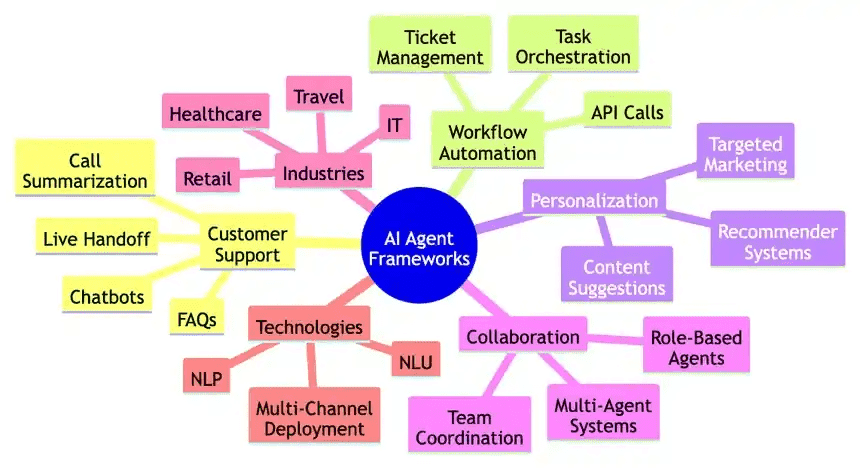
AI Agent Frameworks
What Is $ARC?
$ARC is the native ecosystem token of AI Rig Complex. ARC’s official tokenomics page describes it as a fair-launched token and emphasizes three core purposes:
aligning incentives,
fueling open-source development,
and rewarding meaningful contributions.
That framing is important because it positions $ARC differently from many AI-agent tokens. Instead of saying the token simply gives “governance” or vague utility, ARC ties it directly to the open-source and ecosystem-growth side of the project.
The architecture page adds another clue by referring to “$arc token” as part of the ecosystem and describing it as fair-launched and available to the world.
What Does $ARC Do?
Based on the official material currently visible, $ARC appears to serve several ecosystem functions.
Incentive Alignment
This is the clearest official use case. ARC’s tokenomics page explicitly says the token aligns incentives. In practice, that likely means helping coordinate developers, contributors, ecosystem projects, and community participants around the growth of Rig and related products. This is partly inference, but it follows directly from the tokenomics language.
Open-Source Development Support
ARC says the token helps fuel open-source development. That matters because Rig is an open-source framework. Tokens in that context are often used to help fund ecosystem growth, reward contributors, and encourage sustained builder engagement. Again, the exact operational mechanics are not fully detailed in the accessible snippet, but the intent is official.
Rewarding Contributions
The same page says $ARC rewards meaningful contributions. That suggests the project wants token value to be linked to ecosystem-building activity rather than pure passive holding. This is a strong narrative fit for open-source AI infrastructure, where community and contributor energy often matter as much as formal company structure.
Ecosystem Participation
Because ARC is building registry, service, and potentially marketplace-like layers such as Ryzome, it is reasonable to infer that $ARC may become increasingly important for participation across those ecosystem surfaces. This is not fully specified in the visible tokenomics snippet, so it should be framed as an inference rather than a confirmed present-day utility.
ARC’s Emerging Product Direction: Registry, Forge, and Ryzome
A useful way to gauge ARC’s direction is to look beyond the manifesto and token page.
The homepage references an Arc Registry, which implies the project is curating or mapping a live ecosystem of agents and partners. The existence of Forge and Ryzome pages suggests ARC is moving toward more concrete product surfaces where builders and agents can interact.
The Ryzome waitlist page is especially interesting. It says the product is built on Anthropic’s MCP, and that services integrate effortlessly, saving developer time and making agent actions reliable and smooth. This is a meaningful signal because it shows ARC paying attention not only to model frameworks, but to the growing world of agent-to-service protocols and MCP-compatible ecosystems.
That gives ARC a stronger 2026 narrative fit. It is not only about “AI agents” in the abstract. It is increasingly about:
agent frameworks,
interoperable service integration,
ecosystem registries,
and machine-native tooling.
Why ARC Matters in the AI-Agent Sector
ARC matters because it represents one of the more infrastructure-oriented branches of the AI-agent sector.
A lot of AI-agent tokens are centered on characters, consumer apps, or speculative narratives. ARC’s official materials, by contrast, focus on:
a real open-source framework,
developer tooling,
ecosystem collaboration,
and service integration.
That gives ARC a different profile. It is closer to an AI developer infrastructure ecosystem than a pure consumer-facing agent token.
It also matters because Rust-based AI tooling is still a relatively differentiated corner of the market. Many agent ecosystems are more heavily associated with Python or JavaScript stacks. ARC’s strong association with Rust and modular infrastructure could make it attractive to a specific class of builders who care about performance and systems-level reliability. This is an inference, but it follows directly from Rig’s technical identity.
Risks and Limitations
ARC is interesting, but it comes with real risks.
Ecosystem-Value Capture Risk
Even if Rig is a valuable framework, investors still need to ask how much of that value truly accrues to $ARC. Open-source frameworks can become widely used without their associated token becoming essential. ARC’s tokenomics narrative helps, but long-term value capture still depends on real ecosystem usage. This is an inference based on the structure of open-source ecosystems.
Competitive Risk
The AI-agent infrastructure space is crowded. ARC is competing not only with tokenized AI ecosystems, but also with many non-token open-source frameworks and tooling stacks. Rig may be differentiated through Rust, but that alone does not guarantee winner-take-most adoption. This is a broader market inference.
Product-Surface Ambiguity
The project has promising surfaces like Registry and Ryzome, but public materials are still lighter on hard operational detail than a fully mature enterprise stack would typically provide. That does not mean the project lacks substance, but it does mean investors should separate the clear core identity around Rig from the still-emerging broader platform narrative.
Token Volatility
Like many AI-agent-related tokens, $ARC is still a crypto asset subject to narrative swings, liquidity changes, and rapid repricing. Public market trackers show the usual wide volatility profile common to newer sectors.
Conclusion
AI Rig Complex is one of the more interesting infrastructure-first projects in the crypto-AI sector because it is built around a real technical core: Rig, a Rust framework for modular, lightweight, scalable AI applications and agents. ARC’s own materials make that clear. The token is not the foundation of the story; the framework is.
What makes the project more than a developer library, though, is the surrounding ecosystem ambition. ARC presents itself as a collective of developers and agents, highlights an ecosystem registry, and is beginning to show product layers like Ryzome that point toward broader agent-service infrastructure.
As AI-agent infrastructure continues to evolve, projects like ARC show how crypto can be used to coordinate builders, open-source frameworks, and machine-native ecosystems. For traders looking to stay ahead of emerging narratives—from AI agents and developer infrastructure to RWAs, PayFi, and chain abstraction—Phemex offers a secure and user-friendly platform to explore the market, monitor new opportunities, and sharpen your trading edge.
