
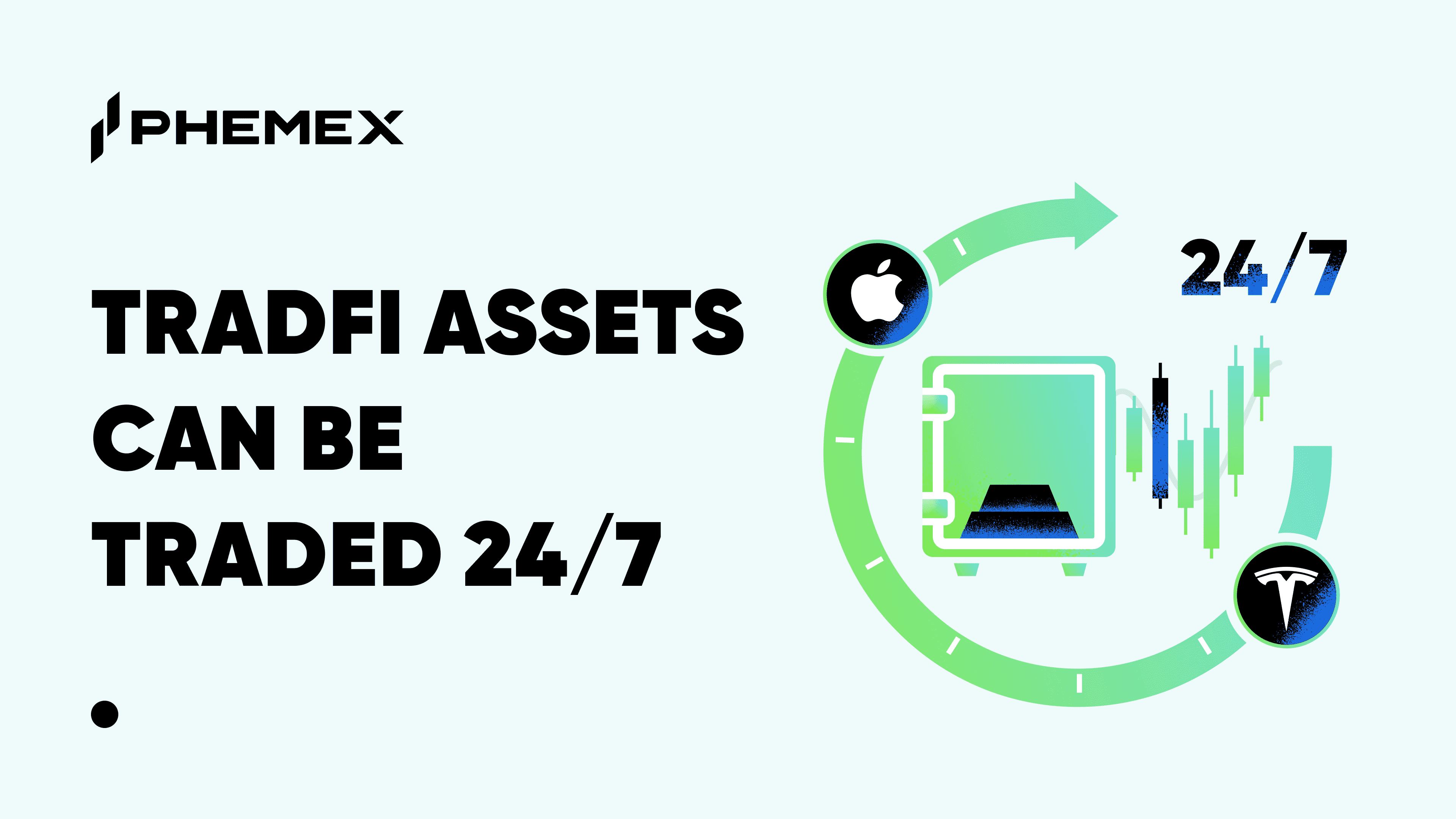
Stocks trade on exchanges with fixed hours. Gold settles through London and New York markets that close overnight. But imagine being able to trade Tesla, the S&P 500, or gold at 3 AM on a Sunday — soon, this will be possible for everyone.
This isn’t a loophole or a workaround — it’s how futures contracts have always worked.
Understanding the market structure behind 24/7 TradFi trading explains why this is possible and what it actually means for price discovery.
What Determines When an Asset Can Trade?
Trading hours depend on where and how an asset is traded, not on the asset itself.
When you buy Apple stock on the NYSE, you are bound by exchange hours because the NYSE operates the order book. The exchange decides when trading opens, when it closes, and when it halts. Your ability to trade is tied directly to that infrastructure.
Apple’s value does not stop existing at 4 PM Eastern. News still happens. Earnings still matter. The only thing that stops is the NYSE’s matching engine.
Futures contracts run on different infrastructure. When you trade a contract based on Apple’s price rather than Apple shares themselves, you are no longer dependent on the NYSE. The contract exists on the platform that lists it, and that platform sets its own trading hours.
This is why CME futures trade almost twenty three hours per day even though their underlying spot markets have limited hours. It is also why crypto perpetual contracts trade continuously.
How Do Futures Decouple from Spot Market Hours?
A futures contract is an agreement to exchange value based on an asset’s price, not the asset itself. That separation is what allows extended trading hours.
The spot market is where ownership changes hands. When the NYSE is open, buyers and sellers exchange real Apple shares. This process depends on settlement systems, custodians, and regulatory oversight, all of which operate on defined schedules.
The futures market trades contracts that reference spot prices without requiring spot ownership to change. A Tesla futures contract tracks Tesla’s price, but trading it does not involve Tesla shares moving between accounts.
Because futures do not rely on spot market infrastructure to execute trades, they can operate independently. CME’s E-mini S&P 500 futures trade from Sunday evening through Friday afternoon with only brief daily pauses, even though the underlying stocks trade only during NYSE hours.
Crypto platforms extend this logic further. Perpetual contracts, which have no expiration date, are fully self contained. They reference external prices but do not depend on external settlement systems. That is what enables true 24/7 trading.
What Keeps Futures Prices Aligned with Spot Prices?
If futures trade when spot markets are closed, what prevents prices from drifting too far away?
Traditional futures rely on expiration and settlement. Each contract has a fixed settlement date where it must converge with the spot price. As expiration approaches, arbitrage traders step in. If futures trade too high, they sell futures and buy spot. If futures trade too low, they do the reverse.
Perpetual contracts use a different mechanism called funding rates. Instead of expiring, traders make periodic payments based on how far the contract price deviates from spot.
When a perpetual trades above spot, long positions pay shorts, which encourages selling and pushes prices down. When it trades below spot, shorts pay longs, which encourages buying.
This mechanism continues even when spot markets are closed because reference prices can come from after hours trading, international markets, or the last available spot data adjusted for new information.
The result is that futures generally track spot prices, although temporary divergence can occur when spot markets are closed.
Why Don't Spot Markets Just Trade 24/7?
If futures can trade around the clock, why do stock exchanges not do the same?
Settlement infrastructure Stock trades involve real ownership transfer. Shares move between accounts, custodians update records, and regulatory requirements must be met. This settlement process, currently T+1 in US markets, depends on systems that do not operate continuously.
Liquidity concentration Market makers and institutions focus activity during core hours. Spreading the same volume across a full day would thin liquidity, widen spreads, and increase volatility.
Regulatory frameworks Stock exchanges operate under rules that define trading hours, halts, and circuit breakers. Moving to 24/7 trading would require major regulatory changes.
Operational costs Running an exchange requires staff, surveillance, and infrastructure. Extending hours means extending costs, which may not be justified by overnight volume.
Futures sidestep many of these issues because they do not involve direct asset transfer. They are contracts that settle in cash rather than physical delivery.
What Happens to TradFi Futures When Spot Markets Are Closed?
When you trade a Tesla futures contract on a Saturday, you are trading a market that references Tesla’s price but cannot directly arbitrage against spot until Monday.
This creates specific dynamics.
Price discovery continues If major news breaks over the weekend, futures markets reprice immediately. Futures become the primary venue for price discovery until spot markets reopen.
Basis can widen The basis is the difference between futures and spot prices. With spot markets closed, arbitrage is limited and the basis can widen. It typically normalizes once spot trading resumes.
Liquidity may decrease Fewer participants trade during off hours. Lower liquidity can lead to wider spreads and larger price moves for the same order size.
Gap risk at open When spot markets reopen, prices may gap to align with futures. This can create volatility during the opening session.
These are not flaws. They are structural characteristics of trading futures outside spot market hours.
How Does This Apply to Precious Metals and Other Assets?
The same structure applies to precious metals and other TradFi assets.
Gold spot trading is tied to venues like the London Bullion Market and COMEX, each with defined hours. Physical gold settlement depends on those systems.
Gold futures, however, trade nearly around the clock. Perpetual gold contracts on crypto platforms extend this to full 24/7 availability.
As long as there is a reliable reference price and a mechanism to keep futures aligned with spot, the contract can trade independently. This applies to indices, commodities, and foreign exchange pairs.
Frequently Asked Questions
If spot markets are closed, what price do futures reference?
Futures platforms use various reference prices: the last spot close, after-hours trading data, related markets that are open (Asian markets for US stocks, for example), or composite indices. The specific methodology varies by platform and contract.
Do 24/7 futures prices always match spot when markets reopen?
Not exactly at the moment of open, but arbitrage quickly aligns them. There may be brief gaps at spot market open as prices reconcile with where futures traded overnight.
Is overnight TradFi trading riskier?
It has different risk characteristics. Lower liquidity can mean larger price moves. The inability to arbitrage against spot can allow prices to deviate further. These aren't necessarily "more risky" — they're different dynamics to understand.
Why do crypto platforms offer 24/7 TradFi when traditional futures don't?
Traditional futures exchanges like CME do offer near-24-hour trading on weekdays, with brief maintenance breaks. Crypto platforms extend to full 24/7 by using perpetual contract structures that don't require the operational breaks traditional exchanges take.
Key Takeaways
TradFi assets can trade 24/7 as futures because futures contracts are separate instruments from the assets they reference. When you trade a stock futures contract, you are not trading on the NYSE. You are trading on the platform that lists the contract.
This is not a special feature or a hack. It is the core structure of derivatives markets. Futures have traded extended hours for decades. Perpetual contracts simply remove expiration dates and use funding rates to enable continuous trading.
The ability to trade 24/7 comes with structural realities, including basis divergence, lower off hours liquidity, and gap risk when spot markets reopen. Understanding these mechanics helps traders use TradFi futures more effectively.