


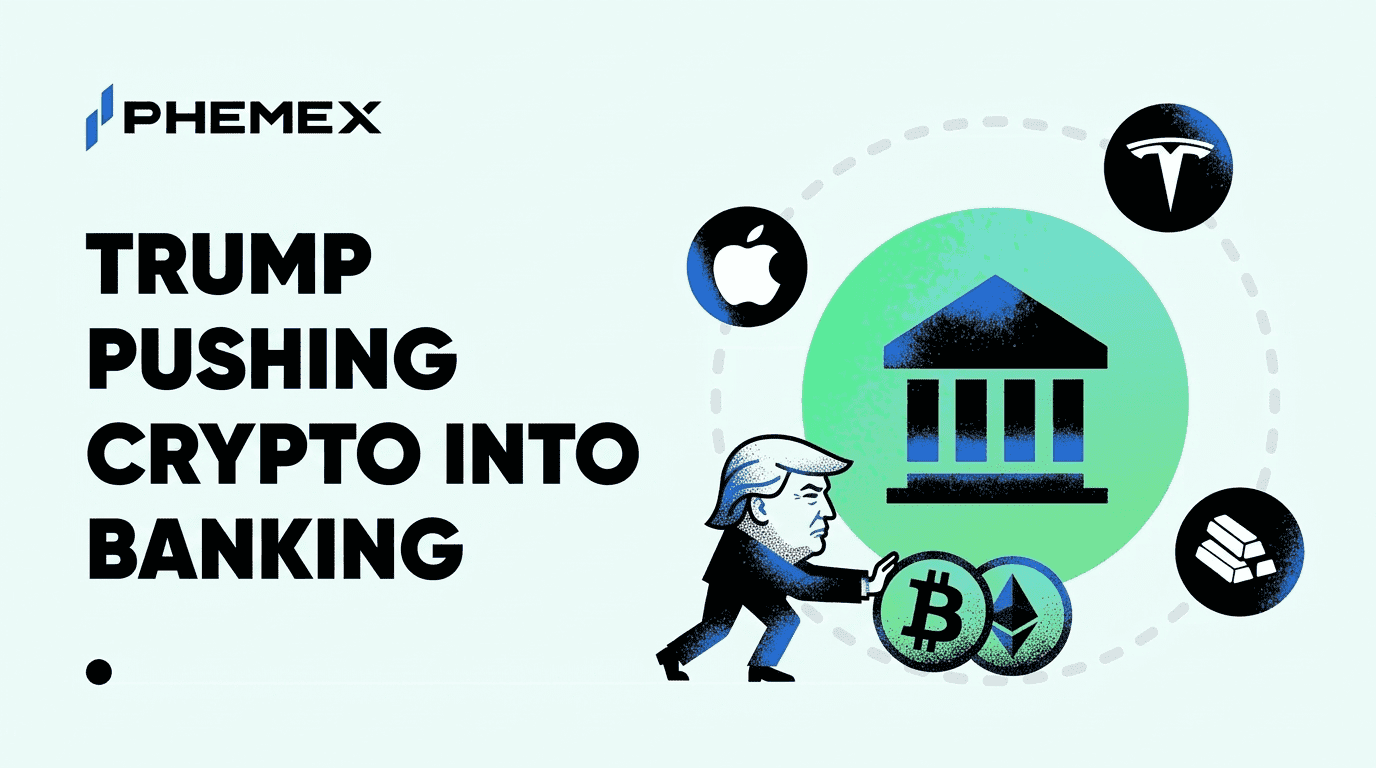
In 83 days, the Office of the Comptroller of the Currency under Trump-appointed Comptroller Jonathan Gould has granted conditional national bank charters to 11 crypto and fintech firms, including Ripple, Crypto.com, Circle, BitGo, Paxos, and Fidelity Digital Assets. On March 4, Kraken Financial became the first digital asset bank in US history to receive a Federal Reserve master account, giving it direct access to Fedwire payment rails without relying on an intermediary bank. And on the same day, Trump posted on Truth Social that "Banks should not be trying to undercut The Genius Act," directly accusing traditional lenders of sabotaging his crypto legislative agenda.
This is not incremental policy adjustment, and it is not an accident. Eighteen months ago, federal regulators were pressuring banks to close accounts for crypto companies, and today those same crypto companies are becoming banks. Here is what changed, who is getting charters, and what it means for the US financial system.
What the OCC Actually Did
The OCC is the federal agency that grants national banking charters. Under Jonathan Gould, it has moved faster on crypto applications than any previous Comptroller in the agency's history.
In December 2025, the OCC conditionally approved five applicants for national trust bank charters. Circle's First National Digital Currency Bank, Ripple National Trust Bank, BitGo, Fidelity Digital Assets, and Paxos Trust Company all received the green light in a single batch. Three more conditional approvals followed in early 2026 for Crypto.com, Stripe's Bridge National Trust Bank, and Protego. Morgan Stanley also filed an application for a crypto-focused trust charter subsidiary, and Trump-linked World Liberty Financial applied in January.
Then came the rule change that made the charters more useful. On February 27, the OCC finalized a regulationreplacing the narrow term "fiduciary activities" with the broader "operations of a trust company and activities related thereto." That single phrase change, effective April 1, means national trust banks can now conduct non-fiduciary custody, including holding crypto assets for clients outside of traditional trust arrangements. It codifies what Gould had been signaling all along, that crypto firms with these charters are not limited to trust services and can operate as custodians, process payments, and potentially hold deposits.
Why This Is a 180-Degree Turn From Biden
The difference from the Biden era is hard to overstate.
Under Biden, federal regulators ran what the industry called Operation Chokepoint 2.0. The FDIC sent "pause letters" to banks instructing them to halt crypto-related activities. The Fed withdrew guidance that had previously allowed banks to engage with digital assets. Coinbase, Gemini, and dozens of smaller firms reported having bank accounts closed without explanation. The message from Washington was unmistakable, and banks that touched crypto would face supervisory consequences.
The reversal came in stages. First, the FDIC released FIL-7-2025, clarifying that prior FDIC approval is no longer required for permissible crypto activities. The Fed withdrew SR 22-6 and SR 23-8, sunsetted its Novel Activities Supervision Program, and removed "reputational risk" from bank examination criteria. The OCC followed by telling national banks they could decide for themselves if they wanted to service crypto clients.
But Gould went further than simply removing barriers. He actively invited crypto firms to apply for charters, and the difference between "we won't punish banks for working with crypto" and "we want crypto companies to become banks" is the difference between tolerance and integration. The Trump OCC chose integration.
What a Banking Charter Actually Gives Crypto Firms
A national trust bank charter is far more than a regulatory badge. It comes with specific operational capabilities that change how these firms function.
Federal preemption. A national charter overrides the state-by-state money transmitter licensing that crypto firms currently navigate. Ripple, Circle, and Crypto.com currently hold dozens of individual state licenses, and a national charter replaces that patchwork with a single federal framework.
Custody authority. The February 27 rule clarification means chartered trust banks can custody crypto assets without the restrictions that previously limited them to fiduciary arrangements, giving institutional clients a federally regulated custodian option beyond the current short list.
Payment system access. This is the capability that matters most for the long term. Kraken Financial's Fed master account, approved March 4, gives it direct access to Fedwire, the backbone of US dollar settlement. Kraken can now settle payments without routing through a correspondent bank. The account is limited in scope, with no discount window access and no interest on reserves, but it establishes the precedent. If Kraken has a Fed master account, every other chartered crypto bank will apply for one.
Legitimacy with counterparties. Banks, pension funds, and corporate treasuries that previously could not work with crypto-native firms due to compliance restrictions can engage with a nationally chartered, OCC-supervised entity. The charter converts a crypto company into something institutional compliance departments can approve.
The Banking Industry Is Fighting Back
Traditional banks are not watching this quietly, and the pushback is coming from the highest levels of the financial industry.
The Bank Policy Institute, whose members include Goldman Sachs, JPMorgan, and American Express, has reportedly considered a lawsuit challenging the OCC's charter approvals. Their argument is twofold. Crypto trust banks are getting access to federal payment infrastructure without meeting the same capital requirements as traditional banks, and the expedited approval timeline of 83 days for 11 firms suggests insufficient regulatory scrutiny.
Senator Elizabeth Warren has publicly clashed with Gould over the World Liberty Financial application specifically, arguing that granting a bank charter to a Trump-affiliated entity creates obvious conflicts of interest, but Gould rejected her request to pause the application.
Trump's response to the banking pushback was characteristically direct. His March 4 Truth Social post warned that "The Banks should not be trying to undercut The Genius Act, or hold The Clarity Act hostage." The GENIUS Act governs stablecoin regulation, and banks had been lobbying to ban stablecoin yield entirely, a position crypto firms rejected as anticompetitive. The President siding publicly with crypto over the banking lobby on live legislation signaled that traditional finance's influence over digital asset policy has limits under this administration.
Circle's IPO and What It Signals
Circle's IPO filing fits into this story as the market's verdict on the regulatory shift.
The USDC issuer filed to go public on the NYSE under the ticker CRCL, targeting a nearly $6 billion valuation with JPMorgan, Citi, and Goldman Sachs as lead underwriters. Cathie Wood's Ark Investment Management expressed interest in up to $150 million in shares.
A stablecoin company going public at a $6 billion valuation, led by Wall Street's biggest banks, only happens when the regulatory environment supports it. Circle also holds one of the OCC's conditional national trust bank charters, making it simultaneously a future regulated bank and a public company. Two years ago, Circle's SPAC deal collapsed and cost the company $44 million. The fact that the same company can now attract Goldman Sachs as an underwriter tells you everything about how much the regulatory terrain has shifted.
Frequently Asked Questions
Can crypto companies now operate as real banks in the US?
Yes, but with limitations. The OCC national trust bank charters allow crypto firms to custody assets, process payments, and potentially hold deposits under federal supervision, though they are not full commercial banking licenses. Chartered firms cannot yet offer FDIC-insured deposit accounts or access the Fed's discount window, though Kraken's Fed master account suggests the boundaries are expanding.
What happened to Operation Chokepoint 2.0?
It was systematically dismantled across all three federal banking agencies starting in mid-2025. The FDIC stopped requiring prior approval for bank-crypto relationships, the Fed withdrew its restrictive supervisory letters and eliminated "reputational risk" as an examination criterion, and the OCC began actively inviting crypto firms to apply for national charters. The shift went from discouraging banks from touching crypto to encouraging crypto companies to become banks.
Why are traditional banks opposed to crypto banking charters?
Banks argue that crypto firms are getting access to federal payment infrastructure and the trust of a national charter without meeting the same capital, liquidity, and supervisory requirements that traditional banks face. The Bank Policy Institute has considered legal action, and bank lobbyists pushed to ban stablecoin yield during GENIUS Act negotiations to prevent new competition for deposits.
What does Kraken's Fed master account mean for the industry?
Kraken Financial became the first digital asset bank to receive direct access to Federal Reserve payment systems on March 4, 2026. The account lets Kraken settle payments through Fedwire without an intermediary bank, which could speed up deposits and withdrawals for institutional clients. It is a limited, one-year pilot account, but it sets a precedent that other chartered crypto firms will follow.
Bottom Line
The Trump administration is doing more than allowing crypto into the banking system. It is actively building the on-ramp with eleven firms chartered in 83 days, a Fed master account for a crypto exchange, a rule change expanding what trust banks can do, and a President publicly backing the industry against traditional bank lobbying. That is a coordinated policy direction, not a series of coincidences.
The firms to watch are the ones that move from conditional charter to fully operational bank. Anchorage Digital is currently the only crypto-native firm that has made that transition. Ripple, Circle, and Crypto.com are next in line. If they clear the final charter conditions in 2026, the US will have multiple federally regulated crypto banks with access to the same payment infrastructure that JPMorgan and Goldman Sachs use. For traders, that means faster fiat on-ramps, regulated custody, and a financial system that treats digital assets as permanent rather than experimental.
This article is for informational purposes only and does not constitute financial or investment advice. Cryptocurrency trading involves substantial risk. Always conduct your own research before making trading decisions.