


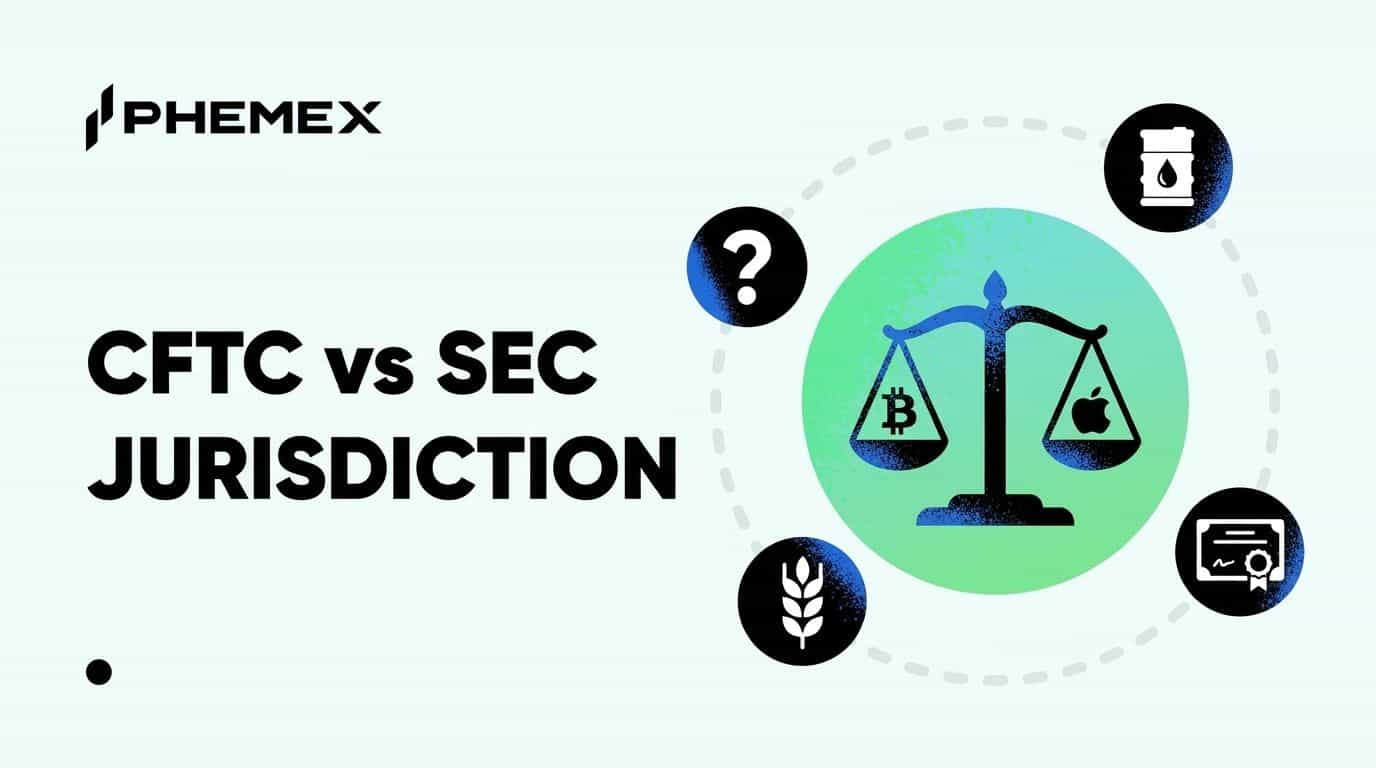
The CFTC filed 83 enforcement actions related to digital assets between 2015 and 2025, totaling roughly $6 billion in penalties. The SEC filed over 80 of its own during the same period, collecting more than $2 billion. Two federal agencies spending a decade fighting over the same assets with no clear line between their jurisdictions. That is the problem the CLARITY Act is designed to fix, and as of late March 2026, it is closer to becoming law than any crypto market structure bill in American history.
The CLARITY Act, also known as H.R. 3633, passed the House 294-134 in July 2025, cleared the Senate Agriculture Committee in January 2026, and faces its Banking Committee markup in the second half of April. If signed into law, it draws a permanent statutory line between the CFTC and SEC. Digital commodities go to the CFTC while securities stay with the SEC. Here is what that means for traders, which assets fall on which side, and why the regulatory approach of each agency produces very different outcomes for market participants.
What the CLARITY Act Actually Does
The bill creates a new legal category called "digital commodity" and hands the CFTC exclusive jurisdiction over spot and cash markets for those assets. This is a significant expansion. The CFTC currently has anti-fraud and anti-manipulation authority over commodity spot markets, but not full regulatory oversight. Under the CLARITY Act, digital commodity exchanges, brokers, and dealers would all register with and answer to the CFTC.
The definition of "digital commodity" is specific. It covers fungible digital assets whose value derives from a decentralized blockchain network rather than from the managerial efforts of a central issuer. Bitcoin, Ethereum, Solana, XRP, Cardano, and the other assets named in the March 17 joint interpretive rule all qualify, and the CLARITY Act would make that classification permanent through statute.
The SEC retains jurisdiction over digital securities, meaning tokens sold as part of an investment contract where buyers expect profits from the efforts of a central team. A token can also transition between categories. An asset launched through a fundraising round with profit promises might start as a security and later qualify as a digital commodity once the network is sufficiently decentralized and the issuer's role diminishes.
How the CFTC and SEC Regulate Differently
This is where the jurisdiction question stops being abstract and starts affecting your trading account. The two agencies operate under fundamentally different philosophies, and those philosophies produce different rules, different enforcement patterns, and different levels of friction for market participants.
The SEC is a disclosure-based regulator built around protecting investors through registration requirements, detailed filings, and strict reporting obligations. When the SEC regulated crypto assets as potential securities, exchanges faced registration demands, tokens faced potential delisting, and projects faced enforcement actions for failing to register offerings that the SEC retroactively classified as securities sales. The Gensler-era "regulation by enforcement" approach meant that the rules were often only clarified after someone was sued for breaking them.
The CFTC takes a principles-based approach, setting broad standards for market integrity and anti-fraud, then working with exchanges and self-regulatory organizations to implement them. The CFTC has historically been more comfortable with innovation and less likely to use enforcement as a first resort. For traders, that typically means more available products, fewer listing restrictions, and a regulatory framework designed around market function rather than investor protection gatekeeping.
CFTC vs SEC at a Glance
|
Category
|
CFTC (Digital Commodities)
|
SEC (Digital Securities)
|
|
Regulatory philosophy
|
Principles-based, market integrity
|
Disclosure-based, investor protection
|
|
Primary focus
|
Prevent manipulation and fraud
|
Require registration and disclosure
|
|
Enforcement approach
|
Targeted actions, works with industry
|
Broad enforcement, regulation by litigation
|
|
Spot market authority
|
Full oversight under CLARITY Act
|
No spot commodity authority
|
|
Registration burden
|
Exchange, broker, dealer registration
|
Securities offering registration, ongoing reporting
|
|
Product availability
|
Broader, fewer listing restrictions
|
Restricted until registered
|
|
Historical crypto actions
|
~83 cases, $6B in penalties (2015-2025)
|
80+ cases, $2B+ in penalties (2017-2025)
|
|
Assets covered
|
BTC, ETH, SOL, XRP, ADA, LINK, etc.
|
Unregistered token offerings, investment contracts
|
If your primary asset is Bitcoin, Ethereum, Solana, or any of the 16 named digital commodities, the CFTC's lighter-touch framework governs your trading environment going forward. If you are buying tokens from a project that raised money by promising returns based on team effort, the SEC still applies.
Which Assets Go Where
The March 17 joint rule already named 16 digital commodities. BTC, ETH, SOL, XRP, ADA, LINK, AVAX, DOT, HBAR, LTC, DOGE, SHIB, XTZ, BCH, APT, and XLM all have confirmed commodity status under federal regulatory interpretation.
Under the CLARITY Act, any future token can qualify as a digital commodity if it meets the statutory definition. The key test is decentralization. If the token's value comes from the blockchain network itself rather than from the efforts of a centralized team, it qualifies as a commodity. The bill creates a pathway for tokens that launched as securities (through an ICO or fundraising round) to transition to commodity status once the network matures and decentralizes.
Tokens that remain securities include those still controlled by a central issuer, sold with explicit profit promises tied to team performance, or that have not achieved sufficient decentralization. The SEC retains full enforcement authority over those assets.
Stablecoins occupy a separate category entirely. The CLARITY Act treats them under distinct provisions, and the stablecoin yield question has been the primary sticking point holding up the bill's Senate progress. Banks worry that allowing stablecoin issuers to pay yield could trigger capital flight from traditional deposits.
What Changes for Traders if the CLARITY Act Passes
The practical impact hits several levels at once.
Exchange registration simplifies. Under the current patchwork, exchanges maintain separate compliance frameworks for assets that might be commodities and assets that might be securities. The CLARITY Act collapses that into two clear tracks. Digital commodity exchanges register with the CFTC, platforms listing digital securities register with the SEC, and no one is left guessing which framework applies to which token.
More products become available. The CFTC's principles-based approach historically leads to broader product offerings. Derivatives, structured products, and new trading pairs for all 16 named commodities can be offered under a known regulatory framework rather than the shadow of potential SEC enforcement. Exchanges that previously restricted U.S. access to certain tokens due to securities risk can relist those assets confidently.
Enforcement becomes predictable. The biggest cost of the old system was not any single enforcement action but the uncertainty around it. Projects did not know which agency would come after them or for what, and exchanges did not know which tokens were safe to list. The CLARITY Act replaces that ambiguity with clear lines so you know which regulator you answer to before you launch a product, not after you get sued.
And the timeline matters. Senators have stated publicly that if the CLARITY Act does not pass by May, digital asset legislation will not move for the foreseeable future because midterm election politics will grind Congress to a halt. The Banking Committee markup in April is the critical window.
Why the CFTC Has Been the Preferred Regulator for Crypto
The crypto industry has pushed for CFTC oversight for years, and the reason is straightforward. The CFTC approved Bitcoin futures in 2017 while the SEC was still debating if it should allow a Bitcoin ETF. Former CFTC Chair Christopher Giancarlo, known as "Crypto Dad," has argued publicly that the CLARITY Act benefits banks even more than crypto companies because it gives traditional financial institutions a clear framework to enter digital asset markets.
But the preference is not purely about leniency. The BitMEX case in 2020 resulted in a $100 million settlement for failing to implement adequate anti-money-laundering controls, and the CFTC has brought billions in total penalties against crypto firms that engaged in manipulation or operated unregistered platforms. The difference is that the CFTC tends to act against specific bad behavior rather than claiming entire asset classes fall under its jurisdiction.
The honest answer is that neither regulator is perfect. The SEC protects retail investors from fraudulent offerings while the CFTC enables innovation but may offer less protection for unsophisticated buyers. The CLARITY Act attempts to give traders the best of both by assigning each agency to its area of competence.
Frequently Asked Questions
Does the CFTC regulate Bitcoin and Ethereum right now?
The CFTC has regulated Bitcoin and Ethereum futures and derivatives since 2017. The March 17, 2026, joint interpretive rule extended that to spot markets for 16 named digital commodities. The CLARITY Act would make this permanent through federal statute rather than agency interpretation.
What is a digital commodity under the CLARITY Act?
A fungible digital asset whose value derives from a decentralized blockchain network, not from the managerial efforts of a central issuer. If the token's market value depends on a team delivering on promises, it is likely a security. If it depends on network usage and supply-demand dynamics, it qualifies as a digital commodity.
Will the CLARITY Act pass in 2026?
Polymarket gives it 72% odds as of late March 2026. The bill passed the House with strong bipartisan support (294-134) and cleared the Senate Agriculture Committee. The Banking Committee markup is scheduled for late April, and senators have said the bill must pass by May or it stalls until after midterm elections.
How does CFTC regulation affect crypto trading fees and access?
CFTC-regulated markets historically have lower compliance overhead than SEC-regulated ones, which can translate to broader product availability and more competitive fee structures. The registration framework under the CLARITY Act requires exchanges to meet anti-manipulation and anti-fraud standards, but it does not impose the same disclosure and reporting burden that securities regulation demands.
Bottom Line
The jurisdiction question has been the single largest source of regulatory uncertainty in U.S. crypto markets for the past decade, and the CLARITY Act is the first bill with genuine bipartisan momentum to resolve it permanently. If it passes, BTC, ETH, SOL, and every other digital commodity trades under CFTC oversight with a principles-based framework designed for market integrity rather than securities gatekeeping. The SEC keeps its authority over actual securities offerings where investor protection matters most.
The April Banking Committee markup is the next inflection point. If the stablecoin yield compromise holds and the vote happens on schedule, traders will know by summer if this framework becomes permanent law or reverts to the interpretive guidance that a future administration could reverse. For anyone trading digital commodities on a U.S. platform, the outcome of the next six weeks determines if the regulatory clarity you have today is permanent or temporary.
This article is for informational purposes only and does not constitute financial or investment advice. Cryptocurrency trading involves substantial risk. Always conduct your own research before making trading decisions.