


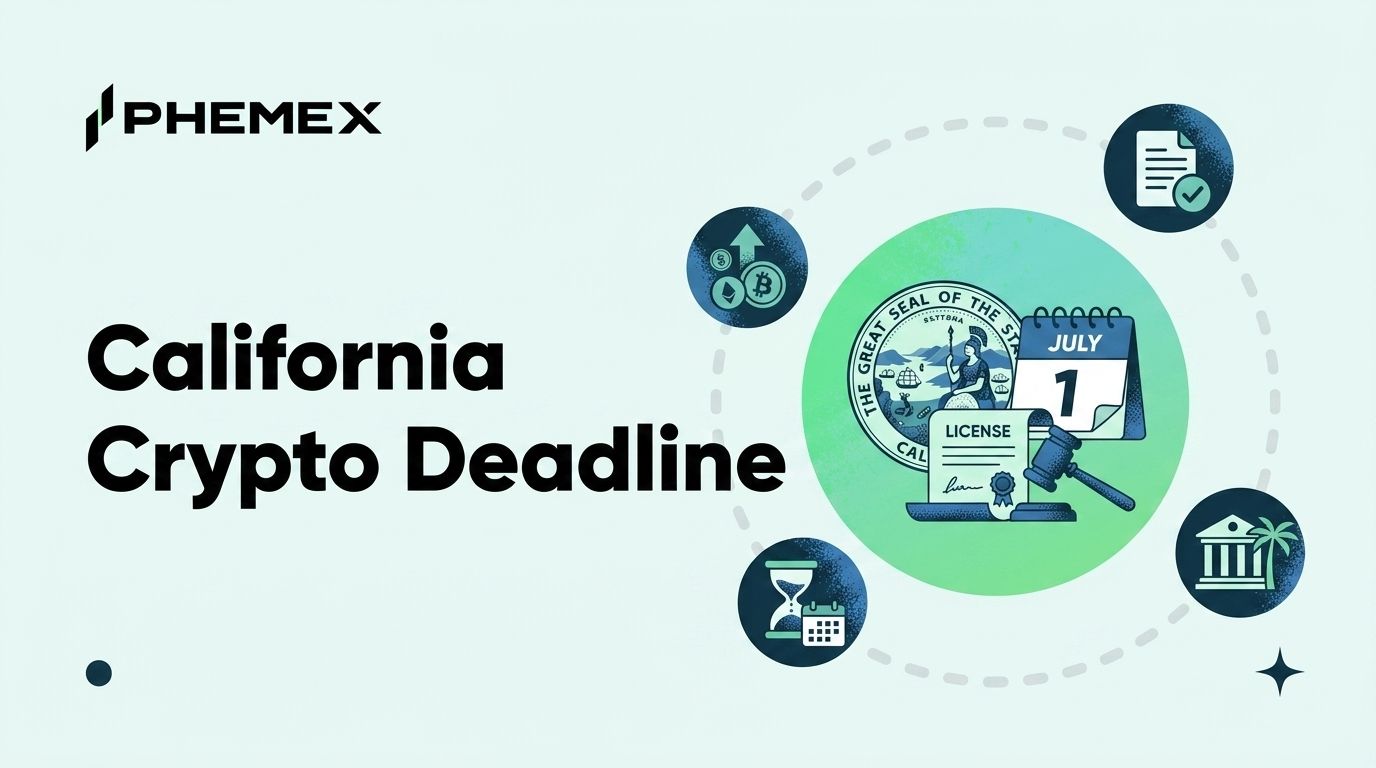
California's Digital Financial Assets Law goes live on July 1, 2026, and the Department of Financial Protection and Innovation began accepting applications on March 9. From July 1, any firm that exchanges, transfers, stores, or issues digital financial assets for California residents must hold a DFAL license, have a complete application on file, or qualify for a written exemption. The state that contains roughly 13% of the US population and the deepest pool of retail crypto users in the country is about to become a licensed market overnight.
The clock is short. Firms that have not started the application process by mid-June are unlikely to slot in under the "application on file" safe harbor, and the DFPI has signaled it will move quickly on enforcement once the date passes. The civil penalties run up to $100,000 per violation per day, plus restitution, plus the cost of being named in a public DFPI examination report. Here is what the law actually does, who is affected, what enforcement looks like, and how the cost compares to the only other state regime that has been this aggressive about crypto.
What AB 39 and SB 401 Actually Cover
DFAL is the combined product of two bills the legislature passed in 2023 and amended in 2024. AB 39 is the core licensing regime, modeled loosely on New York's BitLicense but with a wider scope. It covers any "digital financial asset business activity," which the statute defines as exchanging, transferring, or storing a digital financial asset on behalf of a California resident, issuing a stablecoin, or engaging in an exchange or transfer of digital financial assets as a customer business.
SB 401 layers consumer protection rules on top, including specific disclosure requirements for digital financial asset kiosks (crypto ATMs), daily transaction caps of $1,000 per customer at kiosks, and fraud reimbursement obligations for kiosk operators when a victim reports a scam transaction within the first 14 days.
Read together, the two bills create the most consumer-protective state crypto regime in the country and the second-broadest licensing requirement after the BitLicense. The DFPI has also retained authority to write further implementing rules through 2027, which means the compliance bar can move.
Who Needs a License and Who Does Not
The licensing trigger is California residency of the customer, not the location of the firm. A crypto exchange headquartered in Singapore that serves California users is in scope. A US-domiciled DeFi front-end that lets a California IP address connect a wallet is in scope. The exemption list is narrow on purpose.
Banks and credit unions with a federal or state charter are exempt because they already have a primary regulator. Broker-dealers registered with the SEC are exempt for activity within the scope of their broker-dealer registration. Money transmission licensees under California's existing Money Transmission Act are exempt for activity already covered by that license. Merchants that accept digital financial assets only as payment for goods or services are exempt for that activity.
Everyone else, including centralized exchanges, custodians, kiosk operators, payment processors, prepaid card issuers backed by crypto, lending platforms, staking-as-a-service providers, NFT marketplaces that handle custody, and stablecoin issuers, needs either a DFAL license or a filed application by July 1.
Enforcement Authority the DFPI Actually Has
The enforcement framework is what gives DFAL teeth. The DFPI can issue subpoenas, conduct on-site supervisory examinations, demand books and records, issue cease-and-desist orders, and assess civil penalties of up to $100,000 per violation per day. It can also seek restitution on behalf of California users, refer matters to the state attorney general for criminal prosecution, and revoke a license for material noncompliance.
The agency has been hiring crypto-specialized examiners since late 2024 and has signaled in public remarks that it intends to begin supervisory examinations within the first 60 days after July 1. The early exam priorities are reported to include reserve and custody verification, transaction monitoring programs, kiosk fraud reimbursement compliance, and consumer disclosure language. None of this is hypothetical. The DFPI has run roughly the same playbook with money transmitters since 2018, and the typical first-cycle exam produces public consent orders and fines.
How DFAL Compares to the New York BitLicense
The closest analog is the BitLicense, which the New York Department of Financial Services launched in June 2015. The cost of obtaining a BitLicense at the time was widely reported in the $50,000 to $100,000 range for application fees, plus six- and seven-figure budgets for legal counsel, capital reserves, and ongoing compliance.
The result was a multi-year exodus. Within 18 months of the BitLicense going live, more than 10 firms had withdrawn from New York or shut down US operations entirely. The smaller firms that stayed were largely acquired or folded. Eleven years later, only a few dozen firms hold an active BitLicense.
California is structurally similar but materially larger. The state is roughly two-thirds the GDP of the entire country of the United Kingdom and the single largest concentration of retail crypto users in the United States. Walking away is a different cost calculation than walking away from New York in 2015. Most major firms are expected to file rather than exit.
What This Month Actually Looks Like
June 2026 is the operational pressure point. Firms that started preparing in March have spent the past 90 days assembling reserve attestations, AML program documentation, custody policies, and senior officer disclosures. Firms that started in April are in scramble mode. Firms that have not started have effectively two paths. They can file a minimally complete application by June 30 to qualify for the safe harbor that lets them continue operating while the application is under review, or they can geofence California IP addresses by July 1 and treat the state as a closed market until the license is granted.
The geofence path looks straightforward but creates its own legal exposure under California's Unfair Competition Law if any California resident slips through. Several large offshore firms have already announced they will block California users until licensure, and the DFPI's enforcement page is already listing the first round of warning letters issued to unregistered operators.
The compliance cost is also material. Industry estimates for first-year DFAL compliance run from $250,000 for a small custodian to $5 million-plus for a global exchange, broken across application fees, legal counsel, capital reserves, custody segregation, and the build-out of California-specific consumer disclosures and complaint handling.
What the Law Means for Stablecoin Issuers Specifically
DFAL contains a stablecoin provision that mirrors the GENIUS Act at the federal level but with California-specific guardrails. Any stablecoin issuer that wants to offer a California-issued or California-marketed stablecoin must hold one-for-one reserves of cash and short-term Treasuries, publish monthly reserve attestations, and submit to DFPI supervisory examinations.
This is consequential because the largest stablecoin operators have signaled that they will treat the California rules as a de facto national floor. If a firm meets California's reserve and disclosure rules, it almost certainly meets every other state's rules and the federal GENIUS Act baseline. For traders, this should mean less counterparty risk on the stablecoins they hold. The Phemex academy article on stablecoins covers the reserve mechanics in more depth.
Frequently Asked Questions
Does DFAL apply to DeFi protocols?
The statutory text is broad enough to capture front-end interfaces, custodial smart contract platforms, and any entity that "facilitates" a transaction. If a truly decentralized protocol with no operating entity is in scope remains a legal question, but any team that develops, markets, or operates a DeFi front-end with a US presence should assume it is in scope until the DFPI says otherwise.
Can a firm continue serving California users after July 1 if the application is still pending?
Yes, but only if the application was filed before July 1 and is materially complete. The DFPI has the discretion to revoke that safe harbor if it determines the application is deficient. Firms cannot file a placeholder application and expect to keep operating.
How does DFAL interact with the federal CLARITY Act if both are in effect?
The two regimes are designed to coexist. CLARITY assigns federal jurisdiction over digital commodities to the CFTC and creates a federal pathway for token offerings, but it does not preempt state licensing of intermediaries. A firm that holds a CFTC registration under CLARITY still needs a DFAL license to serve California customers as a custodian, exchange, or transfer agent.
Will smaller firms be priced out?
Some will. The compliance economics favor scale, and the smallest US-only firms with thin margins are most exposed. The likely outcome is some consolidation through acquisition by larger licensees and a smaller number of firms walking away from the state entirely.
Bottom Line
July 1, 2026, is when California stops being an open market for digital financial assets and starts being a licensed one. Firms that intend to keep serving California users need either a DFAL license, a complete application filed before the deadline, or a written exemption. The DFPI has the staffing, the statutory authority, and the political mandate to begin enforcement immediately, and the $100,000-per-day penalty math means the cost of getting this wrong scales fast. Watch for the first DFPI public examination reports in the August-September window. Those reports will set the bar for what "good compliance" looks like and will reprice the operational cost of being a US crypto business for the rest of the cycle.
This article is for informational purposes only and does not constitute financial or investment advice. Cryptocurrency trading involves substantial risk. Always conduct your own research before making trading decisions.