


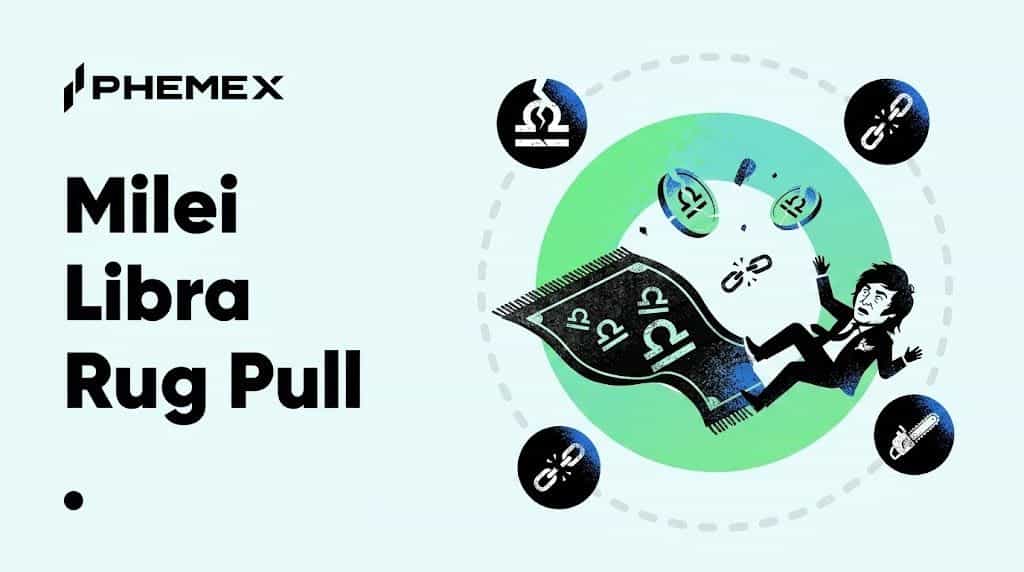
On April 7, 2026, The New York Times published phone records obtained by Argentine federal prosecutors showing that President Javier Milei exchanged seven phone calls with crypto lobbyist Mauricio Novelli on the night of February 14, 2025, the exact evening Milei posted on X promoting the $LIBRA token and sharing its Solana contract address with millions of followers. The token surged from near zero to a $4.6 billion market cap in under an hour before crashing more than 90%, wiping out an estimated $251 million from roughly 114,000 wallets.
Milei has not been charged, but prosecutors also recovered a draft agreement from Novelli's phone outlining a $5 million payment tied to the president's promotional support. The Argentine Chamber of Deputies reopened its investigation committee on April 8 and began summoning senior government officials. Here is what happened, why it matters beyond Argentina, and what it signals about political risk in crypto markets.
What Was the Libra Token and How Did It Collapse
The $LIBRA token launched on the Solana blockchain on February 14, 2025, created by a Delaware-registered company called Kelsier Ventures and branded under the slogan "Viva La Libertad." Kelsier Ventures was operated by Hayden Mark Davis alongside his brother Gideon and their father Tom, a family operation that had previously been involved in multiple memecoin launches on Solana.
The pitch was that the token would fund small businesses and startups in Argentina, giving it a veneer of economic legitimacy that most memecoins lack. When Milei posted about the project on X, the price jumped from $0.000001 to $5.20 within 40 minutes as retail buyers flooded in. But the founders held roughly 70% of the total supply, and once the price hit its peak, insiders began pulling liquidity.
Blockchain analytics firm Bubblemaps later confirmed that Davis removed approximately $100 million in liquidity from the pool using a strategy similar to the one he employed with the $MELANIA token weeks earlier. The price crashed from $5.20 to under $0.50 within hours. By the end of the day, 114,000 wallets had recorded losses totaling $251 million, making it one of the largest presidential-linked financial scandals in Latin American history.
What the Call Logs and Payment Draft Reveal
The February 2025 fallout was damaging enough. Milei initially claimed he was merely sharing information about a project he found interesting and denied any financial involvement. Argentina's Anti-Corruption Office (OA) initially cleared him of wrongdoing, and the story appeared to fade.
Then prosecutors seized Novelli's phone.
Forensic analysis of the device, first reported by Argentine outlet El Destape in March 2026, uncovered two critical pieces of evidence. The seven phone calls between Milei and Novelli occurred on the night of the launch, with the timing overlapping directly with the promotional post and the token's price spike. Prosecutors have not disclosed the contents of those calls, but the timing alone contradicts Milei's narrative of casual, arm's-length awareness.
The second piece of evidence is a draft agreement found on Novelli's phone dated three days before the launch. The document, addressed to "H" (believed to be Hayden Davis), outlines a three-installment payment totaling $5 million. The first installment of $1.5 million was an advance. The second $1.5 million was contingent on Milei publicly naming Davis as his advisor. The final $2 million depended on Milei signing an exclusivity consulting contract between Kelsier Ventures and the Argentine government. It remains unclear if any of these payments were actually made.
The Political Fallout in Argentina
Milei's approval rating fell to 36.4% in March 2026, a five-point drop from February and his lowest since taking office, according to Bloomberg. A separate Cointelegraph-cited survey found that 57% of Argentines said they no longer trust the president, with the Libra scandal cited as a primary factor alongside rising unemployment.
The political response has escalated in layers. Opposition lawmakers filed impeachment motions in February 2025, shortly after the initial collapse. Those motions stalled at the time, but the new evidence revived them. On April 8, 2026, the Chamber of Deputies formally reopened the investigation and began issuing subpoenas. Milei previously attempted to dissolve the Investigation Task Unit probing the scandal under Decree 332/2025, a move that critics argued was itself evidence of obstruction.
Argentina's legal framework makes presidential impeachment difficult. It requires a two-thirds majority in the Chamber of Deputies and then a Senate trial, and Milei's La Libertad Avanza coalition still holds enough seats to block removal. But the political damage is accumulating regardless of the legal outcome, and midterm elections are approaching.
Why This Matters for Crypto Beyond Argentina
The Libra scandal reaches far beyond Argentine politics. It sits at the intersection of three trends that affect every crypto trader.
Presidential endorsements move markets faster than any influencer. When a sitting head of state promotes a token, the implied legitimacy is orders of magnitude higher than a celebrity shill. Retail buyers who entered on Milei's post were not gambling on a random Pump.fun launch. They were acting on what appeared to be a government-backed initiative. That distinction matters because it changes the risk calculus for millions of people who would never otherwise touch a memecoin.
Regulatory backlash from political scandals spreads across borders. Brazil's securities regulator CVM has already cited the Libra collapse in proposals for stricter crypto marketing rules. The EU's MiCA framework, which took full effect in late 2024, explicitly prohibits the kind of undisclosed promotional arrangements the draft agreement describes. If the Argentine investigation produces a conviction or formal charges, expect other jurisdictions to use it as a case study for tightening enforcement.
And the pattern of insiders extracting liquidity while retail absorbs losses is not unique to this token. Davis used the same strategy on $MELANIA weeks before $LIBRA, according to Bubblemaps analysis. The playbook of launching a token, getting a high-profile endorsement, and pulling liquidity at the top has become industrialized. The only difference here is that the endorser was a president rather than a YouTuber.
Frequently Asked Questions
Did Milei personally profit from the Libra token rug pull?
Prosecutors have not confirmed that Milei received any payments, but a draft agreement found on intermediary Novelli's phone outlines $5 million in installments tied to promotional support. The investigation is ongoing, and Milei remains a person of interest rather than a charged defendant. The seven phone calls on launch night suggest involvement well beyond the casual awareness he initially claimed.
How much money did investors lose in the Libra token collapse?
Approximately $251 million was lost across 114,000 wallets when the token's market cap crashed from $4.6 billion to near zero within hours of the February 14, 2025 launch. Hayden Davis reportedly removed roughly $100 million in liquidity from the pool, and insiders collectively held about 70% of supply before the sell-off began.
Could Milei actually be impeached over the Libra scandal?
Impeachment in Argentina requires a two-thirds majority in the Chamber of Deputies followed by a Senate trial, and Milei's coalition currently holds enough seats to block removal. The more immediate threat is political erosion heading into midterm elections, as his approval has dropped to 36.4% and trust polls show 57% of Argentines no longer have confidence in him.
What happened to Hayden Davis and Kelsier Ventures after the collapse?
Davis publicly denied the rug pull was intentional, claiming it was "a plan gone miserably wrong" while acknowledging he was custodian of $100 million in a related account. Kelsier Ventures, the Delaware-registered company behind the launch, is under investigation in both Argentina and the United States. Davis had previously been linked to similar liquidity extraction from the $MELANIA token using the same on-chain tactics.
Bottom Line
The Libra scandal is now the most documented case of a sitting president being directly linked to a crypto rug pull, and the evidence trail keeps getting longer. Seven phone calls on launch night, a $5 million draft payment agreement, and $251 million in confirmed retail losses create a fact pattern that prosecutors can build on regardless of when formal charges arrive relative to Argentina's midterm elections. For crypto traders, the lesson is specific and repeatable. When a token's primary value proposition is a political endorsement rather than technology, liquidity, or community, the risk profile is fundamentally different from a standard memecoin gamble because the endorser's exit is invisible until the chart has already collapsed. The broader regulatory response is already materializing in Brazil and Europe, and every future political token launch will be measured against this case.
This article is for informational purposes only and does not constitute financial or investment advice. Cryptocurrency trading involves substantial risk. Always conduct your own research before making trading decisions.