

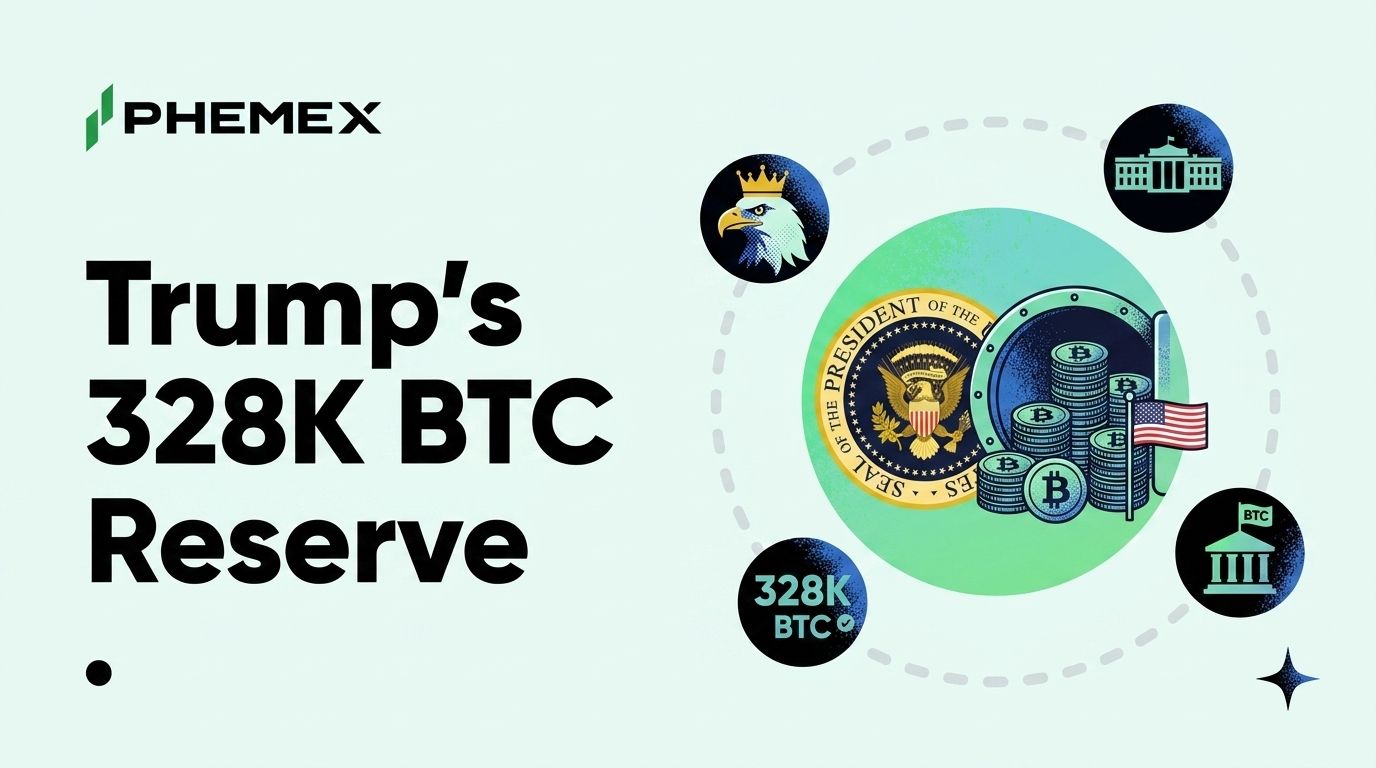
Patrick Witt, who runs the White House Council on Digital Assets, told the Consensus Miami stage Wednesday that a formal announcement on the US strategic Bitcoin reserve is coming "in the next few weeks." The United States already holds approximately 328,372 BTC, worth roughly $24 billion at current prices, making it the largest known state holder of Bitcoin. The new piece is that the administration is now openly saying the holding will be permanent and that further accumulation is on the table, with the mechanism being budget-neutral acquisition using seized assets rather than direct taxpayer purchases.
This is the public confirmation of a position the Trump team has been hinting at since the March executive order. The path runs through the American Reserves Modernization Act, a draft bill that directs Treasury and Commerce to study acquisition mechanisms that do not draw on the general fund. Here is what the policy actually does, why the seized-assets framing matters legally, and what the announcement is likely to look like when it lands.
What the 328,372 BTC Number Actually Represents
The headline figure is the cumulative balance the US government has accumulated through criminal forfeiture and civil seizure proceedings going back more than a decade. The largest single contribution came from the Silk Road seizures, with the Bitfinex hack recoveries and various subsequent dark-market actions adding to the pile.
For most of that history, the convention was that seized Bitcoin gets auctioned off through US Marshals Service sales. The March 2026 executive order ended that practice and consolidated the holdings into a designated reserve account. What Witt confirmed on Wednesday is that the holding is now a permanent feature of the federal balance sheet rather than a transient artifact of law enforcement.
At $74,879 per coin, the reserve is worth approximately $24.6 billion. That ranks the US ahead of any disclosed corporate treasury, ahead of every other sovereign holder, and roughly on par with the entire El Salvador national reserve apparatus times several multiples. The signaling value of the holding is now larger than the dollar value, because the explicit policy is no longer to liquidate.
What the ARMA Draft Actually Does
The American Reserves Modernization Act is the legislative vehicle that turns the executive holding into a statutory program. The draft language directs Treasury and Commerce to jointly study acquisition mechanisms that meet three tests.
|
Requirement
|
What It Means in Practice
|
|
Budget neutrality
|
No general fund appropriation. No new taxes. Acquisition cost must come from existing seized assets or surplus accounts.
|
|
Custody compliance
|
Storage must meet federal asset custody standards (qualified custodian, multi-sig, regular audit).
|
|
Reporting transparency
|
Quarterly disclosure of holdings to Treasury, annual report to Congress.
|
The budget-neutral provision is the politically critical piece. It is what allows the administration to argue, accurately, that no taxpayer money is being spent on speculative Bitcoin purchases. The mechanism is more like a reclassification of existing federal assets than a new spending program.
The draft also leaves the door open to "swap" mechanisms, where the Treasury could exchange other federal asset holdings (gold, certain mineral reserves, and notably foreign currency reserves) for Bitcoin at market rates. That part of the draft has drawn the most legal scrutiny, because it would arguably require congressional authorization rather than executive action alone. Witt's framing on Wednesday suggested the initial announcement will stick to the seized-asset pathway and leave swap mechanics for a later phase.
For broader context on how this fits into the regulatory direction set by the SEC and CFTC commodity ruling, the institutional posture has now flipped from enforcement-first to accumulation-first inside the span of about 14 months.
Why the Seized-Assets Framing Matters
The legal architecture matters because it determines who can challenge the program and on what grounds. A purchase program funded by appropriations would require congressional approval and could be unwound by a future Congress with a single vote. A reclassification of seized assets is functionally administrative.
Senator Lummis, who has championed the broader strategic reserve concept since 2024, has been clear that the legislative goal is to write the holdings into statute so that they survive administration changes. That is the function of ARMA. The draft is structured so that even if a future executive wanted to liquidate the reserve, the action would require an act of Congress.
The international optics are also part of the calculation. El Salvador and the UAE sovereign wealth pilot have both run smaller-scale Bitcoin holding programs, but no G7 power has formally committed. A US announcement reshapes the conversation for every other treasury department globally, because the question changes from "should we hold Bitcoin" to "are we positioned correctly if the US is accumulating."
What the Announcement Will Likely Look Like
Witt's "next few weeks" framing maps to a window between mid-June and early July 2026. The format will almost certainly mirror the structure of previous Trump-era policy rollouts, which tend to combine an executive order, a press event at either the White House or a major venue like Consensus or the Bitcoin Conference, and a coordinated statement from Treasury.
Watch for three specific signals when the announcement arrives.
Custody arrangement. The reserve has to live somewhere, and the likely custody arrangement involves either a qualified institutional custodian under contract to Treasury or a federal-direct cold storage solution managed through the Department of Energy national lab infrastructure. The custodian choice signals how seriously the program is being structured.
Acquisition trigger language. The draft ARMA refers to "opportunistic accumulation" rather than a fixed schedule. The announcement language around when the Treasury can add to the position will tell traders if the program is reactive (price dips, market events) or systematic (dollar-cost averaging from seized-asset flows). Reactive accumulation produces more volatility in spot price. Systematic accumulation produces a steady bid that compresses volatility.
Coordination with the SEC and CFTC. A reserve program intersects with the spot ETF complex in ways that have not been fully addressed. If the Treasury starts accumulating while the spot ETFs are also growing, the structural bid on BTC supply is the largest since the post-halving 2024 cycle.
What This Means for Price
The first-order price impact of the announcement is probably already partially baked in. Witt's comments on Wednesday produced a roughly 1.8% spot move, which suggests the market is pricing some probability of a formal announcement but not certainty. The market remains in the middle of the 9-day ETF outflow streak, so the bullish signal from the reserve confirmation is being offset by institutional repositioning.
The second-order impact is the more interesting trade. A formal announcement that includes ongoing accumulation language puts a structural floor under BTC that did not exist before. The asset that was a permitted reserve becomes a programmed reserve, and the holding period becomes effectively infinite. That changes the valuation framework for institutional allocators who require a clear policy direction before sizing up.
Risk to the trade is the implementation gap. Past administrations have announced programs and then watched them stall in implementation for years. ARMA could pass or it could sit in committee through the 2026 midterms, and the reserve could remain executive-only and reversible. The signal value of the announcement is large, but the structural value depends on the legislative follow-through.
Frequently Asked Questions
Does the US actually own 328,372 Bitcoin right now?
Yes, based on disclosed seizure records and the consolidated balance maintained under the March 2026 executive order. The number reflects coins held in custody by the US Marshals Service and other federal agencies, transferred to the designated reserve account. The exact figure fluctuates slightly based on ongoing forfeiture actions.
Will taxpayer dollars fund Bitcoin purchases?
The ARMA draft explicitly forbids general fund appropriations for Bitcoin acquisition. The mechanism is budget-neutral, drawing on seized assets and potential asset-swap arrangements. Future legislation could expand this scope, but that is a separate question, but the current program is designed to be neutral to the budget.
What happens to BTC price if the announcement adds an accumulation provision?
An accumulation provision adds a structural bid on supply. The order of magnitude depends on the pace, but even modest programmed accumulation removes coins from circulation permanently. The price impact tends to be slower than a single news event but larger over multi-quarter horizons.
Could a future president sell the reserve?
An executive holding can be unwound by a future executive order. The legislative purpose of ARMA is to write the holding into statute so that liquidation would require an act of Congress. Until the bill passes, the reserve remains reversible through executive action alone.
Bottom Line
The US is now openly committed to holding 328,372 BTC and is signaling that the next phase includes accumulation. The structural transition from enforcement to accumulation is the largest shift in US Bitcoin policy since the March 2024 spot ETF approvals. The legal architecture, particularly the budget-neutral seized-asset framing, is designed to insulate the program from political reversal.
Watch for the formal announcement in the mid-June to early July window. The three signals that matter are the custody arrangement, the acquisition trigger language, and the coordination posture with the SEC and CFTC. If the announcement includes ongoing accumulation language, the structural floor under BTC is the largest it has been since the post-halving cycle. If it stays static at the existing 328,372 holding, the signal value is real but the price impact is smaller.
This article is for informational purposes only and does not constitute financial or investment advice. Cryptocurrency trading involves substantial risk. Always conduct your own research before making trading decisions.