
Summary Box
Ticker Symbol: AERO
Current Price: Around $0.54
Chain: Base
Contract Address: 0x940181a94A35A4569E4529A3CDfB74e38FD98631
Market Cap: Around $510 million
Circulating / Max Supply: Roughly 956.8 million circulating / no hard max cap
ATH / ATL Price: $2.32 / $0.006424
All-Time ROI: Roughly +8,000% from the CoinMarketCap ATL
Availability on Phemex: Yes
What Is Aerodrome Finance?
What is Aerodrome Finance? In simple terms, Aerodrome is the central liquidity marketplace of the Base blockchain. It is a decentralized exchange and automated market maker designed to make token swaps more efficient while giving liquidity providers and long-term token lockers a reason to stay engaged. If Base is an on-chain economy, Aerodrome is one of its most important marketplaces.
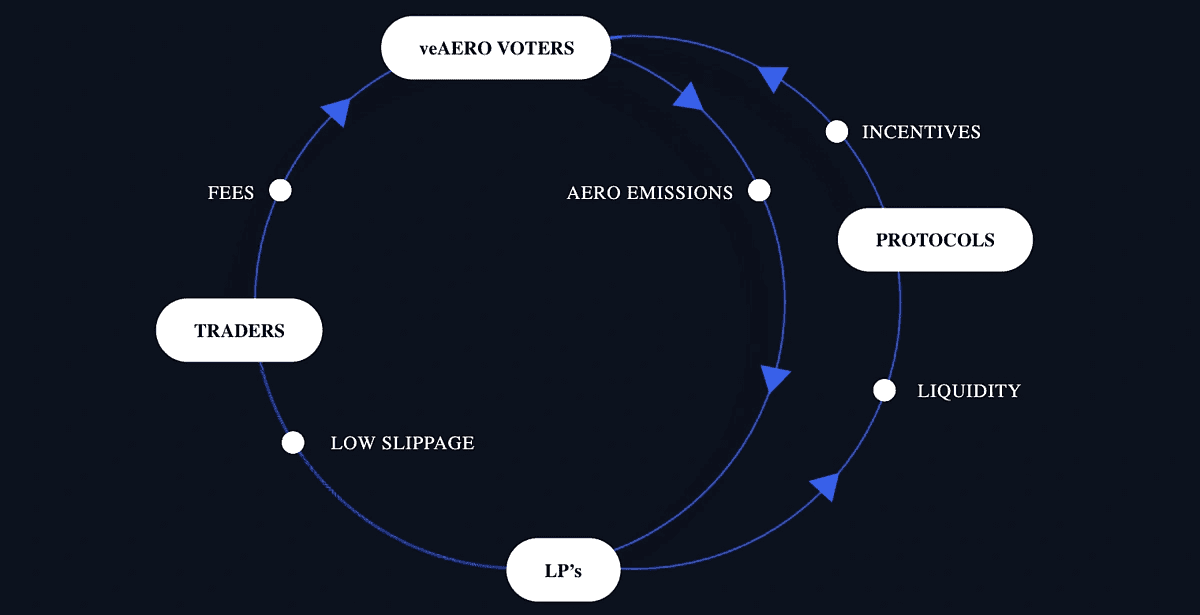
That role matters because liquidity is the lifeblood of any DeFi ecosystem. New assets need liquid trading pairs. Existing assets need deep pools and low slippage. Protocols want a venue where they can direct incentives efficiently, while users want a place where fees are competitive and the interface does not feel hostile. Aerodrome tries to solve those needs at once through its ve(3,3)-style model, where AERO holders can lock tokens into vote-escrowed positions, vote emissions toward selected pools, and earn a share of fees and incentives in return.
The result is a protocol that is not just a trading venue, but also a governance and incentive engine. Traders use it for execution. Liquidity providers use it to earn rewards. Voters use locked AERO positions to direct where incentives go. That layered utility is why the Aerodrome Finance price forecast depends on more than simple meme momentum. It depends on whether Base keeps growing, whether Aerodrome stays the dominant liquidity hub on that chain, and whether the token’s inflationary emissions are offset by actual economic activity.
Price History & Performance Overview
Aerodrome launched in August 2023 and quickly established itself as one of Base’s most important DeFi primitives. Its early move was fueled by timing. Base was still young, liquidity was concentrating rapidly, and traders were searching for a protocol that could become the default routing layer for swaps and incentives. Aerodrome fit that role almost immediately.
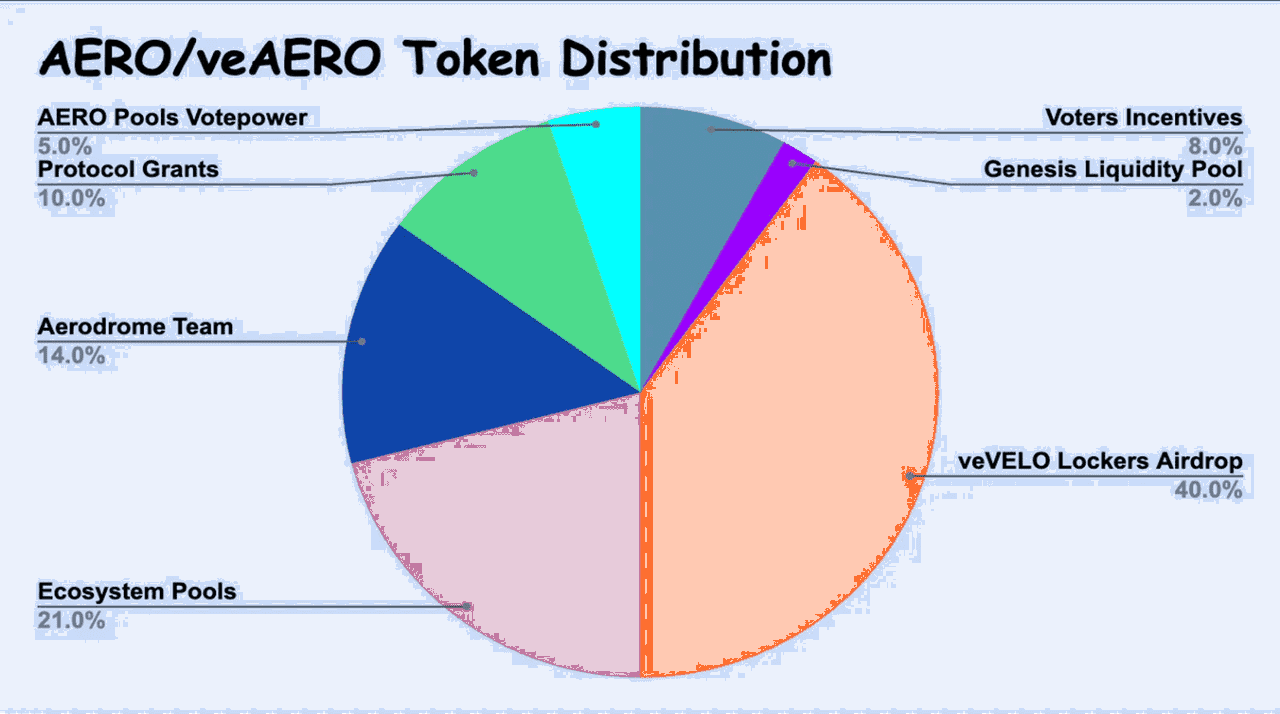
The initial token design also helped it stand out. Unlike many newer protocols, Aerodrome emphasized that it launched without venture funding, without token sales, and with a public-good style framing. That narrative was powerful in a market tired of opaque allocations and insider unlock overhangs. Early AERO supply started at 500 million tokens, with emissions and governance mechanics designed to bootstrap liquidity over time rather than front-load everything into a single launch event.
By late 2024, AERO reached its all-time high of $2.32. That rally was driven by a mix of Base ecosystem enthusiasm, DeFi rotation, and the market’s appreciation for Aerodrome’s fee-sharing and vote-lock structure. But once the broader market cooled and investors re-focused on dilution, the token entered a much more difficult stretch. Emissions continued. Supply expanded. The market began asking a harder question: can AERO’s fee generation outpace its issuance?
This is not a token with a fixed-supply digital-gold narrative. It is a productive, inflationary governance asset whose valuation depends on whether protocol revenue, lockups, and network effects are strong enough to offset supply growth. In bull phases, that flywheel can work beautifully. In weaker periods, dilution becomes the first thing traders notice.
Whale Activity & Smart Money Flows
Whale activity in Aerodrome Finance is less about a single dramatic wallet and more about the interaction between large holders, locked supply, and treasury-like entities. AERO has a very large holder base by mid-cap standards, with public trackers showing well over 740,000 holders. That broad distribution is helpful, but it does not eliminate concentration risk because a meaningful portion of supply is still influenced by protocol contracts, locked veAERO positions, and treasury or growth-fund activity.
Recent public market commentary around AERO has focused on netflows, locked supply, and buybacks rather than panic selling. In June 2026, reported protocol-aligned activity highlighted a 497K AERO buyback and noted that more than 190 million AERO had been acquired and locked across programs such as the Protocol Growth Fund, Flight School, and Relay mechanisms. Public market headlines also referenced Base netflow leadership and reports of larger professional holders increasing exposure. Even when traders should treat these headlines with some caution, the direction of the signal is clear: the recent conversation around smart money tracking for AERO has leaned more toward accumulation and lockups than toward broad distribution.
For traders who care about short-term direction, the most useful framework is to watch whether more AERO is being pulled into long-duration locks and whether buyback-and-lock activity continues. If that stays strong while Base activity remains healthy, the supply side becomes more manageable. If not, the inflation argument reasserts itself quickly.
On-Chain & Technical Analysis
Technical analysis for Aerodrome Finance is getting more constructive, but it is not yet a clean blue-sky breakout. Recent CoinGecko data show AERO trading in a 24-hour range around $0.48 to $0.56 and a 7-day range around $0.35 to $0.55. That gives us a practical map of the current battlefield.
The first important support zone sits around $0.48. That area has recently acted as the lower edge of the short-term recovery band. If AERO can keep defending that level, momentum traders will likely treat pullbacks as buyable dips rather than the start of a deeper reversal. Below that, the next more important support comes in around $0.42, which has already been referenced in recent market commentary as a defended zone. If price breaks materially below $0.42, the market may revisit the broader weekly demand area around $0.35.
On the upside, immediate resistance sits around $0.56, roughly the high end of the recent short-term range. If AERO flips that level decisively, the next technical target likely opens toward $0.65 to $0.70, where prior breakdown structure and psychological resistance may reappear. Beyond that, $0.80 becomes the more ambitious momentum target before the market starts seriously discussing a path back toward $1.00 and higher.
Fibonacci analysis on the recent swing from roughly $0.35 to $0.56 places the shallow retracement area near the upper-$0.47s and the deeper retracement zone near the low-$0.43s, which lines up neatly with the support zones already visible on price action. That kind of confluence matters. It suggests the current market is not random noise; it is beginning to build a more coherent structure.
As for indicators, the recent 7-day and 14-day gains imply that RSI is likely elevated compared with where it was during the earlier lull, while recent headlines pointing to a reclaim of longer-term averages strengthen the case that momentum is turning. MACD-style trend followers would probably view the recent move as constructive but still vulnerable to failure if price cannot hold above the upper-$0.40s. In plain English, AERO has improved technically, but it has not yet escaped the need to prove that this rally is more than just a reflex bounce.
Short-Term Price Prediction (2025–2026)
For the rest of 2026, the short-term AERO price prediction comes down to three overlapping variables: Base activity, Aerodrome’s fee and volume profile, and whether the market continues rewarding buyback-and-lock mechanics despite ongoing emissions.
In the bull case, AERO holds above the $0.48 support band, breaks cleanly through $0.56, and benefits from continued Base growth, renewed DeFi appetite, and more aggressive lockup behavior. If DEX volume remains strong and fee distribution keeps supporting the veAERO thesis, AERO could reasonably trade back into a $0.85 to $1.20 range before year-end. That would still leave it below its cycle high, but it would represent a major structural repair.
In the neutral case, AERO keeps generating real fees and maintaining relevance, but the market remains skeptical about inflation and refuses to re-rate the token too aggressively. Under that scenario, AERO likely spends much of the next several quarters between $0.40 and $0.80. That range would reflect a healthy but contested valuation, where the protocol is clearly useful but not yet priced as an unstoppable DeFi blue chip.
In the bear case, the broader DeFi market weakens, Base activity cools, or traders refocus on emissions and single-chain dependence. Then AERO could slide back toward $0.25 to $0.35, especially if the recent rally loses steam and the protocol cannot maintain its recent netflow and lockup momentum. That is the critical downside lesson with Aerodrome: even a strong-fee protocol can struggle if token issuance outruns investor appetite.
Long-Term Price Forecast (2027–2030)
Long-term forecasting for AERO is inherently speculative, but the token is easier to model than many purely narrative assets because it is tied to an actual cash-flow-like engine. The long-term Aerodrome Finance price forecast is therefore less about abstract “community strength” and more about whether Aerodrome remains the liquidity center of Base through the next multi-year cycle.
In a bullish 2027–2030 scenario, Base continues to grow as a major consumer and DeFi chain, Aerodrome keeps its leading position, and the market increasingly values productive governance tokens that route real fees to users. In that setup, AERO could plausibly revisit and surpass its old high, with a longer-term range around $1.50 to $3.50. That range is not guaranteed, but it is grounded in the idea that a protocol doing large DEX volume and substantial holders revenue should not necessarily remain priced like a weak secondary DeFi asset forever.
In a more moderate scenario, Aerodrome remains important but faces more competition, while emissions keep capping upside. The protocol still works, users still trade, liquidity still concentrates there, but valuation multiples stay restrained. In that case, a $0.70 to $1.80 long-term range feels more realistic.
In a bearish scenario, Base becomes less central to the market, DeFi activity fragments, or Aerodrome’s incentive machine starts to look more extractive than efficient. Then AERO could remain trapped in a much lower band, perhaps $0.15 to $0.60, with periodic spikes but no durable re-rating. That is why every long-term AERO price prediction 2025 article has to say the same thing plainly: AERO is a leveraged bet on protocol execution, not a passive store-of-value token.
Fundamental Drivers of Growth
The most obvious growth driver is chain-level positioning. Aerodrome is not trying to be a generic DEX on a crowded field of equal alternatives. It is trying to be the essential liquidity and incentive layer for Base. If Base expands meaningfully, Aerodrome has a clear path to benefit from that growth.
The second major driver is its token design. AERO is inflationary, but it is not inflationary in a vacuum. Emissions are tied to a system where locked holders vote on pool incentives, collect fees, and influence where liquidity goes. That makes the token more like an ownership-and-routing asset than a simple farm token, especially when volumes are healthy.
Third, Aerodrome’s economics are unusually aligned with users. The official framing emphasizes that 100% of fees and incentives go to users, while public disclosures note that trading fees are distributed to veAERO voters and only a limited share of emissions historically went to the team. That structure gives the protocol a better claim to real value accrual than many DeFi tokens that promise governance but do not direct meaningful economics to holders.
Fourth, product expansion matters. Aero Launch, Slipstream, and concentrated liquidity tooling all help Aerodrome extend beyond being just a basic swap venue. The easier it is for new projects to launch liquidity and keep it on Aerodrome, the stronger the protocol’s moat becomes.
Key Risks to Consider
The risks of investing in Aerodrome Finance are real and should not be minimized. The largest is token dilution. AERO has no hard cap, and the protocol’s emission structure remains a central part of its design. If fee growth and lockup demand fail to absorb that supply, the token can underperform even while the protocol itself remains active.
The second risk is chain concentration. Aerodrome is deeply tied to Base. That is a strength when Base is thriving, but it also means AERO lacks diversification. If activity slows on Base, AERO does not have a broad multi-chain cushion to fall back on.
Third, competition never disappears in DeFi. Liquidity hubs benefit from network effects, but they also attract rivals. If other venues on Base or broader L2 DeFi become more attractive to traders or token issuers, Aerodrome’s dominance can erode gradually rather than all at once.
Fourth, incentive dependence is a real issue. Protocols can produce strong headline volumes when incentives are generous, but the quality of that volume matters. Investors should keep asking whether Aerodrome’s fee engine reflects sticky usage or whether too much activity is merely a response to emissions and short-term yield farming.
Finally, smart-contract and governance risk still exist. Aerodrome’s contracts are audited and the protocol has security structures in place, but DeFi always carries operational risk. AERO is not a low-risk asset just because the product has traction.
Analyst Sentiment & Community Insights
Community sentiment around AERO is currently strong. On CoinGecko, the community vote is heavily bullish, with 87% positive sentiment in one recent snapshot. Phemex’s social data also leaned constructive, showing a bullish tilt across recent collected tweets and a meaningful number of unique contributors discussing AERO. Those indicators do not replace fundamentals, but they do tell us that AERO is not being ignored.
Public market commentary has also turned more constructive in June 2026. Recent headlines have emphasized AERO’s price rebound, protocol catalysts, buyback-and-lock activity, and Aerodrome’s still-dominant role in Base DEX volume. Even when some of those write-ups are more market-color than hard research, they help explain why AERO has regained momentum.
At the same time, the analyst split is easy to understand. Bulls see Aerodrome as one of the clearest ways to monetize Base activity through a productive DeFi asset with real fee routing. Bears see a token that still needs to outrun emissions and prove that its dominance is durable rather than cyclical. That balance makes the current Aerodrome Finance price forecast interesting: the token has both a clean bull thesis and a very real structural counterargument.
As for Google search interest, AERO appears to behave like most mid-cap DeFi assets: interest spikes around price breakouts, major protocol headlines, and strong chain-level narratives, then cools quickly when the market moves on. That is not a fatal flaw, but it does mean sentiment can be more event-driven than it is for larger crypto assets.
Is Aerodrome Finance a Good Investment?
Is Aerodrome Finance a good investment? The honest answer is that it can be a very good high-conviction DeFi bet, but it is not a low-risk one.
The bull case is compelling. Aerodrome is already a major revenue-generating protocol. It has a real role on Base. It routes meaningful fees to users. Its governance design gives AERO a purpose beyond speculation. And its recent price action suggests the market is willing to reward those strengths again when DeFi sentiment improves.
The bear case is equally straightforward. AERO is still inflationary. It still depends heavily on one chain. It still needs to prove that long-term fee growth can consistently outrun dilution. If the market stops valuing productive DeFi tokens or Base activity weakens, AERO can stay well below its old highs for much longer than holders expect.
So the right framing is not whether it’s safe or unsafe, but instead about what kind of investor you are. If you want an aggressive DeFi asset with strong upside tied to a specific ecosystem, AERO deserves serious attention. If you want minimal dilution, low volatility, or a purely defensive crypto allocation, this probably is not the right fit.
Why Trade Aerodrome Finance on Phemex
Phemex is a top-tier centralized exchange known for security, speed, and trader-focused innovation. That matters for a token like AERO, which can move quickly and often rewards traders who can react without fighting poor execution or fragmented access.
Phemex offers spot trading for a wide range of crypto assets, giving users straightforward access to AERO exposure when they want to build or scale a position. For more advanced traders, Phemex also supports futures products on selected assets, and current market pages show live AERO/USDT spot and futures listings. That is useful because AERO is the kind of asset where active traders may want more flexibility than spot alone provides.
Beyond core trading, Phemex also offers tools that matter in volatile markets. Trading bots can help automate entries, exits, and risk management. Phemex Earn provides passive-income options for supported assets. Pulse adds a SocialFi layer where traders can discover ideas and participate in a broader crypto-native content ecosystem.
Trade](https://phemex.com/trade/AERO-USDT%22>Trade) AERO on Phemex