









Key Takeaways
Zilliqa’s yield story has changed materially: the network’s legacy design used a hybrid Proof-of-Work system tied to its original sharded architecture, but Zilliqa 2.0 has now switched the network to Proof-of-Stake on mainnet.
For 2026, staking is the primary native yield path for most ZIL holders. Mining is now mainly relevant as a historical comparison, not as the core ongoing participation model. This is an inference from Zilliqa 2.0’s live PoS mainnet, new staking portal, and the prior phase-out of mining rewards.
Zilliqa 2.0 staking supports both liquid staking and non-liquid delegated staking designs, while solo validators can stake directly if they meet the minimum validator requirement.
Validator participation is capital-intensive: Zilliqa says a validator on Zilliqa 2.0 must stake a minimum of 10 million ZIL to join consensus. That means most users seeking yield will likely optimize through delegation rather than solo validation.
As of now, ZIL is still a relatively small-cap Layer 1 by market value, with CoinGecko showing roughly $75 million market cap and about 20 billion ZIL in circulation, so yield should be evaluated alongside tokenomics and token-price risk.
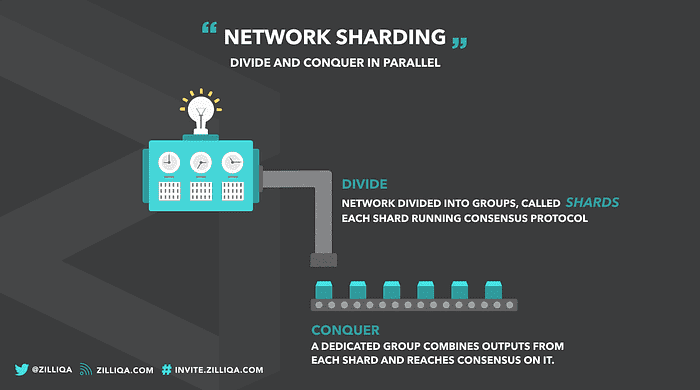
Zilliqa has always been associated with one big idea: scalability through sharding. Its original technical whitepaper described Zilliqa as a blockchain built around network and transaction sharding, allowing shards to process transactions in parallel. That made it one of the earliest major Layer 1s to push the “sharding-first” thesis long before it became common elsewhere.
But if you are trying to maximize yield from ZIL in 2026, the important question is no longer just whether Zilliqa scales. It is how the network now rewards participation. The legacy chain used a hybrid Proof-of-Work-based design, and miners once played a direct role in securing the network. But Zilliqa 2.0 has changed the model. Zilliqa’s own materials now describe the mainnet as live, EVM-compatible, and secured by Proof-of-Stake, with a new staking portal and new validator economics.
So the modern comparison between staking and mining is not really a coin-flip between two equally live options. It is a comparison between:
the old yield model that defined Zilliqa’s earlier years, and
the new yield model that now defines the chain in the Zilliqa 2.0 era.
For most investors and participants, the conclusion is already leaning one way: if you want to maximize yield on ZIL today, staking is the center of the conversation.
Why Zilliqa Was Different in the First Place
Zilliqa’s legacy architecture matters because it explains why mining was once central to the network. The 2017 Zilliqa whitepaper describes a system built around network sharding and transaction sharding, where shards process transactions in parallel. In that design, Proof-of-Work played a role in identity establishment and shard participation, while the network’s architecture was explicitly built to scale throughput with the size of the network.
That original design gave Zilliqa a distinct identity in crypto. It was not just another smart contract chain. It was positioned as one of the earliest serious implementations of sharded blockchain infrastructure. Even Zilliqa’s current roadmap still describes the project as being built by the “pioneers of sharding,” while its newer architecture introduces x-Shards as a future-facing customization and scalability layer.
In the legacy era, that meant mining mattered. Miners were part of the network’s security and reward system, and mining yield was a real consideration for users who wanted to earn ZIL by contributing compute. But that is no longer the full picture.
The Big Shift: Zilliqa 2.0 Replaces Mining-Centered Security With PoS
Zilliqa’s current yield landscape is defined by the transition to Zilliqa 2.0. Zilliqa’s January 2025 staking update says plainly that the network is shifting its consensus model from Proof-of-Work to Proof-of-Stake to improve throughput, finality, operational costs, and energy efficiency. The same post explains that validators on Zilliqa 2.0 stake ZIL as collateral to secure the network, and that delegators can stake through validator-run delegation contracts to earn a proportional share of rewards.
By June 2025, Zilliqa announced that Zilliqa 2.0 mainnet was live and instructed users to move from the legacy staking system to the new staking platform in order to continue earning rewards. The roadmap also marks the network as having officially switched to Zilliqa 2.0, with tokenomics and the new staking portal going live as part of the mainnet phase.
This is the most important practical point for yield seekers: the network’s native reward engine now revolves around staking, not mining. That is not just a preference shift. It is a protocol shift.
What Mining Means for Zilliqa Now
Mining still matters historically, but much less operationally.
In October 2024, Zilliqa announced a halving mechanism for mining rewards as part of the transition toward Proof-of-Stake. The proposal reduced mining rewards in October, November, and December 2024, eventually cutting them to 12.5% of their original monthly level. Zilliqa’s October 2024 newsletter explicitly described this as part of the ongoing shift to PoS for Zilliqa 2.0.
That tells you everything you need to know about the direction of travel. Mining rewards were not being expanded. They were being wound down as the chain prepared for a new economic model. Then, once Zilliqa 2.0 mainnet launched, the network moved to PoS staking and new staking contracts.
So for practical yield maximization in 2026, mining should mostly be treated as a legacy route. It is useful to understand because it explains how Zilliqa evolved, but it is no longer the obvious path for users who want ongoing native rewards from the live chain. That is an inference, but it is strongly supported by the reward halving, the PoS transition, and the live Zilliqa 2.0 mainnet/staking portal.
How Staking Works on Zilliqa 2.0
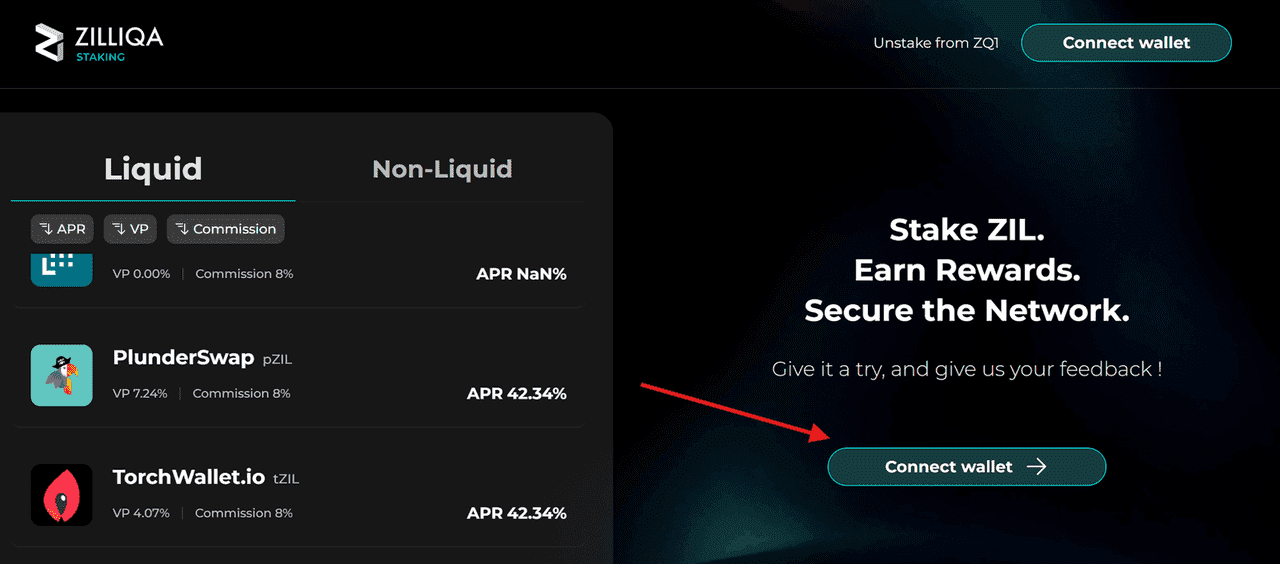
Zilliqa 2.0’s staking design is more sophisticated than a simple lock tokens and earn yield model. The developer portal says solo validators can deposit the minimum stake required and become validators directly. It also says validators can operate staking pools so users can delegate stake to them. On top of that, the reference staking contracts currently support two delegated staking variants:
Liquid staking, where users receive a non-rebasing liquid staking token representing their share of the pool, and
Non-liquid staking, where users can withdraw rewards in ZIL or re-stake those rewards to increase their future share.
Zilliqa says the system is permissionless and two-layered: a deposit contract allows anyone with the minimum required stake to become a validator, while delegation contracts allow validators to accept delegated stake from other ZIL holders. It also notes that rewards can be claimed immediately, while withdrawals and validator switching remain subject to an unbonding period for security reasons, with slashing for safety violations and jailing for liveness failures.
That makes staking on Zilliqa 2.0 more than a passive savings mechanism. It is tied directly to validator behavior, network security, and capital structure.
Solo Staking vs Delegation: Which Is Better for Yield?
For most users, the answer is simple: delegation is the practical route.
Zilliqa states that a validator node on Zilliqa 2.0 must stake a minimum of 10 million ZIL to participate in consensus. At current market prices, that creates a very high barrier to solo validator economics. Even if a participant has the technical expertise to run a validator node, the capital threshold alone makes solo validation inaccessible for most token holders.
That pushes most users toward delegated staking. Delegation lets smaller holders earn a share of staking rewards without running their own node or meeting the validator minimum. It also provides flexibility, since Zilliqa’s reference contracts support both liquid and non-liquid models depending on whether the user prefers liquidity or a more direct reward stream in ZIL.
Solo validation may still make sense for large operators or institutions that want direct infrastructure exposure and a bigger role in consensus. But if the goal is simply to maximize yield on a moderate ZIL position, delegation is likely the more realistic choice.
What Maximizing Yield Actually Means on Zilliqa
Maximizing yield is not the same as chasing the highest nominal reward rate. On Zilliqa 2.0, reward economics are dynamic. The roadmap says staking rewards are adjusted based on block-space utilization, a target staking ratio, transaction fees, and depletion of the ZIL reserve. That means staking yield is not a fixed number carved in stone. It moves with network conditions and tokenomics.
So when thinking about yield, ZIL holders should separate four different questions:
First, what is the raw reward stream? That depends on validator performance, network usage, and the tokenomics model. Zilliqa’s staking update says rewards are distributed per block and depend partly on validator performance.
Second, how much liquidity do you need? Liquid staking may offer better capital flexibility because the liquid staking token can represent your claim while rewards accrue via price appreciation, whereas non-liquid staking is more straightforward but less flexible.
Third, what operational risk are you taking? Solo validation may offer more direct control, but it also adds infrastructure burden and slashing/jailing risk. Delegation reduces that operational load.
Fourth, what is the token-price risk? Even a decent staking yield can be overwhelmed by token depreciation. CoinGecko currently shows ZIL near $0.0039, down about 98.5% from its all-time high, with a market cap around $75 million. That does not make staking unattractive by itself, but it means nominal yield should never be evaluated in isolation.
Staking vs Mining: Which Wins in 2026?
In purely practical terms, staking wins.
Mining was once a core part of Zilliqa’s architecture, and it remains part of the project’s identity as one of the earliest sharding-focused chains. But Zilliqa’s actual network design has moved on. The chain has switched to Zilliqa 2.0 mainnet, staking is now the live security and reward layer, mining rewards were wound down before the transition, and the official user journey is now built around the new staking portal.
That means the modern article title almost answers itself:
If you are comparing historical yield routes, both mining and staking matter.
If you are comparing current native yield opportunities, staking is the relevant option.
Mining still matters as context because it explains how Zilliqa got here. But staking is the route that matches the protocol as it exists today.
The Bigger Picture: Yield in the Sharding Era
The phrase “sharding era” is still appropriate for Zilliqa, but it means something broader than it used to. In the original design, sharding was directly tied to Zilliqa’s network and transaction throughput model. In the newer architecture, Zilliqa is evolving toward x-Shards, customizable blockchain environments, and PoS-secured infrastructure with a new staking economy. The result is that yield is no longer something extracted mainly through mining compute. It is something earned through capital commitment and validator alignment inside a more flexible Layer 1 architecture.
That is a big philosophical shift as well as a technical one. Zilliqa’s old model rewarded hardware participation. Its new model rewards stake-backed security and validator performance.
Conclusion
Zilliqa’s yield model has changed decisively. The legacy chain built its reputation as a sharding pioneer and once relied on a mining-linked security model. But Zilliqa 2.0 has now moved the network to Proof-of-Stake, introduced a new staking portal, established liquid and non-liquid delegation paths, and made staking the center of native yield generation.
For most ZIL holders in 2026, the practical answer is straightforward: if your goal is to maximize yield, staking is the route to study, not mining. Delegation is likely the most realistic path for ordinary holders, while solo validation is reserved for much larger operators able to meet the 10 million ZIL minimum and handle validator infrastructure.
The final caution is just as important: staking yield is only one side of the equation. ZIL’s market value, tokenomics, network usage, and validator performance all matter too. In other words, maximizing yield in the sharding era is not about finding the highest number. It is about choosing the participation model that best fits the network as it exists now.
Register](https://phemex.com/register?group=7916&referralCode=CUFKP8">Register) on Phemex Now
