





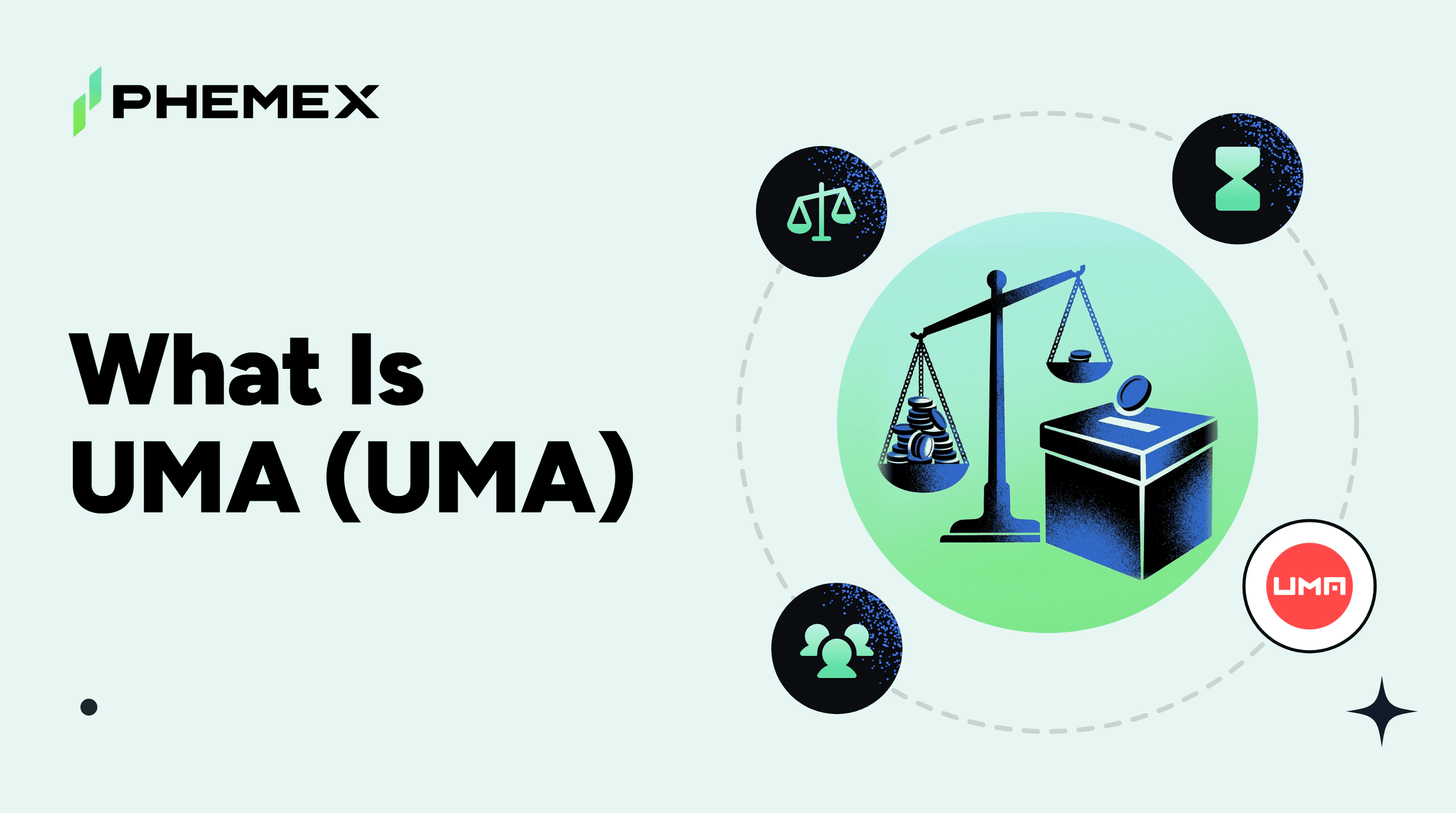
UMA, the optimistic-oracle token from Risk Labs, is what holders stake to vote on disputed answers in UMA's oracle. The oracle brings real-world facts to smart contracts, which can't look them up on their own. Someone posts an answer with a bond, and it stands unless someone challenges it in time.
A disputed answer that goes to UMA's vote settles only when more than 12.07 million staked UMA back the same outcome. That bar was 65% of the 18.57 million UMA staked at the late-November close. Every staked token counts in that base, voter or not, so a dispute needs most of the pool to turn up and agree. A vote that falls short rolls into another round.
How Much Staked UMA Does It Take to Settle a Dispute?
It took more than 12 million staked UMA at the late-November close, and that number moves with the stake. UMA's voting contract sets two bars for each disputed question. More than 5 million UMA must vote, and the leading answer needs more than 65% of everything staked. At that stake the 65% bar was the higher of the two by a wide margin.
A staker who never votes still counts in that 65% base, so staying away makes every dispute harder to settle. The contract locks in the bar at the first reveal of each round, using the stake at that moment.
The bar in tokens falls when stake leaves. A year earlier more UMA was staked, and the same 65% came to about 15.5 million tokens. UMA's governance had raised the share from 50% to 65% in 2025. Measured against all UMA in existence, the bar of just over 12 million tokens came to about 9%.
These are the rules UMA's contracts on Ethereum enforced at that point.
|
What UMA's contracts held at the late-November close
|
Value
|
Where it is set
|
|
Challenge window for an assertion
|
2 hours
|
The oracle's default liveness
|
|
Smallest bond
|
500 USDC, twice the 250 USDC fee
|
The minimum-bond rule
|
|
Share of a disputed bond paid to UMA
|
50%
|
The burned-bond percentage
|
|
One voting round
|
24-hour secret commit, then a 24-hour reveal
|
The vote timing
|
|
Votes needed to settle
|
Over 5 million voting, over 12.07 million on one answer
|
The participation floor and 65% of all stake
|
|
Cost of a missed or wrong vote
|
0.1% of stake
|
The slashing library
|
|
Wait to unstake
|
7 days
|
The unstake cool-down
|
What Is UMA Crypto?
UMA is two things with one name. The protocol is an optimistic oracle, a way to bring real-world facts to smart contracts. It's called optimistic because it treats an answer as true until someone pays to argue with it. The token secures those answers, since staked UMA holders settle the arguments. UMA's site calls Risk Labs "the foundation and team behind UMA."
The site's own sample question asks if the Chiefs beat the Eagles in the 2022-2023 NFL Super Bowl, the kind of yes-or-no fact a contract can't look up by itself. The site lists Across, Polymarket and Story Protocol among the projects built with the oracle, along with Rated and Sherlock.
Holders of a governance token such as Kyber Network's KNC vote on changes to its protocol. UMA holders vote on upgrades too, and UMA's site says the token provides the oracle's economic guarantees.
UMA set its lowest close in a year in late November, and our UMA price prediction covers the price side of the story.
How Does UMA's Optimistic Oracle Work?
Someone posts a statement as true, such as the result of a game, and locks up a bond with it. If nobody disputes it before a challenge window closes, the statement stands and the bond comes back. UMA calls that window liveness, and the default was two hours, though the app using the oracle can set its own.
The bond is what makes a false answer expensive. The smallest bond is twice UMA's fee in the oracle's default currency, USDC. That way the half of a disputed bond that goes to UMA always covers the fee.
To challenge, a disputer posts a matching bond before the window closes. On Ethereum the dispute then goes to a vote of staked UMA, unless the app that asked named its own arbiter.
The side that loses the vote forfeits its bond. The winner gets its own bond back plus half of the loser's, and the other half goes to UMA's Store, the contract that collects the protocol's fees.
How Do UMA Token Holders Vote?
Only staked UMA can vote, and taking your stake back out means a seven-day wait. Each voting round lasts two days. Voters commit a hidden vote in the first 24 hours and reveal it in the next 24. UMA's docs say the secrecy stops voters from copying each other or coordinating on a wrong answer.
Stakers earn a share of newly minted UMA. Since the upgrade described in UMA's notes on its 2023 voting system, they also risk slashing. A staker who misses a dispute vote or backs the losing answer loses 0.1% of their stake on that vote. The slashed tokens go to the voters who got it right.
Votes on UMA's own upgrades, the job a DAO governance token does, carry no slashing.
That 0.1% adds up because the vote load climbed. UMA's voting contract resolved 857 requests in October 2026 against 78 in October 2025, counting disputes and governance votes together. With that load, a staker who stops voting pays on every settled dispute they skip.
If a vote misses either bar, the question rolls into the next round, and a dispute that misses five rounds in a row is deleted without an answer.
A proposal posted on UMA's governance forum in early November 2026 would ease that load. Its Dispute Router would let a Risk Labs council settle two kinds of dispute from UMA's oracles on Polygon without a vote. Those are answers proposed too early and questions a later request already answered. Every other dispute would still go to the vote.
UMA Tokenomics: Supply, Staking and New Tokens
UMA has no supply cap in its code. The token contract lets any address with its minter role create new UMA, and UMA's governance contract decides who holds that role. UMA's voting contracts held that role at the late-November close, and the current one mints staking rewards when stakers claim them.
Rewards flow at 0.13 UMA a second, a rate governance can change, and it was the same a year earlier. That comes to about 4.1 million UMA a year, roughly 3% of the 132 million in existence at the close. At that rate, a holder who doesn't stake sees their share of all UMA shrink by about that much a year.
Supply stood near 100 million in February 2020, so it grew by roughly a third over the years since.
Staked UMA was down more than a fifth from a year earlier, at about 14% of all UMA. Split across that smaller stake, the new tokens came to about 22% of staked UMA a year. What each staker keeps depends on their voting record, since slashing moves tokens from absent and wrong voters to the right ones.
How to Buy UMA Tokens
Phemex's UMAUSDT perpetual was delisted in August 2026 and its UMA/USDT spot pair in September 2026. To buy UMA on-chain, you need a self-custody wallet and a decentralized exchange, and these steps keep you on the real token.
-
Set up a self-custody wallet that supports Ethereum, and write its recovery phrase down offline.
-
Fund it with ETH for gas fees and the token you plan to swap from, such as USDC.
-
Open a decentralized exchange and paste UMA's Ethereum contract, 0x04Fa0d235C4abf4BcF4787aF4CF447DE572eF828, into the token search so the swap uses the real UMA.
-
Set a slippage limit before you confirm. Slippage in crypto is the gap between the quoted price and the price you get, and it widens in thin pools.
-
To vote with it, stake it through UMA's own voting app.
Phemex's crypto futures cover other coins. Futures use leverage, and a leveraged position is closed automatically by a liquidation engine if losses push its margin below a set minimum.
Frequently Asked Questions
Is the UMA protocol the same as the UMA token?
No. The UMA protocol is the optimistic oracle and the dispute vote behind it, run by smart contracts on Ethereum. The UMA token is what holders stake to vote in that system and to earn the new tokens it mints.
Does UMA have a supply cap?
No. New UMA is minted as staking rewards at a rate governance sets, and that rate came to about 4.1 million UMA a year at the late-November close.
What happens when a UMA oracle answer is disputed?
On Ethereum it goes to a vote of staked UMA unless the app that asked named its own arbiter. The losing side gives up its bond, and the winner takes back its own plus half of the loser's.
Bottom Line
UMA's oracle is as strong as the stake behind its vote. The 65% bar is a share of that stake, so every token that leaves the pool lowers the number it takes to decide a dispute. And the stake fell while the vote load rose more than tenfold.
If you're weighing UMA, the number we'd watch first is the amount staked, because it measures both what each staked token earns and how hard the oracle is to push around.
Disclaimer: This article is for informational purposes only and is not financial advice. Cryptocurrency trading involves substantial risk. Always do your own research before making investment decisions.
