


 Rewards Hub

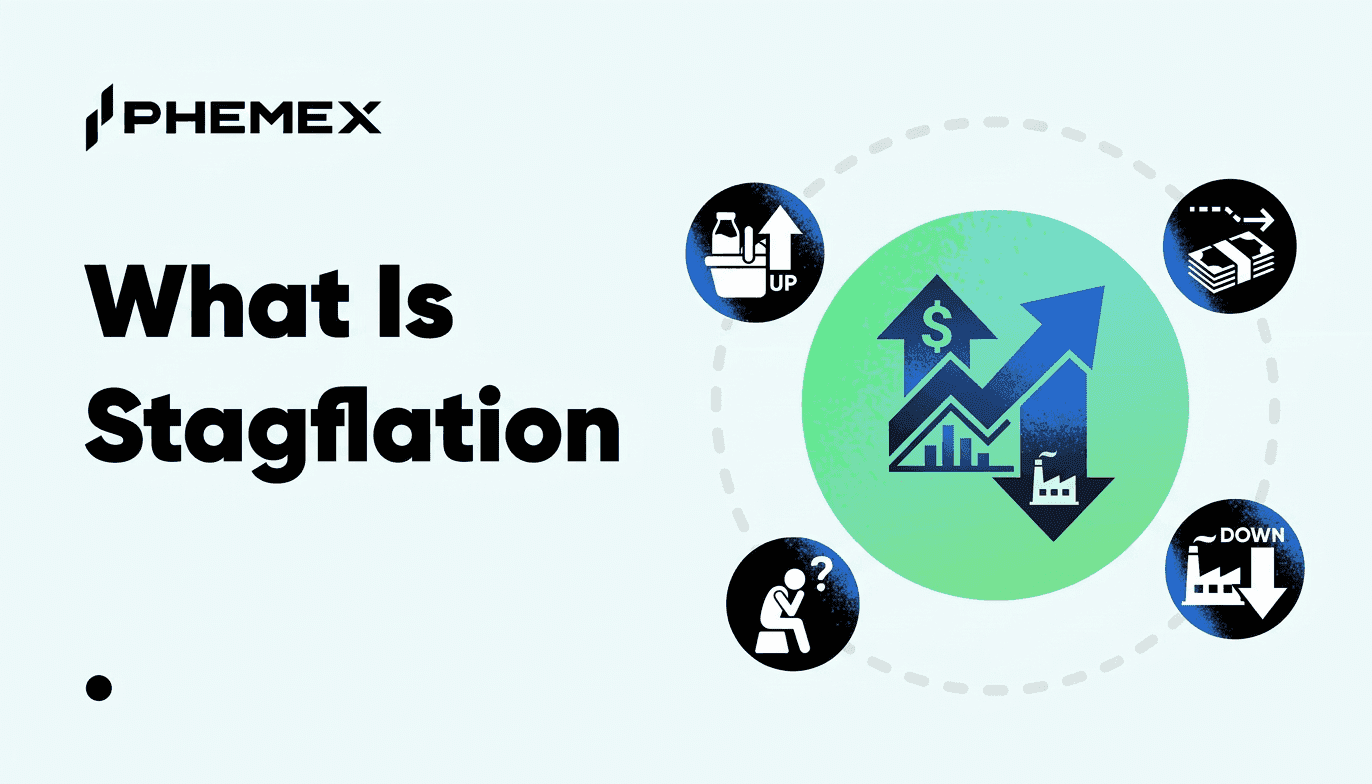
The Federal Reserve's March 18 Summary of Economic Projections lands tomorrow, and it faces a problem it hasn't had to formally acknowledge until now. Oil is above $95 per barrel thanks to the Iran conflict, Trump's 15% tariffs are pushing import prices higher, and the economy is showing signs of slowing at the same time. If the SEP shows higher inflation forecasts alongside lower GDP growth projections, that's the textbook definition of one word that makes central bankers lose sleep: stagflation.
For crypto traders, stagflation is the macro scenario that's hardest to trade because it breaks the normal playbook. Here's what it actually means, why 2026 looks like a mild version of it, and how to position if the Fed confirms it tomorrow.
What Stagflation Actually Is
Stagflation is the combination of three things that aren't supposed to happen at the same time: high inflation, stagnant or negative economic growth, and rising unemployment. The name itself is a mashup of "stagnation" and "inflation," and it was coined in the 1970s when the U.S. experienced exactly this combination for the first time.
In a normal recession, demand falls and prices come down with it, so the central bank can cut rates to stimulate growth. In a normal inflationary boom, prices rise but so do wages and employment, so the central bank can raise rates to cool things down. Stagflation breaks both playbooks because prices are rising while the economy is shrinking. The central bank has to choose: raise rates to fight inflation (making the recession worse) or cut rates to support growth (making inflation worse). Every tool helps one problem and hurts the other.
The 1970s Playbook: What Happened Last Time
The last major stagflation episode gives a roadmap for what could happen next. In 1973, OPEC imposed an oil embargo on the United States, and oil prices quadrupled almost overnight. Inflation surged past 12%. Unemployment climbed. GDP contracted. The combination persisted through most of the decade.
Fed Chairman Arthur Burns tried to thread the needle by keeping rates moderate, and it didn't work. Inflation stayed high and growth stayed weak. It took Paul Volcker, appointed in 1979, raising the federal funds rate to 20% in 1980 to finally break the inflationary cycle. The cost was the worst recession since the Great Depression, with unemployment hitting 10.8%, but inflation eventually came down and the economy recovered.
Two asset classes performed well during this period. Oil stocks surged for obvious reasons. Gold rose more than 500% between 1971 and 1980, proving itself as the go-to stagflation hedge. Equities, bonds, and cash all lost purchasing power. The lesson: when fiat currency is losing value and the economy is contracting simultaneously, hard assets with limited supply outperform everything else.
Why 2026 Looks Like a Mild Stagflation Setup
The parallels to the 1970s aren't exact, but the basic ingredients are present for the first time in decades.
On the inflation side: The Iran conflict has pushed oil from $60 to above $95 per barrel (it briefly topped $115 in early March), and the Strait of Hormuz disruptions are adding shipping costs that flow through to consumer prices. Trump's 15% global tariffs, effective since late February, are layering additional price pressure on imported goods. Core PCE hit 3.1% year-over-year in January 2026, and economists estimate CPI could reach 2.6-2.9% in March with a path toward 3.5% by year-end if oil stays elevated.
On the growth side: Consumer confidence collapsed 9.7 points in January 2026 to 84.5, the lowest reading since April. The Expectations Index dropped to 65.1, well below the 80 threshold that historically signals a recession within the next year. Tariffs reduce global trade volumes, and major banks including JPMorgan and Goldman Sachs have scrapped their earlier forecasts of multiple 2026 rate cuts. Polymarket currently prices the probability of a U.S. recession by end of 2026 at roughly 31%.
The combination is what matters. Either problem alone would be manageable. Inflation alone means the Fed holds rates steady or hikes. A growth slowdown alone means the Fed cuts. But when both happen together, the Fed is stuck, and that's exactly the position it finds itself in heading into tomorrow's decision. The 99.2% probability of a rate hold isn't a sign of confidence. It's a sign that the Fed is paralyzed by conflicting data.
What Tomorrow's SEP Will Tell Us
The March FOMC meeting is a quarterly projection meeting, which means the Fed will release updated forecasts for GDP growth, inflation, unemployment, and the dot plot showing where each member expects rates to go. This is the first SEP since the Iran conflict began and since tariffs took effect.
Watch for one specific combination in the projections: if the median GDP forecast for 2026 drops below the September 2025 projection while the median inflation forecast rises above it, that's the Fed officially acknowledging stagflation risk. Markets will read it immediately, and the reaction in crypto will likely follow the pattern BTC has shown after 7 of 8 FOMC meetings in 2025: initial volatility within minutes, followed by a directional move over the next 48 hours once traders digest the full picture.
The dot plot matters more than the statement itself. If the median dot shifts from two expected cuts to one or zero for 2026, that's the market getting confirmation that rate relief isn't coming anytime soon, which is bearish for all risk assets including crypto.
How Stagflation Affects Crypto
Crypto doesn't have a long track record during stagflationary conditions because Bitcoin didn't exist during the 1970s, but the short-term and medium-term effects point in different directions.
Short-term: bearish across the board. Stagflation means tighter liquidity, higher uncertainty, and risk-off positioning. When the Iran strikes hit on February 28, BTC crashed to $63,000 alongside the Nasdaq in a classic correlated selloff. Rising rates (or no cuts) combined with slowing growth drains the speculative capital that supports crypto prices. The broader crypto ETF category has seen net outflows of about $32 million year-to-date in 2026 after two years of $35 billion annual inflows, and the reversal in flow direction tells you where institutional sentiment sits right now.
Medium-term: potentially bullish for Bitcoin specifically. This is the part most traders miss. Stagflation erodes the purchasing power of fiat currency because inflation stays elevated while growth stalls. Central banks, when forced to choose between fighting inflation and preventing a depression, historically choose growth. That means they eventually cut rates and print money, which is the exact environment where BTC has historically performed best. CoinShares' 2026 outlook priced BTC at $70,000-$100,000 in a stagflation scenario but above $170,000 if the Fed panics and reverts to aggressive stimulus.
Altcoins fare worse than BTC in stagflation. Stagflation drains the speculative capital and risk appetite that sustains high-beta assets like smaller altcoins. During a prolonged liquidity squeeze, capital concentrates into the assets with the strongest store-of-value narrative: BTC first, ETH second, and everything else distant. The altcoin season index at 27-35 (Bitcoin Season) already reflects this dynamic. If stagflation is confirmed, expect BTC dominance to stay elevated or climb further above its current 56-58% level.
Gold vs. Bitcoin: The Stagflation Hedge Question
Gold has been the undisputed winner of the 2025-2026 macro environment. It's currently trading around $5,025-$5,100 per ounce, up more than $2,000 from a year ago, and it hit an all-time high of $5,595 in late January. Meanwhile, BTC is down roughly 44% from its October 2025 ATH of $126,000.
The institutional money is making a clear choice right now. The $4.57 billion in Bitcoin ETF outflows from late 2025 flowed in the opposite direction of gold, which attracted massive inflows over the same period. The "digital gold" narrative hasn't been tested during a sustained stagflationary environment, and the market is telling you it doesn't fully trust it yet.
That said, recent data from mid-March shows signs of a potential shift. Bitcoin ETFs pulled in $1.3 billion during the first half of March, while gold saw modest outflows during the same window. If this rotation continues, it could signal the beginning of a re-evaluation of BTC's role during macro stress. For now, though, gold is winning the stagflation trade and the burden of proof sits with Bitcoin.
How to Position If Stagflation Is Confirmed
If tomorrow's SEP confirms the stagflation setup (higher inflation projections, lower GDP projections, fewer dots for rate cuts), here's the practical framework.
Reduce leverage aggressively. Stagflation environments produce violent, two-way volatility as markets swing between inflation fears and recession fears. Leveraged positions get stopped out in both directions. If you're running futures exposure, cut it to half or less of your normal size until the macro picture clarifies.
Hold a higher stablecoin percentage for yield. With rates at 3.50-3.75% and holding, stablecoin yield products are paying competitive returns without taking directional risk. This isn't sitting on the sidelines. It's getting paid to wait while the macro resolves.
Shift crypto allocation toward BTC and ETH. A 60-70% BTC/ETH weighting with 20-30% stablecoins earning yield and only 10% in selective altcoins is a reasonable stagflation portfolio. The altcoin allocation should focus on tokens with ETF infrastructure and regulatory clarity, not speculative plays.
Watch for the Fed pivot as the signal. The trade that matters most in a stagflation cycle isn't the initial positioning. It's catching the moment the Fed capitulates and chooses growth over inflation by cutting rates. The first confirmed cut after a stagflation period is historically one of the strongest buy signals for risk assets, and BTC is likely the fastest asset to reprice higher when it happens.
FAQ
Is stagflation actually happening in 2026?
Not officially, not yet. The U.S. is in a "stagflation risk" setup where the ingredients are present (rising oil, tariff-driven price increases, weakening consumer confidence) but the full combination of negative GDP growth plus sustained high inflation hasn't been confirmed in the data. Tomorrow's SEP will give the clearest signal yet about if the Fed sees it coming.
Will Bitcoin protect me during stagflation?
In the short term, probably not, since BTC has traded as a risk asset during every recent macro shock, falling alongside equities when bad news hits. Over a longer timeframe, BTC's fixed supply and independence from central bank policy make it a candidate to benefit once the Fed eventually pivots to supporting growth through rate cuts and liquidity injections.
What's the difference between a recession and stagflation?
A recession involves falling output and usually falling prices, which makes the central bank response straightforward: cut rates, stimulate demand. Stagflation involves falling output with rising prices, which traps the central bank in a no-win position. The "flation" part is what makes it uniquely dangerous and harder to trade.
Bottom Line
Stagflation is the macro scenario where the normal rules stop working, and 2026 has the ingredients for a mild version of it: oil shock from the Iran conflict, tariff-driven inflation, and a consumer whose confidence just fell to a multi-year low. Tomorrow's Fed projections will tell us if the committee sees the same thing the market does.
For crypto traders, the playbook is straightforward even if the macro isn't. Reduce leverage, increase stablecoin yield positions, concentrate crypto exposure in BTC and ETH, and keep enough dry powder to act aggressively when the Fed eventually pivots toward supporting growth. The first rate cut after a stagflation scare is historically one of the best entry points for risk assets.
Disclaimer: This article is for informational purposes only and does not constitute financial advice. Cryptocurrency investments carry significant risk. Always conduct your own research before making investment decisions.