A fake Ledger Live app published under the name "Leva Heal" sat on the Apple App Store for roughly two weeks in April 2026 and drained $9.5 million from more than 50 victims before Apple removed it. Three victims alone lost seven-figure sums, with $3.23 million in USDT stolen on April 9, $2.08 million in USDC on April 11, and $1.95 million in BTC, ETH, and stETH drained on April 8. The stolen funds were routed through more than 150 KuCoin deposit addresses and a mixing service called AudiA6, making recovery unlikely for most victims.
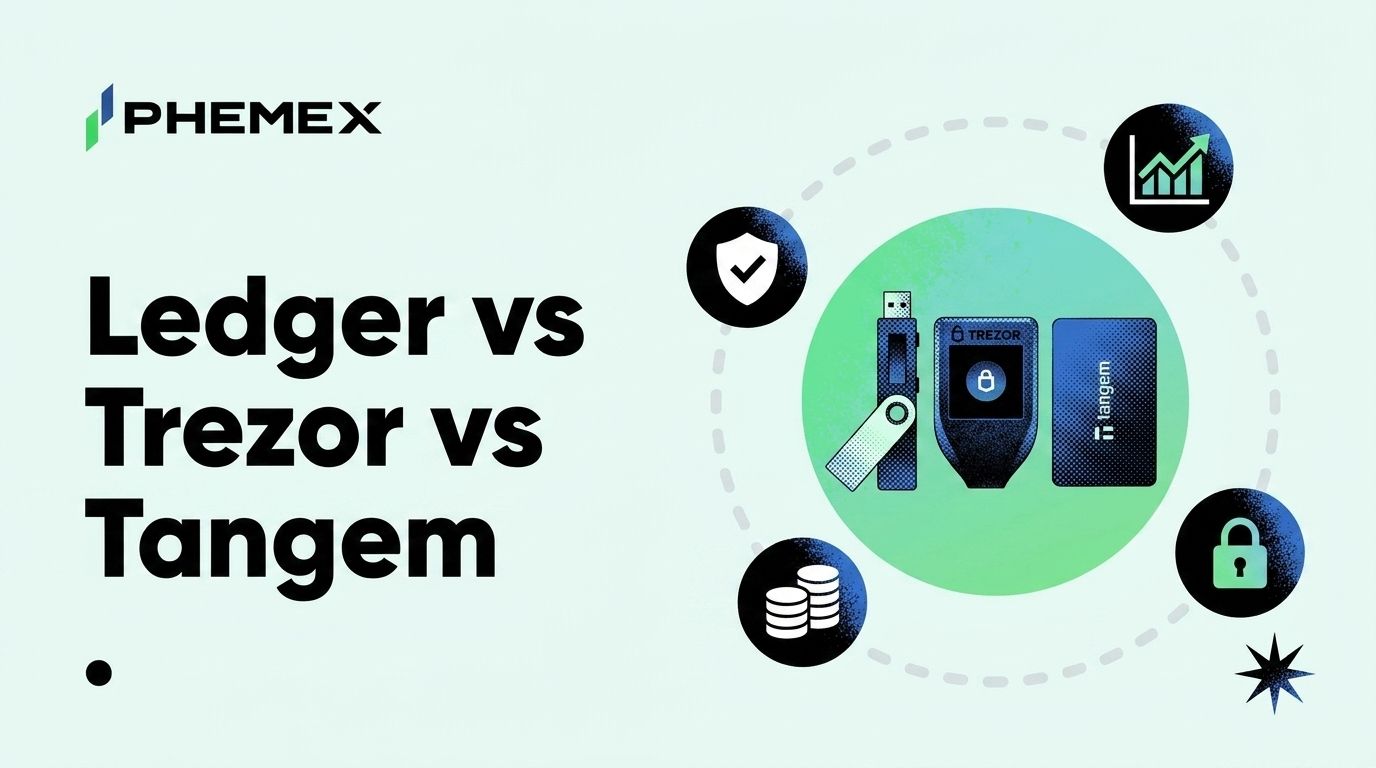
The scam worked because users entered their recovery phrases into the fake app, handing attackers full access to their wallets. And that raises a question every hardware wallet owner should be asking right now. If the app store you trust can host a convincing clone for two weeks without catching it, how do you verify that the software you are using is actually real? Here is how Ledger, Trezor, and Tangem compare on security, and exactly how to verify you have the legitimate app for each one.
How the Fake Ledger App Scam Actually Worked
The publisher name on the fake app was "Leva Heal Limited," not "Ledger SAS," which is the real publisher. That single detail would have saved every victim $9.5 million in total losses, but most people never check the publisher field when downloading from an official app store. Apple's own review process, which is supposed to catch exactly this kind of impersonation, failed to flag it for roughly two weeks.
The app mimicked the Ledger Live interface and prompted users to enter their 24-word recovery phrase during what looked like a normal setup process. The real Ledger Live never asks for your seed phrase on a phone or computer. That input happens exclusively on the physical device screen. Anyone who entered their seed into a desktop or mobile app, no matter how legitimate it looked, gave attackers everything they needed to sweep every wallet tied to that phrase.
This is not the first time fake wallet apps have appeared in major app stores, and it will not be the last.
How to Verify You Have the Real Wallet App
The verification process is different for each wallet ecosystem, and none of them rely on trusting an app store listing at face value.
Ledger Live should only be downloaded from ledger.com/start, and the official publisher in app stores is "Ledger SAS." After downloading the desktop installer, Ledger publishes SHA-512 checksums that you can verify by running a hash command in your terminal (shasum -a 512 on Mac/Linux, Get-FileHash in PowerShell on Windows) and comparing the output to the value on Ledger's website. If the numbers do not match, delete the file immediately.
Trezor Suite should only be downloaded from trezor.io/trezor-suite or the official GitHub releases page. The publisher name is "SatoshiLabs s.r.o." Trezor provides both SHA-256 checksums and PGP signatures for every release, and their download verification guide walks through the full process step by step. Because Trezor Suite is fully open-source, anyone can audit the code on GitHub to confirm it matches the compiled binary.
Tangem is mobile-only (iOS and Android), so download from the official Tangem website link to the app stores. The key distinction with Tangem is that no seed phrase ever exists, so a fake Tangem app cannot steal a recovery phrase because there is no recovery phrase to steal. Backup happens by cloning private keys onto additional physical cards during initial setup.
Ledger, Trezor, and Tangem Compared
Each wallet takes a fundamentally different approach to security, and the right choice depends on what trade-offs you are willing to accept.
|
Feature
|
Ledger (Nano X / S Plus)
|
Trezor (Safe 5 / Safe 3)
|
Tangem (NFC Card)
|
|
Companion app
|
Ledger Live (desktop + mobile)
|
Trezor Suite (desktop + web)
|
Tangem app (mobile only)
|
|
Secure Element chip
|
CC EAL5+ (Nano X), CC EAL6+ (Nano S Plus)
|
Yes (Safe 5 and Safe 3)
|
CC EAL6+ certified
|
|
Firmware
|
Closed-source (proprietary Ledger OS)
|
Fully open-source
|
Audited, not open-source
|
|
Seed phrase
|
24-word recovery phrase
|
12 or 24-word recovery phrase
|
No seed phrase (card-based backup)
|
|
Connection
|
USB-C + Bluetooth (Nano X)
|
USB-C only (no Bluetooth)
|
NFC tap to phone
|
|
Supported assets
|
15,000+ coins and tokens
|
9,000+ coins and tokens
|
16,000+ across 85+ blockchains
|
|
Starting price
|
~$79 (Nano S Plus)
|
~$69 (Safe 3)
|
~$55 (2-card set)
|
|
Best for
|
Wide asset support, mobile + desktop users
|
Open-source advocates, transparency-first users
|
Beginners, travelers, seed phrase risk eliminators
|
The table shows specs, but the real differences come down to philosophy.
What Each Wallet Gets Right (and Wrong)
Ledger has the largest market share and the most polished app experience across desktop and mobile. The Secure Element chip isolates private keys from the main processor, which is the same technology used in bank cards and passports. But the firmware is closed-source, meaning you trust Ledger's internal audits rather than being able to verify the code yourself. The Bluetooth connection on the Nano X adds convenience for mobile users but also introduces an attack surface that pure USB or NFC wallets avoid. And as the fake app incident proves, Ledger's brand recognition makes it the biggest target for impersonation scams.
Trezor built its reputation on transparency. Every line of firmware and companion app code is open-source on GitHub, which means security researchers worldwide can audit it continuously. The Safe 5 added a color touchscreen, haptic feedback, and a Secure Element chip that previous Trezor models lacked, addressing the most common criticism of older hardware. The downside is no Bluetooth and no mobile app for iOS, which limits convenience for users who primarily transact from their phones. Trezor also relies entirely on seed phrases for backup, so the same social engineering risks that hit Ledger users apply here too if someone tricks you into typing your seed into the wrong software.
Tangem takes the most radical approach by eliminating the seed phrase entirely. Your private key is generated on the card's Secure Element chip during setup and never leaves it, with backup handled by tapping additional Tangem cards during initialization to clone the key. Phishing attacks targeting seed phrases simply do not work against Tangem users. The card itself is IP69K rated (waterproof, dustproof) and weighs 6 grams, fitting in a regular wallet like a credit card. But the downsides are real and worth understanding before you commit. If you lose all your cards without having created backups, your funds are gone permanently with no recovery option, and the mobile-only app means no desktop interface for power users who prefer managing portfolios on a larger screen.
The Verification Checklist Every Wallet User Needs
Regardless of which wallet you use, these five steps apply before installing or updating any wallet software.
Go directly to the manufacturer's official website every time. Never search "Ledger Live download" or "Trezor Suite download" in Google or an app store and click the first result, because phishing sites and fake apps regularly dominate those results with paid ads and SEO manipulation.
Check the publisher name before installing anything. Ledger's official publisher is "Ledger SAS," Trezor's is "SatoshiLabs s.r.o.," and Tangem's is "Tangem AG." Any variation, misspelling, or different company name means you are looking at a fake and should close it immediately.
Verify the checksum after downloading desktop software from Ledger or Trezor. Both companies publish hash values on their official sites that you can compare against the file you downloaded. If you skip this step, you have no way to know if the file was tampered with between the server and your machine.
Never enter your seed phrase into any app, browser extension, or website under any circumstances. The seed phrase goes into the physical device screen during recovery and nowhere else, and no legitimate wallet company will ever ask for it through software. This single rule would have prevented every dollar of the $9.5 million fake Ledger app loss.
**Bookmark the real URLs after your first verified download and use those bookmarks for every future update.**Attackers regularly buy ads and register domains that look nearly identical to official sites, and a saved bookmark bypasses all of those traps.
Which Wallet Should You Actually Pick?
The honest answer depends on what threat you are most worried about.
If your biggest concern is phishing and social engineering, Tangem's seedless design removes the most commonly exploited attack vector entirely. You cannot be tricked into typing a seed phrase that does not exist. For users who are not technically confident and want the simplest possible security model, Tangem is the hardest to mess up.
If you want maximum transparency and the ability to verify everything yourself, Trezor's open-source firmware and companion app let you (or any security researcher) confirm exactly what the code does. The Safe 5 fixed the hardware gaps that previously made Trezor feel dated compared to Ledger, and the lack of Bluetooth is a feature if you view wireless connections as unnecessary risk.
If you need the widest asset coverage and the most flexible app ecosystem, Ledger still leads with 15,000+ assets across desktop and mobile with Bluetooth connectivity. But the April 2026 fake app incident is a reminder that popularity comes with a target on your back, and Ledger users specifically need to be more vigilant about app verification than anyone else.
All three wallets keep your private keys offline on a dedicated chip, and all three are dramatically safer than leaving funds on an exchange or in a hot wallet. The $9.5 million lost to the fake Ledger app was not a hardware failure. It was a software verification failure, and that is a problem every user can solve with the steps above.
Frequently Asked Questions
Can a fake wallet app steal my crypto if I have a hardware wallet?
Only if you enter your seed phrase into the fake app. A hardware wallet keeps your private keys on the physical device, so no software can extract them remotely. The danger comes when a fake app convinces you to type your 24-word recovery phrase into a screen controlled by attackers, which is exactly what happened in the April 2026 Ledger scam.
Is Tangem safe without a seed phrase?
Tangem generates and stores your private key on a CC EAL6+ Secure Element chip that never exposes the key externally, with backup handled by cloning the key onto additional physical cards during setup. The trade-off is that if you lose all your cards without backups, there is no recovery option. For most users, keeping two backup cards in separate secure locations provides equivalent or better protection than memorizing a 24-word phrase.
How do I check if my Ledger Live app is real?
Go to ledger.com/start and download directly from that page. On desktop, verify the SHA-512 checksum Ledger publishes by running a hash command on the downloaded file and comparing outputs. On mobile, confirm the publisher is "Ledger SAS" in the app store listing. If anything looks different, do not install it and report it to Ledger support.
Is open-source firmware actually safer than closed-source?
Open-source means anyone can review the code for vulnerabilities or backdoors, which is why many security researchers prefer Trezor's approach. Closed-source, like Ledger's, means you trust the company's internal audits and third-party certifications. Neither approach is inherently "safer" on its own, because open-source provides transparency while closed-source can protect proprietary implementations from being reverse-engineered. The best practice is to use a wallet with a certified Secure Element chip regardless of firmware model.
Bottom Line
The fake Ledger app that stole $9.5 million in six days did not exploit any hardware vulnerability. It exploited the assumption that if an app is in the Apple App Store, it must be legitimate. That assumption cost 50 people their savings, and the same attack will be attempted again against every major wallet brand.
The defense is straightforward. Download only from the manufacturer's official website, verify the publisher name, run checksum verification on desktop installers, and never type your seed phrase into anything except the physical device screen. Tangem users skip the seed phrase risk entirely, Trezor users can audit the code themselves, and Ledger users get the broadest ecosystem but carry the biggest target. Pick the wallet that matches your threat model and treat every app store listing as unverified until you prove otherwise.
This article is for informational purposes only and does not constitute financial or investment advice. Cryptocurrency trading involves substantial risk. Always conduct your own research before making trading decisions.