


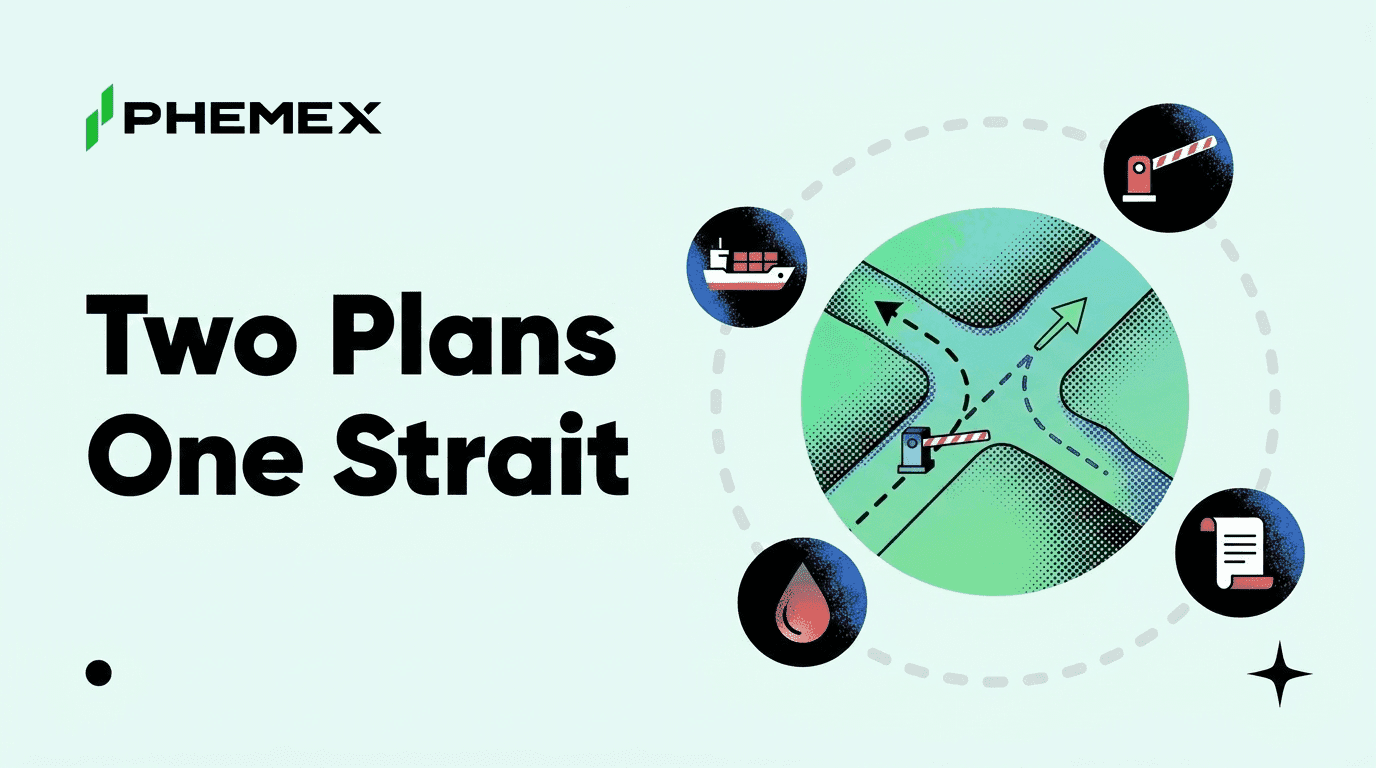
Iran's Foreign Ministry and Iran's own parliament are now pulling Tehran's Hormuz policy in opposite directions, and the split is already showing up in oil prices. On August 5, ministry spokesman Esmail Baghaei said Iran and Oman had agreed on geographic coordinates for a no-tolls dual-lane shipping corridor through the strait, built around a 60-day interim period and a jointly administered coordination center. One day later, Iran's parliament began reviewing a separate plan to ban US- and Israeli-linked vessels and charge every other ship tolls of up to 7% of cargo value, with a 20% fine for violators. The Strait of Hormuz is the roughly 33-kilometer-wide waterway between Iran and Oman that carries close to one-fifth of the world's oil, according to the US Energy Information Administration, which is exactly why a legislative challenge to Tehran's own negotiated deal is not a footnote.
This is not really a story about Iran reversing course overnight. It is a story about two branches of the same government answering to different audiences, and about what that disagreement has already done to the price of a barrel of crude.
The Two Tracks Pulling Iran's Hormuz Policy in Opposite Directions
Track one runs through Iran's Foreign Ministry. Esmail Baghaei told reporters on Wednesday, August 5, that Tehran and Muscat had settled on specific coordinates for a dual-lane route, with inbound traffic passing through a northern corridor near the Iranian coast and outbound traffic exiting through a southern corridor near Oman. The arrangement carries no tolls, runs for a 60-day interim period, and sits under a jointly administered coordination center. Baghaei described the joint Tehran-Muscat statement as being "in the final drafting stage," four words that moved oil markets more than most completed government statements do.
Track two runs through Iran's parliament, and it points the other way. NPR reported on August 6 that lawmakers are separately reviewing a plan to ban vessels linked to the United States and Israel, along with ships from other "hostile countries," from transiting the strait. That same plan would charge every other commercial vessel a toll of up to 7% of cargo value and fine violators 20% of that value, with the entire scheme conditioned on compensation for Iranian war damage. A toll regime charging up to 7% of cargo value is, by design, the opposite of the no-tolls interim corridor the Foreign Ministry spent weeks negotiating with Oman.
Why a Foreign Ministry and a Parliament Can Contradict Each Other
Most coverage of this split frames it as Iran flip-flopping, and that framing misses what is actually happening. A foreign ministry negotiates, while a parliament legislates, and the two functions rarely move in step. They answer to different constituencies inside the same government, and neither one's position binds the other until it clears formal ratification or gets signed as an executed agreement.
Iran's Foreign Ministry is the executive channel that talks to Oman, drafts joint statements, and answers to the broader foreign policy line coming out of Tehran's leadership. Iran's parliament, the Majlis, answers to a domestic electorate and a harder-line political base that wants visible accountability for war damage and skepticism toward anything that looks like accommodating the United States or Israel. A toll-and-ban plan plays well to that base in a way a quiet, toll-free logistics arrangement with Oman simply does not, even if the toll-free version is the one Tehran's own diplomats need to get oil moving again.
This split is not unique to Iran. Executive branches negotiate deals that domestic legislatures then slow, amend, or reject in almost every government built on separated powers. What earns this an entire section is that both tracks are moving inside the same government during the same week, over the same stretch of water, and traders have to price both outcomes until one of them formally wins. The Foreign Ministry's coordinates only matter if nothing legislative overrides them. The parliament's toll plan only matters if it clears whatever ratification process Iranian law requires. Neither condition has been met yet.
The United States Rejected the Toll Plan Directly
A US official responded to the parliament's toll plan on August 6, and the rejection was blunt. The official said there would be "no tolls or charges," describing the strait as "an international waterway [where] no party controls the lanes" or the ability to transit through them. That statement targets the parliament's toll-and-ban plan specifically. It does not address the Foreign Ministry's separate no-tolls corridor with Oman, which US officials have treated far more favorably in public commentary throughout the week. Washington drew a clear line that it will not accept a toll regime from either chamber of Iran's government, whichever one ends up setting policy.
Where Hormuz Diplomacy Stands After the Weekend
The joint Tehran-Muscat statement Baghaei described on August 5 still had not published as of this weekend. CNN's live coverage on August 8 and 9 described it as still "in the final stage of review," contingent on what officials characterized as "no third party interference." Five days after Baghaei's comments, the document both governments have pointed to remains unsigned and unreleased.
Iran's national security chief added to the weekend's uncertainty by publishing a list of demands, reported over the weekend, that included lifting the US naval blockade, withdrawing US military forces from the region, and permanently ending the war. Those are maximalist asks set against a 60-day interim shipping corridor, and they surfaced while the joint statement itself sat unfinished. On Sunday, August 9, Trump said the United States is "low-keying" negotiations with Iran and leaning on increased economic pressure instead, according to reports. Neither government has said talks have collapsed. Both have signaled, in their own way, that the simpler version of this deal is not close.
Traders have been here before. Phemex covered the last Iran ceasefire's effect on crypto sentiment, and the pattern held then, too. A de-escalation headline moves the Fear and Greed Index faster than it moves the underlying facts on the ground.
Why Oil Rebounded and What the Scenarios Mean From Here
Brent crude closed at $83.55 per barrel on August 7, up 1.29% on the day, up 7.09% on the month, and up 25.47% year over year, according to TradingEconomics. WTI opened at $78.31 that same day and settled near $78.20 on August 8. Both prints sit well above the sub-$79 levels Brent and WTI carried on August 5 and 6, when Baghaei's "final drafting stage" comment was still fresh and the market was pricing something closer to resolution.
A live pull on the morning of Monday, August 10, put Brent trading just above $84 per barrel, in a roughly $81.52 to $84.40 session range, with WTI near $78.82, up about 0.8% on the day. That pull comes from an aggregated data feed without a precise UTC timestamp attached, which is worth flagging directly rather than presenting as more exact than it is. What it shows clearly is a continuation of the climb that began after August 7, not a reversal of it, and the timing lines up with the same window in which the parliament's toll plan surfaced and the joint statement stalled through the weekend.
None of this proves a single cause. Crude moves on many inputs at once, and no source has tied the rebound to one specific event. But the sequence is hard to ignore. The sub-$79 prints landed while the Foreign Ministry's language sounded closest to a finished deal, and the climb back toward $84 has tracked the period in which a rival branch of the same government introduced a plan that contradicts it while the actual paperwork failed to appear. Markets tend to price open questions as risk, and Hormuz is carrying more of them than it was a week ago. Phemex covered a similar reaction pattern earlier this month, when oil and stocks moved together on any signal out of Tehran, and the same dynamic is playing out again.
The three paths from here carry distinct implications for oil, yields, and Bitcoin.
|
Scenario
|
Oil
|
Yields
|
BTC
|
|
Foreign Ministry track prevails
|
Brent likely retraces toward the sub-$79 levels seen before the parliament plan surfaced
|
Inflation-risk premium in yields eases as the supply threat fades
|
Risk-on tone supports another push at the $65,000 level
|
|
Parliament track advances
|
Brent holds or extends the current climb toward $84 on renewed disruption risk
|
Yields stay elevated as the oil-driven inflation premium persists
|
BTC likely stays capped below $65,000 as risk appetite cools
|
|
Stalemate continues
|
Brent chops in the $80 to $85 range on unresolved uncertainty
|
Little net change ahead of Wednesday's CPI print
|
BTC keeps testing $65,000 without a clean break either way
|
Oil and crypto have leaned on each other during macro-driven risk episodes before, as Phemex has explained previously, and this week fits that pattern. Odds on a full strait normalization have been treated skeptically for months. Phemex tracked Polymarket's normalization odds sliding to 25% earlier this year, and this week's toll plan only adds to that skepticism rather than resolving it. September rate-hike odds have held at 36% on Polymarket through the weekend, a stability that partly reflects markets waiting on both Wednesday's CPI print and how this standoff resolves. That story belongs to today's CPI-week coverage, not here.
Frequently Asked Questions
Is the Strait of Hormuz open?
Yes, in the sense that commercial shipping keeps moving through it, but there is no signed reopening agreement, no ratified no-tolls corridor, and no resolution to the parliament's toll plan. Right now "open" means shipping is continuing under contested and unfinished terms.
Why is Iran's parliament proposing tolls on ships in the Strait of Hormuz?
Iran's parliament is reviewing a plan, reported by NPR on August 6, that would ban US- and Israeli-linked vessels and charge other ships up to 7% of cargo value, conditioned on compensation for war damage. The plan reflects a domestic political demand for visible accountability that runs on a separate track from the Foreign Ministry's talks with Oman.
Did the United States reject Iran's Hormuz toll plan?
Yes. A US official said on August 6 that there would be "no tolls or charges" and described the strait as an international waterway that no single party controls. The rejection targeted the parliament's toll-and-ban plan specifically, not the separate no-tolls corridor the Foreign Ministry negotiated with Oman.
How much of the world's oil passes through the Strait of Hormuz?
The US Energy Information Administration estimates the strait carries close to one-fifth of global oil consumption, making it the world's most important single oil chokepoint. That volume is why a proposed toll plan that has not even been ratified can already move Brent and WTI prices.
Bottom Line
The headline risk here is not that the Strait of Hormuz has closed. It is that Iran's own government cannot currently agree with itself on the terms of keeping it open. If the joint Tehran-Muscat statement publishes in the coming days without a toll provision attached, expect Brent to retrace back toward the sub-$79 levels that prevailed before August 6. If Iran's parliament instead advances the toll and ban plan toward ratification, expect Brent to hold or extend its climb past $84 and BTC to stay capped below $65,000 on the resulting risk-off pull. If neither track resolves this week, expect exactly what the market is doing right now, chopping in an $80 to $85 range while pricing two incompatible outcomes at once. Watch for the joint statement's actual publication date, not another round of "final drafting stage" language, as the signal that tells you which track won.
This article is for informational purposes only and does not constitute financial or investment advice. Cryptocurrency trading involves substantial risk. Always conduct your own research before making trading decisions.