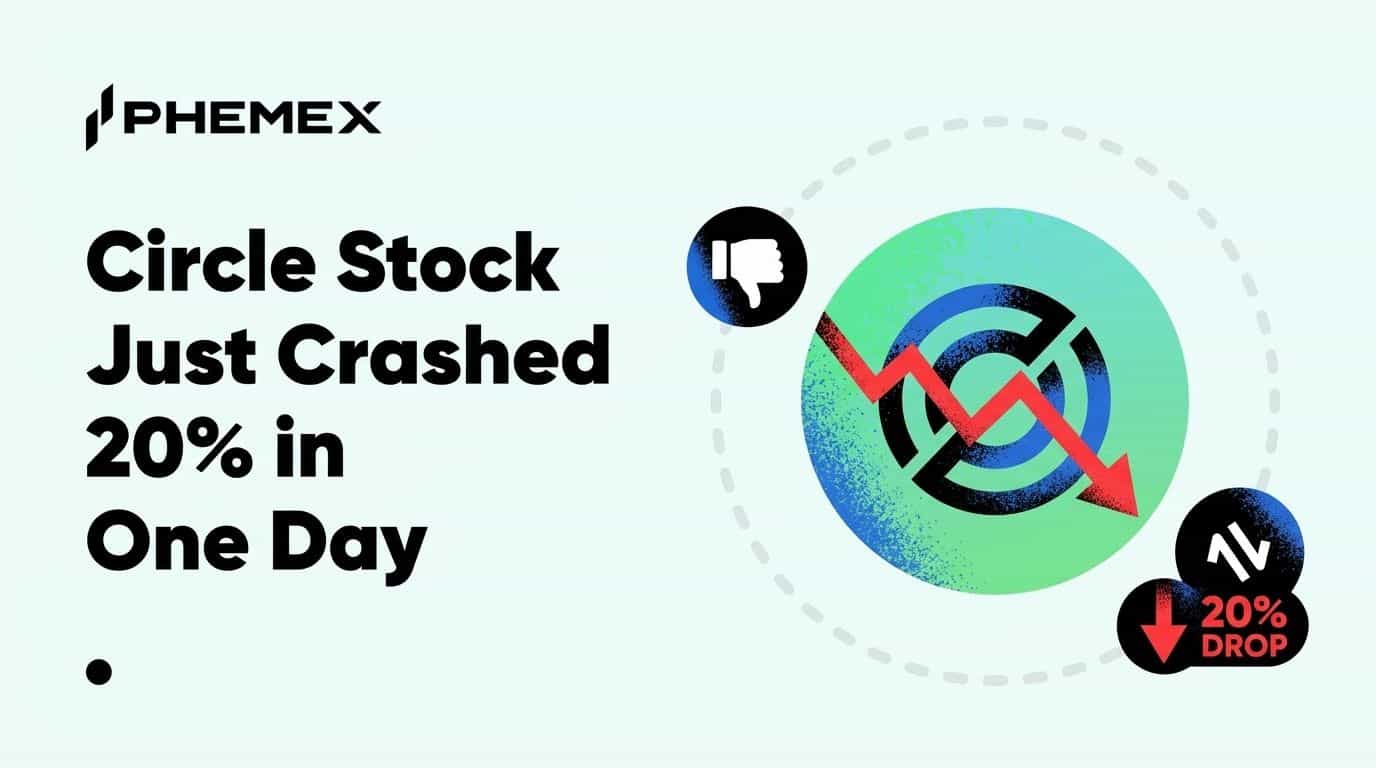
Circle (CRCL) fell 20.1% to $101.17 on March 24, its worst single-day drop on record since the company went public. The catalyst was a revised draft of the CLARITY Act that explicitly bans passive yield on stablecoins, meaning issuers like Circle can no longer offer holders automatic interest simply for holding USDC. Coinbase (COIN), Circle's primary distribution partner for USDC, dropped 9.76% to $181.04 in the same session.
The timing made it worse. CRCL had rallied 170% since early February on expectations that stablecoin regulation would help Circle's business model. Instead, the very legislation the market was cheering now threatens one of the core revenue pathways that bulls were pricing in. And on the same day, Tether announced it had hired Deloitte to conduct a full financial audit, taking a direct shot at Circle's one clear competitive advantage over its rival.
What Happened to CRCL on March 24
Source: Yahoo Finance
The 20.1% decline wiped roughly $2 billion off Circle's market cap in a single session. Volume spiked to more than 4x the 20-day average, which tells you this was not a quiet drift lower. Institutions were actively repositioning.
The stock had been one of the strongest performers in crypto-adjacent equities this year. From early February through the Friday close on March 21, CRCL climbed approximately 170% as the market priced in a favorable regulatory environment for stablecoins. The GENIUS Act, which passed Congress earlier this month, gave stablecoin issuers a clear federal licensing framework and validated the entire sector. Circle was the obvious beneficiary as the largest regulated U.S.-domiciled stablecoin issuer.
Then the CLARITY Act draft landed over the weekend, and the market realized that "favorable regulation" comes with strings attached. The specific provision that triggered the sell-off was a clause banning passive yield on stablecoins. That single provision rewired the bull case for CRCL overnight.
What the CLARITY Act Draft Actually Says About Yield
The distinction in the draft is between passive yield and activity-based rewards, and the line between them matters more than most headlines are acknowledging.
Passive yield is banned. Stablecoin issuers cannot pay holders interest, yield, or any form of return simply for holding the token. If you park USDC in your wallet and earn a percentage just for having it sit there, that model is dead under the CLARITY Act as currently drafted. The rationale from the Senate Banking Committee is straightforward. If a stablecoin pays yield like a money market fund, it should be regulated like one. Banning passive yield keeps stablecoins in the payments lane rather than the securities lane.
Activity-based rewards are still allowed. The draft permits issuers and platforms to offer incentives tied to specific actions. Payments, transfers, platform usage, loyalty programs, and promotional campaigns all remain on the table. The key test is that the reward must be linked to an activity, not to a balance.
For Circle, this means the company cannot build a business model around paying USDC holders 4-5% APY funded by Treasury yields on its $30 billion+ in reserve assets. That was exactly the revenue pathway the market had been pricing into the stock. Circle still earns interest on those reserves, but it cannot pass that interest through to holders as a passive return.
The Senate Banking Committee has targeted an April markup for the CLARITY Act, which means this provision could still be amended. But the fact that it appeared in the draft at all spooked a market that had assumed regulation would be purely additive for Circle's business.
Why Coinbase Dropped Too
Coinbase fell 9.76% to $181.04, and the connection runs deeper than general crypto sentiment. Coinbase is Circle's most important distribution partner for USDC. The two companies have a revenue-sharing arrangement where Coinbase earns a percentage of the interest income generated by USDC reserves held on its platform.
If Circle cannot offer passive yield to attract and retain USDC deposits, the growth trajectory for USDC's circulating supply takes a hit. Fewer USDC in circulation means less reserve income, which means less revenue flowing to Coinbase through the partnership. The market connected those dots within minutes of the draft becoming public.
The 9.76% decline was smaller than Circle's because Coinbase has diversified revenue streams (trading fees, staking, custody), but the USDC partnership is a meaningful line item that just got repriced.
The Tether Timing Was Not a Coincidence
On the same day CRCL was posting its worst session ever, Tether announced it had hired Deloitte to conduct a full financial audit of its reserves. For years, Circle's primary selling point to institutions was transparency. Circle publishes monthly reserve attestations from Grant Thornton and has been audited since before its IPO. Tether, by comparison, had only produced periodic attestations from BDO Italia, which institutional allocators viewed as insufficient.
A Big Four audit neutralizes that gap. If Deloitte signs off on Tether's reserves, the one advantage Circle held over its larger competitor disappears. USDT already dominates with roughly 60% of the stablecoin market compared to USDC's approximately 25%. Remove the transparency edge, and Circle's pitch to institutional clients becomes significantly harder. The timing suggests Tether saw the CLARITY Act draft and recognized an opportunity to pile pressure on its main rival while the stock was already bleeding.
Passive Yield vs. Platform Yield: What Survives
The ban does not kill all stablecoin-related yield. It kills a specific type of yield, and the distinction creates winners and losers.
Platforms like Phemex Earn that offer yield through structured products, lending markets, and activity-based programs operate in a fundamentally different category than a stablecoin issuer paying holders to park tokens. The yield on a crypto earn platform comes from lending markets, DeFi strategies, or platform-specific programs rather than the stablecoin issuer passing through reserve income.
DeFi protocols that generate yield through actual lending and borrowing (Aave, Compound, MakerDAO) are also structurally different from an issuer paying passive interest.
The practical result is that yield migrates from the issuer layer to the platform layer. If Circle cannot pay you to hold USDC, you go find yield on a platform that puts your USDC to work. That shift benefits exchanges and DeFi protocols at the expense of the stablecoin issuer's ability to attract sticky deposits.
What Comes Next for Circle and CRCL
The April Senate Banking Committee markup is the next major catalyst. If the passive yield ban survives the markup unchanged, the market will need to fully reprice Circle's revenue model around transaction fees, enterprise partnerships, and the USDC infrastructure business rather than reserve income distribution. That is a viable business, but it is a smaller business than the one the 170% rally was pricing in.
If the provision gets softened or removed during markup, expect a sharp relief rally. CRCL climbed from $101 to roughly $127 in weeks during the last rally phase, and a reversal of the yield ban would provide the same kind of catalyst.
For traders watching CRCL, the $95-$100 zone is the area where the stock consolidated in mid-February before the parabolic run started. If that level holds as support, it suggests the market views the yield ban as a setback rather than an existential threat. A break below $95 would signal that the repricing has further to go.
Frequently Asked Questions
Why did Circle stock crash 20% on March 24?
CRCL dropped 20.1% after a revised CLARITY Act draft banned passive yield on stablecoins. The provision directly threatens Circle's ability to pay USDC holders interest funded by reserve income, which was a core part of the bull thesis behind the stock's 170% rally since February.
Can stablecoin platforms still offer yield after the CLARITY Act?
The ban targets passive yield paid by the stablecoin issuer to holders. Third-party platforms that generate yield through lending, DeFi strategies, or activity-based rewards are not affected by the issuer-level ban. The yield shifts from the issuer to the platform layer.
What is the difference between passive yield and activity-based rewards?
Passive yield means earning a return simply for holding a stablecoin in your wallet with no action required. Activity-based rewards require the holder to do something specific, such as making payments, completing transfers, or participating in platform programs. The CLARITY Act bans the first and allows the second.
When will the CLARITY Act stablecoin yield ban be finalized?
The Senate Banking Committee has targeted an April markup session. The provision could be amended, softened, or removed during that process. Until the full bill passes both chambers and gets signed into law, the specific terms of the yield ban remain subject to change.
Bottom Line
The 170% rally in CRCL was built on the assumption that stablecoin regulation would be a pure tailwind for Circle. The CLARITY Act draft just proved that regulation cuts both ways. A yield ban forces Circle to compete on infrastructure and transaction volume rather than reserve income distribution, and that is a fundamentally different (and lower-margin) business model than the one the market was pricing.
The April markup is the binary event. If the passive yield ban holds, CRCL needs to find its footing around the $95-$100 support zone and rebuild the investment case on different fundamentals. If it gets removed, the stock rips back toward $127 on relief. Meanwhile, Tether just hired Deloitte to close the one competitive gap that Circle has spent years cultivating. The stablecoin war just got a lot more interesting for everyone except Circle shareholders.
This article is for informational purposes only and does not constitute financial or investment advice. Cryptocurrency trading involves substantial risk. Always conduct your own research before making trading decisions.