










Pyth Network executed a scheduled token release of roughly 2.13 billion PYTH on May 19, 2026, pushing around $92.46 million of new supply into a market that was already pricing the event in. The release lands while PYTH trades near the lower end of its 2026 range, and it ranks among the largest single token releases the project has ever processed. For anyone holding PYTH or watching it, the real question is not the headline figure. It is what the freshly circulating tokens do to price over the days and weeks that follow.
Pyth is one of the most widely used oracle networks in crypto, feeding real-time prices to applications across more than 100 blockchains. The event matters because oracle tokens live and die on adoption, and a sudden jump in circulating supply tests how much real demand sits underneath the price. Here is what Pyth actually does, how its first-party data model differs from older oracles, what the tokenomics look like, and how to read the May supply event without panicking or ignoring it.
What Pyth Network Actually Does
Smart contracts cannot see outside their own blockchain. A lending protocol that needs the current price of ETH, or a derivatives exchange that needs the price of gold, has no native way to fetch that number. Blockchain oracles solve that gap by delivering external data on-chain, and Pyth is built specifically to deliver one kind of data extremely well: financial market prices.
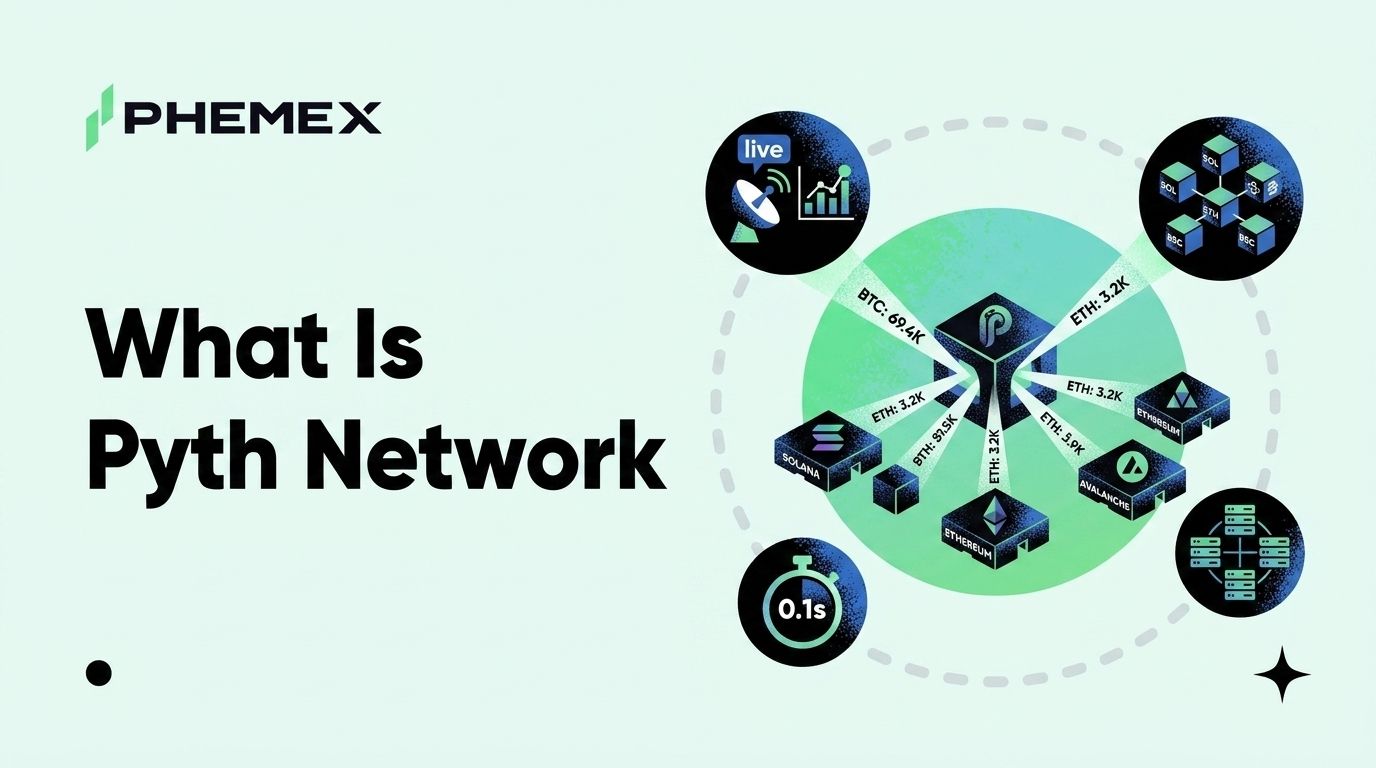
Pyth streams low-latency price feeds for cryptocurrencies, equities, commodities, and foreign exchange pairs. Those feeds reach more than 100 blockchains, so a developer building on Solana, an Ethereum Layer-2, or a newer chain plugs into the same pricing infrastructure without rebuilding it. The network covers thousands of individual price feeds, updated at a frequency that older oracles struggle to match.
The reason it matters for traders is simple. Most protocols where you take leverage, borrow, or trade synthetic assets depend on an oracle to mark your position. If that oracle is slow or wrong, liquidations fire at the wrong price and the whole system bleeds trust.
How First-Party Oracle Data Works
Most older oracles run a push model. A network of third-party node operators fetches prices from public sources, packages them, and continuously writes them on-chain even when no application needs the update. Chainlink is the best-known example of that design. It works, but the data passes through an intermediary layer before it reaches the chain.
Pyth takes a different route. It is a first-party oracle, meaning the price data comes directly from the firms that generate it. More than 120 data publishers contribute, including major exchanges, market makers, and trading firms such as Jane Street and Cboe. Think of it as the difference between getting a stock quote from a news aggregator versus getting it straight from the exchange's own terminal. The source is the same firm that actually trades the asset.
Pyth also uses a pull model rather than a push model. Publishers sign their data and post aggregated prices to Pythnet, a dedicated appchain, and the price only gets written to a destination blockchain when an application asks for it. That on-demand design removes the constant gas cost of pushing updates to every chain, which is what lets Pyth scale to so many networks at once. The tradeoff is that the consuming application pays a small cost to pull a fresh update.
PYTH Tokenomics and the May Unlock
PYTH has a fixed maximum supply of 10 billion tokens. The token governs the network and underpins how data publishers are rewarded for accurate feeds and penalized for bad ones. Before this week, circulating supply sat around 5.75 billion, a little under 58% of the total.
That number is the context for why the May event draws attention. A token unlock is the scheduled release of tokens that were allocated at launch but locked under a vesting schedule, typically reserved for the team, early investors, ecosystem programs, and contributors. Locking those tokens prevents insiders from dumping everything on day one. When a tranche vests, it adds to circulating supply, and the market has to absorb tokens that previously could not move.
On May 19, 2026, Pyth released roughly 2.13 billion PYTH, worth around $92.46 million at recent prices, according to reporting on the release. The bulk of it, about 1.13 billion tokens, is earmarked for ecosystem growth. Another 537 million is allocated to publisher rewards, with the remainder going to protocol development and other categories. Here is how the release breaks down:
The detail that separates a worrying release from a routine one is where the tokens go. Tokens routed to ecosystem growth and publisher rewards are not the same as a cliff release handed straight to early investors who want an exit. Ecosystem and reward allocations tend to release into the network gradually as programs spend them, rather than hitting an exchange order book all at once. That does not make the supply increase disappear, but it changes the speed at which it can pressure price.
How Traders Read Token Unlocks
Token releases add supply, and added supply with flat demand pushes price down. That is the simple version, and it is why traders watch vesting calendars closely. The honest answer is that the real outcome depends on three things, and price action around the date usually tells you more than the headline number.
The first is how much the market already priced in. Scheduled releases are public knowledge months ahead, tracked on vesting calendars that anyone can read. If PYTH drifted lower into May 19 on rising volume, a lot of the selling may already be done, and the release itself can become a "sell the rumor, buy the news" bottom. The second is who receives the tokens. Investor and team cliffs are the highest-pressure type because recipients often sell immediately. Ecosystem and reward pools release more slowly. The third is the size relative to circulating supply and daily volume. A release that equals many days of trading volume is harder to absorb than one the market clears in an afternoon.
This is where retail consistently gets it wrong. Traders either ignore these events completely or treat every one as an automatic crash. Neither is right. The disciplined approach is to check the vesting schedule before taking a position in any token, size the release against daily volume, and watch how price behaves in the 48 to 72 hours afterward rather than reacting to the dollar figure alone.
Frequently Asked Questions
What is Pyth Network used for?
Pyth delivers real-time price data for crypto, stocks, commodities, and forex to smart contracts on more than 100 blockchains. Lending protocols, perpetual exchanges, and other DeFi applications use those feeds to value collateral, mark positions, and trigger liquidations accurately.
Does the May 2026 token unlock mean PYTH will crash?
Not automatically. An unlock adds circulating supply, but the price impact depends on how much the market already priced it in and where the tokens go. Most of this release is allocated to ecosystem growth and publisher rewards, which tend to enter circulation gradually rather than hitting exchanges in one block.
How is Pyth different from Chainlink?
Pyth is a first-party oracle, meaning data comes directly from exchanges and trading firms rather than from third-party node operators. It also uses a pull model, writing prices on-chain only when an application requests them, which is what lets it support so many blockchains cost-effectively.
What is the total supply of PYTH?
PYTH has a fixed maximum supply of 10 billion tokens. After the May 19, 2026 release, circulating supply moved up from roughly 5.75 billion, meaning a meaningful share of the total remains locked under future vesting.
Bottom Line
The May 19 release added roughly 2.13 billion PYTH to a market that had months of notice, so the figure that matters now is not the $92.46 million headline but how price behaves over the next two to three weeks. Watch closely for PYTH holding its pre-release range on stable volume, since a hold there signals the supply was absorbed and demand is real. The fact that most of the release targets ecosystem growth and publisher rewards rather than investor cliffs lowers the odds of a sharp dump, but it does not remove the overhang. The cleaner read comes from adoption metrics. If new chains and protocols keep integrating Pyth feeds, the network grows into its larger float. If integrations stall while supply keeps vesting on schedule, the token has a harder problem than one calendar date.
This article is for informational purposes only and does not constitute financial or investment advice. Cryptocurrency trading involves substantial risk. Always conduct your own research before making trading decisions.
