








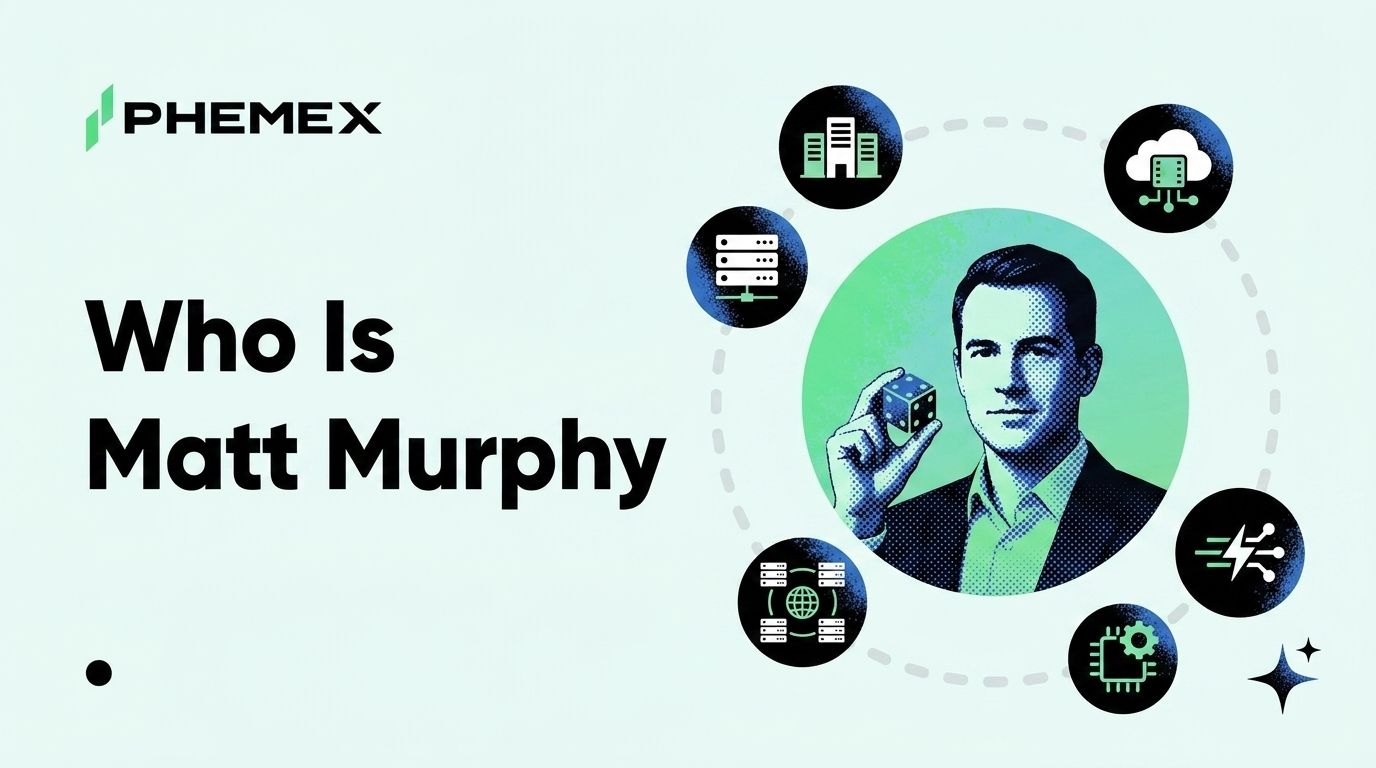
Matthew "Matt" Murphy has run Marvell Technology as CEO since July 2016. He is American, holds a BS in Computer Engineering from Cornell and an MBA from Syracuse's Maxwell School, and spent the first 20-plus years of his career at Maxim Integrated, where he ran the Business Units organization before being recruited to Marvell at age 44. His Marvell tenure has been defined by a structural reinvention of the company from consumer and storage silicon into a hyperscaler custom-silicon partner.
The June 18 fiscal Q1 print is the next major test, and it lands at the worst possible time for the company's multiple. The AVGO custom-ASIC reset on June 4 wiped roughly 8% off MRVL in a single session and reframed the hyperscaler custom-silicon cycle as digestion-phase rather than continuous ramp. Murphy now has to navigate the call with language that either reopens the upside or confirms the digestion read.
The Maxim Years and How They Shape His Style
Murphy spent 22 years at Maxim Integrated, rising from a product engineer role to the Senior Vice President of the Business Units organization that ran most of the company's revenue lines. The style he developed across that tenure was methodical, design-win driven, and deeply customer-facing. Maxim was a high-mix analog and mixed-signal company whose growth depended on landing thousands of small to mid-sized design wins across the industrial, automotive, and communications customer base. The operational pattern was relationship management at the customer engineering level, which is a different skill from the high-stakes mega-customer negotiations that define hyperscaler silicon.
The translation of that style into Marvell has been a slow strategic pivot from a fragmented Maxim-style customer base into a concentrated hyperscaler customer base. The Marvell of 2016 sold storage controllers and consumer connectivity silicon to a long tail of OEM customers. The Marvell of 2026 sells custom ASICs and optical DSPs to a small handful of strategic hyperscaler customers. Murphy made that transition by acquiring the missing technology stacks, divesting the legacy product lines that did not fit the new strategy, and aligning the engineering organization around the custom-program execution model.
The relevant context for what the new customer base looks like is the Marvell investor relations page from earlier in the cycle, where Murphy walked through the specific design-win architecture for each of the four named hyperscaler programs.
What Murphy Has Done at Marvell
Three specific moves define the transformation Murphy has led at Marvell across his nine-year tenure.
The first is the 2018 acquisition of Cavium for $6 billion, documented in the Cavium S-4 merger filing on SEC EDGAR, which gave Marvell the high-performance server processing and security silicon that became the technical foundation for the data-center push. The Cavium ARM-server silicon stack was the platform that Marvell used to land its first major hyperscaler design wins, and the integration was managed cleanly enough that the acquired team became a meaningful share of the senior engineering organization.
The second is the $10 billion Inphi acquisition in 2021, which gave Marvell the optical DSP technology that is now a critical component of every hyperscaler data center build. Inphi's coherent optical interconnect silicon is what allows hyperscaler AI clusters to scale across racks at the bandwidth the GPU and ASIC accelerators demand. The Inphi technology stack is the reason Jensen Huang named Marvell as a critical partner at the Computex keynote earlier this year, and it is the most strategically significant asset Murphy has acquired.
The third is the custom-ASIC program portfolio that closed across 2023 to 2025. AWS Trainium, Google TPU, Meta MTIA, and the rumored Microsoft Maia silicon all run partially through Marvell's design and physical implementation services. The program structure is documented in detail across Marvell's quarterly earnings releases. Each program represents a multi-year design and production commitment that anchors a meaningful share of Marvell's mid-to-late decade revenue. The custom-ASIC programs are what pushed Marvell's market cap past $40 billion and are also the exact business model that the AVGO June 4 print just questioned.
The broader context for the AI infrastructure layer that Marvell now operates in sits in the Phemex AI agents primer, which frames why custom silicon has become the dominant fundamental story across the semi sector.
What His Voice Sounds Like on the Quarterly Call
Murphy's call style is measured and program-anchored. He typically opens with the segment-level revenue mix, walks through the data-center segment progression in detail, and addresses each major custom-ASIC program by code name with specific milestone language. The pattern matters because it gives the analyst community a relatively clean read on if the program ramps are tracking against the original Street model or slipping.
The Q&A section is where the program-level visibility shows most clearly. Murphy answers analyst questions about the Trainium, TPU, and MTIA ramp cadence with explicit timing language, which is unusual for a custom-silicon company because the customer commitments are usually confidential. The analyst community has consequently learned to read his quarterly language closely. When the milestone language is specific and constructive, the bull case is intact. When the language shifts to hedging or program-mix vagueness, the bear case has more room.
The Computex keynote moment earlier this year was the most significant external signal he received in the AI cycle. Jensen Huang naming Marvell as a "next trillion-dollar company" candidate is the kind of strategic alignment statement that does not happen by accident, and Murphy reportedly negotiated the language placement directly with NVDA in the weeks before the keynote, per the Bloomberg post-Computex coverage. That episode is a useful window into how Murphy manages the strategic communication layer of the role.
Why the June 18 Print Is the Next Real Catalyst
The MRVL fiscal Q1 print is scheduled for June 18 after the close, and the catalyst weight on the print has elevated meaningfully since the AVGO June 4 reset. Three specific items will set if the multiple holds or compresses further.
The first is the AI infrastructure revenue mix as a percentage of total revenue. Murphy has guided that the AI segment will cross 50% of revenue inside fiscal 2027, and the Q1 mix print is the cleanest indicator of if that trajectory is intact. A miss confirms the digestion-phase read. An in-line print partially reverses it. A beat reopens the bull case.
The second is the program-level milestone language on the Trainium, TPU, and MTIA ramps. Murphy's specific language on each program will set how the analyst community models the fiscal 2027 trajectory. Constructive milestone language reopens the upside. Cautious language confirms the AVGO read.
The third is the operating margin trajectory. The custom-ASIC business model scales at lower margins during the program ramp phase and expands as volumes hit steady state. A miss on margin expansion is the worst possible signal because it would suggest the customer-pricing power has shifted against Marvell at exactly the moment the digestion phase is exposing the multiple.
The print combined with the AVGO context will set Marvell's trading range through the next two quarters.
Frequently Asked Questions
Is Matt Murphy the right CEO for the AI custom-silicon cycle?
His track record across the Cavium and Inphi acquisitions, the storage-to-data-center pivot, and the four hyperscaler design wins is the cleanest evidence that he is positioned for the cycle. The current question is execution-level navigation of the digestion phase rather than strategic direction, which is a different test from the one he has cleared so far.
What is Murphy's net worth?
The exact number is not publicly disclosed. His Marvell compensation packages have included substantial equity grants tied to multi-year performance metrics across nine years of tenure, and the cumulative value at current Marvell market levels is in the nine-figure range based on public disclosures. The figure has fluctuated significantly with the stock and the recent two-day drawdown has reduced it materially.
Why did Marvell stock rip 21% on the Computex keynote?
Because the Jensen Huang call-out signaled that the NVDA-MRVL relationship inside the AI infrastructure stack is structurally aligned for the next generation of reference platforms. The market took the signal as confirmation that Marvell's optical DSP and custom-silicon stack would capture incremental design slots in the NVDA Rubin and post-Rubin platforms. Most of that gain has now unwound across the AVGO spillover, which is a positioning unwind rather than a fundamental reversal of the underlying signal.
Could Murphy leave Marvell before the custom-ASIC cycle plays out?
There is no public signal that a transition is being planned. Murphy is in his mid-50s and the Marvell board has shown no indication of succession planning. The custom-ASIC programs ramp through fiscal 2027 and 2028, which is inside the timeframe a sitting CEO would be expected to execute.
Bottom Line
Matt Murphy has spent nine years converting Marvell from a fragmented consumer and storage silicon company into a concentrated hyperscaler custom-silicon partner, and the Cavium and Inphi acquisitions plus the four named program wins are the operational proof points. The June 18 fiscal Q1 print is the next test, and it lands at the worst possible moment for the multiple. The AVGO digestion-phase signal needs to be either confirmed or partially reversed by Marvell's own program-level milestone language. Constructive language on the Trainium, TPU, and MTIA ramps with an in-line AI infrastructure mix is the bull setup. A muted print with hedging language compresses the multiple further. The structural story stays intact either way, but the timing of the next earnings acceleration is what the next two quarters will price.
This article is for informational purposes only and does not constitute financial or investment advice. Cryptocurrency trading involves substantial risk. Always conduct your own research before making trading decisions.
