







Learn how to start stock trading on Phemex — buy and short US stocks like Microsoft, Micron, and more using USDT, with no traditional broker and no bank account required.
Stock trading used to mean opening a brokerage account, waiting for bank transfers, and only trading during a narrow window on weekdays. On Phemex, it works differently. You can trade US stocks directly with USDT, go long or short, use leverage, and do it around the clock — all from the same account you already use for crypto. This guide walks you through exactly how it works and how to place your first stock trade.
What Are Stocks in Trading?
A stock represents a share of ownership in a company. When you trade stocks, you're taking a position on whether a company's share price will rise or fall. Traditionally, you'd buy the actual share through a broker and profit only if the price went up.
On Phemex, stock trading is offered through the TradFi section, and it comes in two forms:
- Stock Perpetual Contracts (TradFi) — derivatives that track a stock's price (e.g. MSFTUSDT for Microsoft, MUXUSDT for Micron). You can go long or short, use leverage, and there's no expiry date. Settled in USDT.
- Tokenized Stocks (Spot) — spot trading pairs backed by real equities (e.g. AAPLX, NVDAX, TSLAX), letting you hold price exposure to a stock like you'd hold a crypto token.
The rest of this guide focuses mainly on stock perpetuals, since they offer the most flexibility for active traders — but the account setup is the same for both.
Why Trade Stocks on Phemex?
Here's what makes trading stocks on Phemex different from a traditional brokerage:
- No broker, no bank required. You trade stocks online without a broker — fund your account with USDT and you're ready. This is ideal if you're already in crypto and don't want the friction of opening a separate brokerage account.
- Trade 24/7. Traditional stock markets close on nights and weekends. Phemex stock perpetuals trade around the clock (with regular and extended hours), so you can react to earnings and breaking news whenever they happen.
- Go long AND short. Bullish on a chip stock? Go long. Think a name is overextended? Open a short. You can profit in both directions — something spot-only investing can't do.
- Start small. You don't need thousands to begin. With leverage and USDT-based sizing, you can open a position with a modest amount of capital — yes, even around $100 is enough to start learning (see the risk note below).
- One account for everything. Crypto, stocks, indices (like Nasdaq and S&P 500), precious metals (gold, silver), and commodities (crude oil) — all under a single USDT-settled account.
How Do I Start Stock Trading on Phemex? (Step by Step)
Step 1 — Create and verify your account. Sign up for a Phemex account and complete verification. New users can often claim a sign-up / trading bonus (look for the "Register" gift icon).
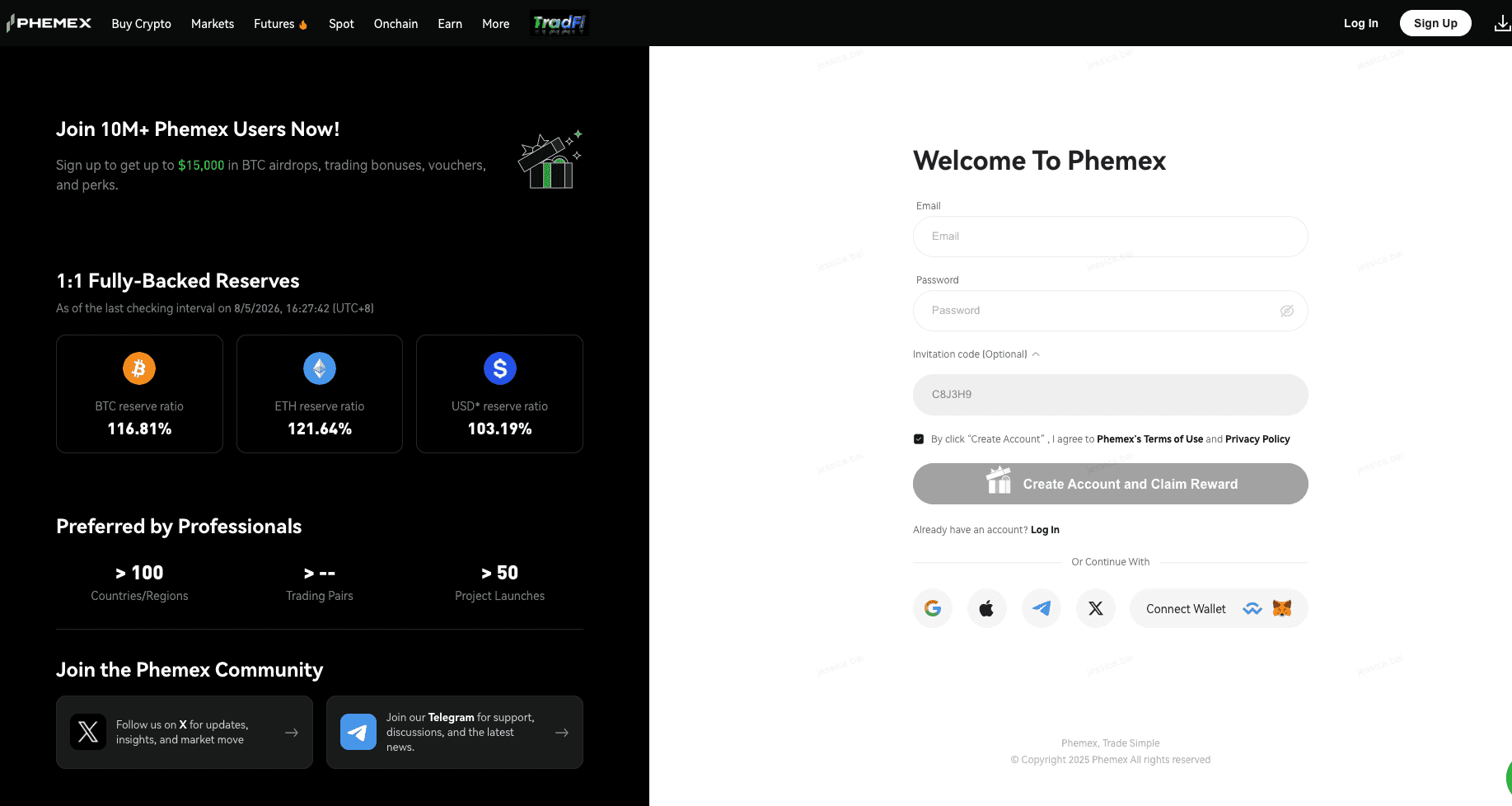
Step 2 — Deposit USDT. Fund your account with USDT via crypto deposit or by buying crypto directly. USDT is the settlement currency for all TradFi stock trading.
Step 3 — Open the TradFi market list. Click TradFi in the top navigation, then filter by Stocks. You'll see a list of tradable tickers — for example MSFTUSDT (Microsoft), MUXUSDT (Micron), SNDKUSDT (SanDisk), plus leveraged ETF products like TQQQUSDT and SOXLUSDT.
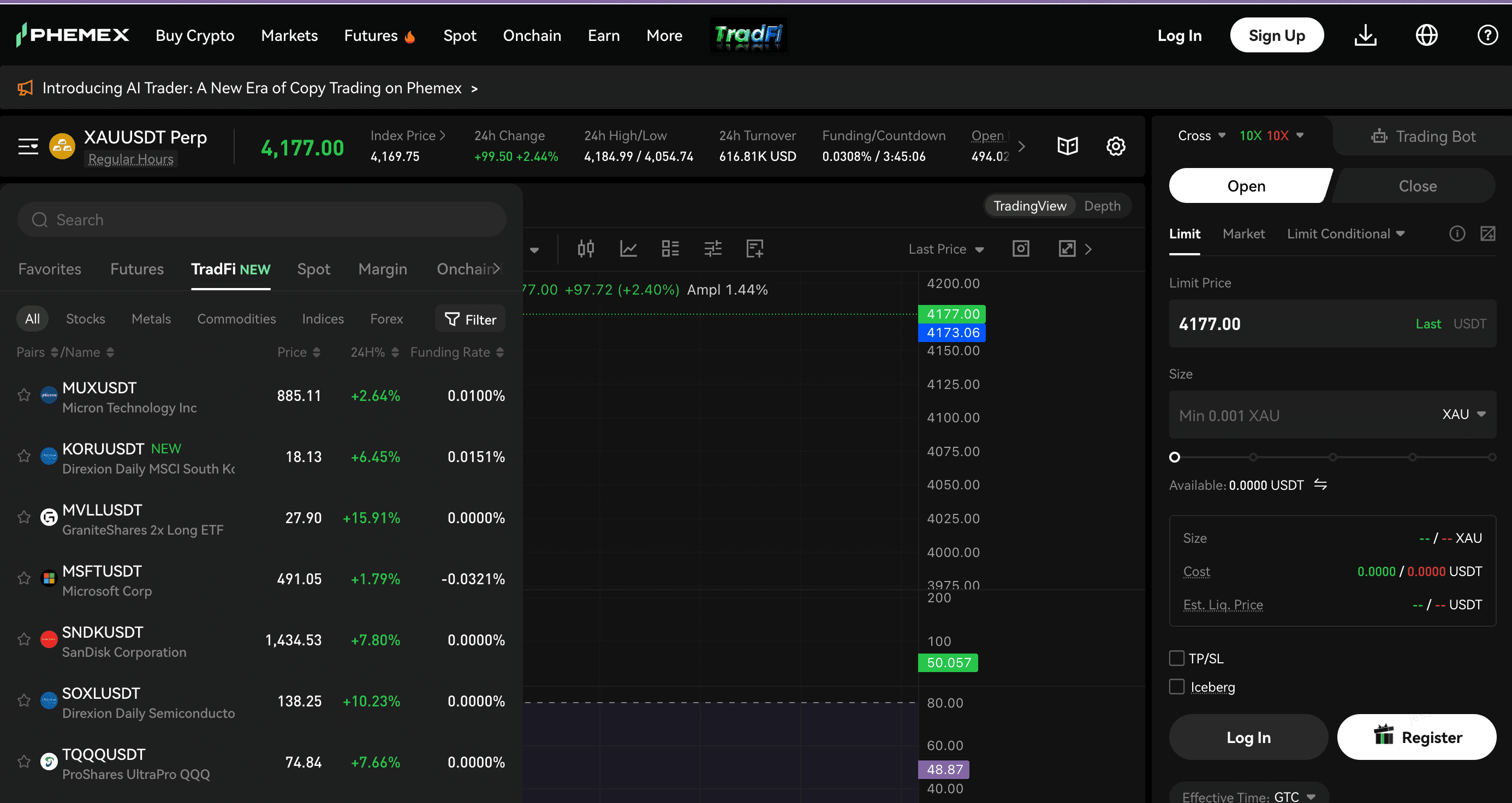
Step 4 — Choose your stock and set up the order. Select a ticker to open its trading page. On the order panel you can:
- Pick Cross or Isolated margin
- Set your leverage (e.g. 10x)
- Choose an order type: Limit, Market, or Limit Conditional
- Decide Long (buy) or Short (sell)
Step 5 — Manage risk before you confirm. Enable TP/SL (Take Profit / Stop Loss) so your exit is defined before you enter. Check the estimated liquidation price and cost shown on the panel.
Step 6 — Place the trade and monitor it. Confirm the order. Track your position, unrealized PnL, and funding rate from your positions tab. Close anytime — there's no expiry on perpetuals.
Key Concepts Every Beginner Should Know
Leverage. Leverage lets you control a larger position with less capital. 10x leverage means $100 controls a $1,000 position. It amplifies gains and losses — start low.
Margin (Cross vs Isolated). Isolated margin limits your risk to the funds assigned to that single position. Cross margin uses your whole balance as collateral. Beginners usually prefer isolated margin for tighter risk control.
Funding rate. Perpetual contracts use a small periodic funding payment between longs and shorts to keep the contract price aligned with the underlying stock. You'll see it displayed on each market.
Long vs Short. Long profits when the price rises. Short profits when the price falls. The ability to short is a core advantage of trading stock perpetuals.
Liquidation. If the market moves against a leveraged position too far, it can be liquidated (closed automatically). Using stop-losses and lower leverage helps you avoid this.
Is $100 Enough to Start Trading Stocks?
Yes — you can start with a small amount. Because Phemex stock perpetuals are settled in USDT and support flexible position sizing with leverage, you don't need a large upfront balance to begin. Starting small is actually the smart way to learn: get comfortable with order types, leverage, and risk tools while your exposure is limited. As your skills grow, you can scale up.
A realistic note on "making $1,000 a day": searches like "can you make $1,000 a day trading stocks" are common, but consistent daily profits are not guaranteed for anyone. Leverage cuts both ways, and losses are part of trading. Treat early trades as tuition, focus on process and risk management, and never trade money you can't afford to lose.
Risk Management & Fees
- Always use a stop-loss. Define your maximum acceptable loss on every trade with TP/SL.
- Size positions responsibly. A common rule is risking only a small, fixed percentage of your account per trade.
- Start with low leverage. Higher leverage feels exciting but accelerates liquidation risk.
- Mind the fees. Review the maker/taker fee schedule; costs compound over many trades. Holding Phemex Token (PT) can reduce trading fees.
Frequently Asked Questions
What are stocks in trading? A stock is a share of ownership in a company. In trading, you take a position on whether its price will rise or fall. On Phemex you can trade stock price movements via USDT-settled perpetual contracts (long or short) or hold tokenized stock spot pairs.
How do I start stock trading on Phemex? Create and verify an account, deposit USDT, open the TradFi → Stocks market list, select a ticker (e.g. MSFTUSDT), set your margin, leverage, and order type, add a stop-loss, and place the trade.
Can I trade stocks without a broker? Yes. Phemex lets you trade US stocks online without a traditional broker or bank account — you fund with USDT and trade directly on the platform.
Is $100 enough to start trading stocks? Yes, you can start small. Flexible position sizing and leverage mean you can open a position with a modest balance. Starting small is a sensible way to learn before scaling up.
Can I short stocks on Phemex? Yes. Stock perpetual contracts let you go both long and short, so you can aim to profit whether a stock rises or falls.
Do Phemex stocks trade 24/7? Stock perpetuals are available around the clock (regular and extended hours), unlike traditional exchanges that close on nights and weekends — so you can react to news anytime.
Which stocks can I trade? Popular names and ETFs are available, including SpaceX (SPCXUSDT), Micron (MUXUSDT), SanDisk (SNDKUSDT), and leveraged ETFs like TQQQUSDT and SOXLUSDT, alongside indices, metals, and commodities.
Disclaimer: This guide is for informational and educational purposes only and does not constitute financial or investment advice (NFA — Not Financial Advice). Leveraged derivatives trading carries a high level of risk, including the potential loss of your entire capital. Always do your own research and never trade more than you can afford to lose.
 Submit Ticket