





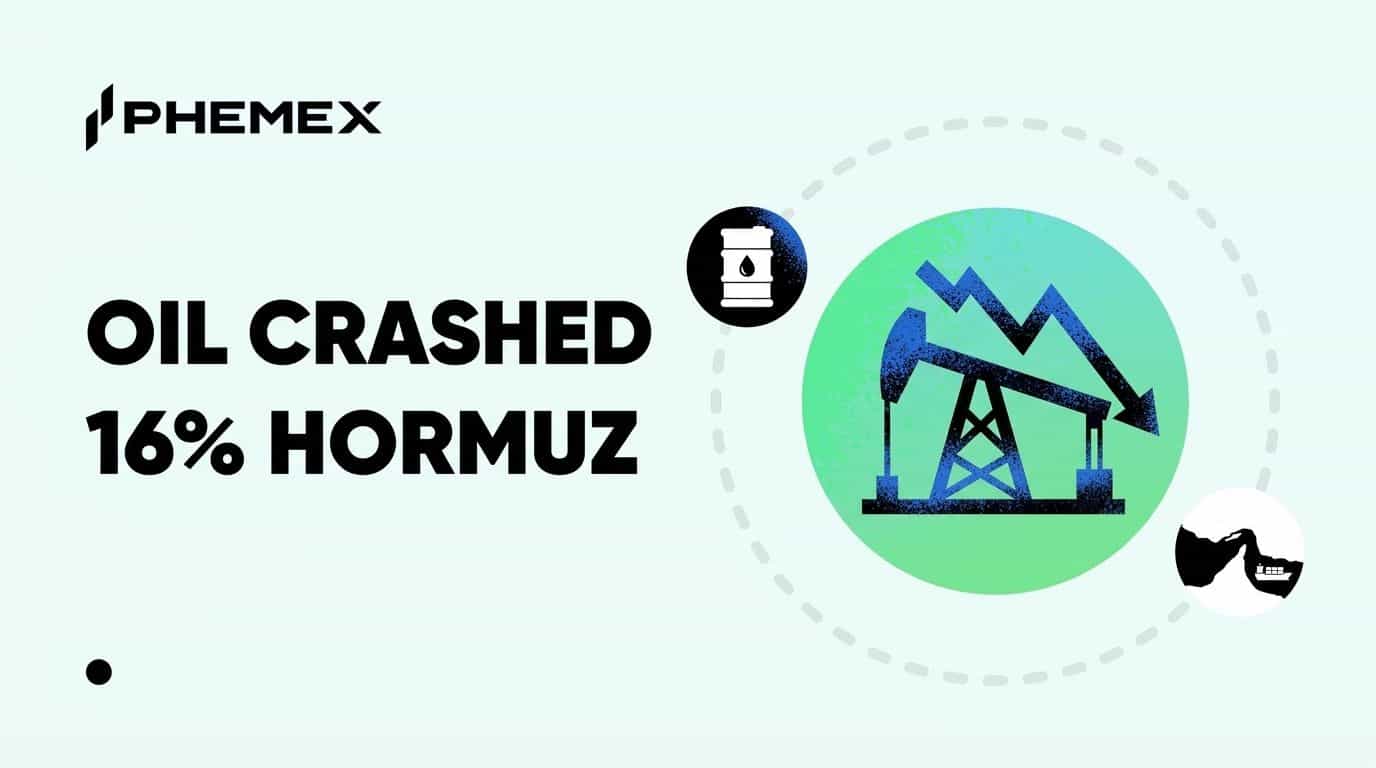
Brent crude collapsed from $112.40 to $94.60 on April 8, 2026, a 15.8% single-day drop that erased nearly three months of war-premium pricing in a matter of hours. The catalyst was a confirmed reopening of the Strait of Hormuz to commercial tanker traffic following the 45-day ceasefire framework that Iran, the U.S., and regional mediators finalized late Monday evening. Oil had not fallen this sharply in a single session since April 2020, and the move rippled through every asset class that had been trading on energy-driven inflation expectations for ten weeks.
Bitcoin responded by climbing 4.2% from $68,800 to $71,700 within the first six hours of Asian trading, with $189 million in short liquidations accelerating the move. The logic is straightforward, and the market is pricing it in fast. Lower oil means lower inflation, lower inflation gives the Fed room to cut, and rate cuts are the single most bullish macro catalyst for risk assets including BTC.
Why a 16% Oil Drop in One Day Matters More Than It Looks
A 16% single-day decline in Brent crude is not a normal move. Since 1990, there have been only nine sessions where oil fell more than 10% in a single day, and six of those occurred during the 2008 financial crisis or the 2020 COVID shutdown. The April 8 crash belongs in a different category because it was driven by the removal of a supply disruption rather than a demand collapse.
That distinction matters. When oil crashes because demand is dying, everything falls together as the economy contracts. But when oil crashes because a supply bottleneck reopens, the effect is disinflationary rather than deflationary. The cost of running the economy drops, margins improve, and central banks get breathing room on inflation.
That distinction is why Bitcoin rallied on April 8 instead of falling. The Strait of Hormuz handles roughly 21% of global oil supply and about 20% of global LNG flows. Its closure since late February had added an estimated $25-30 per barrel in geopolitical risk premium to crude prices, and the reopening stripped that premium out in a single session.
The Fed Connection and Why Traders Are Pricing in Rate Cuts Again
The Federal Reserve has held rates at 3.50-3.75% since January, and Powell has cited energy prices explicitly in three consecutive press conferences as the primary reason cuts remain off the table. The March 18 FOMC statement included the phrase "energy-driven price pressures continue to complicate the inflation outlook," and the CME FedWatch tool showed just a 14% probability of a June cut as recently as April 4.
Source: Eia.gov
Within hours of the oil crash, June cut probability jumped to 38% and July cut probability reached 61% according to CME FedWatch. The OECD Economic Outlook had projected US CPI at 4.2% for 2026 based on Brent averaging $105-110 per barrel. If crude stabilizes in the $90-95 range, multiple forecasters estimate that headline CPI could fall below 3.5% by Q3, which crosses the threshold where the Fed has historically been willing to begin easing cycles.
And the bond market moved even faster than crypto. The 2-year Treasury yield dropped 11 basis points on April 8, its largest single-day move since November 2025, pricing in roughly 50 basis points of cuts by year-end compared to 25 basis points the day before. When the bond market and the crypto market agree on the direction of rates, the signal tends to be reliable.
Historical Pattern of Oil Drops Above 10% and How Bitcoin Reacted
Not every oil crash is the same, and the crypto response depends entirely on what caused the drop. The table below covers every 10%+ single-day oil decline since Bitcoin existed and what BTC did in the following 30 days.
|
Date
|
Oil Drop
|
Cause
|
BTC 30-Day Return
|
|
March 9, 2020
|
-24.6%
|
Saudi-Russia price war + COVID
|
-38%
|
|
April 20, 2020
|
WTI went negative
|
Demand collapse, storage crisis
|
+21%
|
|
November 26, 2021
|
-13.1%
|
Omicron variant panic
|
-19%
|
|
March 9, 2022
|
-12.5%
|
Russia invasion, demand fear
|
-6%
|
|
April 8, 2026
|
-15.8%
|
Hormuz reopening, supply normalization
|
TBD
|
The pattern is clear when you split demand-driven crashes from supply-normalization events. The April 2020 WTI event is the closest parallel to today, because the initial crash was a supply-side shock and the 30-day aftermath saw BTC rally 21% as the macro picture improved. The November 2021 and March 2020 crashes were demand-destruction events that dragged everything down together.
April 8, 2026 falls squarely in the supply-normalization camp. Global demand for oil has not changed. What changed is that 21% of global supply is no longer blocked behind a military chokepoint, and the cost structure of the global economy just improved overnight.
The Risk That Traders Are Underpricing Right Now
The market moved fast on April 8, and by the afternoon session the euphoria was running ahead of the fundamentals. There are two reasons to stay cautious even if the macro direction has genuinely shifted.
The ceasefire is 45 days, not permanent. Iran agreed to a temporary framework, not a peace deal. The Strait of Hormuz is open today, but the underlying conflict between the U.S.-Israel coalition and Iran has not been resolved. If talks break down in May and the strait closes again, every barrel of risk premium comes back, and leveraged longs built on the "oil is fixed" narrative get destroyed. The 2022 parallel here is the July grain deal between Russia and Ukraine, which briefly crashed wheat prices 15% before collapsing three months later and sending prices right back up.
Oil at $95 is still historically expensive. Before the Iran conflict, Brent was trading around $73-78 in January 2026. A move from $112 to $95 feels like relief, but $95 oil still runs above the level where the Fed feels comfortable cutting aggressively. The inflation math improves at $95, but it does not transform. The market needs Brent closer to $85-90 before the rate-cut narrative shifts from "possible" to "probable."
What the Smart Money Is Actually Doing
CoinShares' weekly digital asset fund flows report showed $340 million in net inflows for the week ending April 4, before the oil crash, suggesting institutional allocators were already positioning for a macro improvement. Spot Bitcoin ETFs recorded positive net flows on 8 of the last 10 trading days, with BlackRock's IBIT alone absorbing $127 million on April 4.
The options market tells a more cautious story. On Deribit, the 30-day 25-delta skew flipped from puts to calls for the first time since February 26, but open interest is concentrated at the $75,000 call strike for April 25, which suggests the market sees a ceiling in the mid-70s rather than a breakout toward $80,000+. Institutions are cautiously bullish with defined upside targets, not loading into leveraged longs on the assumption that $95 oil means $100,000 Bitcoin.
Frequently Asked Questions
Why did oil crash 16% on April 8, 2026?
The Strait of Hormuz reopened to commercial tanker traffic after a 45-day ceasefire framework was finalized between Iran, the U.S., and regional mediators. The strait handles roughly 21% of global oil supply, and its closure since late February had added an estimated $25-30 per barrel in risk premium. The reopening stripped that premium out in a single session.
Does falling oil price mean Bitcoin will go up?
It depends on why oil is falling. When oil drops because a supply disruption ends, the effect is disinflationary and historically positive for risk assets including Bitcoin. When oil drops because the economy is contracting, everything tends to fall together. The April 8 crash is a supply-normalization event, which is the more favorable scenario for BTC.
Will the Fed cut rates now that oil has dropped?
Not immediately, but the probability has shifted significantly. CME FedWatch showed June rate-cut probability jumping from 14% to 38% within hours of the oil crash. If Brent stabilizes below $95 and headline CPI trends toward 3.5%, a July or September cut becomes the base case. The Fed needs sustained data improvement, not a single day's price action.
How far can Bitcoin rally if oil stays below $100?
The options market is pricing $75,000 as the near-term ceiling based on concentrated call open interest at that strike. A sustained move above $73,000 on strong ETF inflows and confirmed rate-cut expectations could open the path toward $78,000-$80,000. But the ceasefire is temporary, and any escalation that sends oil back above $110 would reverse the rally quickly.
Bottom Line
The 16% oil crash is the most bullish single-day macro development for Bitcoin since the spot ETF approvals in January 2024, and the bond market confirmed it by pricing in 50 basis points of cuts by year-end versus 25 the day before. BTC's immediate target is a sustained close above $71,500-$72,000, which would confirm the breakout from the range that has contained price action since late February.
The catch is that 45-day ceasefires are not peace deals. If Hormuz closes again in May, every dollar of risk premium returns and the narrative flips overnight. Watch Brent crude more than any crypto-native indicator for the next six weeks. If oil holds below $95 through mid-May and the ceasefire extends, the macro setup for a BTC move toward $78,000-$80,000 is the strongest it has been all year. If it does not hold, the $65,000 floor gets tested again, and this time the ETF demand buffer faces a market that has already been disappointed once.
This article is for informational purposes only and does not constitute financial or investment advice. Cryptocurrency trading involves substantial risk. Always conduct your own research before making trading decisions.