







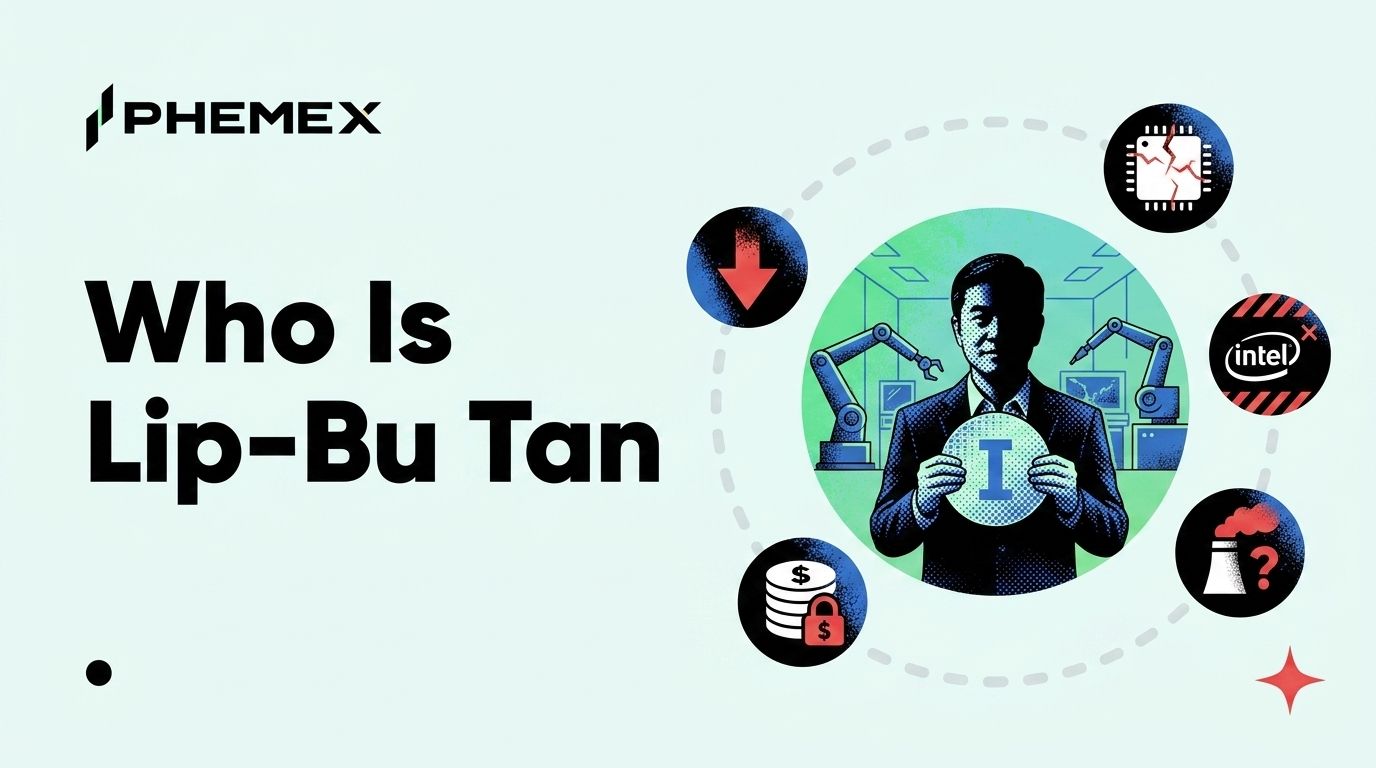
Lip-Bu Tan became the chief executive of Intel in March 2025 after the Intel board ousted Pat Gelsinger in December 2024 over execution issues with the 18A timeline and the foundry cash burn. Fifteen months later, Intel is up 196 percent year to date, the company just locked in the largest single foundry contract of the modern era (Google's 3-million-unit TPU order on the 18A process), and the broader market has stopped asking if Intel will survive the foundry pivot. Tan's playbook (capital allocator plus customer-first sales) is the operational explanation for why the rerating happened on his watch rather than under his predecessor.
Here is the background, the career arc, and the strategic moves that produced the Google win.
Background and Early Career
Lip-Bu Tan was born in Malaysia and educated at MIT, where he completed an undergraduate engineering degree, before earning an MBA at Stanford. The early-career arc moved from engineering into venture capital. In 1987, Tan founded Walden International, a semiconductor-focused venture capital firm that became one of the dominant early-stage investors in the Asian and US semiconductor sectors over the following three decades.
Walden's portfolio over Tan's tenure included early investments in SMIC (the Chinese foundry that eventually became one of the largest non-TSMC pure-play foundries globally), MediaTek, and a long list of fabless and equipment vendors that built out the modern semiconductor supply chain. The deep relationship network that Tan built at Walden through 30-plus years of semiconductor venture investing turned out to be the structural asset he brought to Intel when the board recruited him.
Tan also served on multiple corporate boards over the same period including SoftBank, HP, and Schneider Electric, which gave him the broad exposure to capital allocation decisions at scale that complemented the semiconductor-specific operating experience.
The Cadence Design Systems Turnaround
Tan was appointed chief executive of Cadence Design Systems in January 2009, in the middle of the global financial crisis and at a point when Cadence had been losing share to Synopsys for several years per the Cadence Design Systems annual report archive. The turnaround playbook he ran at Cadence is the closest available template for what he is doing at Intel today.
The Cadence playbook had three components. First, he rationalized the cost base aggressively in the first 18 months, including significant headcount reductions in non-core product lines. Second, he refocused R&D spend on the highest-margin EDA tooling categories where Cadence had defensible technical leadership, particularly in custom IC design and advanced verification. Third, he rebuilt the customer relationship layer by spending personal time with the largest semiconductor design customers (Apple, Qualcomm, NVIDIA, Samsung) to understand what they actually needed from their EDA vendor.
By the time Tan stepped down from the Cadence CEO role in December 2021, Cadence had grown from roughly $850 million in annual revenue to over $3 billion per the Cadence historical annual filings, the stock had compounded at over 25 percent annualized, and the company had reclaimed competitive parity with Synopsys across the major EDA product categories. The track record is the reason the Intel board recruited him in late 2024.
The Intel Strategic Moves That Set Up the Google Win
The Tan playbook at Intel has had four major strategic moves over the first 15 months of his tenure. The first was refocusing the 18A foundry process as the primary cash-flow generator for the entire company over the medium term. That meant prioritizing the Arizona Fab 52 ramp, accelerating yield engineering investments, and reorganizing the foundry business unit reporting structure to give the customer-facing teams more authority.
The second was divesting non-core assets to fund the foundry investment. Tan reduced Intel's stake in Mobileye, completed the Altera spinout that had been in motion under the prior leadership, and disposed of multiple smaller business units that were not contributing to the foundry roadmap. The proceeds funded the capital expenditure on Fab 52 and the 18A node development.
The third was the customer relationship rebuild. Tan personally led the Google TPU negotiation over multiple in-person meetings through 2025 and 2026, leveraging the relationship network he had built over decades at Walden. The Hitachi pact signed June 5 came out of a similar long-running relationship rebuild. The fourth was the leadership team refresh, with multiple senior executive hires from TSMC, Samsung, and Apple to bring foundry-specific operating experience inside Intel.
The combination of those four moves is what produced the Google 3-million-unit TPU order on 18A as the cumulative validation moment. Reuters covered the confirmed order details on June 6, and the Hitachi collaboration ran in parallel under the same playbook structure.
What His Voice Says About the Next 12 Months
Tan's public commentary since the Google announcement, archived through the Intel newsroom, has been calibrated and customer-focused rather than promotional. The Q1 2026 earnings call and the June 6 follow-up interview cycle emphasized that the Google win is the start of a multi-year customer pipeline rather than a one-time event, and that the next 12 months will be measured by yield execution on 18A and by additional customer commitments rather than by stock price.
That measured framing is consistent with the Cadence-era playbook. Tan's track record has been to under-promise and over-deliver on operational metrics, which is the opposite of the Gelsinger-era pattern that the board ultimately rejected. The structural read for Intel investors is that the rerating that has occurred year to date is anchored to operational execution that Tan has personal credibility against, rather than to forward narrative that depends on future surprises.
The next concrete data points are the fiscal Q2 earnings print in late July, the NVIDIA evaluation decision in Q3, and any additional foundry customer wins that show up over the back half of 2026. The Phemex Intel comeback coveragecovers the broader AI infrastructure context that supports the foundry-pivot thesis.
Why His Background Matters for Foundry Strategy
Tan's career path through Walden venture investing, Cadence operating leadership, and SoftBank board service gave him three things that the typical large-cap semiconductor CEO does not have. The first is a deep multi-decade relationship network across the Asian semiconductor supply chain that no Western executive could replicate in less than 20 years. The second is operational experience running a turnaround at scale, which Cadence proved he could do. The third is a capital allocation framework that prioritizes cash-generating businesses over narrative-driven investments.
That combination is specifically suited to the Intel foundry pivot, which is fundamentally a relationship-driven, execution-heavy, capital-intensive business. Gelsinger had the manufacturing instinct but not the capital allocation discipline. Tan has both, plus the customer relationship layer that closed the Google deal.
The structural thesis for INTC under Tan is that the foundry business compounds at roughly 25 to 35 percent annualized over the next three years if execution holds, with the upside scenario adding NVIDIA volume by Q3 and one or more additional anchor customers by year-end. The downside scenario requires either a yield slip on 18A or a broader macro shock that delays the customer commitments.
Frequently Asked Questions
How does Lip-Bu Tan's style compare to Pat Gelsinger's?
Tan is a capital allocator and customer-first sales leader. Gelsinger was a technologist and manufacturing operator. Both styles have merit, but the foundry pivot specifically required the relationship-driven customer rebuild that Tan executed, which is why the board made the change in late 2024.
What made the Google TPU win specifically Tan's deal?
Tan personally led the Google negotiation across multiple in-person meetings through 2025 and early 2026. The deal closed because the relationship layer was rebuilt at the executive level and because the 18A yield commitments were credible enough for Google to commit a multi-year, multi-billion-dollar production batch.
Will Tan stay at Intel through the foundry ramp?
His public commentary suggests a multi-year commitment, and the equity package structure of the CEO contract aligns him to a 5-year minimum ramp window. Departure risk is low through at least 2028 absent unexpected health or family considerations.
What is the biggest execution risk to the Tan playbook?
The single largest risk is a yield slip on the 18A node that would push out the revenue contribution from Google and any future customer wins. Yield engineering on advanced process nodes is difficult, and a slip would compress the credibility window for additional commitments.
Bottom Line
Lip-Bu Tan brought the Walden relationship network, the Cadence turnaround playbook, and the SoftBank-era capital allocation discipline to Intel at the moment the company needed all three. The Google 3-million-unit TPU order on 18A is the structural validation of the playbook, and the Hitachi pact alongside the NVIDIA evaluation extends the same template.
The next 12 months will be measured by yield execution on 18A and by additional customer commitments. Tan's track record points to under-promise and over-deliver on operational metrics, which is the opposite of the pattern that produced his predecessor's departure. The structural read for Intel under Tan is that the rerating that has occurred year to date is anchored to execution he has personal credibility against, with meaningful additional upside if the NVIDIA evaluation converts to a contract by Q3.
This article is for informational purposes only and does not constitute financial or investment advice. Cryptocurrency trading involves substantial risk. Always conduct your own research before making trading decisions.
