




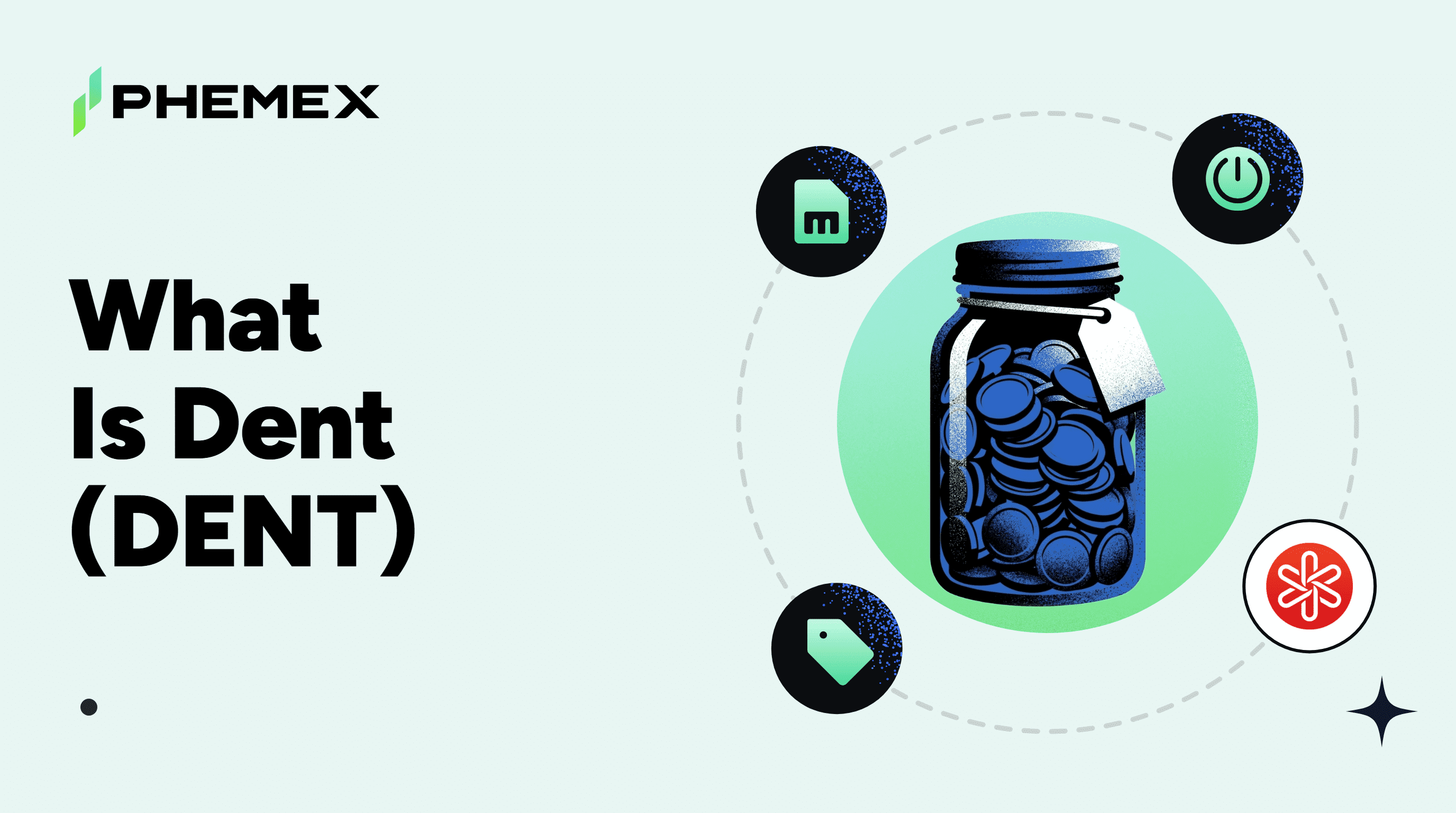
Dent is the DENT token on Ethereum, a crypto asset created in 2017 to pay for mobile data on a planned marketplace for phone users. DT One bought the DENT business in 2025 and renamed it Tunz. The opening carries no primary link, since Dent's own sites and the main coin-data pages fail our sourcing rules.
All 100 billion DENT were created in one transaction in July 2017, and minting was switched off in that same transaction. By the late-November close, holders had burned only a tiny fraction of one token, so the supply had barely moved in more than nine years. No one can print more DENT to dilute a holder, and any value has to come from demand.
Has DENT's Supply Ever Grown?
Just under 100 billion DENT existed at the late-November close, which is the launch supply minus a sliver that holders burned.
|
DENT contract on Ethereum, late-November close
|
Value
|
|
Created at launch (July 2017, one transaction)
|
100,000,000,000 DENT
|
|
In existence
|
99,999,999,999.99994 DENT
|
|
Burned since 2017
|
0.0000571 DENT
|
|
Can new DENT be minted?
|
No, minting was off from creation
|
|
Token-swap (upgrade) path
|
Opt-in only, no new contract named, 0 DENT moved
|
|
What the owner key can still do
|
Rename the token, hand over ownership
|
|
Owner wallet's own balance
|
About 7.43 million DENT (0.0074%)
|
DENT's contract code shows why the count never grew. The deployer marked the token as not mintable at launch, so the code set a "minting finished" switch that no function can turn back. Any later attempt to mint, or to name a wallet that could, stops at that switch.
The company had promised as much in DENT's July 2017 token sale paper, which said "No tokens will ever be added to the supply." The code is what holds it to that.
Burning is the only way any DENT has left the supply, and all the burns since 2017 had come to 0.0000571 DENT. That's less than one ten-thousandth of a single token, so for any practical purpose the supply was still 100 billion.
One route to a different token stays open. A separate upgrade-master address, itself a smart contract, can name a new contract and let holders choose to swap into it. The upgrade master hadn't named one by the late-November close, and no DENT had moved that way.
The owner key has little power left. It was still the ordinary wallet that created DENT in 2017, run by a single private key. It held about 7.43 million DENT, or 0.0074% of supply. Its remaining powers are to rename the token or hand ownership to another address. It can't mint, and it can't freeze transfers either, because the code's release switch only turns one way.
You can check a token contract for a mint function on any other coin you hold.
What Is Dent Coin?
Dent coin is just the everyday name for the DENT token. It's an ERC-20 token, which means it follows Ethereum's shared rules for tokens, so any Ethereum wallet can hold it and send it. The idea behind it was easy to state. Mobile data cost a lot across borders and often expired unused. DENT was to be the money people used to trade it.
|
Dent at a glance
|
Detail
|
|
Token
|
DENT, an ERC-20 token on Ethereum
|
|
Created
|
July 2017, in one transaction
|
|
Supply
|
100 billion, with minting switched off
|
|
Company
|
DENT Telecom, bought by DT One in 2025, renamed Tunz
|
|
The app
|
Tunz, an eSIM data app paid by card, PayPal or Apple Pay
|
|
On Phemex
|
Perpetual delisted February 2026, spot pair April 2026
|
If you met DENT on a price list or in an old wallet, it's the same token, and the contract address in the buying steps below is the way to confirm it.
Who Runs Dent Since the Tunz Rebrand?
The token's issuer was DENT Wireless, a Hong Kong company founded in 2014 as Commando Coder. Its 2017 paper named Tero Katajainen as founder and chief executive.
The business changed hands in September 2025, when DT One announced it had bought DENT Telecom and would rebrand it as Tunz. DT One handles cross-border digital transfers for apps and mobile operators. Its post said DENT's app already let people in over 140 countries buy mobile data on demand, and it quoted Thomas Dingler as DENT's chief executive.
The app shows the change. Its App Store listing goes by Tunz and names DT One Germany GmbH as seller and developer, while the Google Play version keeps the old dentwireless name inside its package name.
For you as a holder, the gap is what the announcement leaves out. DT One's post doesn't mention the DENT token, and it gives no plan for it.
How Was the DENT Token Meant to Work?
The plan made DENT the currency of a data marketplace. The 2017 paper pictured a market where people could buy, sell or donate leftover data while telcos posted packages of their own.
"When the DENT Exchange is live, users will be able to use DENT Tokens to buy and sell data on an international marketplace," the paper said. Despite its name, the DENT Exchange in the paper is a marketplace for data packages, a different thing from a crypto exchange.
Funding came from an initial coin offering that opened on 12 July 2017, the same day the contract went live. DENT Wireless offered 70% of the supply in the sale and kept the other 30% for telco deals, user rewards and staff pay.
The paper gave the token a second job before the market existed. Holders would join a community pressing telcos to change how they sell data, and the DENT app would reward downloads with tokens.
Is Dent a Meme Coin?
No. DENT came from a company with a product plan, and its 2017 paper listed the token type as an "Apps token to purchase and sell mobile data packages." A meme coin usually launches with no product at all and trades on community attention.
Function is also how US regulators sorted crypto assets in March 2026, when the SEC's five-category token taxonomysplit them into groups by what they do. None of that shows DENT's plan worked, only that the company built the token for use.
Is Dent Crypto Dead?
The record splits in two. On Ethereum, DENT still moves freely between wallets, because no one can freeze transfers and its on-chain record shows the supply all but unchanged to the late-November close. A balance bought in the 2017 sale is still the holder's to move, and no admin key can take it back.
The business is the other half. DENT's company lives on as Tunz inside DT One, and its app sells eSIM data plans to travellers. The app takes payment by card, PayPal or Apple Pay, and neither of its two store descriptions mentions the DENT token.
That leaves a working token tied to a product whose public descriptions don't include it. DENT's price history and outlook sit in Phemex's separate Dent price prediction.
How to Get the Right DENT Token
DENT lives on Ethereum, so buying it safely comes down to making sure you have the right token.
-
Match the contract address on every market and wallet you use. DENT's contract on Ethereum is 0x3597bfD533a99c9aa083587B074434E61Eb0A258, and its verified source code is public if you want to read it yourself.
-
Check the ticker as well as the name, because similar names exist and Dentacoin is one of them.
-
Know which Phemex markets closed before you go looking for a price. Phemex's DENTUSDT perpetual was delisted in February 2026, and its DENT/USDT spot pair followed in April 2026. An older 1000DENT/USD contract had stopped trading in 2023.
-
Keep it in a wallet you control, and add DENT by its contract address so the balance you see belongs to the real token.
-
Read any swap offer twice before you send a single token to it. A move to a new contract is one-way in DENT's code, so check the new contract's rules first.
Phemex's futures markets list other crypto assets. Futures use leverage, and a leveraged position is closed automatically if losses push its margin below a set minimum.
What Are the Risks of Holding DENT?
-
No stated role. DENT's own app, renamed Tunz, takes card and PayPal payments. Its new owner's announcement skips the token, so any use case still rests on the 2017 plan.
-
A small market. At CoinMarketCap's late-November close, the whole supply was worth under $3 million. In a market that size, a handful of large orders can move the price a long way.
-
A future swap. If the upgrade master ever names a new contract, holders who swap take on that contract's rules. Those rules can't be read until the contract exists, so a swap is the moment to slow down.
-
One owner key. The owner wallet runs on a single private key. It can't mint or freeze, but whoever controls it could rename the token and confuse buyers.
Frequently Asked Questions
Is Dent the same as Dentacoin?
No. Dentacoin trades as DCN and targets the dental industry. DENT is the 2017 mobile data token on Ethereum, and its contract address tells the two apart.
Can new DENT be created?
No. DENT's contract turned minting off at launch in July 2017, and nothing in its code can turn it back on. A different supply could only come from an opt-in swap to a new contract, and none had been named by the late-November close.
Does the Tunz app use the DENT token?
Not that its store listings say. The App Store and Google Play descriptions name Apple Pay, PayPal or card as the ways to pay without a word on DENT, and DT One's September 2025 announcement leaves the token out too.
Bottom Line
DENT's contract kept its 2017 promise on supply to the letter, and any holder can still check that for themselves. The company did build a mobile data business, but under DT One it sells eSIM plans for card payments and its public descriptions leave the token out.
A DENT holder owns a fixed slice of a supply no one can expand, and the open question is who still needs it.
Disclaimer: This article is for informational purposes only and is not financial advice. Cryptocurrency trading involves substantial risk. Always do your own research before making investment decisions.
