








If you hold BTC, ETH, and USDT across your Phemex futures account, single-asset margin forces you to convert everything to USDT before opening a position. That conversion costs you a trade, a fee, and the opportunity cost of selling an asset you might want to keep. If BTC rallies while your funds are sitting in USDT waiting to be deployed, you miss the appreciation on an asset you owned minutes earlier.
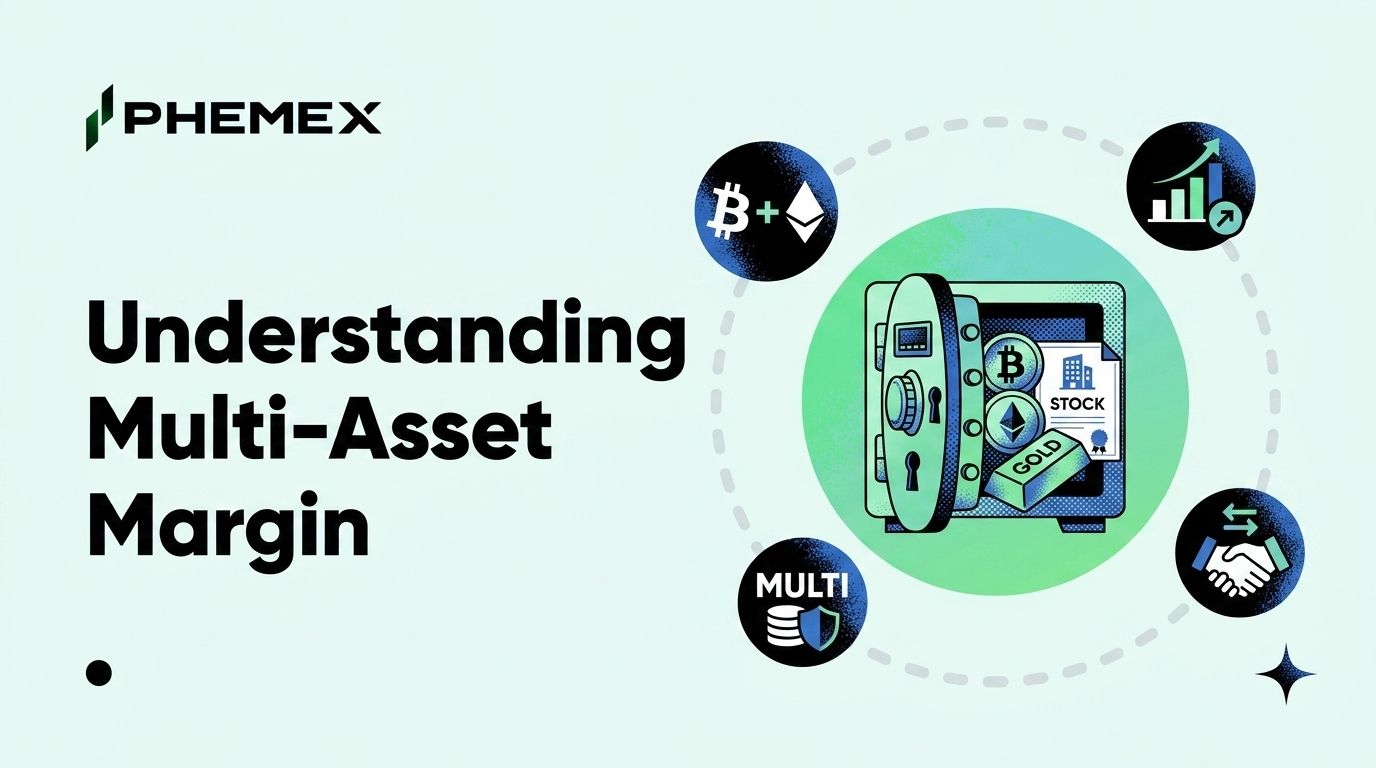
Multi-Assets Mode on Phemex eliminates that problem. It lets you use BTC, ETH, and other supported cryptocurrencies as collateral for USDT-margined futures without selling them first. Your holdings become your margin. Profits from one position can offset losses in another. And your entire portfolio functions as a unified collateral pool rather than fragmented balances that cannot talk to each other.
Here is how the system works, when it gives you an edge, and the specific trade-offs you should understand before switching.
How Multi-Assets Mode Works
Phemex Futures offers two margin modes. Understanding the difference is the starting point.
Single-Asset Mode is the default. Only USDT can be used as margin for USDT-margined futures. If you want to open a BTC/USDT perpetual position, you need USDT in your futures account. Your BTC and ETH holdings sit unused unless you sell them first.
Multi-Assets Mode lets you use multiple supported cryptocurrencies as collateral for USDT-margined futures simultaneously. Your BTC, ETH, and other supported assets are pooled together into a single margin balance. Margin is shared across all your USDT cross-margined futures positions, meaning a profitable ETH/USDT position can provide margin support to an underwater BTC/USDT position. The system treats your entire futures portfolio as one interconnected unit.
The key technical detail is the collateral discount. Non-USDT assets used as margin are not counted at 100% of their market value. For example, BTC valued at $1,000 may only count as approximately $990 in margin value (a roughly 1% discount). This haircut accounts for the volatility and liquidation risk of non-stablecoin collateral. The exact discount rates vary by asset and are published in Phemex's risk management rules for Multi-Assets Mode.
Here is how the two modes compare:
| Feature | Single-Asset Mode | Multi-Assets Mode |
| Collateral | USDT only | BTC, ETH, USDT, and other supported assets |
| Margin Mode | Cross or Isolated | Cross only |
| Capital Efficiency | Lower (idle non-USDT assets) | Higher (portfolio as collateral) |
| Liquidation Scope | Per-position (isolated) or full account (cross) | Full account (cross only) |
| Collateral Stability | Stable (USDT pegged) | Fluctuates with asset prices |
| Conversion Required | Yes (sell to USDT first) | No |
| Profit Offset | Within same margin mode only | Across all USDT cross positions |
| Best For | Beginners, per-trade risk control | Holders who trade, hedgers, multi-position traders |
What Problem Does This Solve?
The practical benefits become clear through a worked example.
Without Multi-Assets Mode. You hold 0.5 BTC ($37,500) and 10 ETH ($19,200) in your futures account. You want to open a BTC/USDT long with 5x leverage, so you sell 0.2 BTC for approximately $15,000 USDT (paying a trading fee), and open your position. Your remaining 0.3 BTC and 10 ETH sit idle, contributing nothing. If BTC rallies 10%, you miss the appreciation on the 0.2 BTC you converted. If your position gets squeezed, your ETH cannot help prevent liquidation.
With Multi-Assets Mode. Same holdings, but you open the BTC/USDT long using your existing BTC and ETH as collateral directly. No conversion, no fee, and your BTC still appreciates if the price rises. Your ETH provides additional margin support, and if you also open an ETH/USDT position, profits from one can offset losses in the other.
The difference is that 30-40% of your portfolio stops sitting idle and starts working as collateral. For traders who hold multiple assets and trade futures actively, that is the gap between fragmented capital and deployed capital.
Who Benefits Most
Multi-Assets Mode is not for every trader. The feature is most valuable for specific trading styles and portfolio structures.
Holders who also trade futures. You hold BTC and ETH as long-term positions but also trade futures for short-term directional bets or hedging. Multi-Assets Mode lets you keep your holdings intact while using them as collateral, so you never have to choose between holding and trading.
Hedgers benefit immediately from the unified structure. Spot BTC serves as collateral for a short BTC/USDT hedge, and the spot appreciation and futures profit/loss offset each other to create a delta-neutral position without selling anything.
Arbitrage and basis traders gain the most capital efficiency. Strategies with simultaneous long and short positions across different pairs require dedicated collateral for each leg under single-asset mode, tying up roughly double the capital. Unified margin cuts that requirement because profits on one leg directly support the other.
Portfolio-style traders running multiple positions across 3-5 pairs benefit from the automatic cross-support. A winning ETH/USDT position automatically provides margin to an underwater BTC/USDT position. In single-asset mode, each position's margin is independent, meaning you could get liquidated on one while another is deeply profitable in the same account.
How to Enable Multi-Assets Mode on Phemex
The switch takes approximately 30 seconds.
-
Log in to your Phemex account on web or app
-
Navigate to any USDT futures trading page (for example, BTC/USDT)
-
Locate the margin mode switch at the top of the trading interface
-
Select Multi-Assets Mode
-
The system verifies two conditions: no active USDT orders or open USDT positions, and no outstanding debts in any asset under your futures account
-
If both conditions are met, the system switches all USDT futures (excluding Innovation Zone futures) to Cross Margin Mode automatically
On the mobile app, tap Futures, then USDT Futures, then tap the [S] button to toggle between Single-Asset and Multi-Assets modes.
You can switch back to Single-Asset Mode at any time, provided you meet the same conditions (no open positions or debts). The system checks both conditions before allowing the switch in either direction.
The Trade-Offs You Need to Understand
Multi-Assets Mode offers higher capital efficiency, but it introduces specific risks that differ from single-asset margin trading.
Cross Margin only, no Isolated option. Multi-Assets Mode does not support Isolated Margin. Your entire futures account balance is at risk across all positions. In single-asset mode with Isolated Margin, a liquidation on one position costs you only the margin allocated to that specific trade. In Multi-Assets Mode, a liquidation event can affect your full account because all assets are pooled. For traders who prefer strict per-trade risk limits, this is the most important trade-off to weigh.
Collateral discount. Your BTC and ETH are not counted at full market value. The haircut (approximately 1% for major assets like BTC) means your effective margin is slightly less than the market value of your holdings. During extreme volatility, the discount rates can also change, potentially reducing your available margin when you need it most.
Collateral value fluctuates with the market. If you use BTC as margin and BTC's price drops 10%, your margin value drops with it, even if the position it is supporting is on a different pair. In single-asset mode with USDT margin, your collateral value is stable regardless of market conditions. Using volatile assets as collateral means your margin cushion can shrink during exactly the market conditions that put your positions under stress.
Currently USDT futures only. Multi-Assets Mode supports only USDT-margined futures at this time. USDC-margined and inverse futures support may be added in the future, but as of April 2026, the feature is limited to USDT pairs.
Frequently Asked Questions
What is Multi-Assets Mode on Phemex?
Multi-Assets Mode is a margin framework that lets you use multiple cryptocurrencies (BTC, ETH, and other supported assets) as collateral for USDT-margined perpetual futures. Your assets are pooled into a unified margin balance, and profits from one position can offset losses in another.
Do I need to sell my BTC to trade futures on Phemex?
Not in Multi-Assets Mode. Your BTC, ETH, and other supported assets serve as collateral directly, without conversion. In Single-Asset Mode, you would need USDT to open USDT-margined futures positions.
Is Multi-Assets Mode riskier than Single-Asset Mode?
It depends on your trading style. Multi-Assets Mode uses Cross Margin only, meaning your full account balance is at risk across all positions. Single-Asset Mode with Isolated Margin limits risk to the margin allocated per trade. Multi-Assets Mode offers higher capital efficiency but lower per-trade risk isolation.
What is the collateral discount?
Non-USDT assets used as margin are not counted at 100% of their market value. BTC valued at $1,000 may count as approximately $990 in margin. This haircut accounts for the volatility of non-stablecoin collateral and protects the system during rapid price movements.
Bottom Line
Multi-Assets Mode solves a specific capital efficiency problem that every futures trader with a diversified portfolio experiences. Instead of converting BTC and ETH to USDT before every trade (losing value, paying fees, and missing appreciation), your holdings become your margin directly. Profits offset losses across positions, and your entire portfolio works as a unified collateral pool.
The trade-off is giving up Isolated Margin. Your entire account is exposed under Cross Margin, your collateral value moves with the market, and the discount means your effective margin is slightly less than your portfolio's face value. For traders who understand these dynamics and manage position sizing accordingly, Multi-Assets Mode turns idle capital into working capital. For those who rely on strict per-position risk isolation, Single-Asset Mode with Isolated Margin remains the right choice.
This article is for informational purposes only and does not constitute financial or investment advice. Futures trading involves substantial risk, including the risk of losses exceeding your deposit. Always conduct your own research before making trading decisions.
