










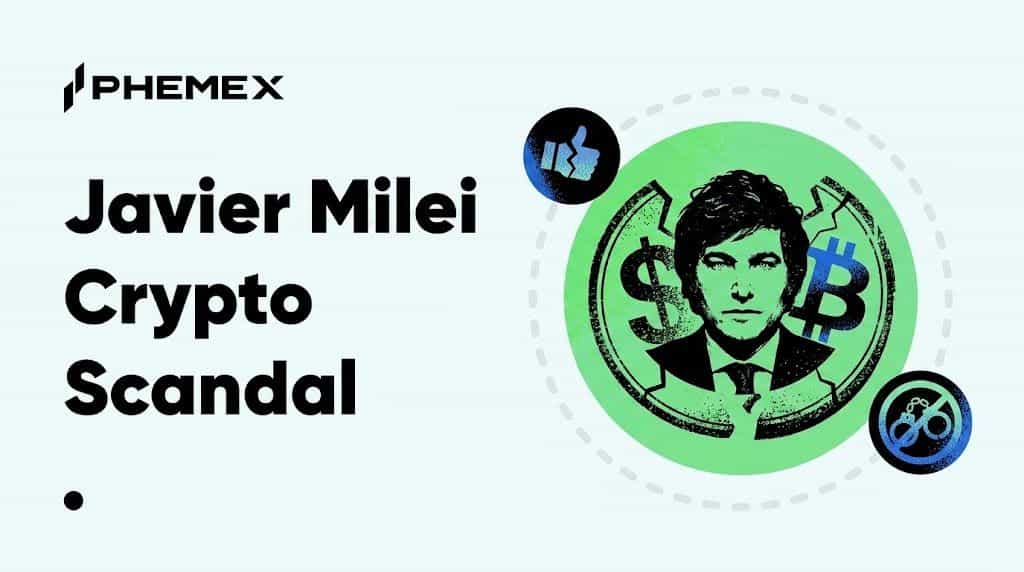
Javier Milei won Argentina's presidency in November 2023 on a platform of radical libertarian economics, chainsaw-wielding theatrics, and a promise to abolish the central bank. He was supposed to be the most crypto-friendly head of state on Earth. Then on February 14, 2025, he posted a promotion for a token called $LIBRA to his millions of followers on X, the token's market cap surged past $4.5 billion within an hour, and by the next morning it had collapsed 96%, wiping out an estimated $251 million in investor funds.
Fourteen months later, the scandal is not fading but actively getting worse. Phone logs published by The New York Times in April 2026 show Milei made seven calls with a key insider on the night of the launch, prosecutors have found a draft $5 million payment agreement, and Milei's approval rating has dropped to 36.4%, its lowest since he took office. The scandal is reshaping Argentine politics and the country's entire relationship with cryptocurrency regulation.
Who Is Javier Milei and Why Crypto Loved Him
Milei is an economist-turned-politician who won Argentina's 2023 presidential election with 55.7% of the runoff vote, defeating the incumbent economy minister Sergio Massa in what NPR described as a mandate against decades of Peronist economic mismanagement. He ran on slashing the state, dollarizing the economy, and eliminating Argentina's central bank entirely. He describes himself as an anarcho-capitalist and regularly cited Austrian economics on the campaign trail, which made him an instant favorite in Bitcoin circles.
The crypto appeal was obvious. Here was a sitting president who believed fiat currencies were inherently fraudulent, who openly praised Bitcoin as a return to sound money, and who inherited a country with 140%+ annual inflation, meaning Argentines already used crypto more than almost any other population on Earth. Argentina consistently ranks in the top five globally for crypto adoption per capita, largely because the peso's purchasing power erodes faster than most people can save.
In his first year, Milei delivered on some economic promises. Inflation dropped significantly, currency controls were partially lifted, and Argentina's securities regulator began building a framework for crypto oversight. The narrative that a pro-crypto president would turn Argentina into a friendly jurisdiction for digital assets felt plausible. Then came Valentine's Day 2025.
What Happened With the $LIBRA Token
On the evening of February 14, 2025, Milei posted on X promoting a cryptocurrency called $LIBRA, describing it as a project called "Viva La Libertad" that would fund small businesses and Argentine entrepreneurs. The token had been created hours earlier on the Solana blockchain by Kelsier Ventures, a Delaware-registered company led by a then-obscure 28-year-old American crypto marketer named Hayden Mark Davis.
The presidential endorsement sent the token parabolic. Within roughly one hour of Milei's post, $LIBRA's market cap surged past $4.5 billion, with the token price jumping over 3,000% to approximately $5. Retail traders piled in, many of them Argentine citizens who trusted their president's endorsement.
Then the insiders sold. According to on-chain analysis, a small cluster of wallets that received early token allocations began dumping within minutes of the peak. The token lost 96% of its value in hours. By the next morning, $251 million in retail investor funds had effectively been transferred to early holders, a textbook rug pull. Milei deleted his X post promoting the token, but screenshots had already spread across Argentine media.
|
Timeline
|
Event
|
|
Feb 14, 2025 (evening)
|
Milei posts $LIBRA promotion on X
|
|
Within 1 hour
|
Market cap hits $4.5B, price up 3,000%
|
|
Within hours
|
Insider wallets dump, price collapses 96%
|
|
Feb 15, 2025
|
Milei deletes the post, $251M in losses confirmed
|
|
Feb 18, 2025
|
Federal judge opens fraud investigation
|
|
June 2025
|
Anti-Corruption Office clears Milei of ethics violations
|
|
Late 2025
|
Milei dissolves the investigation task force (Decree 332/2025)
|
|
April 2026
|
NYT publishes phone logs linking Milei to Novelli
|
The Investigation and What Phone Logs Revealed
Milei's initial defense was simple. He said he had no direct involvement with the project, no financial interest, and had merely shared information about something he believed could help Argentine entrepreneurs. That defense started crumbling in April 2026.
Court documents from the ongoing federal investigation, first reported by The New York Times, show that Milei exchanged seven phone calls with Mauricio Novelli on the night of February 14, 2025. Novelli is a young Argentine trader who had known Milei since at least 2021, served as an informal advisor, and was the person who introduced Hayden Davis and Kelsier Ventures to the Milei orbit. The calls took place both before and after Milei's social media post promoting the token.
Prosecutors also recovered a draft agreement from Novelli's phone describing a three-part payment structure totaling $5 million. The deal included a $1.5 million advance, another $1.5 million tied to Milei's public promotion of the token on social media, and a final $2 million linked to a consulting contract. Separate forensic analysis by DL News found evidence of recurring monthly dollar payments from Novelli to Milei going back years, predating the $LIBRA launch entirely.
Milei has not been formally charged and remains listed as a person of interest. Argentina's Anti-Corruption Office cleared him in June 2025, ruling that his social media post was personal rather than official. But the federal criminal investigation remains active, and a separate class-action lawsuit involving plaintiffs from Argentina, the U.S., and the U.K. is also moving through the courts.
How the Scandal Affects Argentina's Crypto Policy
This is where the story moves beyond politics and starts mattering for anyone who trades crypto. Argentina was on track to become one of Latin America's most progressive crypto jurisdictions. The country's securities regulator, the CNV, had launched a regulatory sandbox for crypto projects by late 2025, and the central bank was preparing to allow commercial banks to offer crypto services starting in April 2026.
The scandal has complicated that trajectory. According to reporting from Buenos Aires Times, regulators initially retreated from crypto-related discussions after the February 2025 collapse. Most returned to the table by November, but the April 2026 evidence dump linking Milei directly to the scheme has reignited political pressure to slow down any pro-crypto reforms.
And yet the picture is not entirely negative. On April 7, 2026, Argentina's securities regulator took the step of recognizing certain cryptocurrencies, including Ether, as counting toward investors' personal net worth, effectively opening the door for crypto holders to access more sophisticated financial products. The country's fundamental demand for crypto has not changed. With the peso still volatile and capital controls still partially in place, Argentines continue to use stablecoins and Bitcoin as practical financial tools regardless of what their president did with a meme coin.
The real damage is reputational. Foreign crypto companies that were considering Argentina as a base now face the question of how stable the regulatory environment really is, or if it is subject to the whims of a president who may have personally profited from a rug pull. That uncertainty is harder to quantify but potentially more lasting than any single policy decision.
The Political Fallout
Milei's approval rating dropped to 36.4% in March 2026, a five-point decline from February and his lowest since taking office, while disapproval climbed to nearly 62%. The $LIBRA scandal is not the only factor, rising unemployment and a controversial trade deal with the Trump administration contributed as well, but it remains the single most damaging political story of his presidency. The Economist called it the "first big scandal" of the Milei era, and it has given the opposition a corruption narrative that resonates far beyond crypto-native audiences.
Opposition lawmakers filed impeachment requests shortly after the February 2025 collapse. Those efforts did not succeed because Milei's coalition holds enough seats to block removal. But Argentina's House of Deputies Investigative Commission concluded that Milei may have committed misconduct in the exercise of his duties by promoting a private venture, potentially violating the Public Ethics Law. The report stated that both Milei and his sister Karina were "key players who enabled the scheme through action and omission."
The October 2025 midterm elections gave Milei's party a win, but the scandal's long tail continued through his second year. Each new piece of evidence, from the phone logs to the payment drafts, reopens the wound at the worst possible times for the administration.
Frequently Asked Questions
Did Milei personally profit from the LIBRA token?
Prosecutors have found a draft $5 million payment agreement on an intermediary's phone and evidence of recurring monthly payments from the same intermediary going back years before the token launch. Milei has not been charged, and the contents of the seven phone calls on launch night remain unknown, but the circumstantial evidence is substantial enough to keep the federal investigation active as of April 2026.
How much money did investors lose in the LIBRA rug pull?
On-chain analysis confirmed approximately $251 million in retail investor losses, with 86% of all LIBRA traders realizing losses exceeding $1,000 according to Nansen data. On the other side, Kelsier Ventures and a small number of insider wallets extracted roughly $100 million in profits, making this one of the largest meme coin rug pulls in crypto history.
Is Argentina still a good environment for crypto?
Argentina's fundamental demand for crypto remains among the highest in the world because of peso instability and capital controls. The securities regulator recognized Ether as counting toward net worth in April 2026, which is a meaningful step forward. But the scandal has created uncertainty around the pace and direction of broader reform, and foreign companies are watching to see if the regulatory sandbox delivers real results or gets stalled by political fallout.
Who is Hayden Davis and what is Kelsier Ventures?
Hayden Mark Davis is a 28-year-old American crypto marketer whose firm Kelsier Ventures created the $LIBRA token on the Solana blockchain. Davis and connected wallets extracted an estimated $100 million from the token launch. He was also linked to the MELANIA meme coin launch. The U.S. SEC has reportedly opened a preliminary inquiry into the possibility that $LIBRA constituted an unregistered securities offering.
Bottom Line
The Milei-$LIBRA scandal is a case study in what happens when political power and meme coin economics collide, and the consequences extend far beyond one token's price chart. The federal investigation is not winding down. It is accelerating, with each round of forensic evidence making Milei's "I had no involvement" defense harder to sustain. For Argentina's crypto industry, the path forward depends on regulators' ability to separate institutional progress from presidential controversy, and the April 2026 decision to recognize crypto in net worth calculations suggests they are trying. For traders and investors watching from outside Argentina, the lesson is simpler. A head of state's endorsement of a token is not a buy signal. It is a red flag, and the 764,000 wallets that lost money on $LIBRA are the proof.
This article is for informational purposes only and does not constitute financial or investment advice. Cryptocurrency trading involves substantial risk. Always conduct your own research before making trading decisions.
